Baku Hosts 5th Meeting of SGC Advisory Council


Author: None None
02/22/2019 · 3 min read
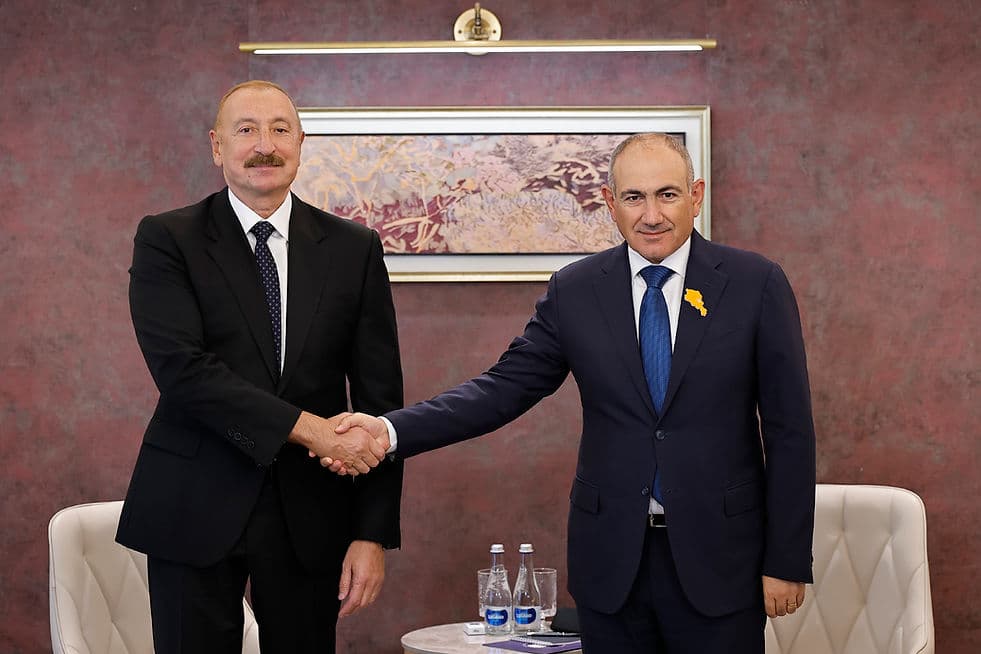
The 5th meeting of the Southern Gas Corridor (SGC) Advisory Council took place on February 20, hosted in Baku by President Ilham Aliyev. President Aliyev reported in his speech that the Trans-Adriatic Pipeline (TAP) had progressed 85 percent of the way to completion—significant progress since last year’s meeting of the Advisory Council, at which time TAP was only 67 percent complete. This year’s event also hosted representatives of Bulgaria and Romania, who are intensifying their collaboration with Azerbaijan and the SGC. Bulgari Minister of Energy, Temenuzhka Petkova, announced that construction on the Interconnector Greece-Bulgaria (IGB) will begin in the middle of 2019. The project, expected to be completed next year, will be able to transport three BCMA from Greece to Bulgaria, with the potential to increase transit volumes to five BCMA by adding a compressor station to the pipeline. The Romanian delegation is also currently looking to increase their state’s collaboration with Azerbaijan. Romanian Minister of Energy Iulian-Robert Tudorache expressed his country’s support for the SGC and voiced interest in becoming part of the project in the future. Echoing this sentiment, Romgaz CEO Adrian Volintiru announced the signature of a “Letter of Intent” while speaking to the Advisory Council—formally expressing Romgaz’s interest in evaluating the potential import of Azerbaijani gas through the SGC. Romania’s interest in Azerbaijani gas comes in the context of efforts to increase connectivity between Central European and Southeast European gas markets. The Arad-Szeged Pipeline, completed in 2010, links western Romania with the Hungarian gas network and the distribution hub at Baumgarten. The Interconnector Bulgaria-Romania (IBR), also known as the Giurgiu-Ruse Pipeline, was inaugurated in 2016, enabling gas to flow from Bulgaria to southern Romania. Arad-Szeged and the IBR were not initially connected, so to provide the final link in the gas transport network stretching from Bulgaria to Austria, Romania commissioned the BRUA pipeline. Construction on the project started in June of 2018, and is expected to be finished by December of 2019. All the necessary infrastructure will be in place to transport Azerbaijani gas from Greece to Austria via Romania by the time that the IGB is finished in 2020. While there has been the persistent talk of exporting Azerbaijani gas from Italy after it exits TAP at San Foca, the pipeline projects detailed above will create a second potential route, allowing Romania to position itself as an alternative to Italy for the transmission of SGC fuel to Baumgarten. Thus, it is to be expected that Romanian gas executives would be quite keen to court transit fees that would not require any additional investment on their part. This is good news for Azerbaijan as well, as the existence of two possible routes gives the South Caucasian state increased bargaining power. Since SOCAR can credibly walk out of negotiation with the Italians or the Balkan states, the firm will be able to secure lower transit fees. Photo: The Advisory Council of the Southern Gas Corridor (SGC) is being held in Heydar Aliyev Center located in Baku, Azerbaijan/Report.az