AI Nation: Chips, Cables, and Kazakhstan's Bid for a Digital Future


Author: Liam Gibson, Julia Mohr
11/17/2026 · 9 min read
 dc-valley.com
Author’s Note: This analysis was completed prior to the revelation of ex-NVIDIA CEO Jensen Huang’s affair with Alice Huang, an executive at Singapore-registered data center company Megaspeed. As of yet, it is unclear how this development could affect projects involving NVIDIA in the region.
Kazakhstan is one step closer to realizing its AI dreams after NVIDIA CEO Jensen Huang’s visit to Astana on Friday October 23. Huang met with top government officials and representatives of several AI companies to discuss applications and implementation plans for the technology in Kazakhstan. With the Trans-Caspian Fiber Optic Cable soon to be in service and Data Center Valley set to start coming online in 2027, Kazakhstan is taking big steps toward integrating AI into all levels of its society and becoming a global exporter of AI computing capacity. Whether it can continue to balance a range of competing interests from east and west may depend on its ability to advance digital sovereignty and secure infrastructure.
NVIDIA in Kazakhstan
Jensen Huang’s visit began with a meeting with Kazakhstan President Kassym-Jomart Tokayev at the Akorda Presidential Palace in Astana. The meeting between the two leaders underlined the role NVIDIA has played in powering Kazakhstan’s push to become an AI nation by providing advanced GPUs. The CEO then participated in a fireside chat with Deputy Prime Minister and Minister of Artificial Intelligence Zhaslan Madiyev at Alem.AI. The conversation took place at Alem.AI, an international center for artificial intelligence devoted to demonstrating AI capabilities and support research and development. Huang and Madiyev discussed ways to build and apply domestic AI technologies reflecting Kazakh language and culture and dedicated to upholding digital sovereignty.
Under Tokayev's presidency, Kazakhstan has enthusiastically embraced AI integration and digitalization. 2026 has been declared the Year of Digitalization, and this June the president signed the 'Digital Kazakhstan' program into law to promote digitalization of the economy and government services and the growth of the IT sector. While the total cost of Digital Kazakhstan to Kazakhstan's federal budget (the initiative will require significant additional private sector funding) is set at $240 million, the program is set to drive economic and job growth by creating new industries. The program has set lofty goals: it hopes to launch Kazakhstan into the limelight as "one of the most technologically advanced countries in the world...by 2029".
Since then, Kazakhstan has remained fully committed. While September 23 ushered in the start of fall for many in the Northern Hemisphere, it marked the beginning of another kind of season in Kazakhstan: AI Month. In recognition of AI Month, the AI and Technology arm of the government of Kazakhstan, in partnership with OpenAI, NVIDIA, and Arizona State University, among others, launched HackAlem AI, certified by the Guinness World Records as the largest agentic AI hackathon to date.
From October 1-3, 2026, Astana hosted the AI and Digital Bridge Conference, which highlighted over 1,500 speakers, 500 investors, and 600 startups. The 127,000+ total attendees were able to choose between roughly 5-7 different panels, with topics ranging from venture capital to AI’s impact on globalization, to government usage of AI. Such engagement has built momentum within Kazakhstan and garnered the attention of larger players abroad: most notably, Jensen Huang.
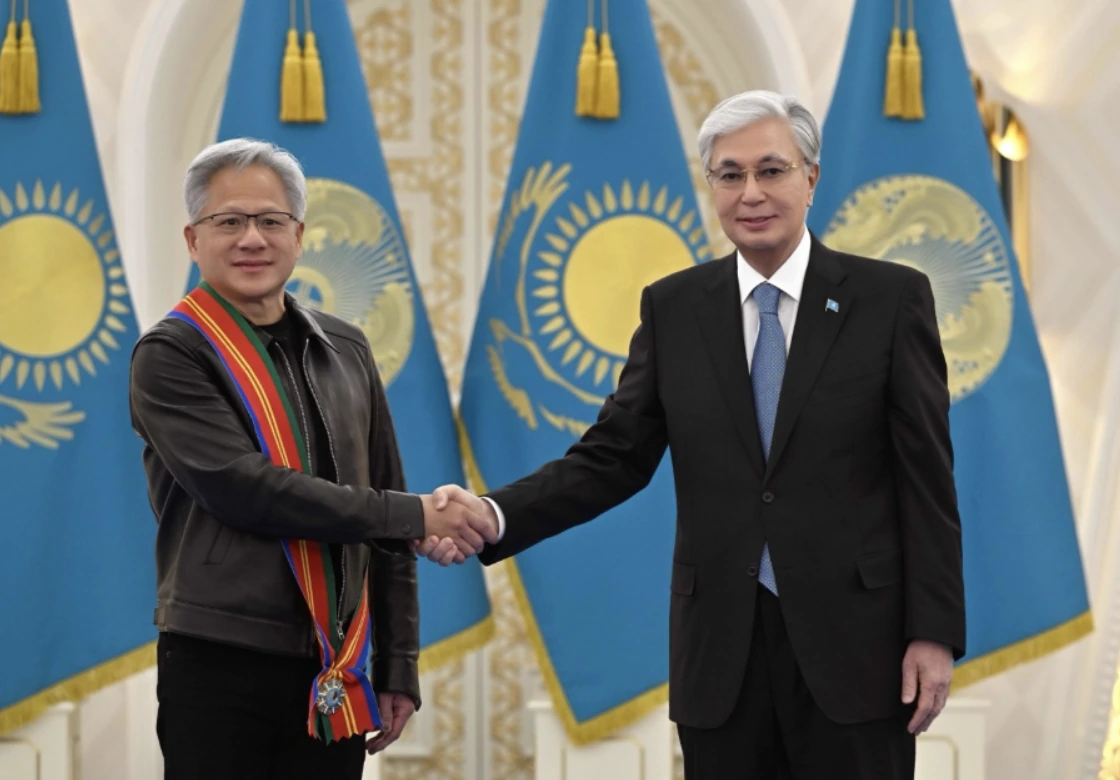 Source: akorda.kz. NVIDIA CEO Jensen Huang and Kazakhstan President Kassym-Jomart Tokayev. NVIDIA’s market capitalization is over 17 times that of Kazakhstan’s 2025 GDP at the time of this writing.
Firebird Kusbegilik
Besides meetings, talks, and domestic initiatives, Kazakhstan has also secured concrete deals with the private sector to realize its vision. A significant investment deal with Firebird Inc. coincided with Huang’s visit. A signing ceremony in the Akorda Presidential Palace highlighted Firebird’s upcoming Kazakhstan AI Factory at Data Center Valley in Ekibastuz. Firebird also made public that it has secured a U.S. export license for 45,000 NVIDIA Blackwell GPUs that will provide the project’s computing capacity. Firebird projects phase 1 of the factory to come online in the third quarter of 2027. The company could invest around $5 billion to create an AI cluster with a potential capacity of 109 MW. Upon completion, Firebird would possess AI infrastructure capacity in Kazakhstan totaling 500 MW.
Firebird has worked closely with Kazakhstan’s government since signing strategic cooperation agreements in June 2026 with a particular commitment to leveraging the technology for domestic development. Rather than creating digital infrastructure that would primarily be exploited by foreign users, Kazakhstan’s AI vision prioritizes its national advancement. Firebird has committed to reserving at least 10% of its total GPU capacity in Kazakhstan for domestic users. Further, the company will create Firebird Labs Kazakhstan to support local startups, research, and development, and it actively supports integrating the Kazakh language into AI models and the use of clean energy sources.
Although Firebird is based in the U.S., the company focuses on bringing GPU infrastructure to frontier markets to improve access to AI tools. Its largest market is Armenia, where it opened its first AI factory in August with over 6,100 NVIDIA Grace Blackwell GPUs. It is now looking to replicate that success in Kazakhstan.
Data Center Valley and Digital Connectivity
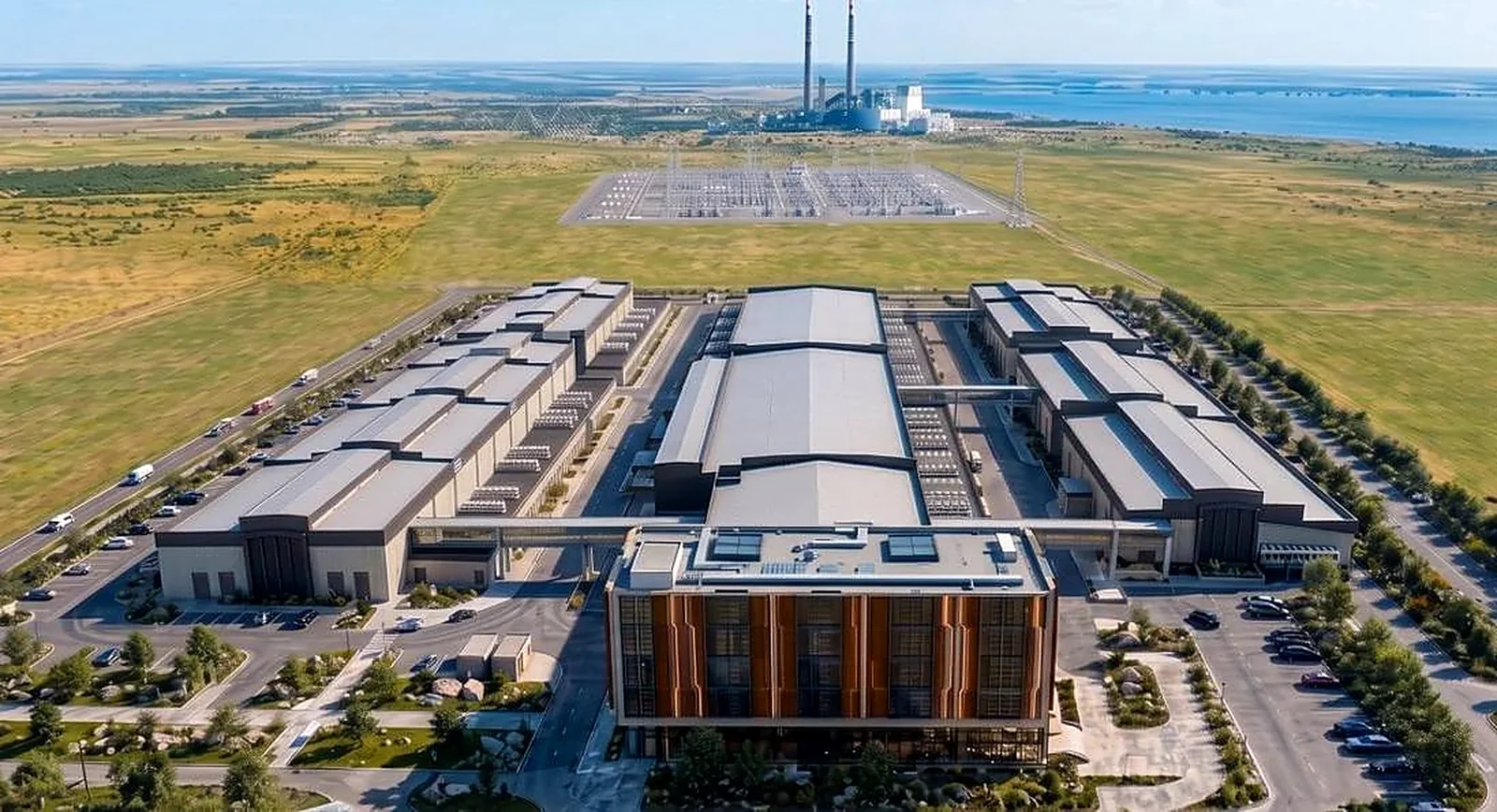
Kazakhstan’s Data Center Valley in Ekibastuz is one of the flagship projects supporting the implementation of AI into its society and economy. Firebird is so far the only company publicly pursuing a project there, having signed an initial agreement for the development, construction, and long-term lease of a data center on October 2, 2026, at the AI & Digital Bridge Forum in Astana.
The site in northeastern Kazakhstan is ideal for several reasons. A 215 MW substation is already in place to provide electricity to the 191.8-hectare site, with the possibility of upgrading to 1 GW and about 1,300 hectares for future developments. The first 50 MW phase is planned to come online in the second quarter of 2027.
Kazakhstan has already been courting tenants to populate the rest of the allocated space. In April 2026, Abu Dhabi-based AI company Aleria signed an MoU with Kazakhtelecom and Kazakhstan's Ministry of Artificial Intelligence and Digital Development regarding Kazakhstan's Data Center Valley initiative. While press on the memorandum doesn't outline the specific role Aleria will play in the implementation process, the company has partnered with NVIDIA and DDN before, providing sovereign AI infrastructure in the U.S. and UAE.
Singapore-based Energy Capital Global Pte. Ltd. has also expressed interest in contributing to Data Center Valley, speaking with Kazakh Invest and government officials and signing an MoU with KT-Telecom LLP in late August 2026. While ECG's website lists Kazakhstan as one of the company's partner countries, it's unclear whether ECG remains a partner in Data Center Valley.
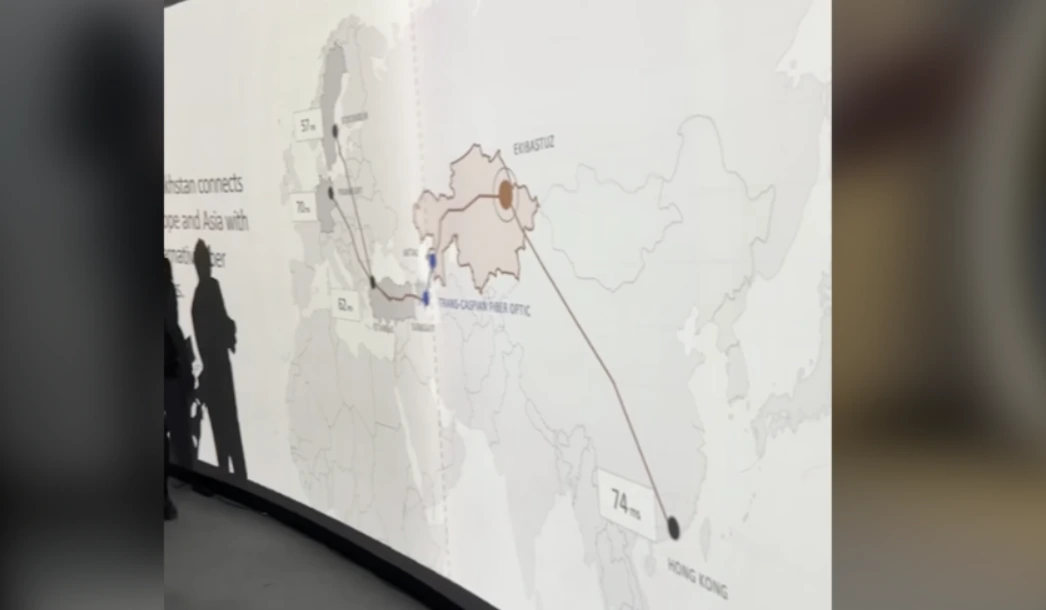 Source: LinkedIn. A map of Data Center Valley connected to several major hyperscaler centers in Europe and Asia presented to NVIDIA CEO Jensen Huang at Alem.AI on October 23, 2026.
Wire Walks and Other Balancing Acts
Kazakhstan explicitly markets its location between Europe and Asia in its drive to attract additional participants and customers for its budding AI industry. A map presented to Huang at Alem.AI revealed Kazakhstan’s vision for Ekibastuz to become a central node connecting hyperscale data centers in Europe and China. Hyperscalers provide distributed computing environments and architecture that accommodate extreme scalability and shifting workloads. They are essential for providing services to many users at once as well as for carrying out especially demanding tasks, and fiber optics are the ideal medium to carry this AI traffic across long distances. As Data Center Valley comes online, Kazakhstan can begin to “export” its computing capacity to users around the world.
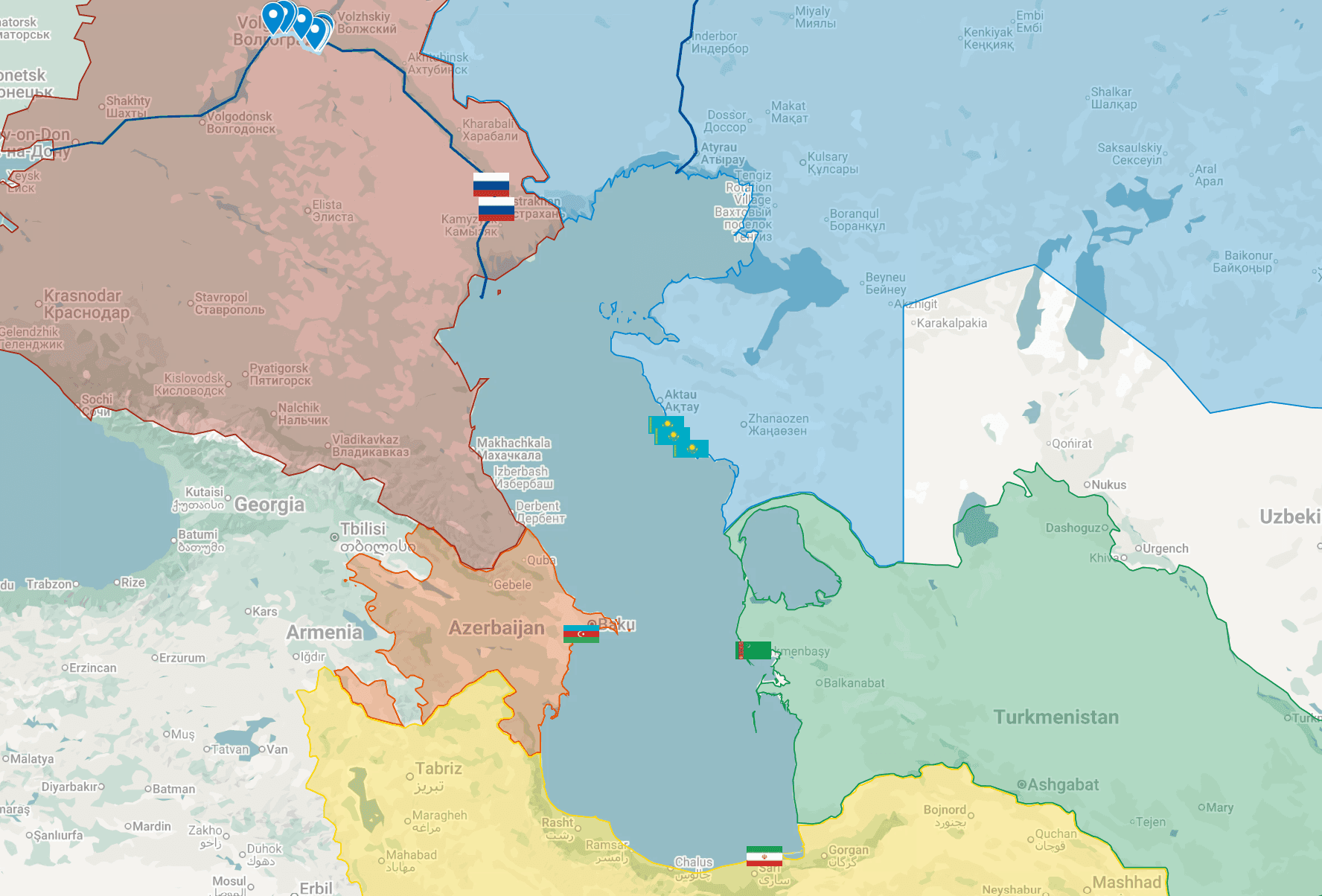
The Trans-Caspian Fiber Optic Cable forms a critical component of this network. Meant to enter service by the end of 2026, the cable was recently laid by CaspiLink, a joint venture between Kazakhtelecom and AzerTelecom International. It spans 380 kilometers from Aktau to Sumgait, provides a capacity of over 400 Tbps at 3.7-millisecond latency, and significantly strengthens Kazakhstan’s digital sovereignty.
Kazakhstan currently depends on 17 cross-border fiber links to Russia for 95 percent of its outbound internet traffic. In contrast, two fiber links connect to China and six to the rest of Central Asia. This latest cable, which could come into commercial service by the end of 2026, marks a significant step in weakening Russia’s grip on Kazakhstan’s digital connectivity. Kazakhstan currently depends on cables for international traffic susceptible to ---although not specific content---is monitored with FSB-operated interception equipment. Further, it provides a sizable alternative route for Central Asian nations currently bound to the Kremlin and exposed to disruptions beyond their borders. In light of the recent drone strikes on Yandex data centers, the region may become better equipped to avoid such disruptions.
In the AI sector, the new fiber optic cable makes projects like Data Center Valley far more appealing to international customers. However, western entities must still be willing to rub shoulders with Russia and China in the digital sphere. The aforementioned Alem.AI map suggested that traffic to Frankfurt and Stockholm would flow under the Caspian and across Türkiye, yielding a 57-millisecond response time between Ekibastuz and Stockholm. However, this is five milliseconds faster than the connection between Ekibastuz and Istanbul. If the cable is to truly cut out Russian networks, it would be expected that responses from Stockholm would take longer than the cities these signals pass through on the way. Moreover, the Trans-Caspian Fiber Optic Cable came to fruition through the sort of multivectoral maneuvering typical for the region: Japanese fiber in a Chinese cable for a joint Kazakhstan-Azerbaijan project supervised by a U.S. consulting and project management firm.
Data Center Valley may begin to resemble this cable as Ekibastuz matures in the coming years. Kazakhstan has already joined both U.S.-led Pax Silica and China’s WAICO. Pax Silica sells an entire ecosystem of U.S. technology meant to reduce dependencies on coercive suppliers, i.e. China, and uphold digital sovereignty. In contrast, WAICO offers to advance the technological base of developing countries through open-source technologies and widespread access to AI, minus the political and security stipulations of Pax Silica. While no new neighbors have announced their intent to move in next to Firebird and its U.S. export-controlled NVIDIA chips, the technology’s presence may itself become a powerful motivator for Chinese involvement in the project. Kazakhstan must provide additional, concrete security assurances not only for future investors but also to protect a domestic AI industry that hopes to fully embrace its Kazakh identity.
Huang’s visit to Astana highlighted key developments in Kazakhstan’s AI sector as well as the burgeoning industry’s international nature. Built around NVIDIA chips, Firebird’s upcoming data center in Ekibastuz would allow entry into a sprawling web of Eurasian digital connectivity. Reinforced digital sovereignty thanks to the Trans-Caspian Fiber Optic Cable promises to make Data Center Valley an even more attractive option for companies around the world and particularly in the west. However, the country’s truly multivectoral approach may pose issues in the long term if it fails to provide security within the servers and wires of its digital infrastructure.