A Hard Rain for Critical Minerals Supply Chains: American Search for Secure Mineral Routes

Author: Dr. Ruchan Kaya
10/05/2026
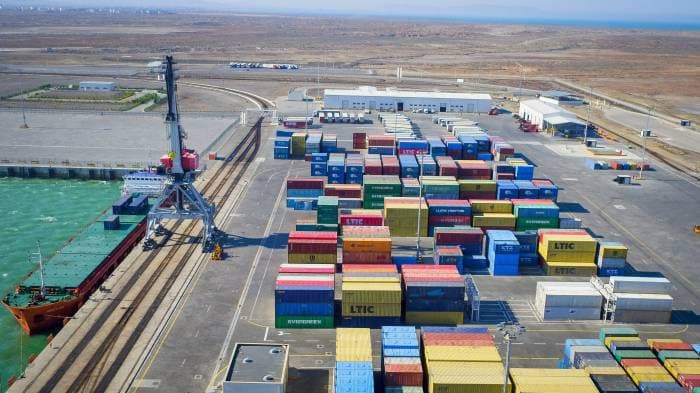 Port of Baku
As the Caspian Policy Center (CPC) reported on Central Asian critical mineral capacity, the region possesses significant mineral endowments, along with industrial ambition. Azerbaijan has the potential for improving transportation connectivity through the region’s growing Middle Corridor, as well as through the development of processing facilities and logistics investments. As critical minerals competition is often told as a story of American vulnerability and Chinese dominance, the Trans-Caspian countries can build mineral supply chains that support the alleviation of the geopolitical stress and mineral supply chain dependence faced by Western countries. As the US continues to invest in new extraction, it should also finance associated and bankable processing, refining, and transport projects. Such efforts would facilitate the development of alternative logistical and industrial platforms that coulcn be the backbone of new and independent supply chains.
Originally, the Chinese advantage at the expense of the Western countries emerged through geology, investment, and an industrial system centered around access and processing ability. The latter is important since power now comes from controlling the systems behind energy and industrial production. Beijing’s leverage rests on accumulated industrial capacity and control over chokepoints in the value chain.
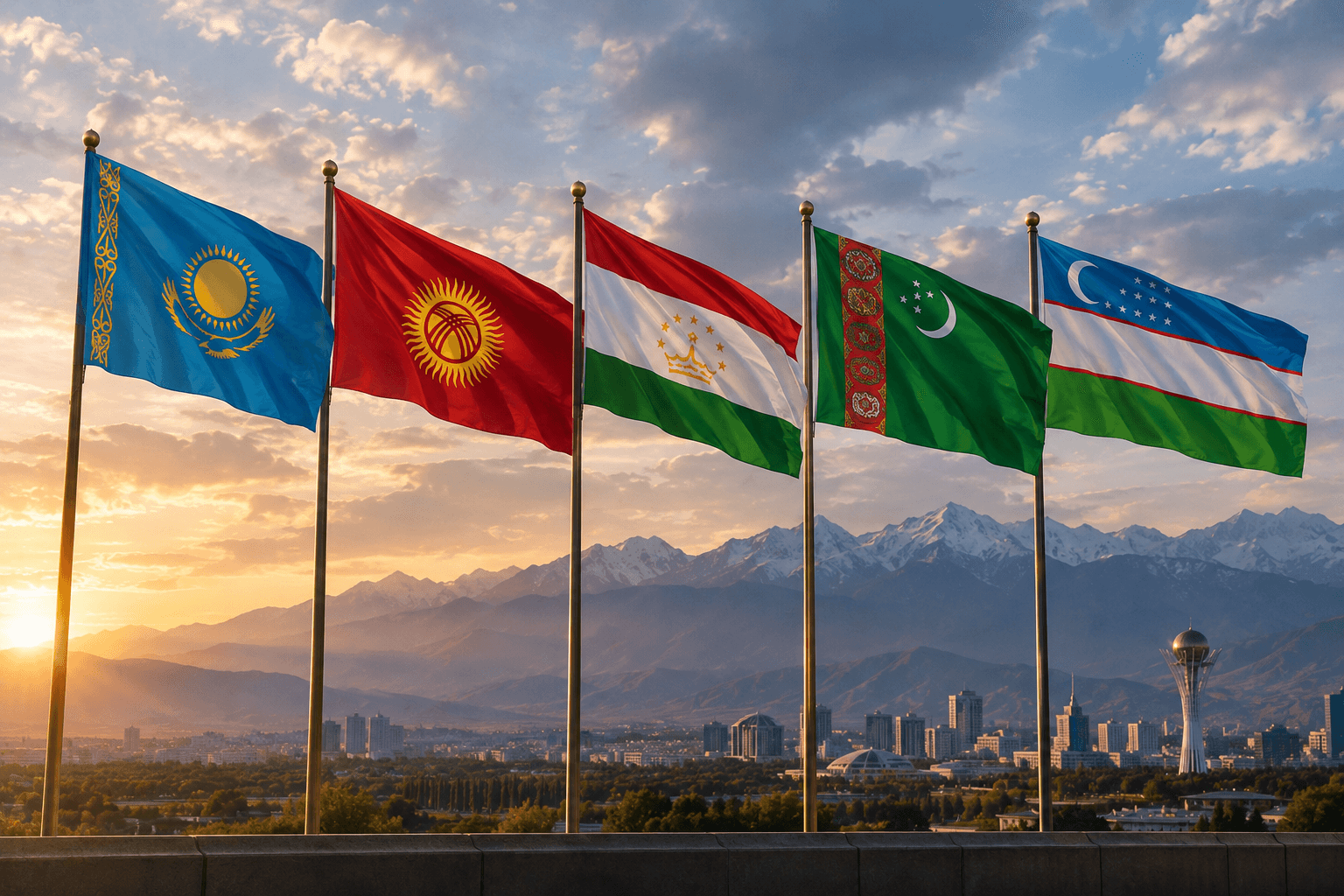
In order to address such issues, the Caspian region can offer diversification through extraction, processing, and logistics. Kazakhstan brings scale in uranium and major potential in copper and tungsten. Uzbekistan offers an expanding mining and metallurgy base, especially for copper, uranium, and tungsten. Azerbaijan’s comparative advantage is complimentary through its linkage with the West. It can serve as a Caspian processing, logistics, and industrial platform connecting Central Asian output to Western markets.
Earlier this year, CPC’s updated work on critical minerals pointed out a significant opportunity for diversifying critical mineral supply chains through the region. AidData reports that China has financed roughly $98 billion in extraction and processing projects across 47 countries in more than 20 years. For the five Central Asian countries and the United States (C5+1), this creates a stronger partnership logic. Producer countries want more than just royalties and raw exports, seeking to add value to raw ore through processing and refining. Therefore, a sustainable, long-term partnership could include access to ore, as well as processing, refining, off-take agreements, and skills building. Such a partnership would improve regional stability and create bankable industrial projects.
Kazakhstan’s tungsten opportunity illustrates the point. The U.S.-backed Cove Capital project is based on a defense-critical mineral, tungsten, and it includes both mining and processing capacity. The $1.1 billion project will receive up to $900 million from the U.S. Export-Import (EXIM) Bank of the United States and sets the pathway into long-term cooperation. The U.S. International Development Finance Corporation (DFC) has issued a separate Letter of Interest exploring up to $700 million for debt financing and development of the project. The Iran War exposed the tungsten dependence of the U.S. and the Kazakhstan agreement can be a real opportunity for alleviating that vulnerability in the future. The project can also help build midstream capacity outside China’s orbit.
Here, Azerbaijan could also play a critical role in becoming a midstream and corridor state for critical minerals. A potential role in critical minerals supply chains is already part of Baku’s economic diplomacy efforts. Consistent with the last three decades of hydrocarbon development, Azerbaijan has been helping diversify Western hydrocarbon routes. Such history demonstrates institutional experience in building east-west infrastructure and commercial relationships.
With Azerbaijani oil reaching Ceyhan, Türkiye, in 2006, the Baku-Tbilisi-Ceyhan pipeline gave Azerbaijani oil direct access to the Mediterranean. The same corridor logic later expanded into natural gas through the Southern Gas Corridor (SGC). As part of the SGC, the Trans-Anatolian Natural Gas Pipeline (TANAP) began carrying Azerbaijani gas to Türkiye in 2018 and enabled supply to reach Europe by the end of 2020. The associated Trans-Adriatic Pipeline (TAP) began commercial operations and delivered Europe-bound Caspian gas shortly afterward. In other words, Azerbaijan is already functioning as a bridge between Caspian resources and Western energy security.
The critical minerals opportunity should be understood as an extension of this proven and reliable role. The Port of Alat’s Free Economic Zone is a platform for Azerbaijan’s push for capital-intensive foreign direct investment in the industrial sector. The zone offers tax and customs exemptions and legal protections for foreign investors. In addition to becoming a corridor, Azerbaijan can play a role in supply through aluminum and copper intermediates.
Repatriation
Although there are concerns about the reliability of the Central Asian countries, it is possible to evaluate their consistency by looking at their performance in the last 10 years. One quiet indicator of whether an investment destination is integrated into lawful international commerce is whether foreign firms can export their profits out of the country. The balance of payments offers a useful proxy. Primary income payments include investment income paid to nonresidents. Kazakhstan’s primary income payments in 2024 were about $25.8 billion while Uzbekistan’s were about $7.75 billion. Azerbaijan is not far behind, with about $5.33 billion. Such sums imply that these states are already routing substantial outward income streams in ways that global data systems can observe and record.
There are still, however, frictions to address. Repatriation can be slowed by several factors, and companies at times struggle. Environmental Impact Assessments (EIAs), tax disputes, banking de-risking, foreign-exchange liquidity, or administrative discretion can potentially pose challenges. Here, the existence of multi‑billion‑dollar income outflows and the U.S. backing of investments establish a baseline assurance. U.S. policy tools should continue to build on this foundation.
Regional Stability and Building Cooperation
Especially at a time when Ukraine’s war in the north and the Iranian war in the south both threaten and support the stability of east-west transportation corridors, the Middle Corridor is seeking to create a viable alternative. Even as international actors make attempts to lower the tensions in the Iranian war, the opening of the Strait of Hormuz will continue to depend on the countries actually committing to make the trade flow effectively. In that environment, a trans-Caspian route is less exposed to specific maritime chokepoints.
Currently, the situation remains fragile. However, the realization and sustainability of such an alternative for international trade requires consistent commitments by partnering countries. From a critical minerals perspective, such external agreements are just as important as resource endowment itself and would require several factors to come together. These include establishing a long-lasting legal framework, ensuring transport capacity, state transparency in regard to exploration, processing, and trade.
The Middle Corridor could become a stable lifeline for European and American supply chains, but the investment environment requires further harmonization. Even beyond route diversification for supply chains between China and Europe, through Kazakhstan, across the Caspian Sea, and onward through Azerbaijan and Georgia, the Middle Corridor can cut the travel times while increasing the freight volumes.
At a time when there are calls for an alliance audit for the United States, the Caspian region offers a lifeline during a hard rain. The region’s mineral endowments, lawful record of outward income flows, processing ambitions, and the route architecture can reduce dependence on China and Russia while also bypassing unstable maritime chokepoints.