Minerals, Energy, and Industry: Takeaways from the Inaugural C5 + South Korea Heads of State Summit
Author: Kurtis Yan
10/02/2026
 Akorda
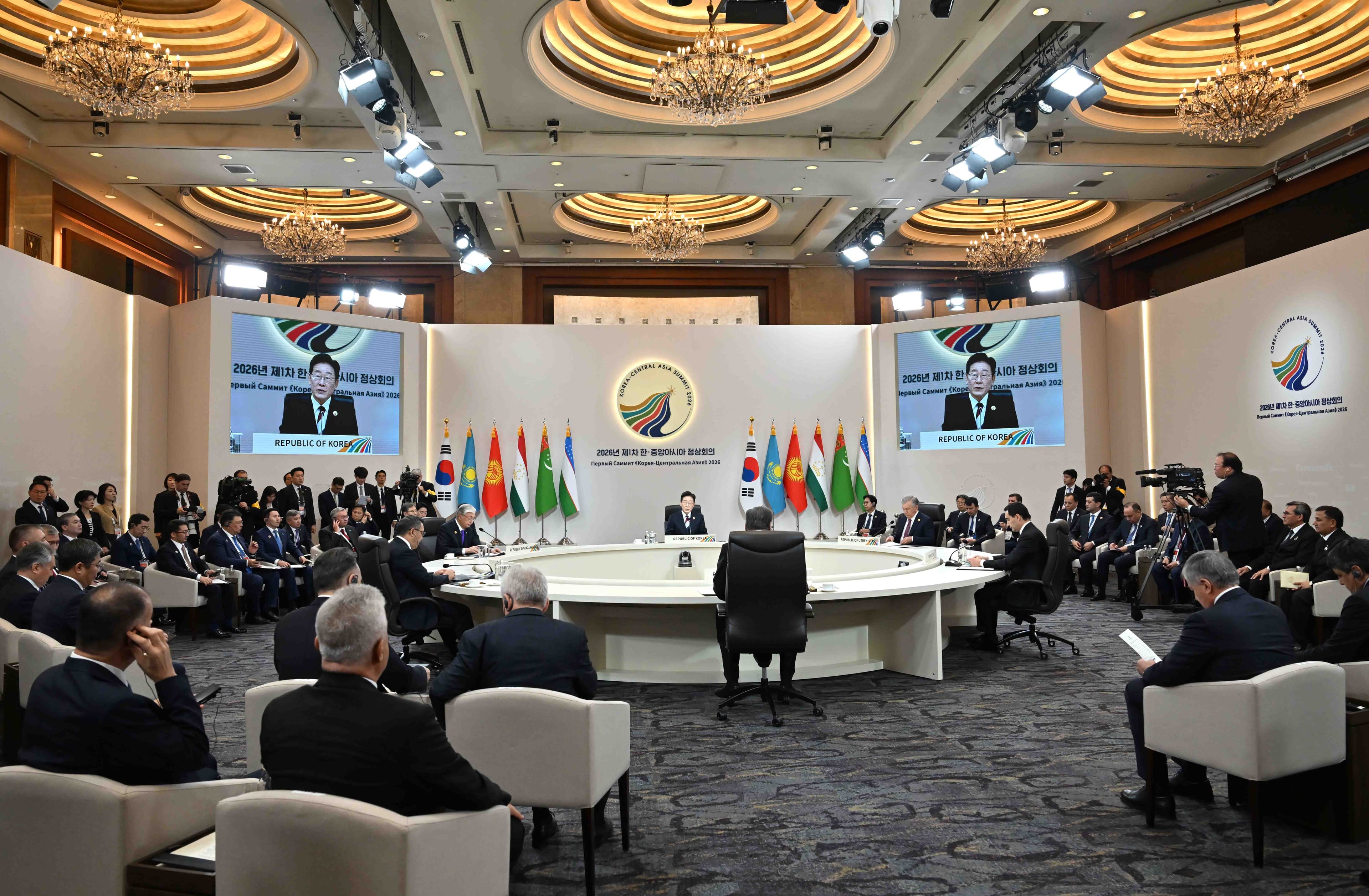
The first-ever South Korea-Central Asia Heads of State Summit in Seoul, South Korea
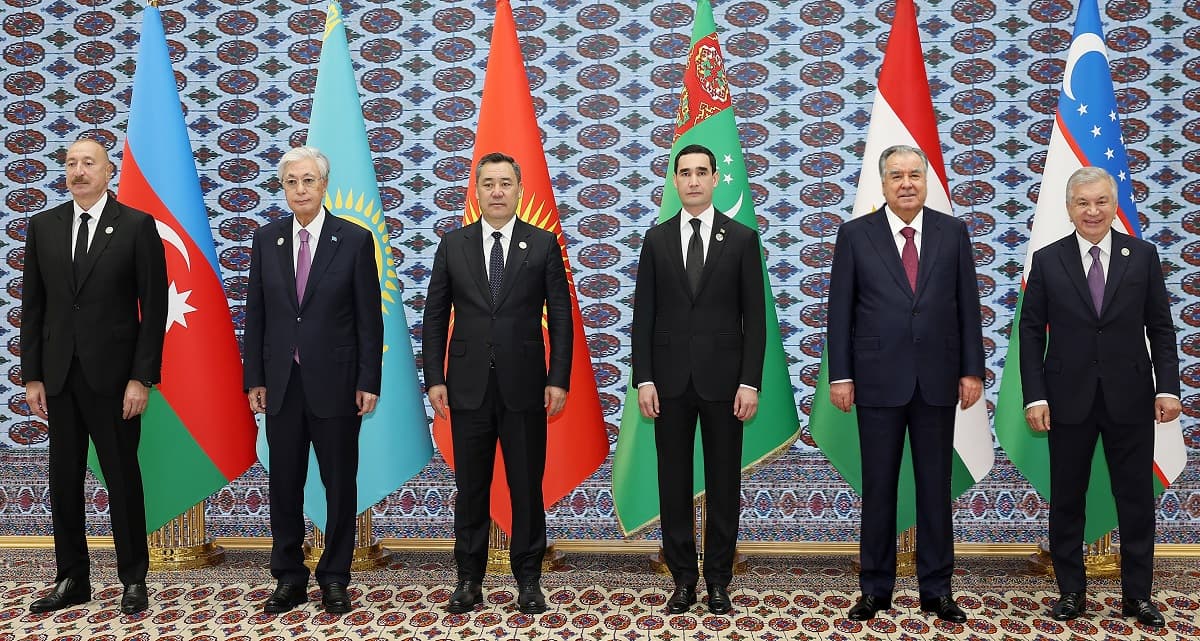
Central Asia continues to strengthen relations with middle powers, and South Korea’s latest summit on September 16 with the C5 only reinforces this trend. All five Central Asian heads of state traveled to Seoul, South Korea, to meet with the country’s president Lee Jae Myung—both in the C5 format and in bilateral discussions on the sidelines.
South Korea is already an active economic and diplomatic partner for Central Asia, with notable footprints in the energy, chemical, and human development sectors. However, the summit was a palpable elevation in relations. The Seoul Declaration solidified commitments to enhance cooperation over the next 30 years, while bilateral deals raised expectations on investment and regional involvement going forward.
Supply Chains and Critical Minerals
Part of the Seoul Declaration includes a commitment to regular consultations on economic security between relevant officials and private-sector representatives. The parties signed a separate Memorandum of Understanding (MoU) on strengthening industrial cooperation and supply chain resilience.
The declaration places a particular focus on critical minerals, recognizing Central Asia as an avenue of economic diversification and joint investment in this sector. To promote local value addition in the minerals supply chain, South Korea plans to apply its technological expertise and capacity towards the deployment of minerals processing and refining facilities in the region. Several bilateral agreements signed on the summit sidelines reaffirm this premise.
The Korea Institute of Geoscience and Mineral Resources (KIGAM) announced a joint agreement with state mining enterprise Tau-Ken Samruk and GRK Ognevsky GOK on joint exploration and drilling of the Bakennoye lithium deposits in Kazakhstan. Drilling is expected to commence in 2027, building off KIGAM’s initial exploration of the deposit that began in 2023. Bakennoye is estimated to hold 25,000 tons of lithium.
Meanwhile, KIGAM signed an agreement with Uzbekistan’s State Committee on Geology and Mineral Resources to expand exploration, research, and development of nickel and cobalt deposits. The two countries will also increasingly utilize the Korea-Uzbekistan Rare Metals Center in Chirchiq, Uzbekistan, to continue research on processing methods for critical minerals near the Almalyk Mining and Metallurgical Combine.
Exploration in Kazakhstan and Uzbekistan reflects alignment with South Korea’s production advantages in batteries and need for the corresponding minerals. Other agreements and specific MoUs on trade and investment in minerals were signed with Kyrgyzstan and Tajikistan as well.
Energy and Business
The most notable energy outcomes from Seoul were between South Korea and Kazakhstan. For one, the two countries looked to advance projects in the planning phase with the goal of implementation. South Korean company Hyundai Engineering wants to develop gas-processing capabilities at the Karachaganak Gas Processing Plant after winning a contract for the project in June. Hyundai issued a Letter of Intent (LOI) with QazaqGas to start developing the $6B-project that will process up to 5 billion cubic meters of gas per year.
An MoU on crude oil cooperation aims to facilitate a bilateral agreement reached in April, under which Kazakhstan agreed to supply South Korea 18 million barrels of oil. On the clean energy front, a South Korea-Kazakhstan green ammonia project is advancing with more concrete details since its proposal in 2025. The project would help decarbonize the production of fertilizer materials and the transport of clean hydrogen. The expected annual output of the project is 55,000 tons of green hydrogen fuel, or 310,000 tons of green ammonia.
An MoU on uranium and civil nuclear engineering was also signed between South Korea and Kazakhstan. The agreement covers research into new reactor technologies and the continued supply of nuclear fuel. South Korea had previously agreed to purchase 3,140 tons of uranium from 2011 to 2017 from Kazakhstan, along with 2,600 tons between 2010 and 2016 from Uzbekistan. In the past, Uranium from the region has most often been processed in Russia. South Korea historically relies on other countries for enrichment, but Seoul has been negotiating with the United States to develop its own domestic capabilities.
South Korea is roughly 90% reliant on imports of energy. It will likely continue to seek reliable sources for diversification of energy supply chains, expanding the business footprint of its energy and engineering companies in Central Asia. However, South Korea and its private companies have been relatively cautious to throw high volumes of capital at projects in the region. That said, the summit in Seoul indicated real effort to reduce business and investment risks.
In line with the Seoul Declaration, Seoul and the Central Asian states will collaborate to develop “Korea Desks” in each country to help support Korean businesses aiming to enter the region. The purpose of these local offices will be to improve coordination on joint investment and reduce trade barriers. High-level consultations between Korean and Central Asian businesses were a key element of the Korea-Central Asia Business Forum.
Infrastructure Development and Connectivity
The summit also emphasized infrastructure and human development. At the Korea-Turkmenistan Business Forum, Korean company Daewoo Engineering & Construction announced an agreement with Turkmenistan’s State Committee on Water Management to renovate the Karakum canal and modernize aging infrastructure. The canal serves as an important irrigation system and supply of household water, spanning over 1,100 kilometers from the Amu Darya River to the Karakum Desert.
Turkmenistan also signed an MoU with Korean telecommunications company LS Cable & System to enhance the country’s telecom infrastructure and eventually manufacture optic cables. Expansion of digital technology and artificial intelligence (AI) were a central component of the Seoul Declaration, with the adoption of the Korea-Central Asia Future AI and Science and Technology Partnership Initiative. On the sidelines, South Korea also signed individual MoUs on AI with Kazakhstan and Uzbekistan.
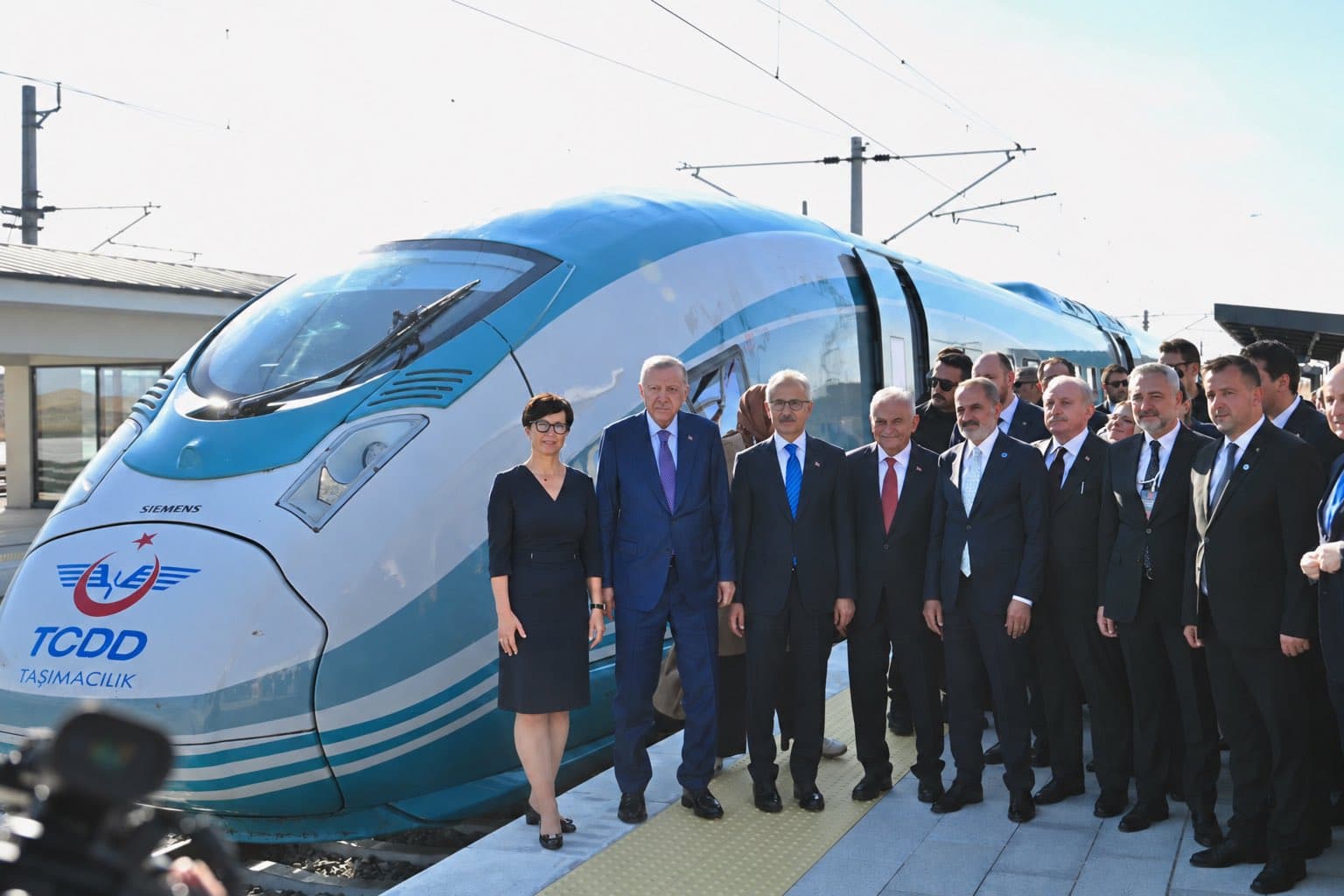
Transit is a key sector of existing Korean involvement in Central Asia, and the heads of state summit reaffirmed this focus. Uzbekistan agreed to launch a feasibility test for the purchase of eight more high-speed trains from South Korea. Since summer of this year, the country has started operating Hyundai Rotem high-speed trains between Tashkent and Khiva. Furthermore, Kyrgyzstan’s President Sadyr Japarov called on Korean businesses to develop transport infrastructure and logistical hubs along the China-Kyrgyzstan-Uzbekistan railway.
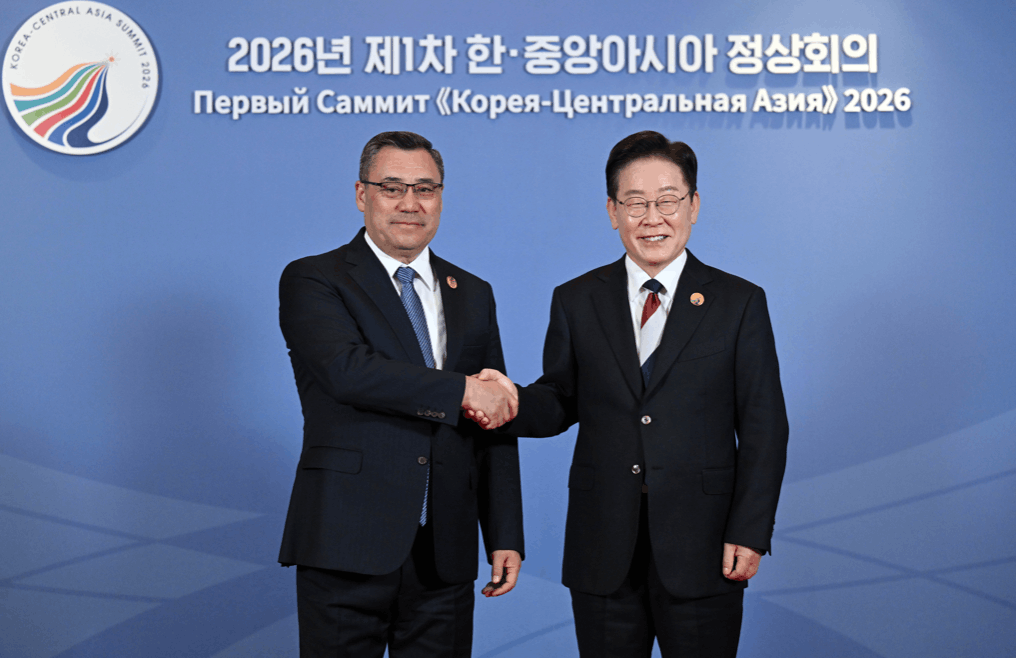
Kyrgyz President Sadyr Japarov with South Korean President Lee Jae Myung Source: president.kg
Broadening Interregional Diplomacy
People-to-people exchanges have always been important in diplomacy between South Korea and Central Asia, given the history of the region’s Koryo-Saram, ethnic Koreans that Soviet leader Joseph Stalin forcibly moved from East Russia to Central Asia. Cooperation on migration has since transformed to encompass the prevalence of Central Asian labor migration to South Korea, as well as frequent international educational exchanges. In Seoul, this translated to the signing of multiple MoUs between Turkmenistani and Korean universities. Likewise, Uzbekistan President Shavkat Mirziyoyev suggested a long-term partnership between South Korea and the C5 in youth training for technology-oriented jobs.
Beyond the aforementioned areas of concrete cooperation, the parties reaffirmed their commitment to researching decarbonization, improving resource management, and addressing climate change. They also reaffirmed their commitment to security, from promoting nuclear non-proliferation in Central Asia to combatting transnational crime.
The Seoul Declaration stipulates that the countries will meet in a summit format every two years, with Kazakhstan set to host in 2028. The countries will also convene at a ministerial and sector-specific level to further institutionalize cooperation. This coordination will continue under the Korea-Central Asia Cooperation Forum that was established in 2007. It provided the launching pad for ministerial-level meetings and, subsequently, a heads-of-states platform proposal in 2024.
The Seoul Declaration, much like the Tokyo Declaration, is an example of a middle power encouraging the C5 bloc’s diplomacy. While C5 formats amplify Central Asia’s political influence, an important consideration is that they also risk uneven attention across the region. Implementing concrete, country-specific projects and bilateral cooperation is a crucial step to ensuring that C5 diplomacy does not operate too broadly nor favor specific states more than others.
Nevertheless, the recent summit in Seoul is just one example of heightened interest in Central Asia—separate from the typical geopolitical rivals like Russia and China. After all, Japan held its first C5 heads of states summit in December 2025, while the United Kingdom launched a ministerial C5 + 1 platform in February 2026. The region will likely continue to attract further foreign interest, demonstrating the growth of Central Asia’s political influence beyond the “great game” narratives of the past.