From Multivectorism to Connectivity: What Drives Kazakhstan's “Connector” Foreign Policy Approach


Author: Dr. Akbota Karibayeva Meyer, Sapargali Shalgimbayev
11/05/2026 · 6 min read
 shutterstock.com
For more than three decades, Kazakhstan has pursued a multi-vector foreign policy, maintaining relations with competing powers while protecting its room for independent decision-making. As a large, landlocked country at the heart of Eurasia, Kazakhstan had to balance neighboring Russia and China while cultivating ties with the United States, Europe, and partners across Asia. Engaging everyone turned a constrained geography into a source of opportunity.
That approach remains essential. But the conditions it was designed for are changing. Sanctions have taken the route through Russia off the table for most Western-bound cargo, and this year's war in Iran disrupted the southern one. As great-power competition reshapes global trade and technology, Kazakhstan faces a new challenge: moving beyond balancing relationships to building connections that give those relationships greater economic value.
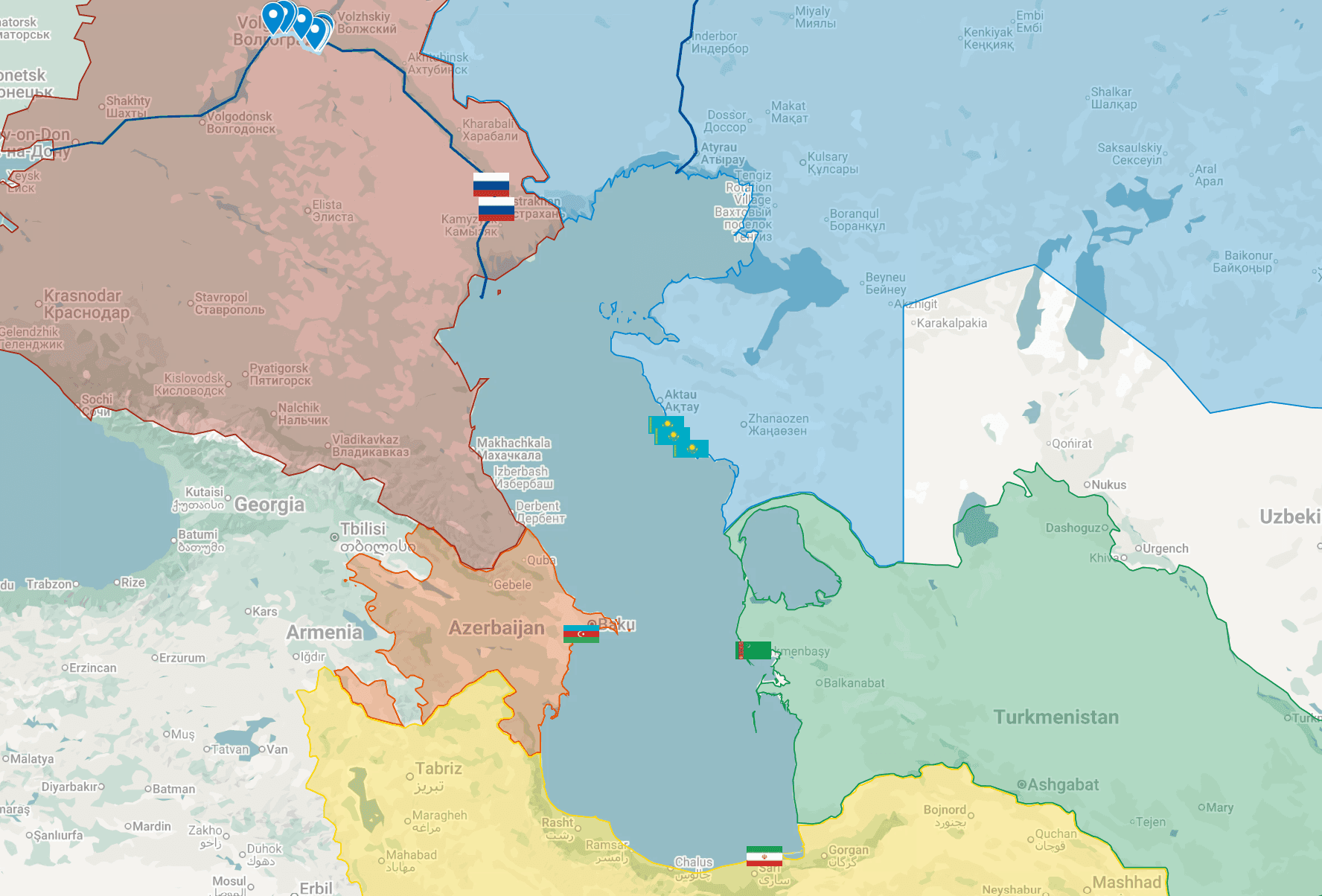
The emerging ambition is to become a connector state — a country that turns its location into leverage by tying other countries' routes and networks together, and in doing so becomes hard to do without. The most visible example is the Trans-Caspian International Transport Route, or Middle Corridor, which connects China and Central Asia with Europe across the Caspian Sea and through the South Caucasus and Türkiye. As shippers sought alternatives to routes through Russia, freight on the corridor through Kazakhstan grew nearly eightfold between 2021 and 2024. Kazakhstan is upgrading railways, expanding the capacity of the ports of Aktau and Kuryk, and working with regional partners to improve and harmonize logistics, customs, and border procedures.
Yet geography alone will not make the corridor competitive. Shippers will use it only if transit times are predictable and the economics work. Here the logic runs both ways. A faster, cheaper corridor lowers the cost of doing business in Central Asia and gives investors a reason to come; for those already there, investors have their own stake in making the route work better. Kazakhstan's objective should be not simply to move goods across its territory, but to build the logistics, processing, and manufacturing that let it capture more value from regional trade.
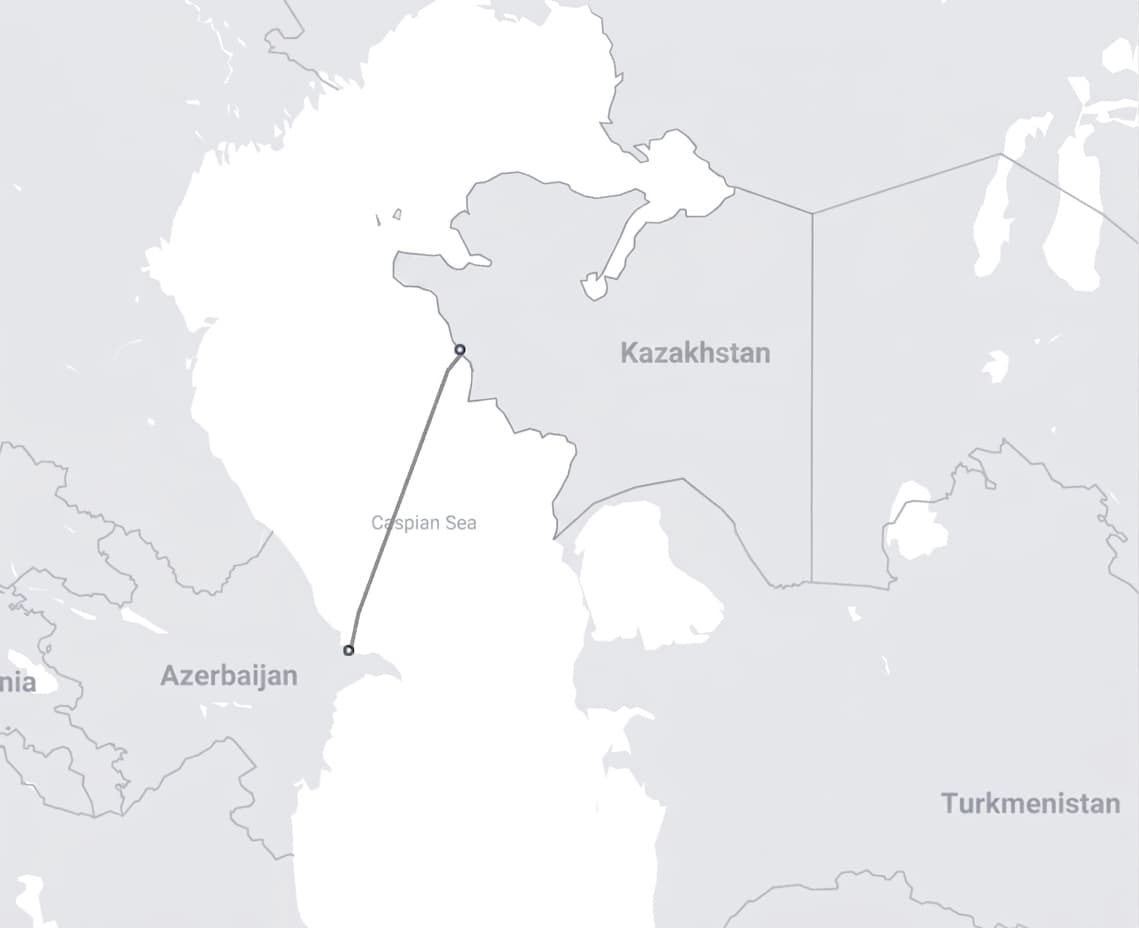
Connectivity also increasingly means moving data, not just freight. On October 15, Kazakhstan and Azerbaijan launched a 380-kilometer fiber-optic line across the Caspian seabed, giving Kazakhstan's internet traffic a route to Europe that bypasses Russian networks. The next link is already on the drawing board. The Black Sea Submarine Cable from Georgia to Romania, an EU flagship project backed by the World Bank, would lay a fiber-optic line alongside a power interconnector. Still at the survey stage, it would carry the Caspian route straight into the EU.
The next phase of competition will depend on more than ports and railways. Data centers and AI need cheap power and fast, secure connections. Kazakhstan wants into both the American and Chinese versions of that future. In June it joined the U.S.-led Pax Silica initiative on trusted AI supply chains; weeks later it became a founding member of the China-backed World Artificial Intelligence Cooperation Organization (WAICO). It is the only country known to belong to both.
That position is being tested. In August, Reuters reported on a draft State Department letter warning that Pax Silica members cannot join competing initiatives whose rules conflict with Washington's. As far as is publicly known, the letter has not been sent, but the signal was hard to miss. Technology might be where multivectorism meets its limits: standards and supply chains are harder to share than a railway. Still, Kazakhstan's value as a bridge does not depend on belonging to every club. What it needs is the capital and skilled people to turn either partnership into working capacity at home.
The same logic informs Kazakhstan's interest in connecting the Middle Corridor with Europe's Three Seas Initiative, which promotes transport, energy, and digital infrastructure among thirteen EU countries through the Baltic, Adriatic, and Black Seas. President Kassym-Jomart Tokayev floated the idea on October 8 in Turkmenbashi, at the first regular summit since Azerbaijan joined the Central Asian leaders' format. It was Astana's third such pitch since June. Tokayev had already proposed linking the corridor to Cyprus's ports and to the U.S.-brokered Trump Route for International Peace and Prosperity (TRIPP) across Armenia.
There is a clear American interest in this prospect. President Donald Trump gave the Three Seas Initiative prominent attention during his 2017 visit to Poland, emphasizing infrastructure, energy security, and U.S. liquefied natural gas (LNG) exports to Europe. His administration renewed that focus at the initiative's April 2026 summit in Dubrovnik, where Energy Secretary Chris Wright launched the Trump Peace Pipelines Framework to expand the region's capacity to import American LNG. Deals there also covered a Croatian-Bosnian gas interconnector, small modular reactors, and an American-financed data center in Croatia worth upward of $50 billion, the same sectors Kazakhstan is targeting. The United States and Türkiye, the corridor's gateway to Europe, are both strategic partners of the initiative.
For Washington, the Three Seas Initiative is both a connectivity platform and a way to diversify Europe's energy supply. For Kazakhstan, a link to it would plug Central Asian infrastructure into a wider European market, with opportunities in logistics, energy, and investment well beyond transit fees. European companies would gain another route to Asian markets, and Central Asian businesses better access to European buyers and investors.
The obstacles are substantial. The Middle Corridor remains constrained by uneven infrastructure, complex border procedures, and coordination challenges across several jurisdictions. Data centers require reliable power, skilled workers, and substantial capital. Participation in competing technology initiatives may also become more difficult as Washington and Beijing seek greater alignment from their partners. And joining initiatives does not on its own lead to strategic autonomy; a country must build the capacity to make those relationships serve its own interests.
Supporting regional connectivity is definitely squarely in the American interest, because it opens the door to things Washington says it needs. Kazakhstan alone produced about 40% of the world's mined uranium in 2025, and the region holds tungsten, rare earths, antimony, and other critical minerals the United States is scrambling to secure. For years, the objection was that the region was too remote, with no way to get anything out. The Middle Corridor is that way out. Central Asian ore often ends up refined in China, which dominates global processing. Processing it in the region with American partners instead would let Central Asian governments keep more of the value and give U.S. buyers supply that bypasses both Russia and China. Central Asian states have little interest in treating every economic decision as a choice between the United States and China. Partnerships that accept this are likely to last longer than demands for exclusive alignment.
Kazakhstan's multi-vector policy is not being replaced. It is evolving from a strategy focused on managing external relationships into one that seeks influence through the networks connecting them, using its central position as leverage to build economic capacity at home and across the region. The test is whether those networks make Kazakhstan more productive and more valuable to its partners. Strategic autonomy will depend on whether the country can turn connectivity into lasting domestic capabilities.
Sapargali Shalgimbayev is President of CFive and a former diplomat at Kazakhstan’s Ministry of Foreign Affairs. He served for many years at the Embassy of Kazakhstan in the United States, where he worked closely with Washington’s policy and expert community.
Dr. Akbota Karibayeva Meyer is a Program Director for Tech Policy at the Caspian Policy Center. A political scientist based in Washington, she focuses on U.S. policy toward Central Asia and the South Caucasus, digital connectivity, energy security, and critical minerals.