Country Spotlight: Malaysia’s Energy Footprint in Turkmenistan and the Greater Caspian Region
Recent Articles


Author: Kurtis Yan
11/10/2026 · 6 min read
 petronas.com
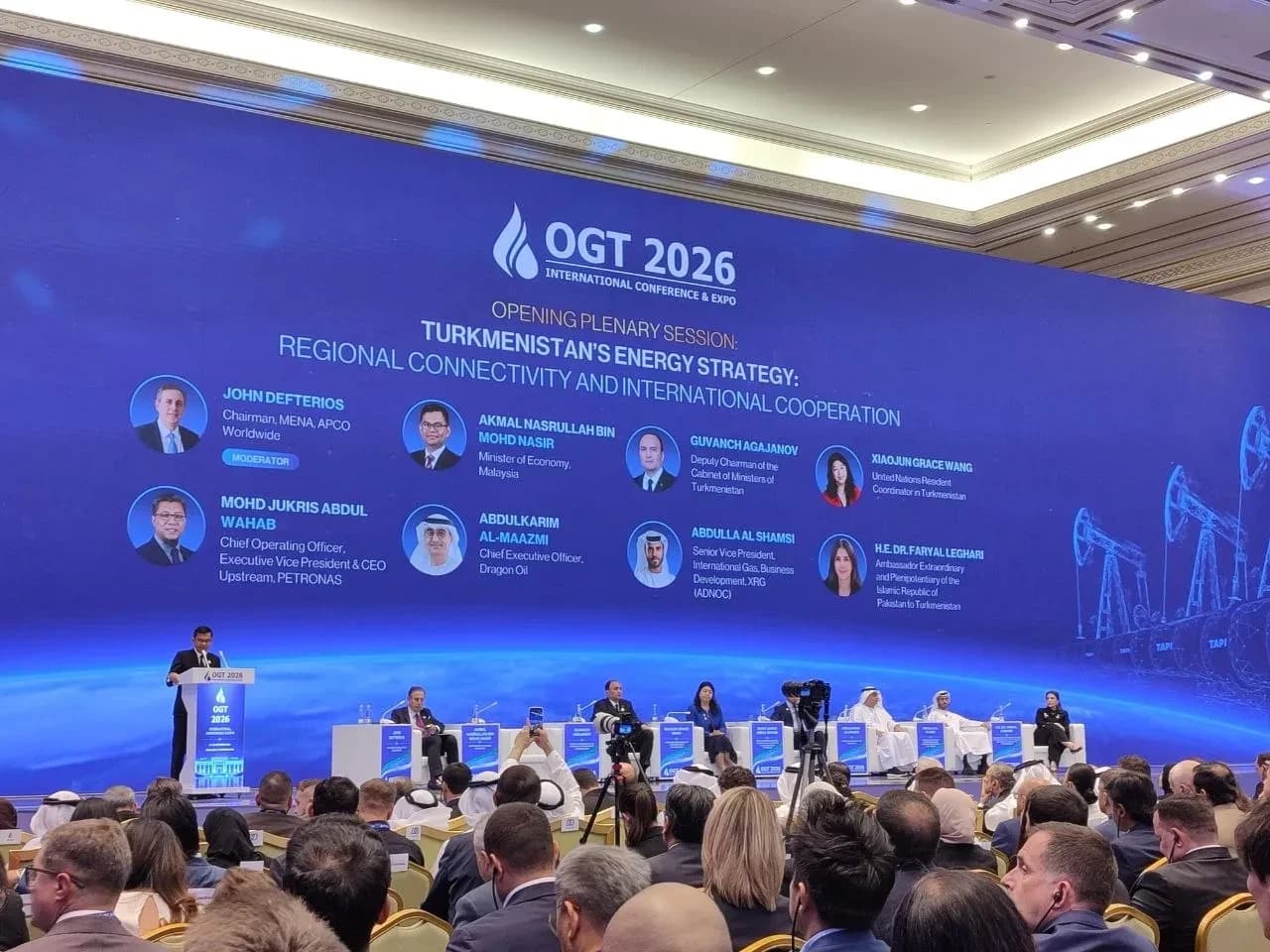
During the 31st International Conference and Exhibition Oil and Gas of Turkmenistan (OGT 2026), Malaysia’s Petronas reaffirmed its commitment to offshore exploration and production in the Caspian Basin, with an expectation of new drilling at the end of the year.
The oil and gas state-owned enterprise (SOE) established a footprint in Turkmenistan in 1996, becoming deeply invested in the country’s energy sector. Although most active in Turkmenistan by a large margin, Petronas’ engagement has notably reached other parts of the Caspian Region, coinciding with Malaysia’s heightened overall interest in the region on multiple fronts and sectors.
Petronas’ Offshore Investment in Turkmenistan
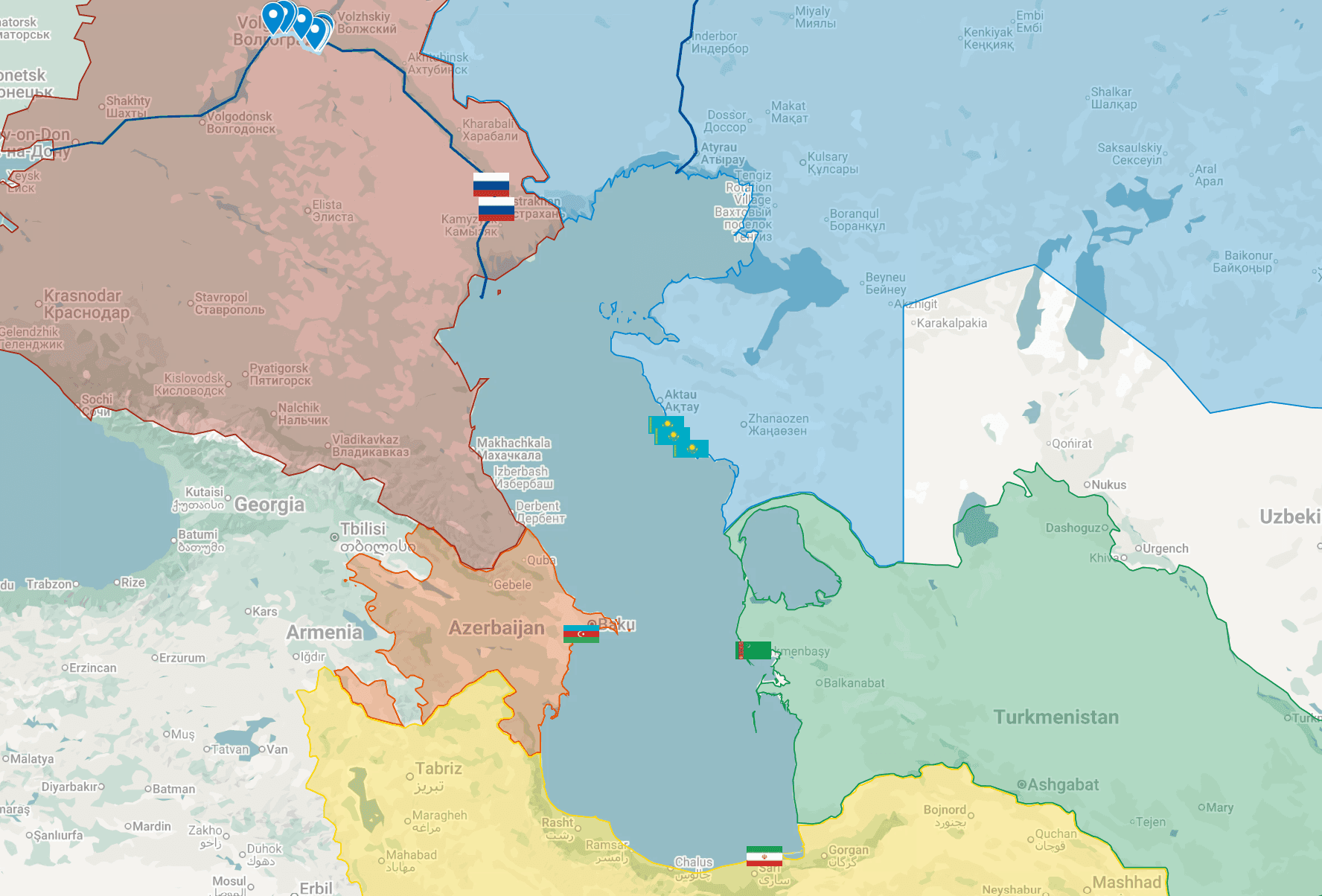
Petronas operates as Malaysia’s hydrocarbon investment wing focused on strengthening Caspian supply chains. Petronas operates under the subsidiary, Petronas Carigali, in Turkmenistan, and its CEO Ismadi Bin Ismail was a participant at the OGT 2026. During the event, Ismail outlined the company’s plan to accelerate exploration, drilling, and production of three wells in Blocks 19 and 20, located in Turkmenistan’s territory of the Caspian Sea.
Drilling is expected to begin by the end of 2026, with the goal of initial oil production within four years. Seismic data acquisition and surveys are also expected in other blocks. This builds off a production sharing agreement (PSA) signed in June 2026 between Petronas Carigali, Turkmenistan’s state oil concern Turkmennebit, and Khazarnebit—an SOE that operates under Turkmennebit.
These agreements also coincided with an official country visit by Malaysia’s Prime Minister Anwar Ibrahim. Malaysian and Turkmen economy and energy officials also signed a “Framework Agreement on Long-Term Cooperation for the Development of Hydrocarbon Resources of Turkmenistan.” The framework outlines potential development in the Galkynysh gas fields and downstream cooperation encompassing gas processing, chemicals production, and oil refining.
Petronas also aims to develop two new fields for gas and oil respectively in Block 1, with the goal of increasing hydrocarbon production from the site. Block 1 is a Turkmen area of the Caspian basin containing the Magtymguly, Diyarbekir, and Garagol Deniz fields. Ashgabat estimates that about 2 billion cubic meters of gas sit in Block 1.
Petronas has historically injected most of its investment into Block 1, investing around $12B into Turkmenistan since 1996. It received the PSA contract for Block 1 in 1996, becoming the first company awarded a license by Turkmenistan. Oil extraction began in 2006 at 10,000 barrels a day, while gas production began in 2011 and currently sits at roughly 400 million cubic feet a day, or 4.1 billion cubic meters a year. Earlier this year. Petronas Carigali received a 25-year PSA extension for Block 1 into 2050.
Moreover, in 2025, Petronas signed a PSA with Abu Dhabi National Oil Company’s (ADNOC) XRG and Khazarnebit to boost production at Block 1’s gas and condensate fields. That same year, Petronas Carigali signed a Memorandum of Understanding (MoU) with Dragon Oil, a subsidiary of Emirates National Oil Company (ENOC) and leading foreign crude oil producer in Turkmenistan. Both companies agreed to pursue technical and commercial exchanges, particularly targeting upstream oil and gas production.
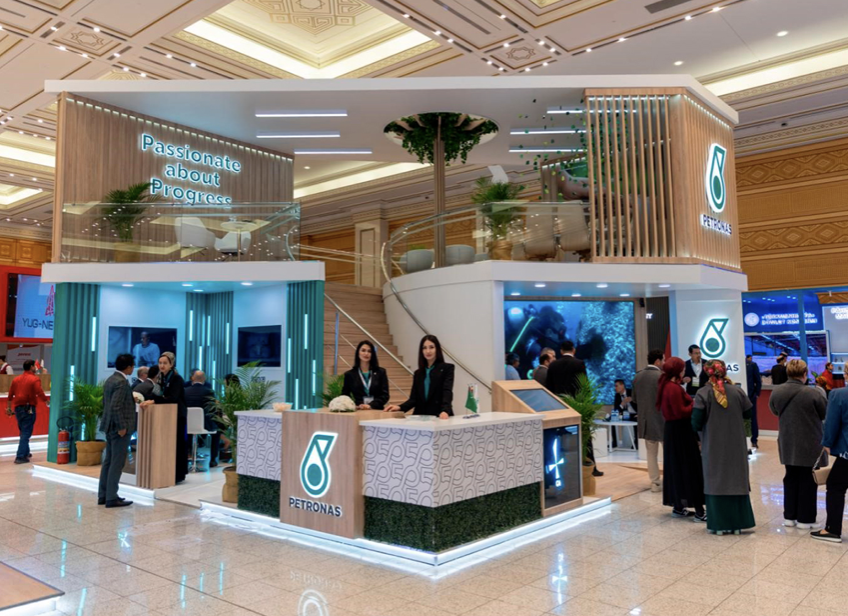 Petronas booth at the 30th Anniversary International Conference and Exhibition Oil and Gas of Turkmenistan-2025. Source: turkmenistan.gov.tm
Energy Cooperation with Other Regional States
Malaysia and Petronas remain active in the rest of the Caspian region, though at a smaller scale of investment and production. Petronas previously purchased a 15.5 percent share of Azerbaijan’s Shah Deniz field in 2014 from Norwegian multinational Equinor for $2.25B. The transaction was finalized in 2015, but Petronas eventually divested in 2022, selling 9.99 percent of its stake to Russia’s Lukoil and distributing the rest to other consortium partners. Petronas subsequently closed the office of its country subsidiary, Petronas Azerbaijan.
In 2024, Petronas had agreed with Uzbekistan to help develop two gas processing facilities: a methane conversion facility and a gas-to-green-ammonia unit. No updates on the status of these projects have been revealed. However, Petronas held a meeting with Uzbekneftegaz on the sidelines of OGT 2026 to expand cooperation on exploration and hydrocarbon extraction in Uzbekistan. They also discussed the prospect of Malaysian gas and condensate supplies to Uzbekistan as feedstock for its Bukhara Oil Refinery.
Downstream Petronas products are also sold in Caspian countries. Petronas relies on authorized local vendors to sell its lubricant, fuel, and other automative products, particularly in Armenia and Kazakhstan.
Beyond upstream investment, Malaysia does not typically import hydrocarbons from the Caspian Region. That said, it has increased coal imports from Kazakhstan in recent years, with growing discourse towards a long-term supply agreement. Malaysia imported roughly $53.6M of coal from Kazakhstan in 2025. Kazakhstan was its third-fastest growing origin source country of coal.
Furthermore, Malaysian officials and entities have pursued renewable energy cooperation with Caspian countries. In 2024, Investment Tashkent—the company’s Uzbekistan-based subsidiary—agreed on the joint development of small solar power stations in Uzbekistan. Designed for deployment on buildings and other infrastructure, the photovoltaic stations will have a capacity of 50 megawatts.
Similarly, Kyrgyzstan’s Ministry of Energy signed an MoU on green energy initiatives with CitaGlobal Berhad, a Malaysian holding company that focuses on civil engineering and renewable energy production. Uzbekistan’s Yashil Energiya, Malaysia’s Fabulous Sunview, and China’s Huawei Tech. Malaysian and Chinese companies also agreed to construct a 300MW thermal power plant in Shurob, Tajikistan, though no updates have been given since 2018.
Kuala Lumpur’s Broader Hopes for the Region
Malaysia’s strong engagement on energy with the Caspian Region accompanies broader economic statecraft. Trade turnover is growing between Malaysia and the Caspian Region, though nearly 88 percent of all Caspian-Malaysian trade turnover in 2024 consisted of Malaysian exports like coffee, tea, palm oil, automative products, and electrical appliances. Malaysia and the broader Association of Southeast Asian Nations (ASEAN) remain interested in the development of logistical networks and trade corridors across Asia to improve trade flows. Multimodal corridors through the Caspian Region can provide alternative routes for Southeast Asia to both export goods to new markets more efficiently and import commodities from Europe.
Diplomatic ties and human connectivity are also reinforced by reciprocal high-level visits. In May 2024, Ibrahim visited Kyrgyzstan, Kazakhstan, and Uzbekistan. Ibrahim emphasized the need to accelerate trade and joint projects in these countries, while reinforcing the significance of tourism. For instance, Ibrahim and Kyrgyz President Sadyr Japarov discussed the potential for direct flights between Bishkek and Kuala Lumpur. In the other direction, Japarov, Turkmen President Serdar Berdimuhamedov, Uzbek President Shavkat Mirziyoyev separately visited Kuala Lumpur in the 2024 and 2025 respectively.
Malaysia’s interest in the Caspian Region also stems from Islamic ties. Malaysia, Azerbaijan, and Central Asia are all members of the Organisation of Islamic Cooperation (OIC), which frequently convenes to discuss religious rights and cultural relations. Malaysia aims to become a central node of the global halal industry, a more frequent topic of discourse between Central Asian and Malaysian officials. Malaysian leadership has discussed regulation and certification of halal products and finance with Uzbekistan and Kyrgyzstan, while a Kazakh delegation also participated in the Malaysia International Halal Showcase (MIHAS) in Malaysia in 2025.
The Malaysian connection to the Caspian region is transforming into a more holistic relationship. Petronas spearheaded Malaysia’s involvement in regional energy supply chains, with Turkmenistan at the forefront. Recent agreements demonstrate that this bilateral relationship remains strong. But Malaysia also expects to expand its participation in joint investment projects and increase trade turnover. Clearly, Kuala Lumpur’s energy ambitions, economic interest, and diplomatic goals will bolster regional engagement and dialogue going forward.