New Deals and Old Questions at the C5+1 Ministerial
Author: Liam Gibson
10/27/2026
 Ministry of Foreign Affairs of the Kyrgyz Republic
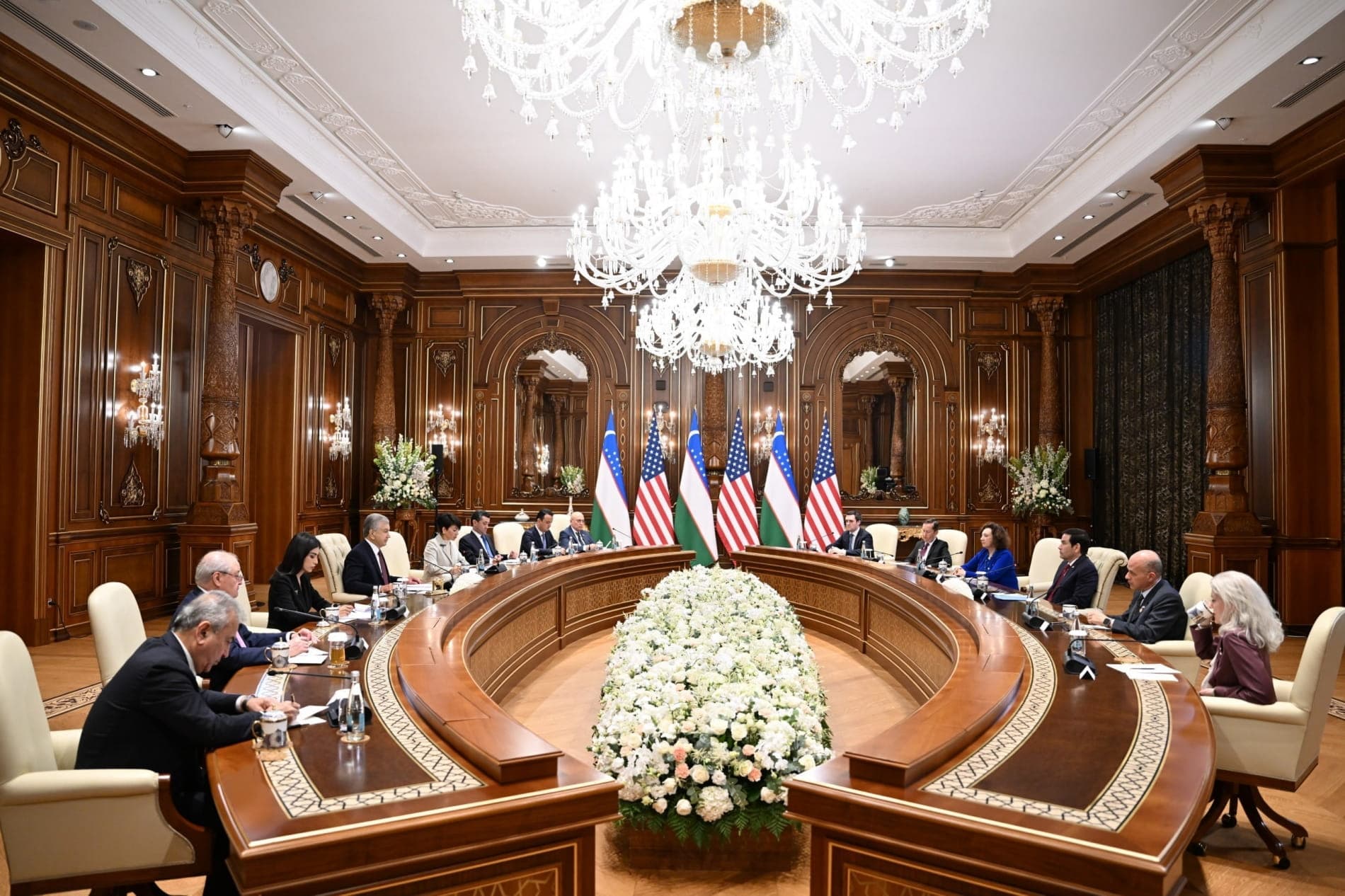
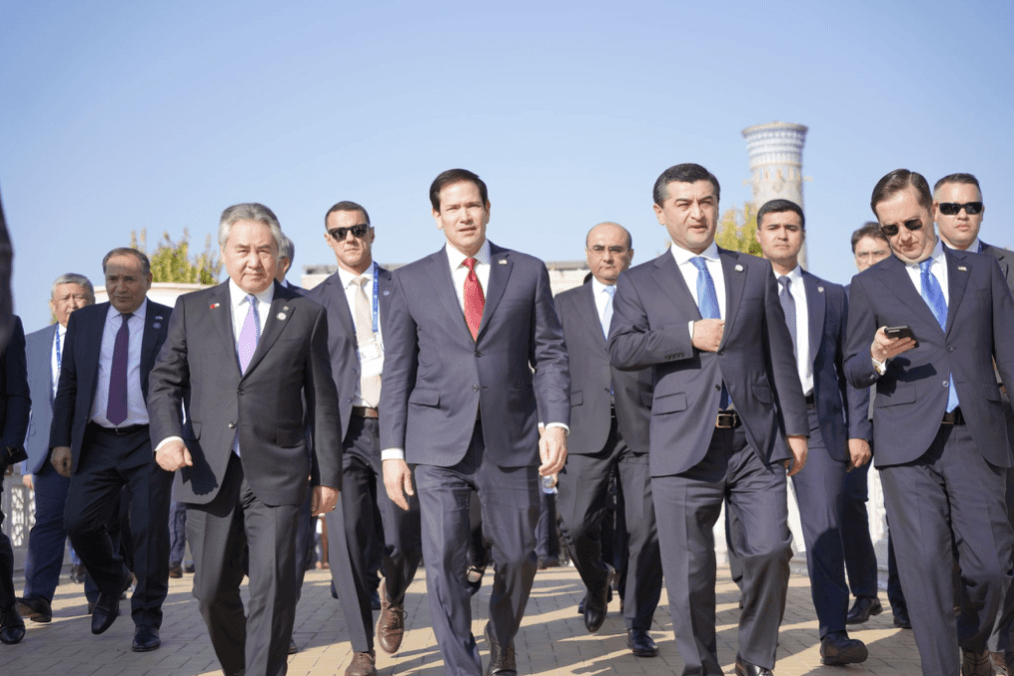
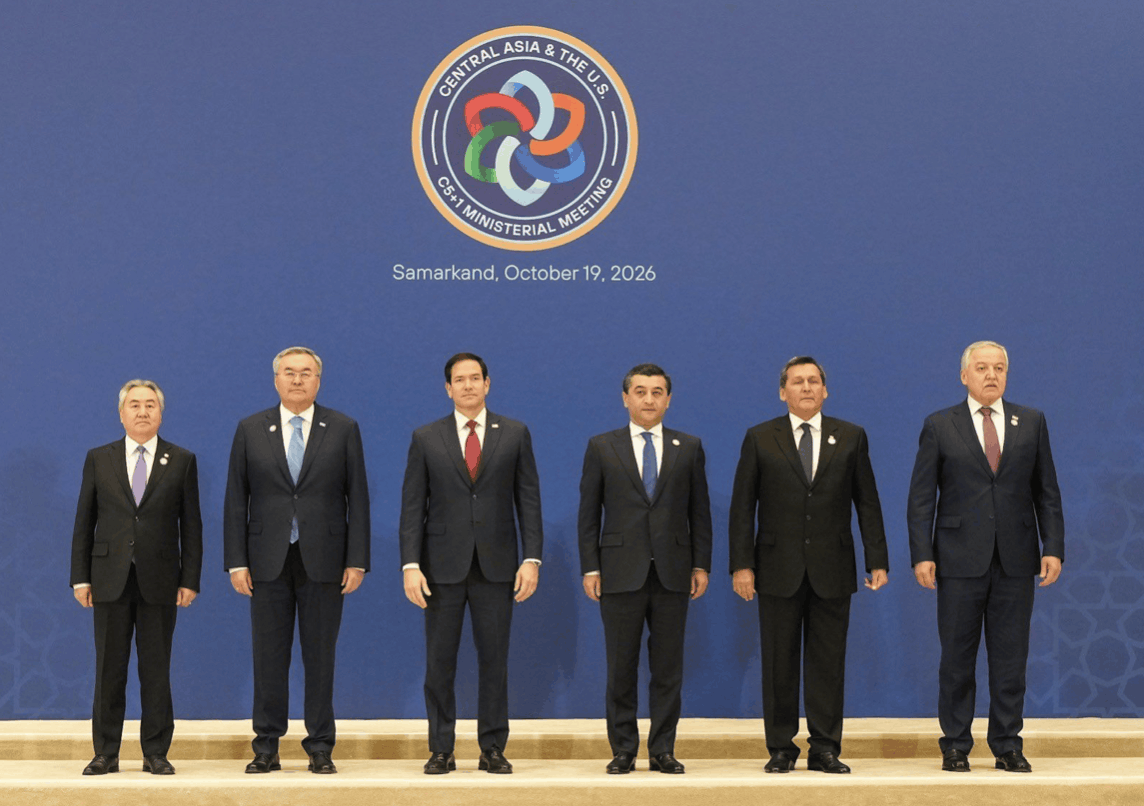
Secretary of State Marco Rubio and Special Envoy Sergio Gor met with all five Central Asian foreign ministers in Samarkand on Monday October 19 as part of the C5+1 Ministerial to expand economic and security ties with the region. The meeting, held in symbolic Samarkand, yielded $12 billion in new contracts and represents the latest step in the burgeoning American relationship with the region under the Trump administration. However, key questions remain regarding both the U.S. side’s long-term commitment and its ability to focus on the region right now as it struggles to respond to crises in Ukraine and Iran.
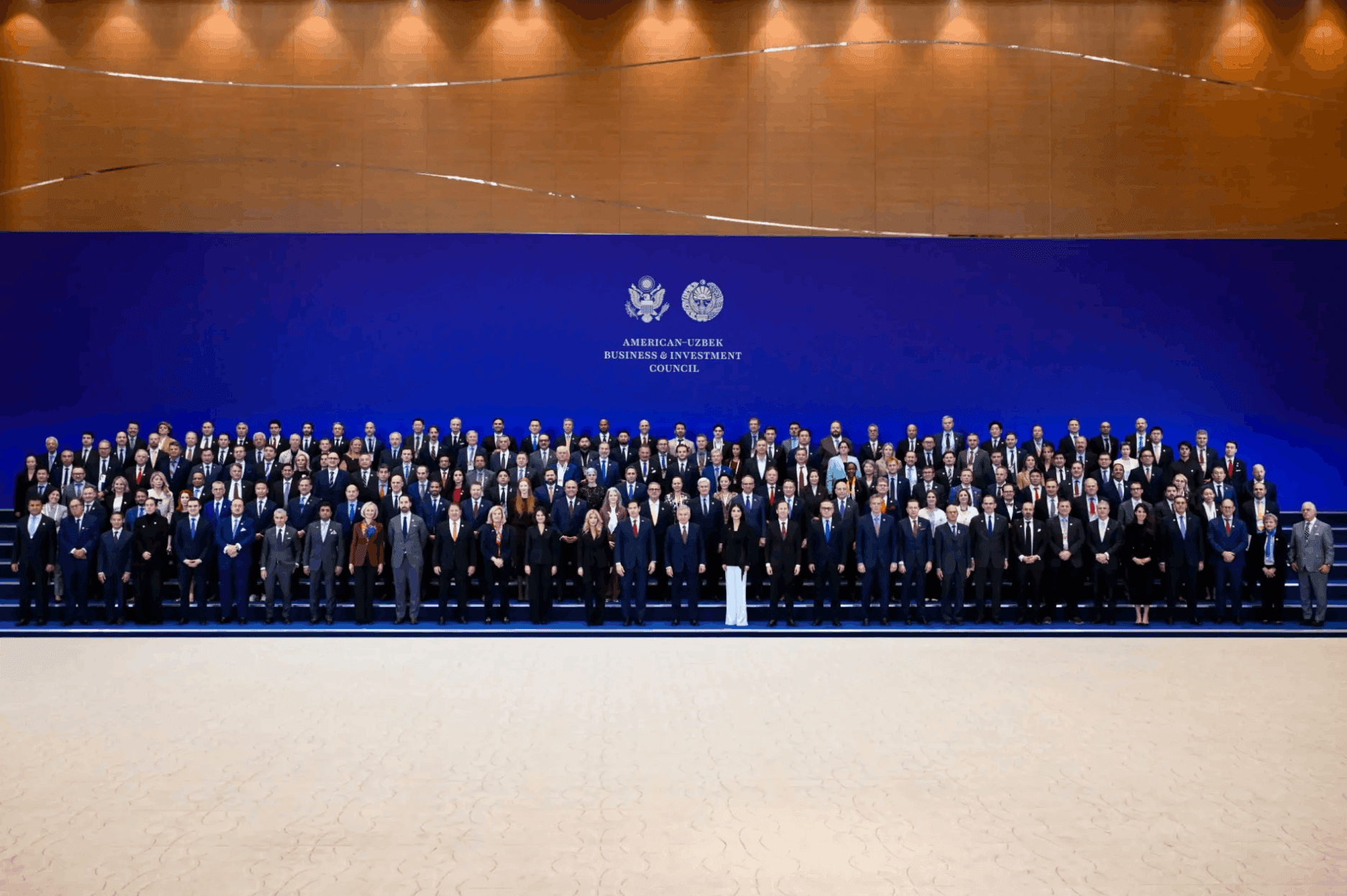
The Secretary of State was joined by U.S. Special Envoy to South and Central Asia Ambassador Sergio Gor and over 200 American business leaders. The ministerial took place in Samarkand, a historic Silk Road city that has facilitated east-west trade for centuries. Rather than trading in spices and textiles, the ministerial resulted in 54 agreements and initiatives valued at $12 billion and a joint statement released by the governments of the U.S., Kazakhstan, Kyrgyzstan, Tajikistan, Turkmenistan, and Uzbekistan detailing their commitment to continued economic, security, energy, and cultural cooperation.
It appears that the U.S. and Central Asia are marching to the beat of the same drum: Uzbekistan President Shavkat Mirziyoyev was clear about what he wants for his nation at the U.S.-Uzbekistan Business and Investment Council, a vision broadly shared by the rest of the C5. The president detailed his desire for a mutually beneficial trade relationship with knowledge and goods flowing in both directions. This means equipping Uzbekistan with the institutions that allow for the training of a professional domestic workforce and research base as well as encouraging Uzbekistani businesses to invest in American enterprises. In return, he offers the U.S. a wealth of minerals, energy, digital technology, and artificial intelligence.
Indeed, as Rubio highlighted, American institutions and companies already provide Uzbekistan with mineral extraction and processing expertise; commercial jets, parts, and training; partnerships in IT and AI; and nuclear energy technology and grid modernizations. Further, an Uzbekistani company, AKFA Group, is already pursuing a modest $80 million aluminum project in Kentucky, proving that the relationship can flow both ways. Sergio Gor succinctly stated the U.S.’s primary selling point: “partnerships that respect sovereignty, honor the rule of law, and deliver long-term value to both sides.”
 Source: U.S. Embassy & Consulate in Kazakhstan
But for all the commercial successes and kind words, American investments are already flagging year-on-year. The ministerial produced $12 billion in contracts, less than half of the $25 billion that came out of the Washington summit in November 2025. Further, the ministerial is the only landmark investment in Central Asia coming from the U.S. since last year’s summit. Rubio acknowledged this before his meeting with Uzbekistan’s Foreign Minister, noting that the U.S. intends to invest an additional $100 billion in Central Asia by some unknown future date.
China invested $35 billion in Central Asia between 2015 and 2025, while its total FDI in the region reached $56 billion by mid-2025. In contrast, Russia has contributed a total of $20 billion. It is important to note that the $12 billion and $25 billion figures refer to the valuation of signed contracts rather than FDI. The U.S. provided $51 billion in FDI total as of 2024, the overwhelming majority of which went into hydrocarbon projects in Kazakhstan.
It is also unclear how many U.S. companies attended the event in reality. State Department sources indicated over 200 businessmen, while Rubio claimed “nearly 300 businesses.” In contrast, Saida Mirziyoyeva made mention of about 100 companies. With 54 deals signed, actual private sector engagement because of the ministerial appears to be remarkably low.
That being said, the U.S. is not trying to replace China and Russia in Central Asia. Close geographical proximity alone makes this impossible, with trade turnover between China and the region totaling $106.3 billion in 2025 alone. Rather, the U.S. views Central Asia as one part of a larger supply chain architecture designed to supplant its own reliance on China, particularly in the realm of critical minerals. Rubio referenced this in his remarks to the press in a conspicuously veiled comment: “I mean, it’s just not smart for – and this is not an attack on any specific country. It’s just not smart for the whole world to depend on one place for 100 percent of anything, because then you’re dependent on what happens in that country, what happens in that region.” Central Asia has made significant progress in revitalizing its infrastructure and streamlining trade on the Middle Corridor, and the U.S. is right to look to the region to diversify suppliers.
The challenge for the U.S. is to maintain its engagement as geopolitical crises elsewhere take priority. The Secretary of State’s visit carries real significance in demonstrating enduring will to continue deepening ties and investing in the region. However, the administration’s focus is not where it was when the Central Asian presidents gathered in Washington last November. President Trump sent Rubio rather than special envoys Steve Witkoff and Jared Kushner, who frequently tackle his most pressing issues, namely Ukraine and the Middle East. Additionally, reporters on the ground in Samarkand asked Rubio as many questions about the Russia-Ukraine War as they did about the impending meetings. That conflict and the ongoing war with Iran continue to drain U.S. diplomatic resources that could otherwise support the development of relations with the Trans-Caspian region.
The Jackson-Vanik Amendment poses a separate issue. Although Rubio expressed his support for its repeal, he acknowledged that the matter is Congress’s responsibility. The Jackson-Vanik Amendment is part of the Trade Act of 1974 denying normal trade relations (NTR) to non-market economies restricting freedom of emigration. The amendment targeted Soviet restrictions on Jewish emigration and succeeded in effecting policy change in the Soviet Union. It does not interfere in U.S. trade with Central Asian states today, with U.S. presidents issuing annual waivers granting NTR, but it is a symbolic barrier to full cooperation with the region and a point of continued contention.
The deals that emerged from the C5+1 Ministerial in Samarkand demonstrate that the U.S. seeks to prioritize the region even as it faces crises elsewhere. However, the momentum the Trump administration began building last year is already flagging, and the stakes for both sides are clear. For the Americans, the U.S. could be deprived of strategic supplies of energy and critical minerals as it tries to secure its supply chains. For Central Asia, the region could lose a valuable partner committed to its long-term prosperity and sovereignty. If the U.S. does not have the bandwidth to maintain the momentum it began building in 2025, the present cooperation may not be as long-lived as both sides claim to want.