Central Asians and Mongolians in South Korea: Established Diasporas and New Migration
Recent Articles
Author: Kurtis Yan
08/18/2026
 Kurtis Yan
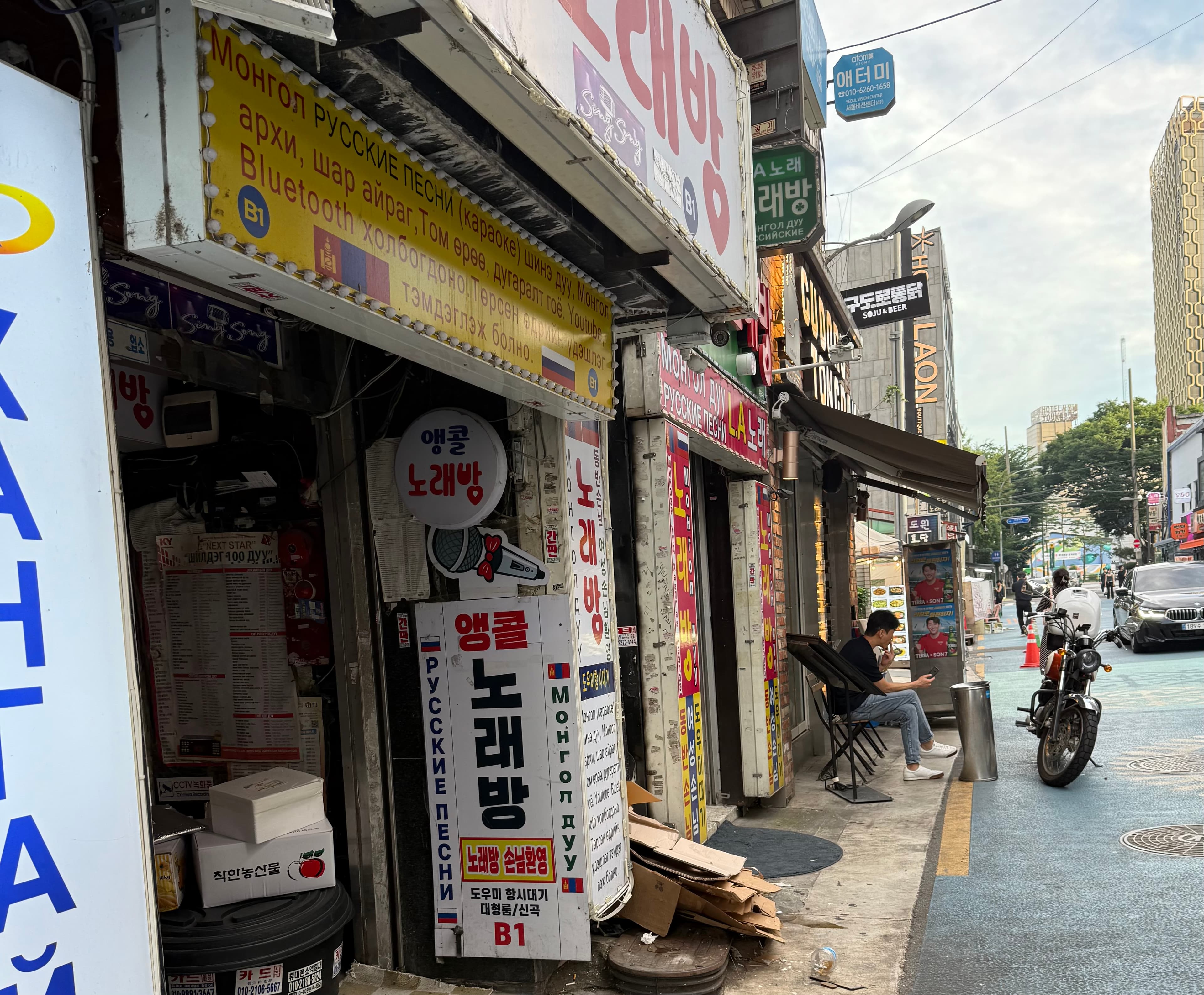
In the heart of Seoul, signs in Cyrillic letters and references to Central Asia line narrow streets. A noraebang (a Korean karaoke room) offers songs in Mongolian and Russian, while restaurants named after Samarkand prepare Uzbek dishes. In the heart of Gwanghui-dong, Central Asia Street has transformed into a vibrant neighborhood for the diaspora of peoples from the Eurasian Steppe. While it might seem surprising, this cultural crossover is widely recognized as a staple in Seoul and an emerging tourist hotspot.
Central Asia and its regional neighbors are on the radar as middle powers. South Korea is just one with a long history of investment and development aid to the region, but Seoul’s unique relationship with the region is more multidimensional. The presence of Central Asian and Mongolian migrants reflects how shared history and reputation have raised the appeal of South Korea, though it also exposes the challenges they face in the country. Against the backdrop of geopolitical analysis of Central Asian affairs, contemporary migration to South Korea presents an understudied dimension of interregional relations based on people-to-people connections.
History of Central Asian Migration to South Korea
Central Asia’s connection to South Korea traces back to the Silk Road, as trade encouraged cultural exchange and the sharing of knowledge. However, the most significant force tying the two together was the mass deportations during the Soviet era. Josef Stalin deported over 170,000 Koreans living in Russia’s Far East to Central Asia in 1937, largely due to growing xenophobia and alleged fears of espionage by the Japanese Empire. Many Koreans died during this period, but those who survived were often welcomed with open arms by the Central Asian states, especially by Uzbekistan and Kazakhstan. There, Koreans rebuilt communities and initially worked on farms. Many Koreans and Central Asians intermarried and went on to start families, and many ethnic Koreans became prominent in local governments and regional businesses. Today, Uzbekistan has the largest Korean community of any of the post-Soviet states, at an estimated 175,000 individuals.
After the fall of the Soviet Union at the end of 1991, many Koreans decided to repatriate to South Korea, though in a gradual process. Known as Koryo-Saram, ethnic Koreans returning to South Korea can apply under the Overseas Korean visa process and are registered under their nationality of origin. Many face linguistic challenges, which contributed to the creation of Koryo-Saram enclaves with Russian-language features. While Koryo-Saram are distinct from ethnic Central Asians, their shared history and interactions with the region built the foundation for labor and migratory links with South Korea.
Aside from Koryo-Saram, Russians also moved to South Korea, searching for labor opportunities amidst Russia’s economic crises. They were the first to establish a Russian-speaking neighborhood in Gwanghui-dong, located in the Jung District of Seoul. Known as the Russian Kvartal, or Little Moscow, Russians were the majority there until the mid-2000s. At the same time, Central Asians began to populate the area due to the Employment Permit System (EPS) that eased the process for labor migrants to work and stay in South Korea. Uzbeks are the most prominently featured group along Central Asia Street. Their restaurant business sparked broader waves of migration to the neighborhood. Many Kyrgyz and Kazakh migrants also reside in the neighborhood.
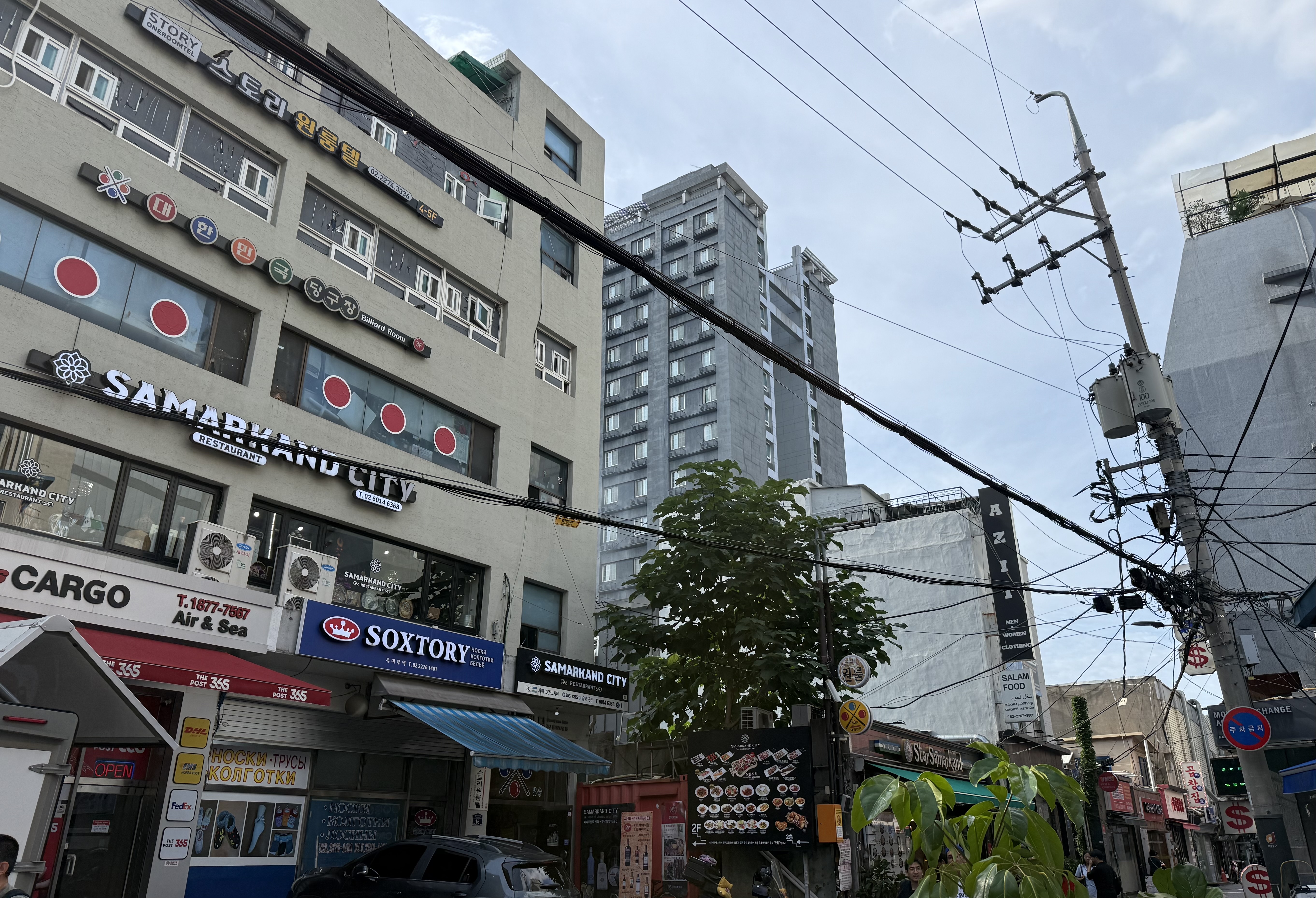
Neighborhood restaurants with Central Asian cuisine. Photo: Kurtis Yan
Since then, Central Asia Street has become a popular area for tourists looking for a unique instance of cultural fusion. Visitors can find Russian desserts, shashlik, convenience stores with Central Asian and Mongolian products, shipping companies, and travel agencies for visiting post-Soviet countries. Over 100,000 Uzbek nationals currently reside across South Korea, while there are at least 15,000 Kazakhs and over 1,500 Kyrgyz nationals working in the country. Moreover, a large portion of ethnic Central Asians live in the broader Seoul metropolitan region, oftentimes in areas linked to Koryo-Saram, such as Wongok-Dong in Ansan.
Intersection with the Mongolian Diaspora
Surprisingly, the largest Mongolian diaspora in the world also resides in South Korea. Mongolians make up the largest proportion of foreigners living in Gwanghui-dong. Signs in Mongolian plaster the walls of buildings and restaurants, and a 10-story building of roughly 40 businesses is locally known as “Mongolia Town.” Mongolia officially adopted the Cyrillic alphabet in 1946 due to pressure from the Soviet Union. This also propelled the use of Russian language in that country.
Mongolians quickly became a recognized group in South Korea. After immigrating during the 1990s, many labor migrants moved into neighborhoods like Gwanghui-dong. Many present-day foreign nationals arrive with a mix of educational backgrounds or with hopes of pursuing higher education. Over 18,000 Mongolians currently study at universities in South Korea. There are also strong incentives to move to South Korea and learn the Korean language. A cohesive community of Mongolians already exist in Seoul, and Korean culture is widely popular in Ulaanbaatar. Furthermore, foreign applicants with sufficient proficiency in Korean can improve their chances of obtaining a long-term visa for work and study. As such, Korean language use is growing in popularity among Mongolian youth, and an estimated 6,000 students at 33 schools in Mongolia currently study it.
While Mongolia is not widely recognized as a part of Central Asia, the cluster of Mongolians living in Seoul alongside Central Asians reflects shared cultural characteristics and a similar history among neighboring countries of the Steppe. On a geopolitical level, both Mongolia and Central Asia aim to court middle-power status and build more multifaceted bilateral relations with South Korea.
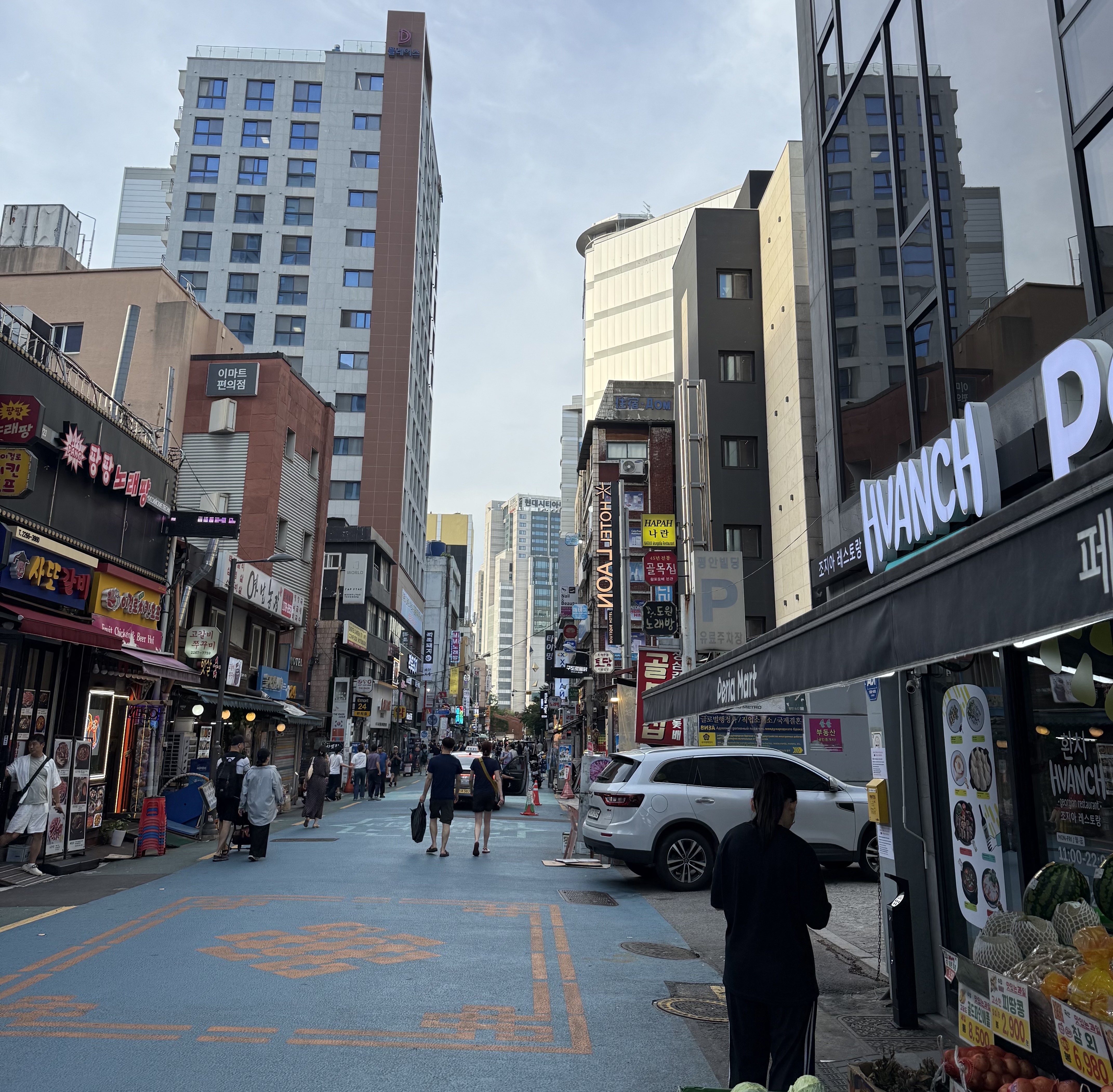
Central Asia Street. Photo: Kurtis Yan
Current Policies and Living Conditions for Labor Migrants
South Korea’s labor migrant policies are comparatively stricter and more selective than most other countries’. To allow people to arrive and perform manual labor, South Korea established the Employment Permitting System (EPS) in 2004. This system that aimed to reduce corruption and illegal immigration into the country was extended to 17 Asian partner countries as of 2026. It also places annual quotas on the number of migrants from each country and requires migrants to have contracts in place with South Korean companies before entry. In 2005, Seoul added the EPS Test of Proficiency in Korean (TOPIK) to assess the language skills of temporary labor migrants and incentivize prior education of the Korean language.
Current Central Asian countries in the EPS system are Uzbekistan, Kyrgyzstan, and Tajikistan. Mongolia is also on the list. Most recently, South Korean officials announced Kazakhstan’s integration into the EPS in 2028, because many Kazakhs working in the country have lacked legal status. In contrast to non-Koreans from Central Asia, Koryo-Saram can acquire an F-4 Visa for extended stays or citizenship in South Korea. This pathway requires them to prove Korean descent from parents or grandparents in a post-Soviet country, though many cite unfair standards and discrimination compared to applicants from outside Central Asia.
Central Asian labor migrants have highlighted higher pay and relatively positive reception from local populations in South Korea. Living and working in Russian-speaking neighborhoods can also ease the difficulties of integrating into a new language climate. Street vendors, small shop owners, and restaurant workers are a common sight in Gwanghui-dong. That said, most migrants regularly face difficult living and working conditions throughout their stays. Housing costs are already high in Seoul, and many still of the workers earn minimum wages, forcing them to live in uninsulated and substandard housing. Many are also forced to accept grueling manual labor shifts at factories and laundromats.
Furthermore, many Central Asian migrants have overstayed their visas and are thus illegally residing in the country. For those who are undocumented, they often face exploitation in the workplace, unfulfilled pay, and coercion to work under dangerous conditions and long shifts. Employers are at liberty to threaten them with deportation if they do not meet work expectations or if they do not stay at their job. EPS does not allow laborers to switch jobs without employer consent, forcing them to stay. Moreover, South Korea has ramped up deportations of undocumented immigrants in recent years.
The Future of Interregional Relations and Central Asia Street
South Korea registered over 2.8 million foreign residents in the country in 2025, a peak in the country’s history. South Korean leadership has long recognized its need to receive foreign labor to correct its demographic crisis, but deportations and the EPS’s stringent terms reflect the country’s wariness to accelerate non-Korean migration.
On the other hand, Jung District leadership is incorporating Gwanghui-dong into an urban renewal project until the end of 2027. The goal is to attract greater business, oversee events, and improve its popularity as a tourism hub. The initiative also appears to recognize the neighborhood’s cultural diversity and unique character as a more permanent aspect of Seoul. For new labor migrants, this could boost the appeal of settling in Seoul and, especially, in its Central Asian enclave.
Both Central Asia and Mongolia continue to balance great power competition through engagement with middle powers, and South Korea remains receptive to expanding relations with its eastern neighbors. Seoul is set to host the first heads-of-state Korea-Central Asia Summit this year on September 16-17. This marks a notable elevation from the current Korea-Central Asia Cooperation Forum at the ministerial level. Meanwhile, bilateral relations between South Korea and Mongolia are only growing. South Korean President Lee-jae Myung visited Ulaanbaatar in July, where the countries enhanced their strategic partnership in energy cooperation, minerals, and security.
Central Asian labor migrants who normally would seek work in Russia continue to seek alternate locations. South Korea continues to rise on the list of emerging destinations, along with the European Union and Türkiye. Warming intergovernmental relations and a sense of urban community can continue to drive this trend. Above all, there is a strong history and expectation of dialogue between Seoul and its neighbors, hinting that the countries could cooperate further on improving migrant welfare. In the end, a need exists for foreign labor in South Korea, and the country provides appealing conditions and historical links that will likely continue to spur migrant inflows.