Afghanistan's Qosh Tepa Canal and the Limits of Central Asia's Water Governance
Recent Articles
Author: Ana Maria Kvatashidze
08/14/2026
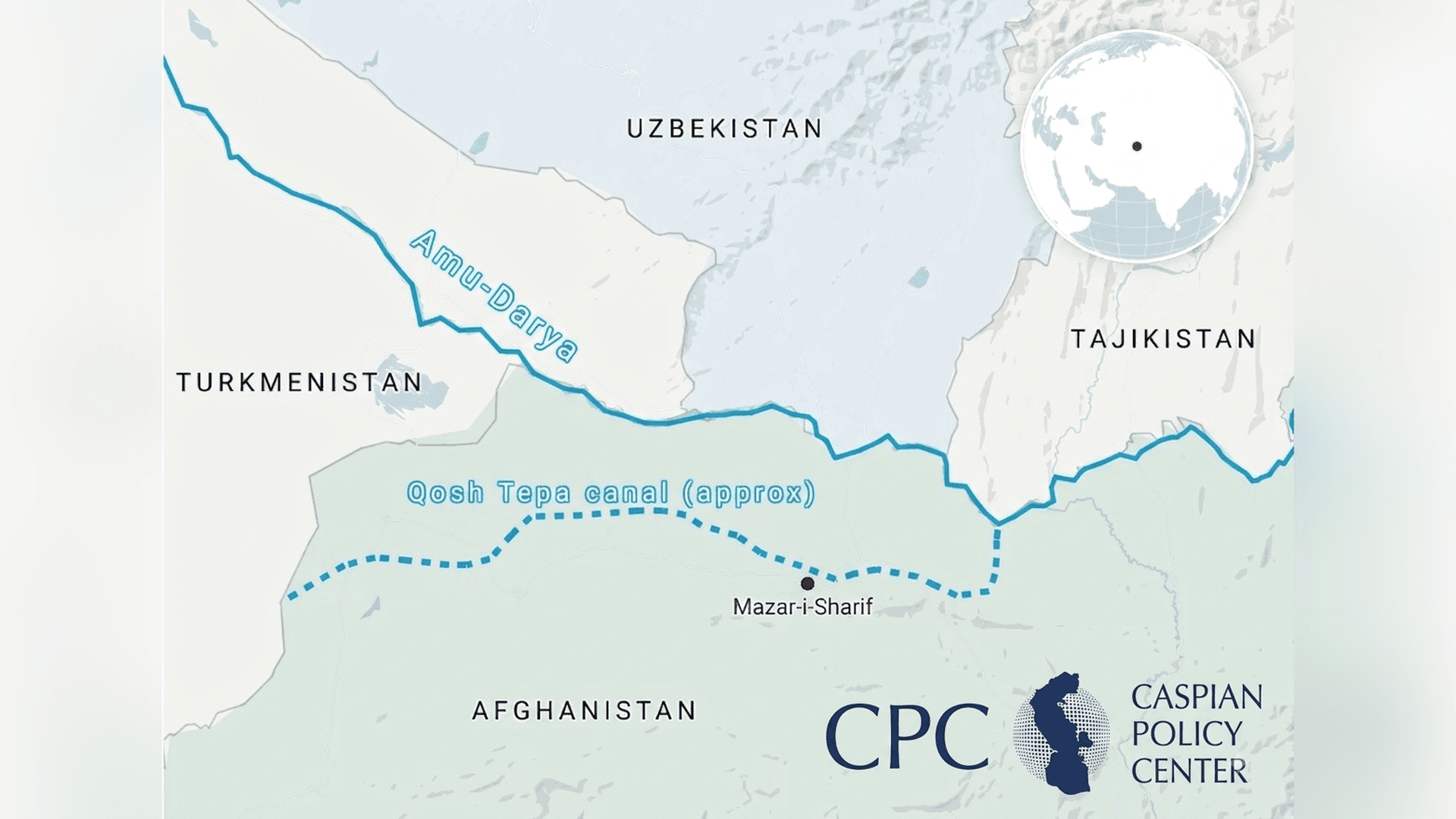
The greatest threat posed by Afghanistan’s Qosh Tepa Canal might not be the amount of water it diverts but the legal and institutional vacuum it exposes. Much of the debate has focused on declining river flows and growing water scarcity. But the bigger problem is that Central Asia's water governance framework no longer matches today's political reality. The Amu Darya river is still governed by institutions designed for a different era. Unlike many of the world's major transboundary rivers, its governance system was never fundamentally updated after the collapse of the Soviet Union. The Qosh Tepa Canal is the first major project to expose the limits of that system.
Afghanistan’s major canal project is one of its most ambitious infrastructure initiatives in decades. Construction began in 2022 on a 285-kilometer canal that will extend from the Amu Darya through Balkh, Jowzjan, and Faryab provinces. The canal is expected to irrigate some 550,000 hectares of previously uncultivated land, transforming northern Afghanistan into a major agricultural region. Estimates of annual water withdrawals vary, ranging from 6 to 10 billion cubic meters, equivalent to roughly 12–18 percent of the Amu Darya's average annual flow, which would make it one of the largest hydraulic projects in the Amu Darya basin.
Afghanistan has a sovereign right under international water law to use the waters that flow through its territory. However, the Qosh Tepa Canal has raised concerns among downstream states because the region lacks a mutually accepted legal and institutional framework for managing a shared river. As a result, a national development project has become a regional strategic challenge.
The roots of today's water governance system date back to the final years of the Soviet Union. In 1987, Moscow created the Basin Water Organizations for the Amu Darya and Syr Darya rivers to manage water allocation across the Soviet republics of Central Asia. After the Soviet Union collapsed, the newly independent states largely kept this system in place by establishing the Interstate Commission for Water Coordination in 1992 and, later, the International Fund for Saving the Aral Sea. These institutions continue to coordinate water management among the five Central Asian republics and provide an important platform for regional dialogue, but they were designed for a very different political system.
Water allocation was managed through centralized economic planning, national borders functioned as internal administrative boundaries, and Moscow, not sovereign governments, made the final decisions when interests conflicted. The system worked because a central authority could enforce seasonal trade-offs between upstream and downstream republics. The Soviet republics of Kyrgyzstan and Tajikistan released water during the summer irrigation season to support agriculture in the republics of Uzbekistan, Turkmenistan, and Kazakhstan. In return, they received coal, natural gas, and electricity during the winter.
The system also reflected a geopolitical reality in which Afghanistan remained outside the region's water governance framework. Although it shares the Amu Darya and has long been recognized as an upstream riparian state under customary international law, Afghanistan was never included in the basin's main water-sharing mechanisms or regional institutions. As a result, one of the river's key stakeholders remained outside the system designed to manage it. Most importantly, the region's water institutions were never built for a future in which Afghanistan would become an active user of the Amu Darya.
From Kabul’s perspective, the project is a tool for national recovery after decades of conflict, economic collapse and chronic food insecurity. Expanding irrigated agriculture could boost domestic food production, reduce reliance on imports, create jobs in rural areas, and support economic development in some of Afghanistan’s poorest provinces. Afghan officials have consistently described the canal as an exercise of Afghanistan’s sovereign right to use its natural resources. Although the Amu Darya forms more than 1,100 kilometers of Afghanistan's northern border, decades of conflict, limited infrastructure, and underinvestment have prevented the country from making full use of its share of the river.
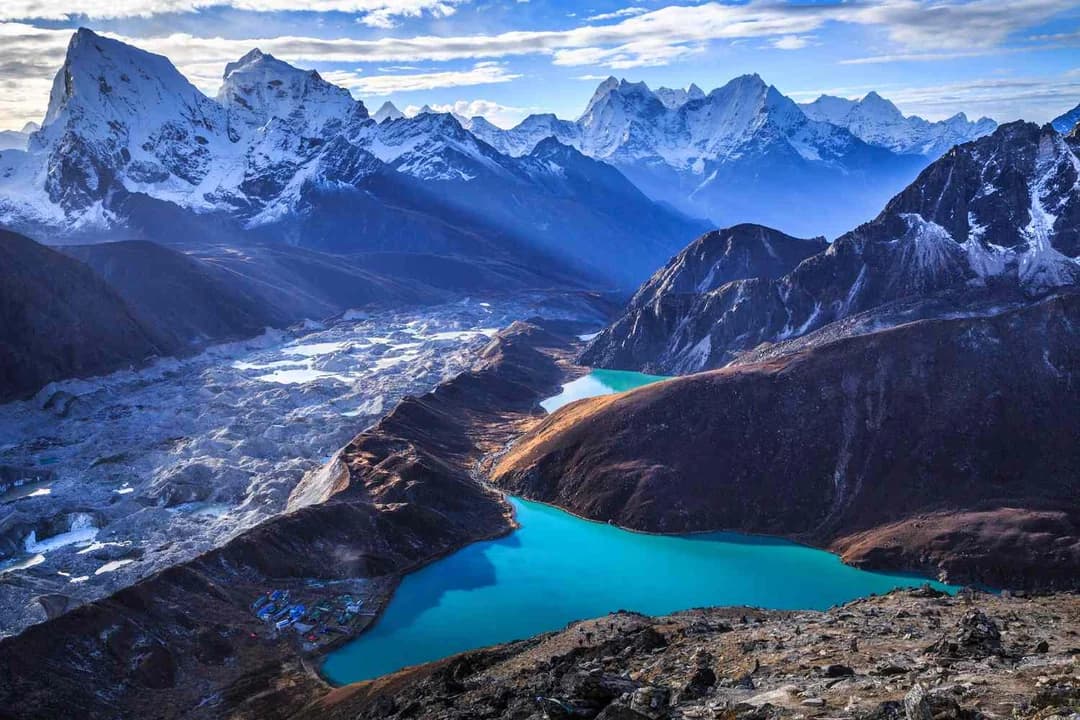
Climate change is making these governance gaps harder to ignore. Rising temperatures are accelerating glacier melt in the Pamirs and Tian Shan, the mountains that feed much of the Amu Darya. In parts of the Western Tian Shan, glacier area has declined by nearly 27 percent over the past two decades, with losses reaching up to 40 percent in some mountain regions. At the same time, population growth, expanding agriculture, and rising energy demand are putting even more pressure on limited water resources. The World Bank projects that water availability across Central Asia will decline significantly in the coming decades, increasing pressure on agriculture and regional economies. A governance system built for more stable conditions is arguably not equipped to manage these new challenges. The Qosh Tepa Canal is entering this already stressed system, making the need for regional cooperation even more urgent.
Another concern is transparency. For a project that could reshape one of Central Asia's most important river basins, little detailed information has been released about the planned canal’s financing or implementation. Taliban officials say the Qosh Tepa Canal is being financed through domestic revenues, primarily customs duties and tax collection, but they have disclosed few details about the project's overall cost or procurement process. The government presents the canal as evidence that Afghanistan can build major infrastructure projects without foreign assistance, and there is little public evidence that a foreign government is financing the project. And the limited availability of verifiable information makes it difficult for outside observers to assess these claims independently. This lack of transparency increases mistrust among neighboring states, regardless of Afghanistan's intentions.
The core problem is that the Amu Darya cannot be managed effectively while one of its principal riparian states remains outside of the region’s institutional framework. In this context, Uzbekistan plays a leading role. More than any other Central Asian country, it has pursued a pragmatic policy toward Afghanistan, even though it has not formally recognized the Taliban. Beyond expanding trade, maintaining electricity exports, and promoting regional connectivity, President Shavkat Mirziyoyev has publicly proposed creating a joint working group to study the Qosh Tepa Canal and its implications for the Amu Darya and involving Afghan representatives in regional water dialogue. Turkmenistan has also continued to work with Afghanistan on energy and transport details, despite political differences. This approach suggests an important lesson. Whether Central Asian governments recognize the Taliban or not, they will have to engage with Afghanistan on water management. There is no practical alternative.
Ultimately, the Qosh Tepa Canal is more than an infrastructure project. It has exposed the limits of Central Asia's existing water governance system. The region's biggest challenge is no longer only managing water scarcity but is also the need to build institutions that reflect today's political realities. As water demand increases and climate pressures intensify, Central Asian governments will have to decide whether to preserve a system designed for the Soviet era or build one that includes all the Amu Darya's riparian states. The future of the Amu Darya now depends on how Afghanistan's participation is institutionalized in a way that strengthens cooperation across the basin.