Copper, AI, and Kazakhstan’s Place in the Global Minerals Supply Chain


Author: Aizhan Balabatyrova, Kamal Aubakirov
11/23/2026 · 10 min read
 shutterstock
On December 14–15, President Kassym-Jomart Tokayev will attend the G20 summit in Miami at President Donald Trump’s invitation, Kazakhstan’s first G20 since 2016. In preparation for this summit, Kazakhstan brought the largest foreign delegation to the B20 USA Summit in Washington, DC, which took place November 9-11. During that event, Kazakhstan presidential envoy Yerzhan Kazykhan named critical minerals processing among the priorities for the Miami meeting. Behind both meetings sits a simple problem: the world needs far more copper than it is on track to produce.
In January, Robert Friedland, founder of the Canadian mining company Ivanhoe Mines, told the Future Minerals Forum in Riyadh that the world will need to mine as much copper over the next 18 years as it has during all of history. Global copper demand, supplied through both mining and recycling, is projected to rise from 28 million metric tons in 2025 to 42 million metric tons by 2040, a 50% increase, with a shortfall of about 10 million metric tons, if there is no significant new investment.
Artificial intelligence is one of the fastest-growing sources of that demand, although not the largest. About 2 million metric tons of the increase is expected to come from AI and data centers, compared with about 7 million from the energy transition. Microsoft’s $500 million data center in Chicago, for example, used 2,177 metric tons of copper, or 27 tons for every megawatt of applied power. Data centers are expected to need about 400,000 metric tons of copper a year over the next decade. In light of this trend, the U.S. government added copper to the List of Critical Minerals for the first time in November 2025.
In June 2026, Kazakhstan became the first Central Asian country to join Pax Silica, the U.S.-led initiative to secure the supply chains behind AI, from critical minerals and energy to semiconductors and data centers. The accession came in the year President Tokayev had designated the Year of Digitalization and Artificial Intelligence.
Much of the discussion of Kazakhstan’s AI future focuses on data centers and computing power. Yet the country’s most significant near-term contribution to the global AI economy, and what sets it apart, lies underground. Kazakhstan already mines and refines copper at scale, holds a wider range of critical minerals that AI and its power systems depend on, and is applying AI in its own mining operations to produce more of them. As Kazakhstan-based copper industry practitioners, we also see the constraints that will decide how much of this potential is realized.
A Concentrated Market Facing a Copper Shortage
Global copper supply depends on a small number of countries. Of the roughly 23 million metric tons of copper mined in 2025, Chile, the Democratic Republic of the Congo (DRC), and Peru produced 11.2 million, nearly half of the total. Refining is concentrated in a single country. China produced about 14 million of the world’s 29 million metric tons of refined copper in 2025 and holds about 12 of the 29 million metric tons of global smelting capacity.
Export restrictions make this concentration riskier. The DRC introduced export quotas on cobalt in 2025 and, in June 2026, banned exports of copper and cobalt concentrates to build its own domestic processing capacity. Indonesia has banned copper concentrate exports since January 2025, with only temporary exceptions.
Their aim is to keep the jobs, tax revenues, and by-products of processing at home, and new smelting capacity is being built in these countries as well as in China. Yet the world does not lack smelters; it lacks concentrate to feed them. Treatment and refining charges (TC/RC), the fees miners pay smelters, have fallen to zero or below, and several smelters elsewhere have cut output or closed. Export restrictions, therefore, add no new copper. They change where it is processed and make supply less predictable for everyone else.
Supply is also slow to respond. Copper supply from existing mines and announced projects is expected to fall about 25% short of demand in 2035. The average copper mine takes 17 years from discovery to production, ore grades keep falling, and global output is expected to peak in 2030. Chile, the world’s largest producer, shows the trend: falling ore grades are expected to push its output below 5 million metric tons in 2026, its lowest level since 2003 and about 900,000 tons below its peak in 2018. Most of the copper the world needs this decade will have to come from mines that already operate or are under construction.
The United States feels this directly. Its net import reliance for copper rose from 45% in 2024 to an estimated 57% in 2025, and it operates only two primary copper smelters. Diversifying supply will depend less on any single giant new mine than on adding reliable producers that can both mine and refine.
Kazakhstan’s Copper, Mined and Refined
Kazakhstan can be one of those producers. It mined an estimated 710,000 metric tons of copper in 2025, placing it among the world’s 10 largest producers, and it holds 20 million metric tons of reserves. It also refines much of its output at home, producing 471,000 metric tons of refined copper in 2025; and KAZ Minerals is building a smelter at Aktogay with a capacity of up to 300,000 metric tons of copper cathode a year, scheduled to start around 2030. This will confidently place Kazakhstan into top 10 smelter capacity by country globally.
New supply is also coming into view. Investment in geological exploration grew 2.5 times between 2022 and 2025, and international miners have returned. Ivanhoe Mines, the company Friedland founded, is exploring a 16,000 square kilometer license package in the Chu-Sarysu Basin, the world’s third-largest sediment-hosted copper basin, where an estimated 25 million metric tons of copper remain undiscovered. First Quantum, Rio Tinto, and Fortescue have also taken exploration positions in the country. Most of this exploration targets the Chu-Sarysu Basin in Central Kazakhstam, home to the century-old Zhezkazgan copper complex.
Beyond Copper: Kazakhstan’s Wider Role in the AI Minerals Chain
Copper is not the only metal the AI build-out requires. Chips, servers, and power systems also depend on gallium, tungsten, antimony, and titanium, among other critical minerals, and Kazakhstan supplies or is developing several of them. It is already the world’s largest uranium producer, accounting for 39 percent of global output in 2024, and Kazakh-origin uranium made up 28 percent of the uranium delivered to U.S. civilian reactors in 2025, second only to Canada at 32 percent.
In central Kazakhstan, a joint venture between a U.S. investment group and Kazakhstan’s national mining company is developing two deposits holding 1.4 million metric tons of tungsten trioxide, among the largest undeveloped tungsten resources in the world. Planned output would equal about 15% of current global production. For gallium, Eurasian Resources Group plans to produce up to 15 metric tons a year in Pavlodar and, during President Tokayev’s visit to Japan in December 2025, signed a long-term agreement to supply Mitsubishi Corporation RtM Japan. That would make Kazakhstan the second-largest gallium producer, though still far behind China.
Can AI Help Produce More Copper?
If most new copper must come from existing mines, the question becomes how to produce more from each of them. In 2023, BHP and Microsoft began using machine learning at Escondida in Chile, the world’s largest copper mine, to improve recovery at its concentrators. As grades fall, such tools are becoming a necessity.
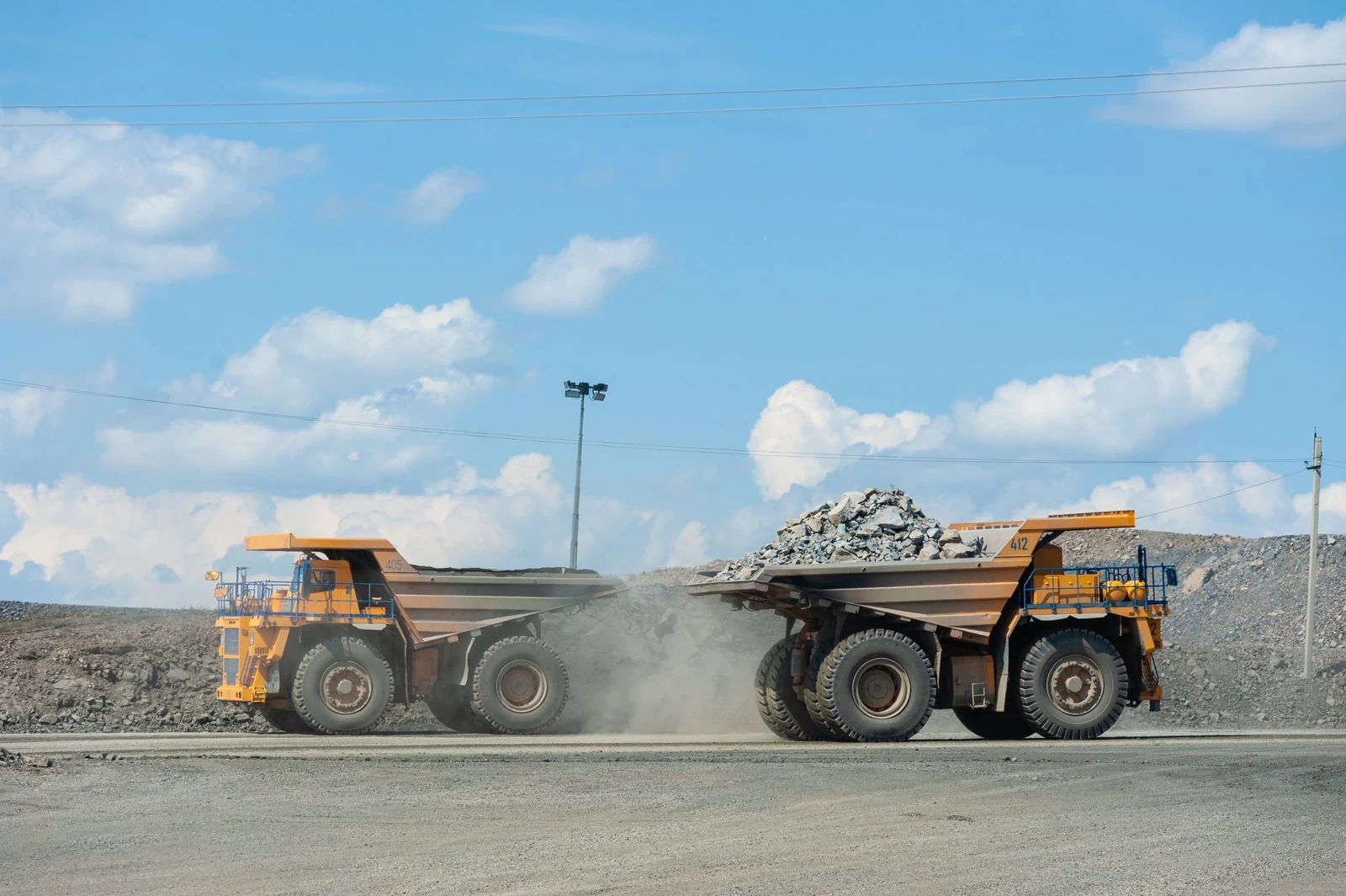
Kazakhstan faces the same challenge. At KAZ Minerals’ Aktogay and Bozshakol mines, average processed grades were about 0.4% in 2025. There, the TRIT-AI system gives concentrator operators hourly recommendations based on more than a dozen process parameters, and automated open-pit haulage has raised haul truck productivity by 22% and cut fuel use by 5-10%. The harder next step is to move from point solutions to decisions across the whole value chain, from mine to plant to logistics.
The national context supports this shift. Kazakhstan created a Ministry of Artificial Intelligence and Digital Development in September 2025 and two months later adopted Central Asia’s first AI law. In October 2026, President Tokayev proposed an AI Challenge built on real industrial problems, with the most effective solutions to be put into production. The challenge is open to Kazakh and international teams; and with industry and energy among its priority areas, mining could supply practical problems such as process optimization, predictive maintenance, and ore sorting.
What Stands in the Way
None of this is automatic, and three constraints deserve a candid look. The first is scale. Kazakhstan mines about 3% of the world’s copper, less than a seventh of Chile’s output. Its value lies not in replacing the largest producers but in adding a reliable source, from mine to cathode, outside today’s most concentrated supply chains.
The second is power. Kazakhstan consumed more electricity than it generated in 2025 and covered part of the gap with imports, and coal still produces about half of its power. The government plans to add more than 26 gigawatts by 2035, but mines, smelters, and data centers will compete for the same grid, and buyers of low-carbon copper will look at the power behind it. The government plans to add more than 26 GW of new generating capacity by 2035, and 13.3. GW of this is due in 2029. The largest single project is Kazakhstan’s first nuclear power plant near Ulken on Lake Balkash. It is expected to add 2.4 GW at an estimated cost of about $16.5 billion, with the first unit scheduled for 2034.
The third is logistics. The Trans-Caspian route gives Kazakhstan’s exporters a direct link to Europe, but falling Caspian Sea levels already limit how much vessels can load at the Aktau and Kuryk ports. The corridor is estimated to need at least $25 billion in infrastructure investment through 2040 to relieve its bottlenecks, which will likely be a public-private mix of financing efforts.
Where Kazakhstan Fits
The G20 forum in Miami is a timely moment to turn Kazakhstan’s Pax Silica membership into a source of reliable and trusted critical minerals supply. Three steps stand out.
1. Co-develop industrial AI for mining. Kazakhstan’s operators, Astana Hub, and technology firms from Pax Silica countries could build joint programs around the proposed AI initiatives and test tools on real operations. Western suppliers are already expanding locally, with FLSmidth enlarging its service center in Karaganda. Tools that prove themselves at Kazakh mines could then be offered to other mining countries in the Pax Silica network.
2. Invest in power and the Middle Corridor. Investment in generation and transmission raises capacity for mines, smelters, and data centers at once. The U.S. International Development Finance Corporation (DFC), the Export-Import Bank of the United States (EXIM), and multilateral lenders could co-finance grid and Caspian port projects. Container trains on the Trans-Caspian route rose 34.4%, year on year, in the first quarter of 2026, and more capacity for cathode and concentrate would shorten the path to Western markets.
3. Finance copper and its by-products as AI supply. U.S. finance has already moved into copper beyond the Americas. In December 2025, the U.S. EXIM Bank approved $1.25 billion for Pakistan’s Reko Diq copper-gold project, expected to bring in up to $2 billion of U.S. equipment supplies and services. In January 2026, the U.S. International Development Finance Corporation (DFC) closed a $600 million investment in the $1.8 billion Orion Critical Mineral Consortium, which the State Department named at the B20 as a potential source of capital for Central Asia. Similar instruments, paired with long-term offtake, could help the region’s producers expand processing and recover more by-products found alongside copper.
The world will need copper from more countries than today’s supply chain allows. Kazakhstan already mines and refines it at scale, supplies more than a quarter of the uranium delivered to U.S. reactors, is developing tungsten and gallium with U.S. and Japanese partners, and is using AI to recover more copper from every ton of ore. Its constraints are real but manageable with the right partners. Joint work on industrial AI, investment in power and logistics, and long-term finance can turn Pax Silica membership into stable supply, and the G20 forum in Miami is a good place to start.
Aizhan Balabatyrova is CEO of KAZ Minerals Management.
Kamal Aubakirov is an R&D and Innovation Analyst at KAZ Minerals.
The views expressed are the authors’ own.