Caspian Sea Security



Author: Luke Coffey
07/29/2026
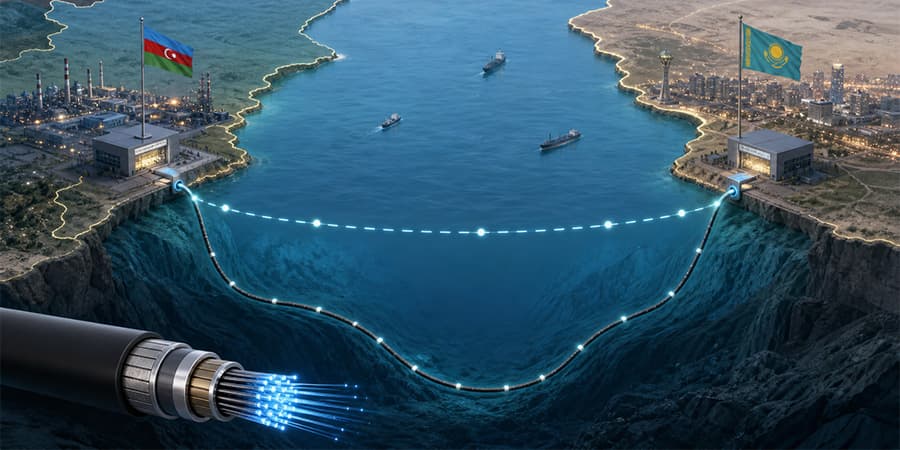
With the growing importance of the Middle Corridor, especially as geopolitical tensions mount with Iran and Russia, there is a need to ensure that this vital transit route remains stable and secure.
This includes security in the air against regional missile and drone threats, as seen with Iran’s attack on Nakhchivan Airport in the early days of the recent conflict. It also requires greater resilience and capacity along the land routes running through the South Caucasus. This is why the Trump Route for International Peace and Prosperity is so important: it complements existing trade routes and adds much-needed redundancy. Finally, the Middle Corridor requires security and stability in the Caspian Sea. Without safe passage across the Caspian, this international trade and transit route becomes a dead end.
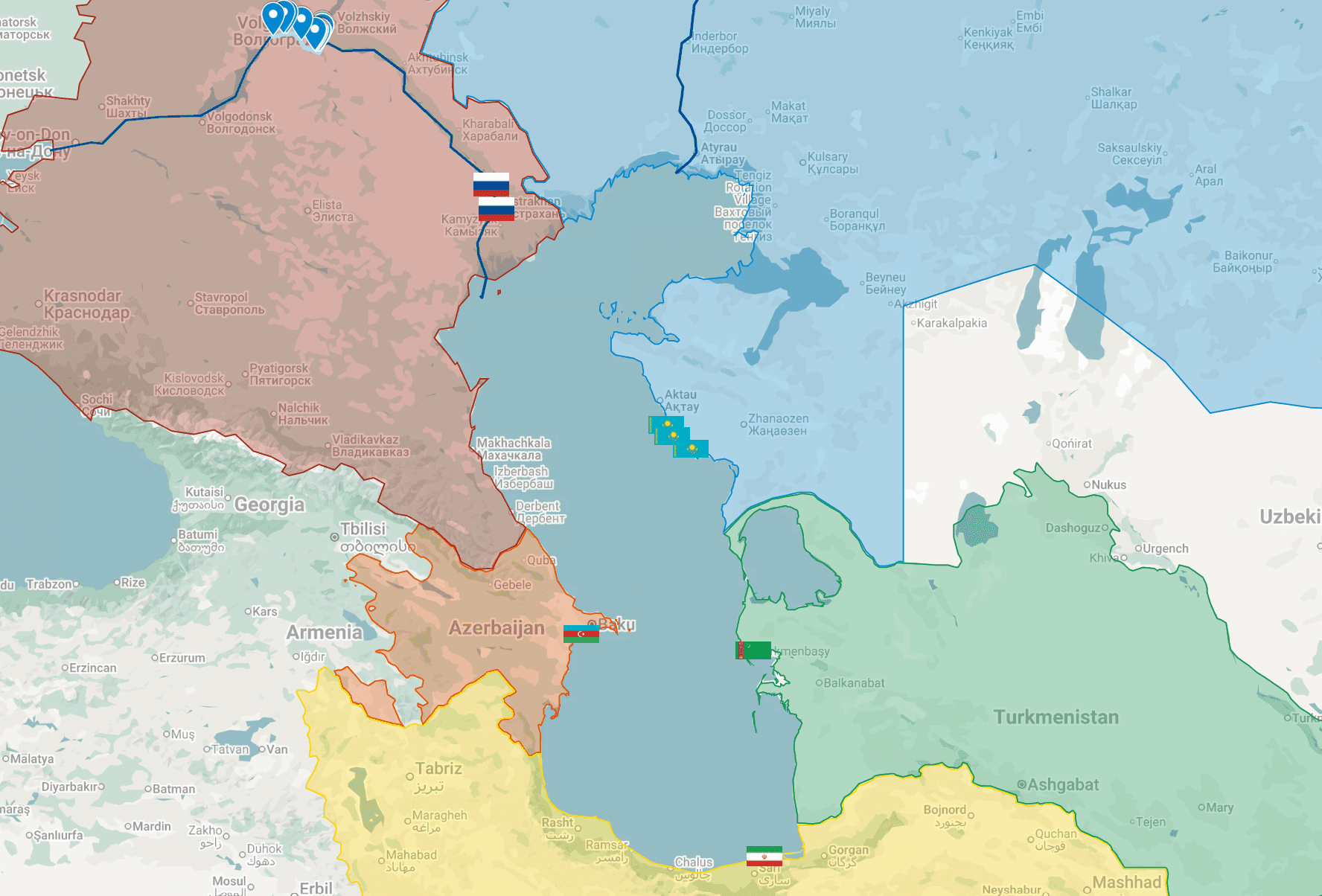
Until recently, Russia was the dominant maritime power on the Caspian Sea, with Iran’s capabilities close behind. However, the three other littoral states, Azerbaijan, Kazakhstan, and Turkmenistan, have been improving their capabilities as well.
In the context of Caspian Sea security, two unfolding developments will shape the balance of power and the overall stability of the region in the coming years and decades. One effect will be felt in the shorter term and is playing out now. The other is a longer-term concern that cannot be ignored today.
In the short term, the security situation and balance of power in the Caspian are changing dramatically in real time. The balance is shifting away from Tehran and Moscow, creating the potential for the other Caspian littoral states to become more important maritime security actors in their own right.
Over the past 24 months, Ukraine has improved its ability to conduct long-range strikes deep inside the Russian Federation. In recent months, it has used this capability against Russia’s Caspian Flotilla. Research carried out by the author shows that open-source intelligence estimates suggest as many as 13 vessels associated with Russia’s Caspian Flotilla, including corvettes, patrol boats, and minesweepers, have been hit or damaged by Ukrainian forces in recent months. If accurate, this would account for a significant share of Russia’s overall naval presence in the Caspian.
While it is impossible to know the severity of each strike, some vessels are believed to have suffered serious damage, and a smaller number might have been destroyed or rendered permanently inoperable. In addition, Ukraine has struck important Russian port facilities that had facilitated the flow of goods between Iran and Russia in recent years, as well as Russian oil platforms in the Caspian. With the most recent attack documented in July, there is no evidence that Ukraine intends to let up on these strikes anytime soon.
In addition, this month Ukraine struck an Iranian cargo ship in the Caspian for the first time. Kyiv claimed that this ship was transporting military goods between Russia and Iran. This development could signal a widening of Ukraine’s military campaign in the Caspian.
Meanwhile, in the southern part of the Caspian, Israel, as part of the U.S.-led air campaign against Iran, conducted a major strike on March 18 against the Iranian naval facility at Bandar Anzali on the Caspian Sea. Open-source reporting shows multiple Iranian ships destroyed or damaged. One photo confirmed that one corvette and two missile boats were struck, amounting to roughly half of Iran’s warships and vessels in the Caspian Sea. According to Israeli officials, maintenance and dry dock facilities, as well as Iran’s northern fleet headquarters building, were also struck.
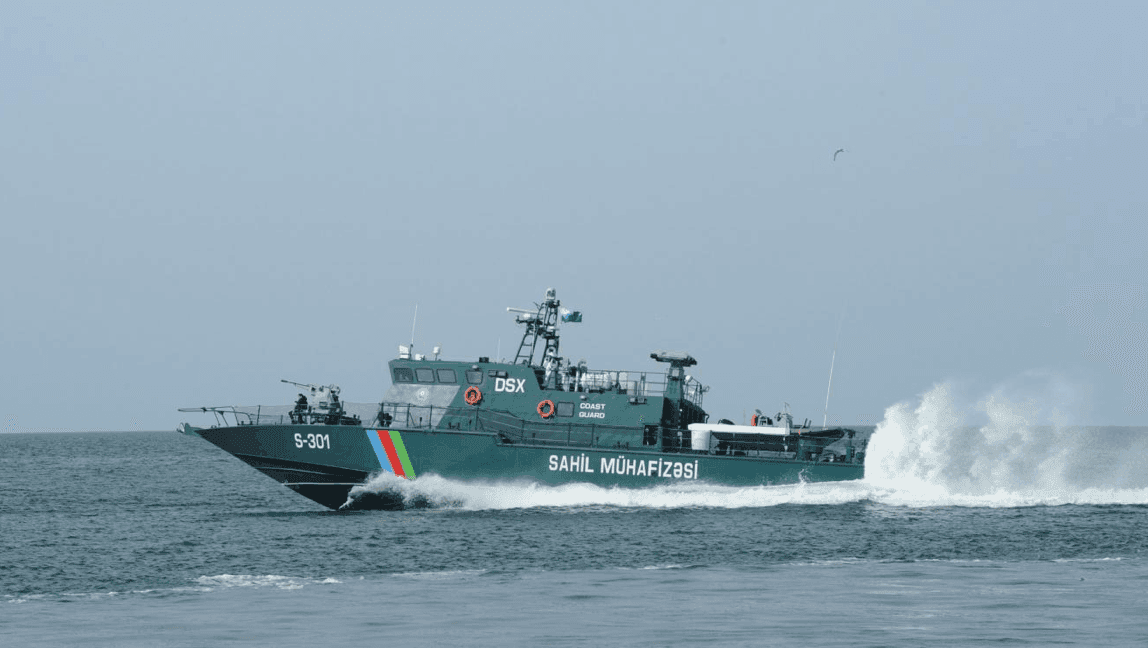
As Russia and Iran lose naval capabilities in the region, other Caspian states are wasting no time improving their own. Azerbaijan is a good example of this. As part of a reenergized U.S.-Azerbaijani bilateral relationship, Vice President J.D. Vance has announced the sale of patrol ships to Azerbaijan in the coming months. Azerbaijan has also taken steps to increase its naval capabilities naval modernization, domestic shipbuilding, coast guard upgrades, joint exercises, and to improve its Caspian maritime surveillance capabilities
It is therefore possible that in the coming years Azerbaijan could become the most powerful maritime force on the Caspian Sea. This would contribute greatly to regional maritime security and could encourage Kazakhstan and Turkmenistan to find the confidence and reassurance needed to boost their own naval capabilities.
However, it is not only the reduction in Russian and Iranian capabilities, or the strengthening of naval capabilities in countries such as Azerbaijan, that will have a strategic impact on the Caspian. Longer-term and slow-burning problems, such as declining Caspian water levels, will have a geopolitical impact too.
According to satellite imagery and NASA’s Global Water Monitor, Caspian water levels have been dropping since the mid-1990s. Alarmingly, if current trends continue, the Caspian could drop by 9 to 18 meters by the end of this century. This would lead to the Caspian losing about a quarter of its surface area, uncovering a piece of dry land roughly the size of Indiana. There are a number of reasons why water levels are declining. The Volga River, which accounts for about 80 percent of the Caspian’s inflow, has been extensively dammed inside Russia for reservoir creation and farming irrigation. Added to this are the pressures created by rising global temperatures.
While there has been considerable academic and scholarly focus on the environmental and habitat impacts of declining water levels, far less consideration, understandably, has been given to the security and geopolitical implications.
Lower water levels will affect regional shipping and energy markets, as the loss of navigable water can make regional trade more difficult. This will also force a drastic change in the region’s naval posture. Russia’s main naval base at Astrakhan is located in one of the Caspian’s shallowest zones. If water levels fall within the predicted range, Astrakhan could become increasingly difficult, and perhaps eventually impossible, to use as a naval port without major dredging or relocation. This could also complicate Russia’s use of the Volga-Don Canal, cutting off Russia’s direct connection between the Caspian Sea and the Black Sea.
As the shallower areas of the Caspian become dry land, Russia would be forced to consolidate its fleet farther south in Kaspiysk and Makhachkala in Dagestan. Not only would such a move require massive investment at a time when Russia’s finances are already strained, it would also physically place Russia’s naval capabilities farther south and closer to other regional countries, such as Azerbaijan.
Taken together, the reduction of Iran’s and Russia’s military capabilities, along with the longer-term implications of a shallower and smaller Caspian Sea, means that smart decisions must be made now to ensure that the Caspian remains a transit zone of stability and security.
This is why the United States should play a role with friendly countries in the region to boost their capabilities and capacities. This could include selling or providing military equipment and hardware, such as smaller patrol boats, coastal defense weapon systems, and radars. It should also include encouraging countries in the region to work closely with Ukraine, especially in the unmanned systems area, to apply lessons from the Black Sea to the Caspian Sea and boost regional defense.
As part of this effort, the United States could revive older initiatives such as the Caspian Guard Initiative, launched in 2003 to improve maritime, airspace, and border-security cooperation in the Caspian region, especially with Azerbaijan and Kazakhstan.
There is no doubt that the Caspian will remain an important geopolitical area of strategic importance and competition, while also serving as an increasingly important part of the Middle Corridor. If the right steps are taken now, the friendly countries of the region can be better prepared for the changing geopolitical tides across the Caspian.