Kyrgyzstan Steppes Up World Nomad Games, Takes Home Gold in Cultural Diplomacy

Author: Julia Mohr
09/16/2026
 President of the Kyrgyz Republic
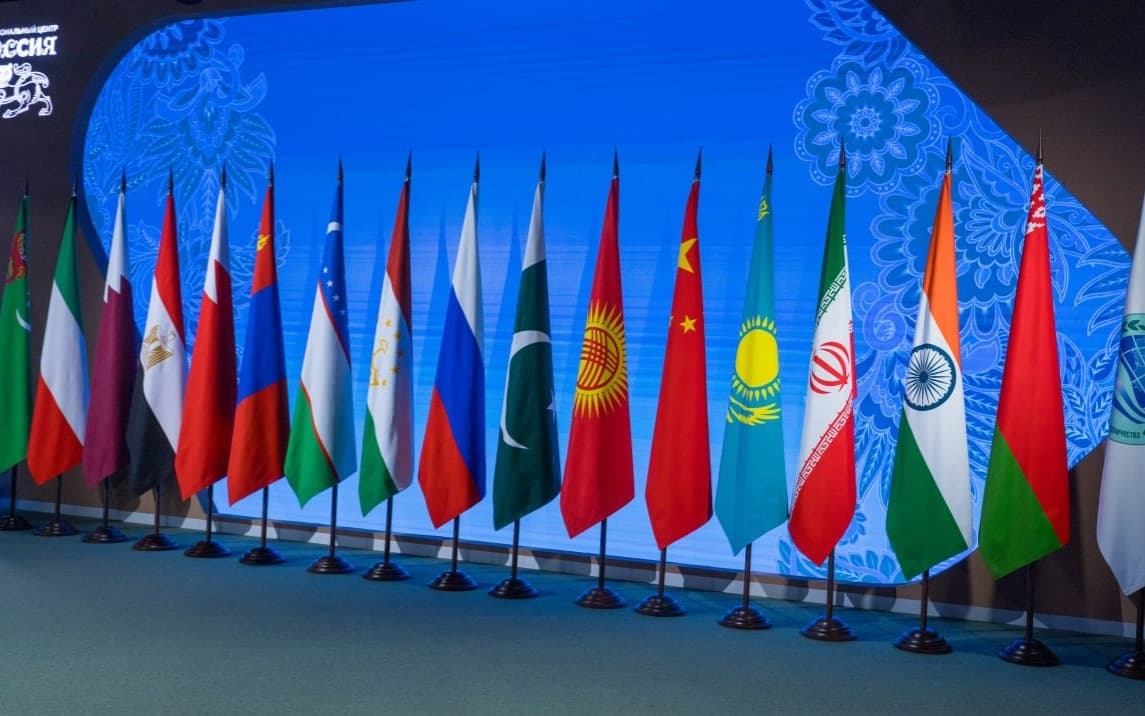
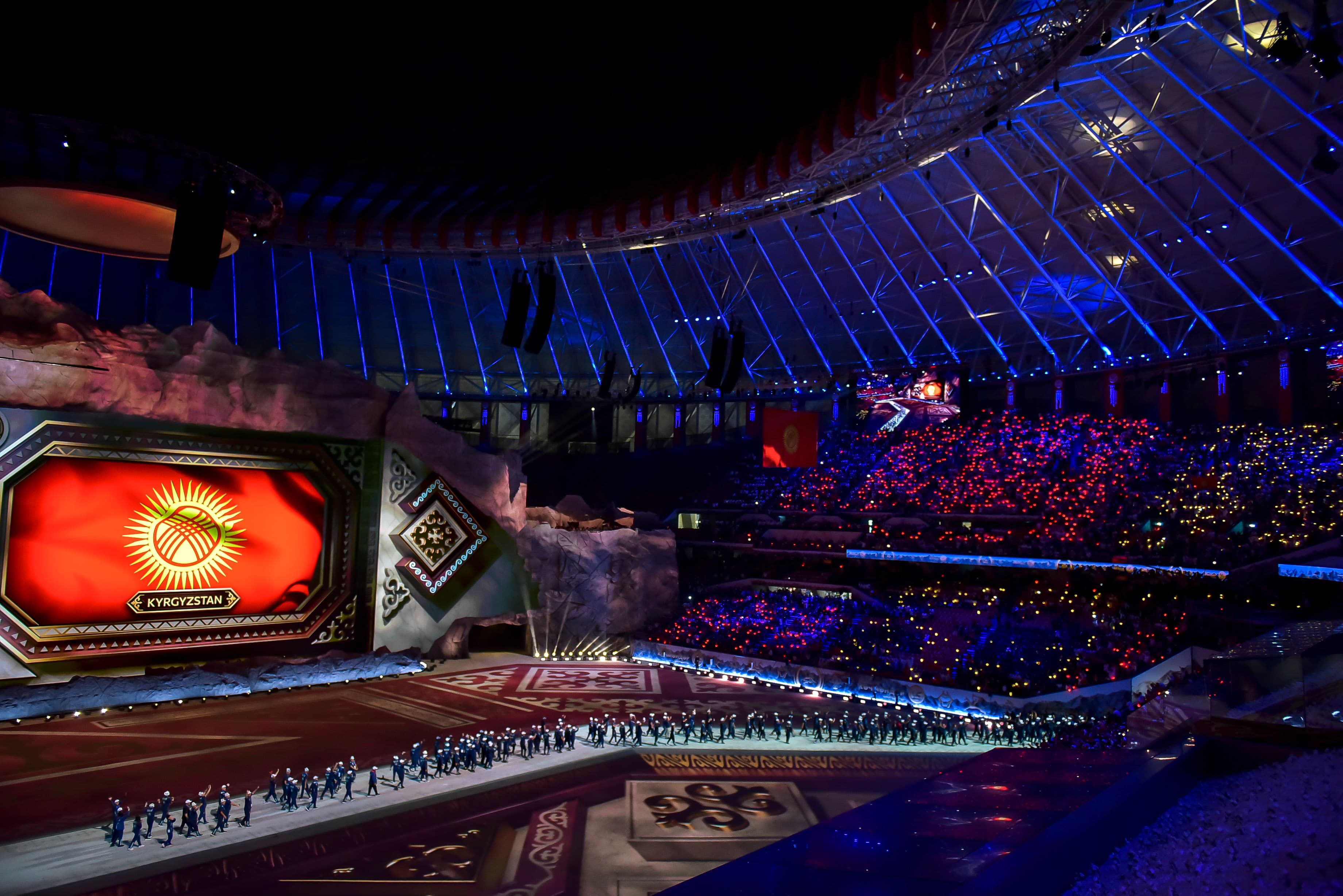
During the working hours of August 31, world leaders convened in Bishkek for the Shanghai Cooperation Organization Summit, discussing geopolitics, diplomatic relations, and trade agreements. Once the meetings concluded, those same leaders attended a very different sort of international conference only a few miles away: the opening ceremony of the sixth World Nomad Games. Hosted in the newly opened, $60 million-dollar yurt-shaped Bishkek Arena, this year’s World Nomad Games was attended by upwards of 30,000 spectators, including President Emomali Rahmon of Tajikistan, President Ilham Aliyev of Azerbaijan, Prime Minister Pashinyan of Armenia, President Vladimir Putin of Russia, and Prime Minister Narendra Modi of India. Dance troupes performed in front of snow-peaked mountains and projected imagery of nomadic symbols and traditions, while equestrians rode around the stage. Later, international sports teams paraded beneath light-shows and giant projected flags. Not a minute was wasted in the seven-hour opening ceremony to showcase Central Asian heritage through modern technological means, illustrating the power of the World Nomad Games as a platform for cultural diplomacy.
A Short History of the World Nomad Games
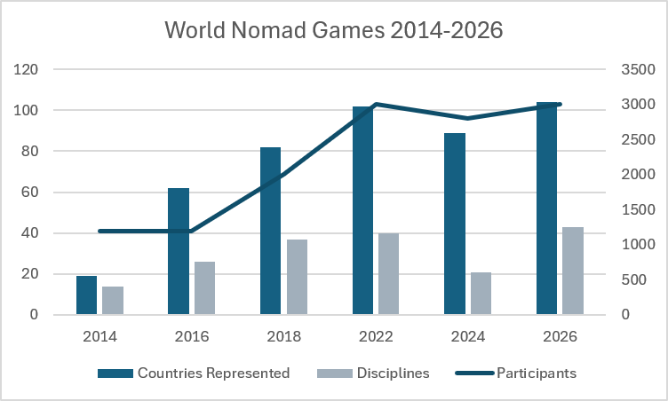
The World Nomad Games was first conceived 14 years ago, one of 10 initiatives agreed upon within the Declaration of the Second Summit of the Turkic Council with the goal of strengthening cultural cooperation among Turkic-speaking states. The First World Nomad Games featured only 14 disciplines, with 1,200 athletes from only 19 countries. In comparison, this year’s turnout saw about 3,000 athletes from over 100 countries, featuring a record-high contingent from African and Austronesian countries: a 207% increase in disciplines, a 60% increase in participants, and a 426% increase in countries represented.
Sharing and Celebrating Nomadic Traditions
The First World Nomad Games opened with Kok-Boru, Ordo, and Toguz-Korgool and featured recitations of Manas and an ethnic fashion show. While keeping 2014’s lineup of classics, the 2026 Games added archery, tug-of-war, sumo, and ssireum-kuresh (ssireum is traditional Korean belt-wrestling) to the competition roster, alongside performances of national dances and exhibitions of national cuisines and art forms.
Held in the scenic Kyrchyn Gorge, the Sixth World Nomad Games saw British horseback archers; a showdown between Kyrgyzstan and the United States in Kok Boru; 196 archers representing 51 countries competing in Kyrgyz, Turkish, and Korean archery competitions; and the victory of Mongolian chef Gongorjav Adilbish at the World Nomad Cuisine competition. After a post-games dispute in medal counting, Kazakhstan took first place with 32 gold medals and 74 medals overall. Kyrgyzstan, Russia, Mongolia, and Uzbekistan took second, third, fourth, and fifth places, respectively.
The Nomad Games have both globalized and popularized Central Asian culture. Western tourism to the World Nomad Games has grown exponentially since 2014, and unofficial numbers estimate the total number of visitors to this year’s Nomad Games at 200,000. International tour groups, like MIR Corporation, Young Pioneer Tours, and Kalpak Travel, now host tour packages for the English-speaking tourist who feels a trip to Paris is old hat. And while the venue was completely unprepared for the crowd size, the crowds themselves –international athletes, journalists, and visitors –experienced a part of nomadic culture they won’t soon forget. As a platform for cultural diplomacy, the World Nomad Games have proven extremely successful: now, the onus is on Kyrgyzstan to sustain and increase international interest in Central Asia by promoting tourism and improving tourism infrastructure.