Grid Limitations and Blackouts: Why does Central Asia Keep Losing Power?




Author: Liam Gibson, Kurtis Yan
09/12/2026
 shutterstock
The region’s latest major blackout on August 14 knocked out power across four of the five Central Asian states and drew widespread attention. This power failure was apparently triggered in Kyrgyzstan, although officials have yet to agree on the ensuing cascade that caused the region-wide blackout. It was not the first time a large-scale outage has occurred. In fact, Kazakhstan, Kyrgyzstan, and Uzbekistan experienced a similarly severe blackout in January 2022. Power outages across the region are not rare and are a vulnerability for a region seeking to develop power-hungry data and mineral industries.
The scale of the latest blackout is indicative of the persistent vulnerabilities of Central Asia’s energy grid. With the countries’ ambitious goals to deploy new technologies and energy-intensive extractive projects, the blackout builds upon established concerns about the region’s power supply.
The Latest Blackout
The August power outage affected major cities across Kazakhstan, Kyrgyzstan, Tajikistan, and Uzbekistan. Photos and videos show inoperable traffic lights, and Almaty’s metro system was shut down for hours. In total, the blackout lasted for several hours before power was restored.
The suspected cause of the outage was a generator failure at the Toktogul hydropower plant in Kyrgyzstan. This led to a 600-megawatt (MW) shift in power generation, potentially triggering a cascading effect across Central Asia’s grid infrastructure. Kyrgyz officials acknowledged that the power generators went offline at Toktogul prior to the reported outage but did not agree that this caused further downstream problems. Rather, they initially argued that the disruption at Almaty’s power hub occurred after Kyrgyzstan stabilized its grid frequencies. Meanwhile, Kazakhstan singled out the Toktogul power generators as the cause of the region-wide blackout.
This dispute has resulted in the creation of independent government commissions to investigate the cause of the incident. A very similar reaction occurred after the 2022 blackout, in which a power surge led to a transmission imbalance across the regional grid system. Uzbekistan’s energy ministry initially claimed that an accident along Kazakhstan’s grid triggered the wider blackout, but Energia Coordinating Dispatch Center (CDC Energia) eventually pointed to a short circuit between the Syrdarya thermal power plant and the Tashkent substation.
Advantages and Drawbacks of the Existing System
The region operates under the Central Asian Power System (CAPS). CAPS dates from the Soviet period, when an integrated electric grid united Kazakhstan, Kyrgyzstan, Tajikistan, Turkmenistan, and Uzbekistan. This interconnected system mitigated differing seasonal electricity shortages faced by these countries. For instance, Kyrgyzstan and Tajikistan provided hydropower in the hot summer months when glacier meltwater is most plentiful, while Kazakhstan and Uzbekistan supplied electricity through thermal generation in the winter. Power was distributed across the region by CDC Energia in Tashkent under the guidance of Moscow.
Central Asian countries began to disentangle themselves from this system after independence. Turkmenistan exited CAPS in 2003, and Tajikistan disconnected from Uzbekistan’s grid six years later. Uzbekistan also threatened to leave the system in 2009 amid efforts to build energy independence and disagreements with Tajikistan, which Tashkent accused of stealing electricity.
This process began to reverse in 2018, when Tajikistan and Uzbekistan signed an electricity-trade agreement. This led the Asian Development Bank (ADB) to allocate $35 million to reconnect Tajikistan to CAPS via Uzbekistan later that same year. The southwestern portion of Tajikistan’s grid returned to CAPS in 2024, with a northern connection still in progress. The ADB continues to modernize electricity infrastructure in Tajikistan to support regional connectivity.
Three primary factors explain the revitalization of the previous system. First, electricity demand has climbed sharply in Central Asia and is projected to continue doing so. This forces countries to purchase electricity from each other to offset the seasonal deficits CAPS mitigates. Second, electricity has become an important cross-border commodity, and tapping into the grid facilitates cross-border electricity trade. Kazakhstan and Uzbekistan agreed to provide electricity to Kyrgyzstan in exchange for water in September 2025, for example. Finally, climate change continues to bear down on the region, and integration leads to more effective, coordinated responses.
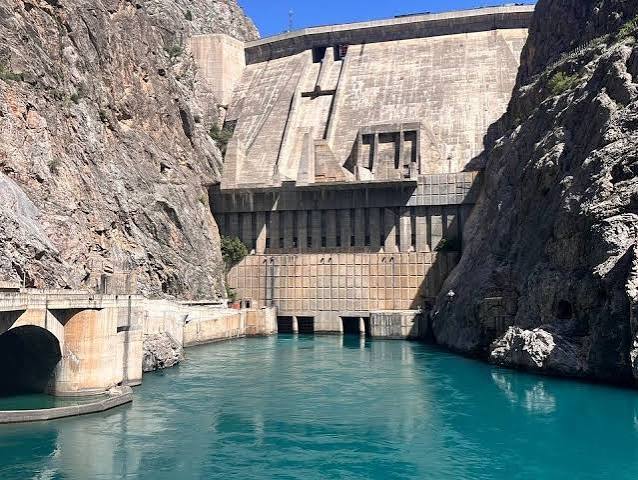
However, the recent blackouts demonstrate that CAPS is not without its downsides. A disruption in Kyrgyzstan cut off power in Kazakhstan, Uzbekistan, and recent-returnee Tajikistan. The lack of centralized control over power generation, unlike during the Soviet period, significantly complicated efforts as governments tried to make sense of the blackout’s cause. Further, although each nation has expanded domestic power production, outdated transmission infrastructure and long transmission networks often hamper efficient electricity delivery.
Regional integration remains worthwhile, despite these drawbacks. Hydropower in Kyrgyzstan and Tajikistan is particularly under threat. Once glacier meltwater begins to decline, the region might see its current summer suppliers become more hungry customers vying for scarce resources.
Grid Limitations for New Projects
As Central Asia looks to diversify its economic output and embrace new production sectors, its grid limitations cannot be overlooked. A lack of reliable, widespread electricity to rural areas provides an obvious obstacle to constructing critical minerals processing plants. These are crucial facilities that not only allow the Central Asian states to retain higher value-added in the mineral supply chain but also resolve a key issue of determining locations for processing. Processes to transform raw extract into refined alloys and usable materials are energy intensive. The United States and other interested nations are looking to deepen their footprints in the region’s mining sector, and the prospect of more Central Asian processing infrastructure can encourage greater East-West supply-chain integration. By contrast, a lack of reliable power supply can reduce the appeal of investment into extractive projects.
Likewise, the region’s efforts to launch energy-intensive data centers and AI cloud computing capabilities might be stifled by the lack of reliable electricity. Central Asian governments have publicly stated their respective country’s interest in developing data centers and advanced computing capabilities. Most notably, Kazakhstan is looking to deploy its 1-gigawatt AI Data Center Valley near Pavlodar by summer 2027, while Uzbekistan is also targeting a 2027 launch for a new 12-megawatt data center, built by the Saudi company, DataVolt. That said, these projects require consistent energy for cooling and continuous operations, which would add further strain on each country’s grid system.
Addressing Future Energy Demands
To address energy insecurity, the Central Asian states should aim to improve grid resilience, update aging power plants, and kickstart alternative energy production. Regional governments are starting to replace older coal-powered plants with more efficient and cost-effective gas-powered complexes. Meanwhile, localized renewable energy, such as solar-powered generators and wind farms can bolster electricity access and security despite seasonal climate impacts. As the region combats water scarcity, renewable energy deployment could also help reduce reliance on hydropower, although that in itself cannot prevent the risk of downstream blackouts during water shortages.
Furthermore, nuclear energy provides a strong opportunity to update older infrastructure and compensate for future energy demands. Both Kazakhstan and Uzbekistan are looking to develop their first nuclear power plants and could conveniently draw upon their uranium reserves, once they develop domestic enrichment capabilities. However, neither renewables nor nuclear energy projects preclude the need to embrace grid reforms.
Efforts are underway to improve trans-border grid connectivity and standardize power exchanges and electricity trade. The World Bank and the Central Asia Water and Energy Program approved $143.2 million to launch the Regional Electricity Market Interconnectivity and Trade (REMIT) Program in January 2026. Kyrgyzstan, Tajikistan, and Uzbekistan are participating in the 10-year project, which seeks to increase regional electricity trade by improving transmission capacity, digitalizing power grids, and strengthening institutions and coordination. Some estimates suggest that this trade could yield up to $15 billion for the region by 2050, capitalizing on ever-growing demand for electricity. CDC Energia, which orchestrated power distribution in the Soviet era, will again coordinate power exchanges as well as the market and new institutions. The participating countries will improve their domestic grids.
If successful, REMIT could make Central Asia’s energy grid far more efficient and resilient, minimizing outages and lowering electricity costs. But much depends on Energia’s performance. Using a single regional controller rather than a decentralized network of power plants and national grids may result in greater transparency for participants. It may also allow for more coherent contingency planning to prevent and respond to outages in one part of the network.
The latest wave of blackouts demonstrates how important this transparency is for a region grappling with record power consumption and a strained environment. Disputes, independent investigations, and decentralized grid projects hinder efforts to cooperate and prevent future outages, especially considering that the strains on CAPS will only rise. Central Asia has a choice: continue to sit in the darkness of disagreement or work together to turn the lights back on.