Beyond the SCO: Central Asia’s New Geography of Power
Author: Dr. Eric Rudenshiold
09/09/2026
Beyond the handshaking, the platitudes, and the boilerplate declarations, were the Cholpon-Ata and Shanghai Cooperation Organization (SCO) Summits significant? Separated by five weeks and 120 miles, the Kyrgyz Republic’s two summit venues produced surprising and differing results.
Cholpon-Ata’s informal meeting of the heads of state of Central Asia and Azerbaijan on July 31 initially looked like another gathering of leaders from the emerging Trans-Caspian region. However, it marked, instead, an important step in the region's evolution from a collection of largely disconnected post-Soviet states toward a more closely aligned political and economic grouping.
Its significance was reinforced only weeks later in Bishkek, where the SCO held its 26th summit. Cholpon-Ata demonstrated the growing cohesiveness of six trans-Caspian states with increasingly shared interests. Bishkek demonstrated the growing diversity of interests within the much larger Pan-Eurasian organization that surrounds them.
Azerbaijan's participation is particularly important. In November 2025, the five Central Asian states formally agreed to Azerbaijan's full participation in their consultative format, effectively transforming the Central Asian five-state (C5) grouping into a tight C6 alliance. The July meeting in Cholpon-Ata wasn’t so much the affirmation of a new organization as it was another mile marker in an already accelerating process that is drawing together the trans-Caspian countries into a more unified transit and trade corridor.
The remarkable feature of this C6 process is not the number of documents signed or even the language of its summit declarations. It is the growing familiarity and confidence evident in Cholpon-Ata between the region's leaders, along with a common interest in capitalizing on shared opportunities.
Bishkek and the Changing SCO
The Bishkek SCO summit provides an important counterpoint. Founded as the Shanghai Five in 1996 by China, Russia, and three of the Central Asian states, Uzbekistan joined in 2001 and the group was renamed the SCO. For much of its history, the organization has been viewed as dominated by Chinese and Russian interests. But that characterization is growing increasingly inadequate.
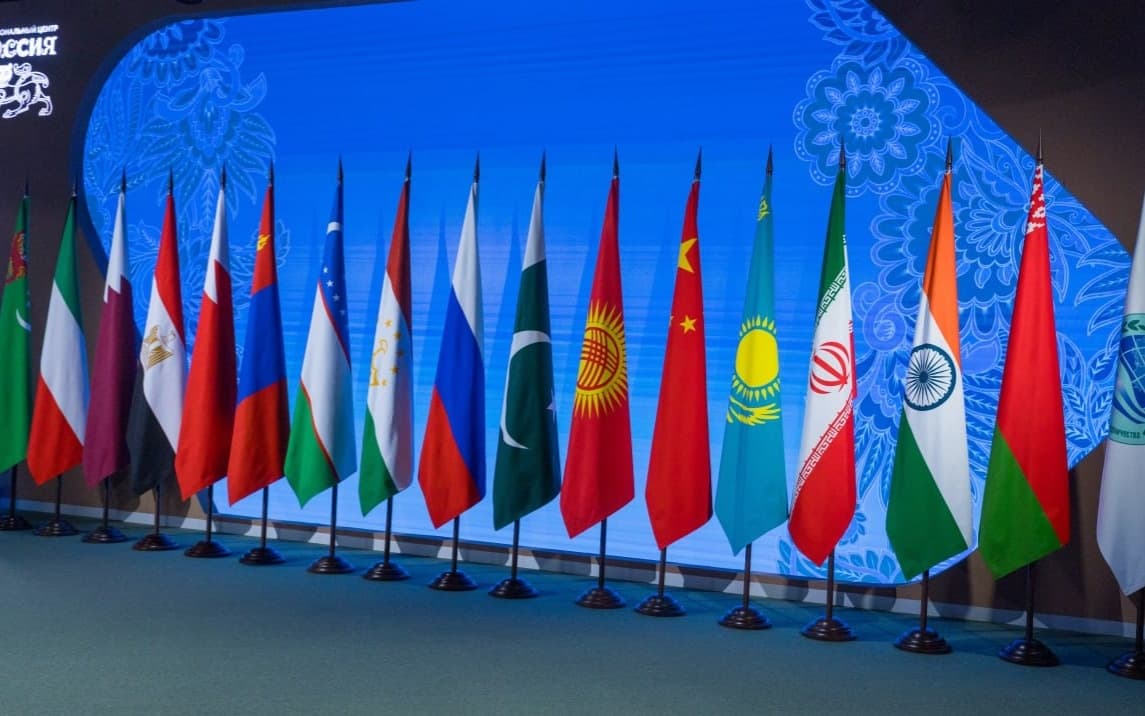
India and Pakistan joined in 2017, Iran in 2024, and Belarus in 2024. The 2026 Bishkek summit brought together all 10 members and reflected the changed character of the organization. Expansion has not simply made the SCO larger, but more pluralistic. With so many interests represented, Beijing and Moscow have less ability to control the organization, its agenda, or to achieve meaningful consensus.
India and China are strategic competitors. India and Pakistan are deeply divided. Iran has unique security and diplomatic priorities. Russia is increasingly dependent on China yet struggles to preserve influence with Eurasian states. China continues to use the SCO to advance its economic and diplomatic agenda across Asia. Meanwhile, the Central Asian states see the SCO as a multilateral platform to display increased unity while maintaining relations with their big neighbors.
The Bishkek summit produced a 25th anniversary declaration with the predictable language about sovereignty, multipolarity, security, terrorism, economic cooperation, and connectivity. There were agreements on amendments to the SCO Charter, yet there was no agreement on perhaps the biggest proposal on the agenda—the creation of a SCO Development Bank. The SCO’s ultimate challenge lies precisely in its diversity as an organization of overlapping interests rather than one with a single geopolitical objective.
Earlier in the year, Bishkek proposed hosting the SCO Development Bank, with President Japarov reinforcing the idea at the Summit. Kazakhstan’s president, however, countered by offering to host the bank. Originally a Beijing proposal to include substantive yuan deposits, the bank would reinforce China’s broader economic and diplomatic role across Eurasia. Yet the proposal lacked agreement and failed.
Russia seeks to remain a consequential Eurasian player with its own sphere of influence—one not dominated by China. India wants strategic autonomy and greater access to Central Asia while avoiding Chinese dominance. Pakistan seeks to pursue its own security agenda while taking advantage of connectivity opportunities with China; it also wants to be present in Central Asia to keep an eye on whatever India might be doing there. Iran searches for diplomatic power and strategic partnerships in an increasingly difficult international environment.
For the Central Asians, the diversity of the SCO is a strategic advantage. The expanded membership provides another platform for managing relations with major powers without subordinating themselves to any one of them.
Putting the Central in Asia
As a result, the Bishkek and Cholpon-Ata meetings are directly linked. Central Asia's external relationships are no longer objects of Russian manufacture. While inherited Soviet-era rail, energy, and trade arrangements oriented the region northward, they increasingly coexist with new east-west, trans-Caspian positioning that ties the region to markets in China, Europe, and around the globe.
China has become an increasingly important economic partner. The Gulf states are investors. Türkiye is deepening its own connectivity. Europe is attracted to the region’s energy, critical minerals, and alternative trade routes. Iran is a gateway to trade, energy, and the Global South. Azerbaijan provides a fraternal link across the Caspian and Middle Corridor access to Europe.
By pursuing multiple relationships, the Central Asian governments are not choosing one partner over another but building optionality. They are embracing partnership over rivalry, not excluding Russia or containing China, but reducing vulnerability to external powers. Cholpon-Ata represents a counterbalance to the SCO, where Central Asia’s smaller regional framework allows the C5, now the C6, to pursue interests more directly tied and central to the Caspian Region itself.
The Caspian Becomes a Bridge
Azerbaijan's joining the C6 is consequential precisely because it provides Central Asia with a political and economic partner on the western side of the Caspian. Such geography matters to landlocked Kazakhstan, Kyrgyzstan, Tajikistan, Turkmenistan, and Uzbekistan. Direct access to global markets depends upon relationships with transit states and infrastructure beyond their borders.
After years of developing itself as an east-west bridge through the Port of Alat, the Baku-Tbilisi-Kars railway, energy infrastructure, and now the broader Middle Corridor, Azerbaijan is a critical partner. Central Asian commodities can move westward across the Caspian, through Azerbaijan and the South Caucasus, and onward to Türkiye and European markets. The same infrastructure can work in reverse, as the route develops to carry greater volumes of traffic in both directions.
More than a transportation project, trans-Caspian connectivity represents economic liberty from circumscribed access managed by their large neighbors. The Caspian has thus transformed from barrier to a bridge between Central Asia and the South Caucasus.
From Agreements to Infrastructure
As evidenced in both Cholpon-Ata and Bishkek, Central Asian governments have no shortage of agreements, declarations, and memoranda of understanding (MOUs). Multilateral consultations are often termed “talk shops” by skeptics, but that is becoming harder for the C6 as the region’s efforts are producing practical agreements that are demonstrably improving transport, trade, security, and regional cooperation.
As ever, the challenge is executing aspirations by moving from political commitments to physical infrastructure. The Middle Corridor needs to be faster, more predictable, and commercially economical, with common digital customs procedures. Rail systems need greater interoperability and connectivity to Caspian ports. Shipping capacity must increase and tie to logistical centers.
The region’s agenda needs to embrace more than transportation. Energy is a critical sector, as Kazakhstan and Turkmenistan need more options to diversify their hydrocarbon exports. Azerbaijan is both an energy producer and positioned to be a key transit state. Critical mineral mining, processing, and refining make up another growing sector that needs greater export capacity.
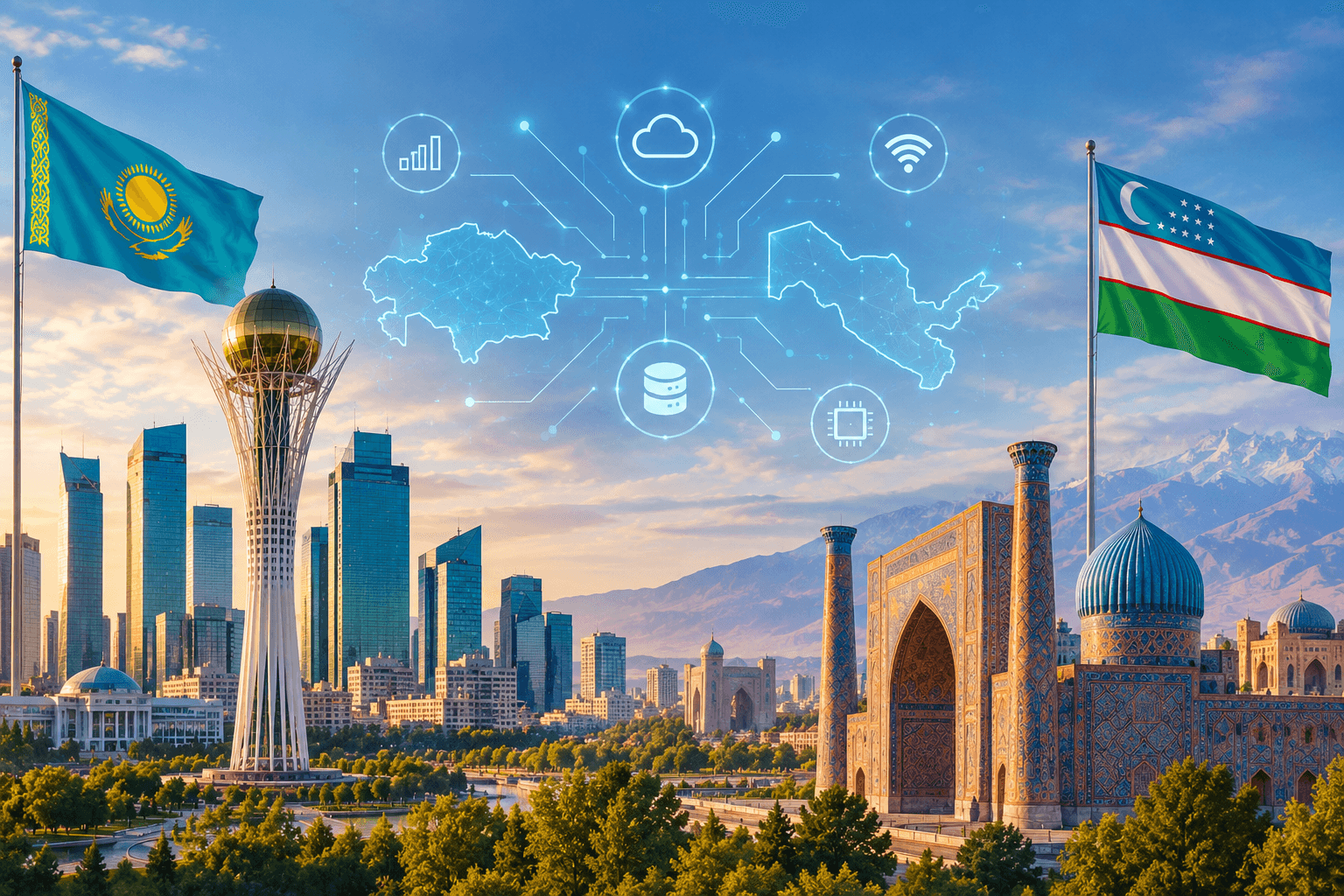
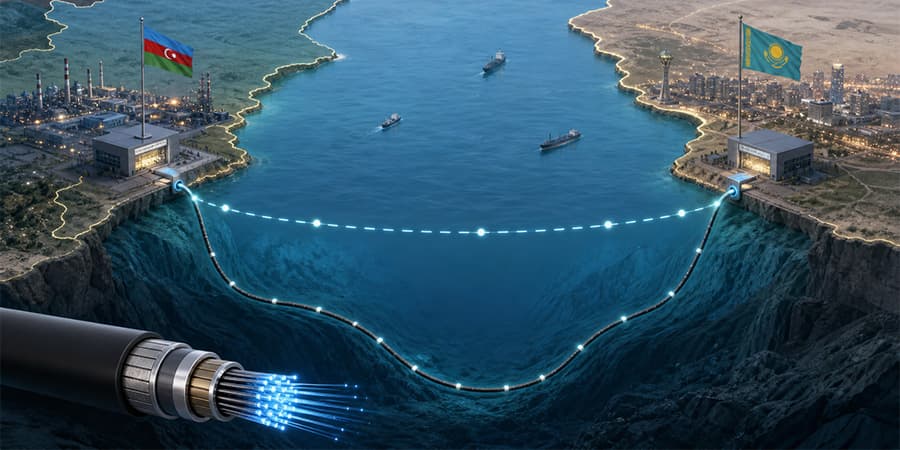
Additionally, digital connectivity may become equally consequential, as satellite and fiber-optic infrastructure across the Caspian is now connecting Central Asia’s nascent digital economies to Azerbaijan, Türkiye, and Europe. These layers of Trans-Caspian connectivity—in addition to railways, pipelines, and other infrastructure—reinforce one another and the region’s strategic positioning and growth outlook.
A Regional Re-Order?
This is why the transition from Cholpon-Ata to Bishkek is important. The SCO is now too diverse and has outgrown China and Russia’s ability to define the organization’s entire political agenda. India, Pakistan, Iran, Belarus, and the Central Asian states each bring different interests, priorities, and rivalries to the organization. As a result, the SCO can produce generally a broad-principled consensus, without its members sharing a common geopolitical strategy.
Consequently, the Central Asian states have the diplomatic space to navigate relationships with larger powers, not just as individual countries, but as a region of shared interests. This does not mean that Kazakhstan, Kyrgyzstan, Tajikistan, Turkmenistan, or Uzbekistan are forsaking ties to Russia or China.
However, the C6 does not represent an alliance as much as it is an emerging regional order based on greater choice. The region is aligning in pursuit of greater cooperative opportunities which in many cases overlap: the C6 across the Caspian, the SCO stretching across Eurasia and the Global South, the Turkic States framework, the Middle Corridor to Türkiye and the European Union, as well as growing engagement with the Gulf and the United States.
Such redundancy and elasticity in relationships could ultimately be more consequential than the creation of another formal bloc. The lack of mutual exclusivity in relations, combined with converging mandates, is by design. For these countries, overlapping partnerships are not a structural weakness but a purposeful form of strategic planning.
For Washington and Brussels, it is important to appreciate that the C6 is not an anti-Russian or anti-Chinese bloc. Western engagement and investment are more likely to succeed if it is recognized that these countries seek balance in relationships rather than choosing between them.
The significance of Cholpon-Ata will likely be measured less by summit ceremonies than by how the C6 continues to operate and develop alongside the larger institutions represented in Bishkek, rather than inside them. If the C6’s political dialogue produces faster railways, efficient ports, stable energy networks, and broader partnerships, the C6 will become considerably more consequential than other talk-shop fora.
For the region’s leaders, the critical question is whether the C6 grouping can use its growing political cohesion to connect Central Asia to the world without simply replacing one form of dependence with another. Trans-Caspian connectivity already delivers greater strategic opportunity. For the countries of Central Asia and Azerbaijan, the result could be an ability to shape the Eurasian trade system rather than simply serving as the venue where major powers compete.