Headlines from the Caspian: September 28, 2026
Recent Articles
Author: Caspian Policy Center
09/28/2026
 president.az
Energy and Economy
Major Cooperation Agreements Signed Between Azerbaijan and International Firms
Azerbaijan and its state-owned enterprises signed a number of strategic frameworks and Memoranda of Understanding (MoUs) with international companies on the sidelines of the second Azerbaijan International Investment Forum on September 26. These included a “final investment decision” between SOCAR, TotalEnergies, and XRG regarding the Absheron gas-condensate field, along with a production sharing agreement (PSA) between SOCAR and ExxonMobil for exploration of the Middle Kura basin. Azerbaijan Minister of Economy Mikayil Jabbarov claimed that Azerbaijan signed 26 contracts totalling $10 billion with international investment companies in the fields of energy, artificial intelligence, and industry.
Source: president.az, Euronews
ExxonMobil and SOCAR Launch Azerbaijan Shale Venture
On the sidelines of the Azerbaijan International Investment Forum, ExxonMobil and Azerbaijan’s state energy company SOCAR signed a Production Sharing Agreement to explore, develop, and produce unconventional hydrocarbon resources in Azerbaijan’s Middle Kura basin. The agreement establishes a 50/50 partnership between the two companies, with ExxonMobil serving as operator, bringing its global unconventional resource expertise and technology to assess the basin’s potential. The deal marks a significant expansion of ExxonMobil’s upstream engagement in Azerbaijan and reflects Baku’s growing interest in developing onshore unconventional resources alongside its traditional offshore oil and gas projects.
Source: World Oil
Kyrgyzstan to Purchase 10 U.S.-Made Freight Locomotives
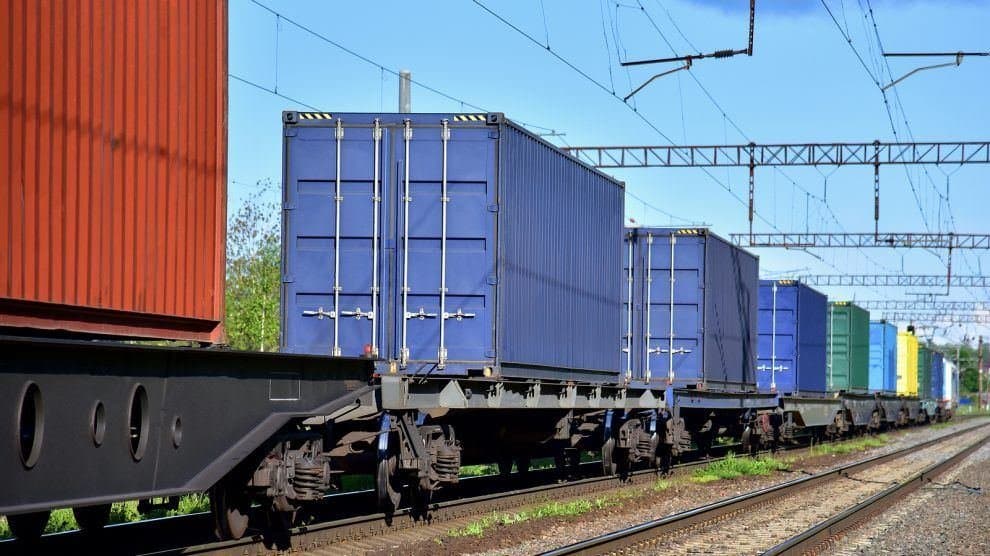
On the sidelines of the United Nations General Assembly (UNGA), Kyrgyzstan signed a contract with U.S. manufacturer Wabtec to purchase 10 TE33AS-series mainline freight locomotives for the state-owned Kyrgyz Temir Zholu. The locomotives are expected to be delivered by the end of 2027 and will modernize approximately 30% of the railway operator’s locomotive fleet. The agreement comes as Kyrgyzstan prioritizes the development of its railway infrastructure and prepares for the completion of the China–Kyrgyzstan–Uzbekistan railway, which is expected to increase freight volumes across the Middle Corridor and strengthen the country’s transit potential. Kyrgyz President Sadyr Japarov has also highlighted the deal as an opportunity to deepen U.S.–Kyrgyz economic and investment cooperation.
Source: 24.KG
NVIDIA’s Jensen Huang to Visit Kazakhstan on October 23
NVIDIA founder and CEO Jensen Huang will visit Kazakhstan next month to discuss the deployment of artificial intelligence (AI) technologies in the country. Kazakhstan’s Ministry of Artificial Intelligence and Digital Development will hold a fireside chat with Huang at the alem.ai International Center for Artificial Intelligence in Astana. The discussion will close out Kazakhstan’s AI Month program, which includes a hackathon and other events related to AI.
Source: Astana Times
Russia Sharply Increases Diesel Shipments to Central Asia Despite Broader Export Restrictions
Russian diesel exports to Kazakhstan, Kyrgyzstan, and Tajikistan more than doubled in August from the previous month, exceeding 370,000 metric tons across Central Asia and neighboring Mongolia. The increase came as Russia maintained restrictions on fuel exports to most foreign markets while permitting shipments to countries covered by intergovernmental arrangements. The surge reflects Central Asia’s continuing dependence on Russian fuel supplies and Moscow’s ability to use energy trade selectively despite domestic production pressures caused, in part, by Ukrainian attacks on Russian refineries.
Source: Reuters
Armenia Temporarily Substitutes Iranian Gas for Russian Supplies
Russian suspended gas deliveries to Armenia, September 15-25 for planned maintenance on the North Caucasus–Transcaucasia pipeline. Armenian authorities said domestic reserves and additional Iranian supplies would prevent an interruption to consumers. The episode highlighted both Armenia’s continuing dependence on Russian energy—Russia supplied roughly 82 % of Armenia’s gas imports in 2025—and Yerevan’s efforts to develop alternatives through Iran. The planned nature and short duration of the outage make it a limited test of substitution rather than evidence of a completed energy realignment.
Source: Reuters, JAMnews
Kyrgyzstan Delays New Mining Royalty System Until 2029
Kyrgyzstan intends to delay its new mining royalty system until 2029, pushing back a change that would tax the export of raw ore more heavily than metals processed in the country. Although the system could bring greater processing capabilities to Kyrgyzstan, the government claims it needs more work before it can be implemented. 35% of Kyrgyzstan’s state budget revenue comes from taxes on subsoil users, and the Finance Ministry has previously expressed concerns about massive revenue decreases under similar royalty-based systems.
Source: The Times of Central Asia
B5+ Italy Business Forum Launches in Astana
The inaugural Central Asia-Italy business forum took place on September 18 in Astana, Kazakhstan. Italy, already Kazakhstan's third largest trading partner, wants to expand ties with the entire region of Central Asia. Trade turnover between Italy and Kazakhstan reached almost $17 billion in 2025, of which the overwhelming majority was crude petroleum exports from Kazakhstan. The leaders present at the B5+Italy summit discussed trade diversification, business interactions between Italy and Central Asia, agriculture and critical minerals, and the creation of a direct flight path from Italy to Kazakhstan.
Source: Trend, OEC World
SOCAR Expands into Côte d'Ivoire; Sale of Stake Finalized
Marking its expansion into Africa, the State Oil Company of the Republic of Azerbaijan (SOCAR) plans to load the first oil cargo from Côte d'Ivoire’s Baleine oil and gas field later this year, following the completion of the sale of Italian energy company Eni’s 10% stake to SOCAR. The Baleine gas field, which was discovered in 2021, produces over 57,000 barrels of oil and over 78 million cubic feet of gas per day. Eni, which remains Baleine’s majority stakeholder and developer, is still developing the field. After the completion of phase 3, Baleine’s oil and gas production is expected to triple.
Source: Trend, Eni
Singapore-Based Venture Capital Firm to Launch Two-Year Support Program for Startups in Uzbekistan
Golden Gate Ventures will provide 20 selected startups from Central Asia access to the firm’s mentors and network. The firm also announced the opening of an office in Uzbekistan in June. The program was announced during Information and Technologies Week, also known simply as ICT Week, in Uzbekistan that was September 22-25.
Source: Times of Central Asia
AIIB to Provide $182 Million for Transport Infrastructure in Georgia
The Asian Infrastructure Investment Bank (AIIB) and Georgia signed an agreement to improve transport infrastructure on the Middle Corridor. The $182 million package will finance 67.4 kilometers of climate-resilient road infrastructure in the Kakheti region, improving connections between Azerbaijan and the East-West Highway and Black Sea ports. It will also support the development of a National Highway Control Center and an Intelligent Transport System. The deal was signed on the sidelines of AIIB’s 11th Annual Meeting in Doha. AIIB has nine projects in a range of sectors in Georgia valued at $848.6 million.
Source: Trend
Azerbaijan, TotalEnergies and XRG Approve Full-Scale Development of Absheron Field
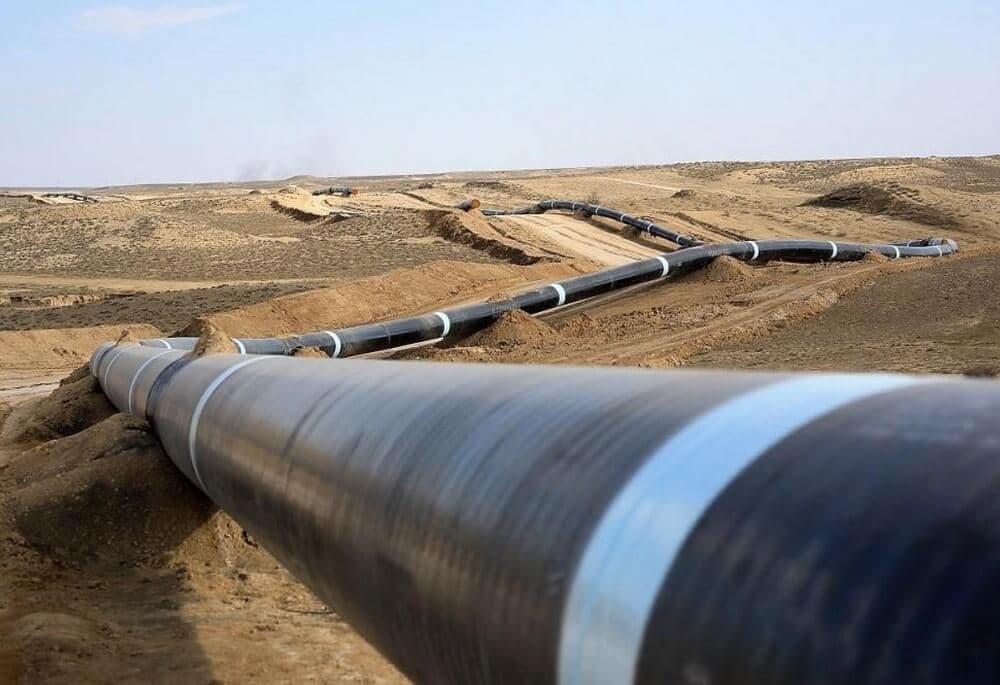
SOCAR, France’s TotalEnergies, and UAE-based XRG have adopted a Final Investment Decision (FID) for the full-scale development of the Absheron gas condensate field in Azerbaijan’s sector of the Caspian Sea. The project will include additional drilling and new processing infrastructure, with production expected to begin in 2029 and reach approximately 17 million cubic meters of gas per day and 47,000 barrels of condensate per day. The development is expected to add up to 5 billion cubic meters of annual gas production within three to four years, further strengthening Azerbaijan’s role as a major regional energy supplier and its integration with established export routes through the Southern Gas Corridor.
Source: Interfax
China’s Sungrow to Add 450 Megawatts of Wind Power to Kazakhstan’s Grid
Three new wind power plants with capacities of 300 MW, 100 MW, and 50 MW will be built in Akmola Region during 2026-2028. Akmola Region Governor Marat Akhmetzhanov and Sungrow signed the agreement on September 25 during the Kazakhstan-China Investment Forum in Almaty. The project will help diversify Kazakhstan’s energy supply and expand its renewable generation capacity.
Source: Trend
Politics and Security
First Central Asia-South Korea Summit in Seoul
On September 16, the first summit between the leaders of Central Asia and South Korea occurred in Seoul, South Korea. The summit provided a platform for bilateral talks and business forums alongside high-level meetings focused on further cooperation on minerals, energy, trade, industry, and investment. Most importantly, the six signed the Seoul Declaration that affirmed their commitment to peace, future cooperation, and innovation. Furthermore, the leaders agreed to hold the summit every two years, with the next summit scheduled for 2028 in Astana, Kazakhstan. More than 70 agreements and memorandums were reportedly concluded during the broader summit diplomacy. The emphasis was on moving beyond the extraction of raw materials toward joint processing, manufacturing, research, and workforce development. Kazakhstan agreed to deepen cooperation with Seoul on peaceful nuclear energy, crude oil, science, and technology, while Kyrgyzstan proposed a joint investment fund and Kazakhstan President Kassym-Jomart Tokayev promoted an end-to-end transport chain linking Korea, Central Asia, and Europe through the Middle Corridor. The summit underscored the region’s continuing effort to diversify economic and strategic partnerships beyond Russia and China.
Source: Fergana Agency, Korea Herald, Reuters, Yonhap News Agency, Euronews
U.S. Government Plans for TRIPP Integration into Larger Corridor with Trans-Caspian Enterprise Fund
On September 23, U.S. Caspian region government officials met with representatives from over 40 companies on the sidelines of the UN General Assembly to discuss the Trump Route for International Peace and Prosperity (TRIPP) transformation into a fully-fledged transport corridor. The meeting, “Prosperity Through Peace: Investing in the Trans-Caspian Trade Route and TRIPP,” hosted representatives from all eight Caspian region countries and provided a platform to discuss TRIPP and future trade and investments.
Source: RFE/RL, UA News
Central Asian Governments Call for Renewed Arms-Control Efforts
The foreign ministers of Kazakhstan, Kyrgyzstan, Tajikistan, Turkmenistan, and Uzbekistan called for new, verifiable arms-control mechanisms in a joint statement marking two decades since the Central Asian Nuclear-Weapon-Free Zone Treaty. They expressed concern about stalled disarmament negotiations, the expiration of major agreements, and the modernization of nuclear arsenals. The statement came after the expiration of New START in February and reflected the region’s preference for collective diplomatic appeals rather than alignment with a new nuclear bloc.
Source: The Times of Central Asia
14 Kazakhstan Soldiers Killed During Training Exercise on the Caspian Sea
At least 17 Kazakhstan servicemen were swept away at sea during a combat exercise on the Caspian Sea, leading to 14 deaths. The incident occurred in Kazakhstan’s part of the Caspian Sea, near the Mangystau region. The Ministry of Defense stated that sudden weather changes caused the accident. Kazakhstan’s President Kassym-Jomart Tokayev declared September 25 a day of national mourning.
Source: Euronews
Tokayev Orders Military Reforms in Response to Death of 14 Kazakh Servicemen
In the days following the tragedy (see above), President Tokayev of Kazakhstan ordered an investigation of the incident, which revealed that the servicemen were not given safety equipment, and an assessment of the Defense Ministry itself. Speaking about these failures, Tokayev stated that Kazakhstan’s military is “stuck in the last century” and has requested a plan for military modernization and reform from the Defense Ministry. Having dismissed the previous defense minister over the deaths, President Tokayev has directed the new minister, Aidos Myrzakhmetov, to review the budget and update the military’s list of priorities.
Source: Trend, China Daily
Azerbaijan Hosts “Power of Unity - 2026” Military Exercise for Uzbekistan, Azerbaijan, and Türkiye
The military exercises began on September 23 in Karabakh, Azerbaijan, and aim to prepare soldiers for interoperability among the nations’ units fighting on different types of terrain. The second and third phases of the exercises will take place in Nakhchivan and Boyuk Zira, an island off Baku in the Caspian Sea. Although the three countries have participated in joint military exercises before, “Power of Unity – 2026," also known as “Unity of Strength – 2026," depending on the translation, are the first exercises among these three countries: Uzbekistan, Azerbaijan and Türkiye.
Source: Tashkent Times, Ministry of Defense Azerbaijan
CSTO Conducts “Frontier 2026” Exercises in Kazakhstan with Afghanistan in Mind
The Russia-led Collective Security Treaty Organization (CSTO) held military exercises September 12–19 at the Koktal training ground in southeastern Kazakhstan. The drills practiced responses to cross-border incursions in mountain and desert terrain, reflecting continuing CSTO concern about instability and militant infiltration from Afghanistan. The exercises also demonstrated that, despite the organization’s broader political limitations, Afghanistan remains one of the few threats around which CSTO members can articulate a common security rationale.
Source: The Times of Central Asia
Turkmenistan Shows Off New Chinese Air Defense System
A total of 11 Chinese-built air defense systems --eight FK-2000s, an FD-2000, a KS-1A, and an FM-90, were on display at a military parade in Turkmenistan on September 28. Turkmenistan is one of five other countries, including the UAE, Chad, Ethiopia, and Sudan, to use the short-to-medium range FK-2000, and the system itself is the fourth Chinese-built surface-to-air system acquired by Turkmenistan. The FK-2000 is produced by the China Aerospace Science and Industry Corporation, and was first unveiled at an exhibition in 2022. Videos on social media have revealed that Ethiopia has also recently received at least two FK-2000s.
Source: China Daily, Baidu, Military Watch Magazine, Defence Blog
Armenia’s Constitutional Court Clears the Framework Agreement Underpinning the TRIPP Corridor
Armenia’s Constitutional Court ruled that the framework agreement for the Trump Route for International Peace and Prosperity (TRIPP) is compatible with the constitution, clearing a procedural hurdle before its consideration by the National Assembly. Armenian officials continue to describe the planned route as operating under Armenian sovereignty and jurisdiction, while Azerbaijan uses the term “Zangezur Corridor” and expects construction of the Armenian section to begin in 2027. The ruling moved the project from a constitutional question toward a political and legislative phase, but did not itself authorize construction or resolve competing interpretations of the corridor’s governance. The clearance does, however, free Armenia’s parliament to consider the agreement.
Source: Vigil Consilium, RFE/RL
Azerbaijan Seeks to Translate Climate Commitments into Irrigation and Agricultural Investment
At Baku Climate Action Week, Azerbaijan announced up to 1 billion manat—approximately €540 million—for climate-resilient irrigation infrastructure under its 2026–2030 state program. The government also introduced an artificial-intelligence-based farmer-scoring system developed with the United Nation’s Food and Agriculture Organization to direct subsidies toward smallholders adopting water-saving and soil-regenerating practices. The measures connect Azerbaijan’s climate diplomacy to domestic water security, agricultural productivity, and digital governance.
Source: Euronews