Headlines from the Caspian: October 5, 2026
Author: Caspian Policy Center
10/05/2026
 euronews.com
Energy and Economy
Kazakhstan and Germany Deepen Strategic Economic Partnership Around Energy, Critical Minerals and the Middle Corridor
President Kassym-Jomart Tokayev’s September 29–30 visit to Germany produced a significant expansion of Kazakhstan-Germany economic cooperation. Chancellor Friedrich Merz said Berlin wants to strengthen resilient supply chains and further expand the Middle Corridor, while Tokayev said Kazakhstan intends to increase oil supplies to Germany. Critical minerals were another major focus: Kazakhstan possesses 21 of the EU’s 34 strategic raw materials, and the two sides agreed to pursue increased processing rather than simply exporting raw materials. A 2026–2028 roadmap covers industrial, technological, and raw-material cooperation, while Kazakhstan’s Baiterek national holding company reported agreements approaching $870 million.
Source: Reuters, Government of Kazakhstan
Kazakhstan to Receive Second Airbus A400M Atlas Military Aircraft
Airbus Defense and Space stated that the final technical checks are being made to the A400M Atlas aircraft in a factory in Seville, Spain, before delivery to Kazakhstan. This is the second of a pair from an order placed in September 2021. The A400M Atlas functions as a multirole aircraft, with capabilities to transport military vehicles, carry personnel, and lead evacuations.
Source: Janes, Airbus
World Bank: Middle Corridor Could More Than Triple Trade by 2040—but Needs $55 Billion in Investment, Major Reforms
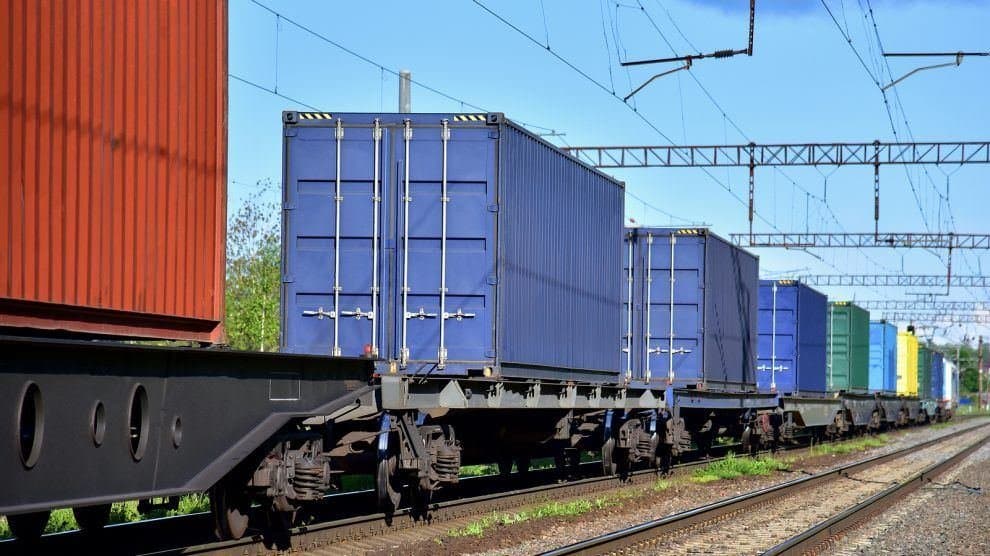
A new World Bank assessment stated that strategic investment could more than triple trade volumes along the Trans-Caspian Transport Corridor by 2040, cut transit times by half, raise regional GDP by 3.3% and create approximately two million additional jobs. The Bank estimates at least $25 billion in physical infrastructure investment is needed through 2040, particularly for railways, ports, and maritime links, with another $30 billion potentially required for logistics hubs, rolling stock, digital systems, and other enabling infrastructure. The report argues that infrastructure alone will not be sufficient: a single digital system for trade documentation, an integrated rail-and-shipping operator, corridor-wide coordination, and more commercially oriented state transport companies will be essential.
Source: World Bank
OPEC+ Keeps November Production Targets Unchanged as Kazakhstan Balances Higher Output with Market Constraints
OPEC+ agreed on October 4 to leave November oil-production targets unchanged. Kazakhstan is one of the core participants in the group and remains under pressure to balance its commitments with production from its major fields, particularly Tengiz and Kashagan. The decision comes as global oil markets remain unusually tight because of disruptions associated with the conflict involving Iran and continuing logistical problems around the Strait of Hormuz. For Kazakhstan, sustained high oil prices are favorable for revenues, but disruptions to export routes—including the Caspian Pipeline Consortium—continue to underscore the country's vulnerability to transportation constraints outside its direct control.
Source: Reuters
Tajikistan Receives Shipments of Iranian Oil
Iranian oil and petroleum have been exported to Tajikistan for the last two months, although the volume and frequency of the shipments, as well as the shipment’s route, are unclear. While necessary, Tajikistan’s imports conflict with the U.S. Operation Economic Outcast that seeks to isolate the Iranian economy. As a consequence, Tajikistan could face sanctions for ongoing trade with Iran. At the same time, Tajikistan’s purchase of Iranian oil and petroleum will allow the small country to ease its dependence on Russia.
Source: Oil Price, US Treasury
Kazakhstan Resumes Efforts to Collect $5 Billion Fine from NCOC
Efforts to enforce a $5.22 billion environmental fine on the North Caspian Operating Company (NCOC) resumed on September 29, the latest development in a years-long legal battle. The fine originated in a 2022 inspection at a Kashagan oil field, operated by NCOC, that identified 10 alleged violations. The Kazakhstan government has been attempting to enforce the fine immediately, while NCOC insists that enforcement must wait for international arbitration to resolve. The fine represents just one of several multibillion-dollar disputes between Kazakhstan and foreign investors in its oil sector.
Source: The Times of Central Asia
Tajikistan Approves $300M Grant from World Bank for Rogun Dam
The country's parliament ratified the latest grant package from the World Bank’s International Development Association (IDA) on October 1, bringing total institutional financing to $650M. Rogun Dam would be Tajikistan’s largest hydropower project and is expected to reach full operational capacity by 2033. Construction has reached 190 meters of the projected 335 meters in height.
Source: Times of Central Asia
Turkmenistan Investment Forum Takes Place in Ashgabat
Government officials, business representatives and private-sector investors gathered in Ashgabat on October 1-2 for the Turkmenistan Investment Forum, or TIF, 2026. The forum’s sessions centered on energy sustainability, regional connectivity, and processing industries. During the event, European Union Ambassador to Turkmenistan Luc Devigne conveyed the EU’s intention to assist with the development of the Trans-Caspian Transport Route, emphasizing the importance of updated infrastructure.
Source: TIF Turkmenistan, Trend
Politics and Security
C6 Summit to be Held on Thursday in Avaza
This year’s formal Consultative Meeting of the Heads of State of Central Asia will be held on October 8, and it marks Azerbaijan’s first participation as a full member of the format. The heads of state of each Central Asian country and Azerbaijan will all travel to Avaza, a city on Turkmenistan’s Caspian coast. The summit builds on the Cholpan-Ata Declaration, under which the six countries agreed to expand cooperation and regional connectivity. Azerbaijan’s status as a full member comes from a summit in Tashkent in November 2025, during which the C5 agreed to its ascension into the platform.
Source: Times of Central Asia
Secretary Marco Rubio to Travel to Uzbekistan with Delegation Representing 100+ American Companies
Sergio Gor, the U.S. Special Envoy for South and Central Asia, announced that Secretary Rubio will visit Samarkand with business representatives to strengthen economic ties between the United States and Uzbekistan. Which American businesses will send representation on the mid-October trip is currently unknown. Rubio will also take part in this year’s C5+1 Ministerial meeting, alongside foreign ministers from each of the five Central Asian countries. The Ministerial will serve as a platform to discuss boosting trade and investment between Central Asia and the United States.
Source: Times of Central Asia, U.S. Embassy and Consulates in India
Türkiye and Azerbaijan Sign Defense Contracts Worth Over $500 Million
The contracts were signed by officials from Türkiye and Azerbaijan during Azerbaijan’s International Defense Exhibition (ADEX 2026) and included the sale of 14 Hürkuş-II aircraft, loitering systems from Baykar, and Roketsan’s mobile coastal defense system, alongside other defense systems. Turkish defense company Aselsan also signed an MoU regarding the ALP-100 air surveillance system and has agreed to build a factory in Nakhchivan.
Source: Daily Sabah, TürkiyeToday
Defense Ministers of Azerbaijan, Georgia, and Türkiye Hold Trilateral Meeting
Azerbaijan, Georgia, and Türkiye held the 13th trilateral meeting of their defense ministers in Shusha on October 2, with Azerbaijani Defense Minister Col. Gen. Zakir Hasanov, Turkish National Defense Minister Yaşar Güler, and Georgian Deputy Prime Minister and Defense Minister Irakli Chikovani participating. The ministers emphasized the importance of trilateral cooperation in strengthening regional peace, security, and stability, and highlighted the need to expand joint military exercises and training activities. They also discussed opportunities to deepen cooperation in military, military-technical, educational, and medical fields, and signed a protocol outlining the meeting’s outcomes.
Source: Minister of Defense of Azerbaijan
Kyrgyz Nanosatellite Launched with SpaceX Falcon 9
On October 1, the SpaceX Falcon 9 rocket launched into orbit, bringing along with it 130 nanosatellites, including one made in Kyrgyzstan. The 10lb satellite, worth $130,000, was developed and produced by Kyrgyz Electronics and assembled by Kyrgyz Asman Open JSC. Once in orbit, the nanosatellite will monitor and collect data on crop yields, water usage, and glacial melting. President of Kyrgyzstan Sadyr Japarov traveled to California to tour SpaceX and watch the launch, after participating in the UN General Assembly in New York.
Source: RFE/RL
U.S. to Provide $5 Million Toward Cybersecurity and the Digital Sector in Central Asia
U.S.-based non-profit CRDF Global will administer $5 million in foreign assistance to advance cybersecurity in the digital sector in Central Asia. CRDF Global works with governments and institutions on security-related programs. The funding is meant to strengthen cybersecurity in all five Central Asian countries, including through grants provided to startups.
Source: The Times of Central Asia
Ukrainian Citizen Detained in Astana at Russia’s Request
Ukrainian citizen Lyubov Rozhanska was detained at Astana airport at Russia’s request because of a criminal case over an alleged attempt to abduct a child. Ukraine has called for her release and opposed her potential transfer to Russia. The case revolves around a dispute over Rozhanska’s grandson, who moved to Russia with his mother in 2021 and received citizenship in 2022. The Ukrainian Supreme Court ruled in 2025 that he should live with his father in Odesa. The woman traveled to Kazakhstan to take the boy back to Ukraine after arranging a meeting with relatives of his mother’s second husband.
Source: The Times of Central Asia