Sealing Cracks: Turkmenistan’s History of Leaks Exposes the Importance of Halting Unfettered Methane Emissions


Author: Kurtis Yan
11/03/2026 · 5 min read
 Shutterstock
Methane emissions might be expected from one of the largest natural gas producers in the world, but Turkmenistan has also been cited for the highest number of super-emitter methane leaks in the world. Though not the largest methane emitter by volume in the Caspian region, the concentration of massive leaks and methane plumes around its natural gas sites stands out.
Turkmenistan’s methane puzzle has become subject to scrutiny and interest, especially since the creation of the United Nations Environment Programme’s (UNEP) Methane Alert and Response System (MARS). Turkmenistan appears to be taking some action to resolve this issue, both verbally and in action by plugging leaks, though more may be required to address the true scale of the problem.
A Leaky History
Since the launch of the MARS system in 2023, Turkmenistan has consistently sat near and at the top of countries with the most methane leak events. Using satellite detection, MARS identifies plumes and sends alerts to governments and companies for responses. The most recent UNEP data, from August 2025 to end of July 2026, recorded over 180 methane leaks from Turkmenistan. Many of these leaks are fugitive, or unintentional, diverging from typical greenhouse gas emissions that come from industrial activity.
The U.S. Environmental Protection Agency (EPA) measures super-emitter events as methane leaks at over 100 kilograms per hour near oil and gas facilities. They are also large enough to detect with global satellite imagery technology.
The high amount of super-emitter events boils down to old Soviet-era technology that continues to process and transport natural gas. Old pipeline systems frequently allow for smaller scale but less observable leaks, while intentional gas venting can be observed around Galkynysh and the Caspian Basin. Verification has been historically difficult in Turkmenistan, allowing the problem to get worse.
The Risks Associated with Methane Leaks
In reality, Turkmenistan only accounts for an estimated 0.2-0.4 percent, or 114 million tons of carbon dioxide (CO2) equivalent, of the world’s greenhouse gas emissions. The issue lies in the types of gas being released. In 2024, methane accounted for just over 19 percent of its total greenhouse gas emissions, compared to around 74 percent for CO2.
Methane is the second most prevalent greenhouse gas in our atmosphere behind CO2 and is typically measured in CO2 equivalent over a 100-year timespan. However, while it dissipates at a faster rate, it traps 80 times more heat than CO2 at the same volume over a 20-year period, raising the urgency and impact of methane emissions in the short term.
Much of the country's greenhouse gas emissions are attributed to fugitive leaks, industrial emissions, and agriculture. 60 percent, or 13.4 million tons of CO2 equivalent, of Turkmenistan’s total methane emissions in 2024 were found to be fugitive leaks, according to Climate Change Tracker. This brings the total 100-year impact to 22.6 million tons of CO2. Accounting for methane’s disproportionate potency, the immediate global warming impact of these emissions is much higher.
Beyond environmental impact, fugitive methane emissions reduce Turkmenistan’s actual profits coming from natural gas production and sales. Preventable leaks of usable gas in processing and transit mean that potential profits are unnecessarily lost.
The European Union (EU) seeks to reduce methane intensity within its own industry and throughout its global supply chains. In 2024, the EU passed regulation 2024/1787, which outlines strategies to minimize, detect, and report methane leaks through supply-chain verification. Though the EU may postpone new reporting requirements by three years due to conflict-driven energy insecurity, the measures indicate that greater scrutiny will be placed on emissions volumes for producing states in their supply chains.
In Turkmenistan’s case, this means that any future efforts to deliver gas to Europe may falter. This provides another economic argument for Ashgabat to take the risks of methane leaks more seriously, along with any other gas and oil producer in the region. For instance, Kazakhstan also appears high up the list of methane super-leaks and in its rate of emissions per capita.
In 2024, Kazakhstan emitted the highest gross volume of methane per year at 53.3 million tons of CO2 equivalent, though Uzbekistan followed closely at around 52 million tons of CO2 equivalent. Though neither of these states come close to Turkmenistan’s 180 super-leaks, they do possess damaging hotspots near gas and oil production sites.
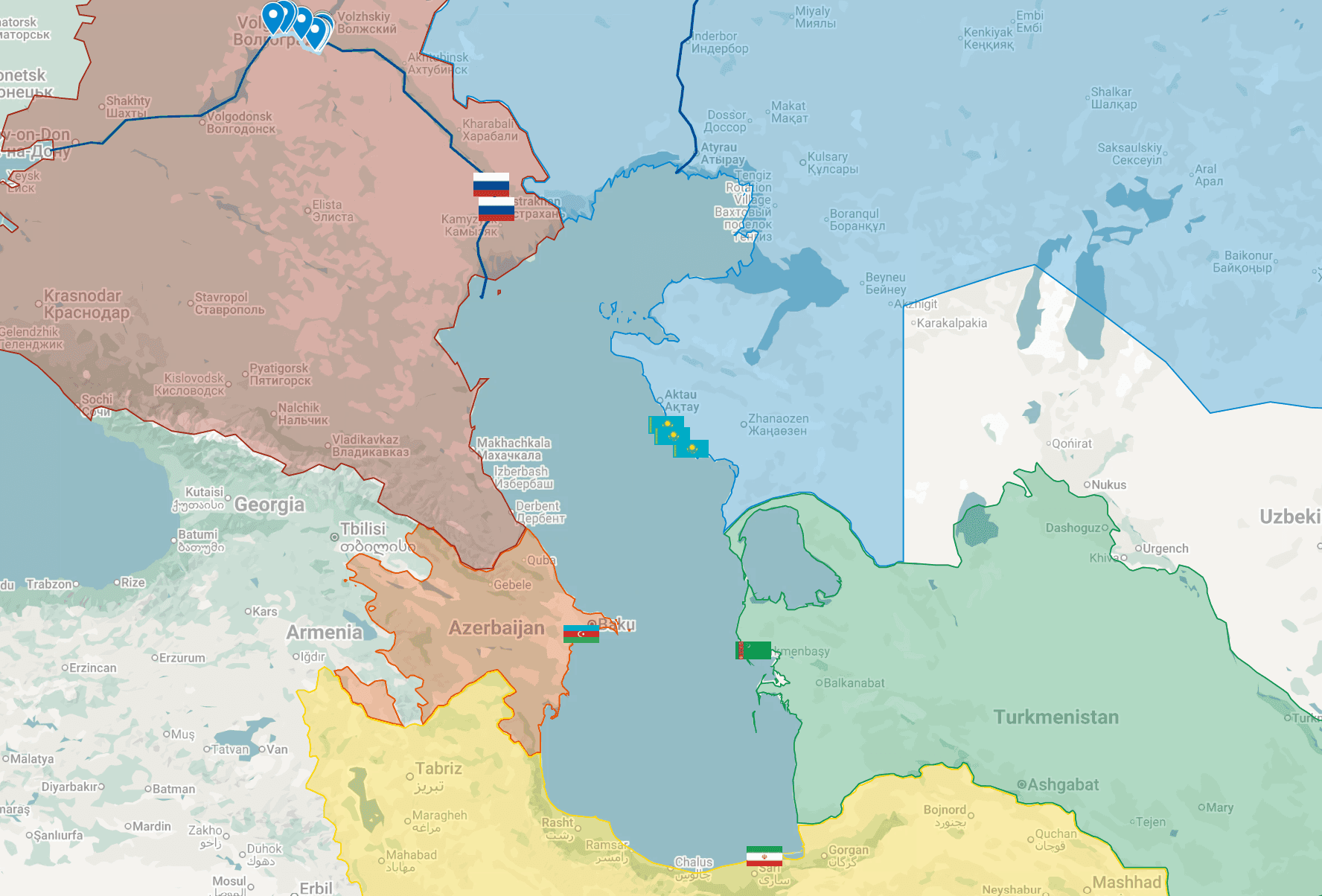
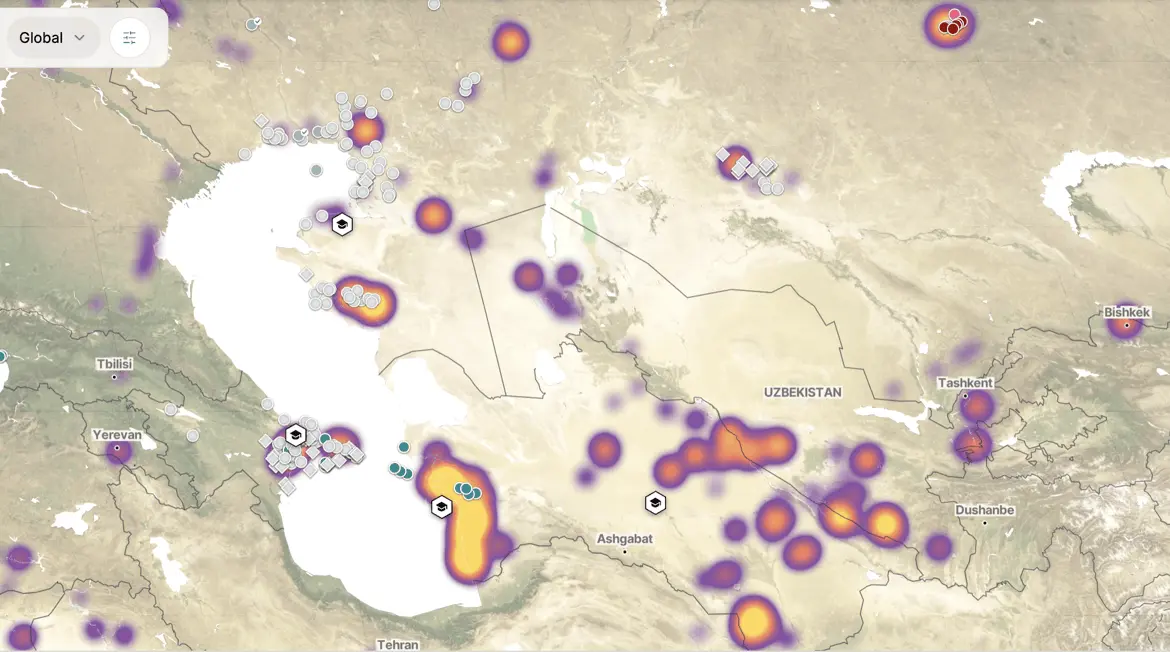 Screen capture of methane leaks in Turkmenistan and the rest of the Caspian Region. Source: UNEP MARS
Turkmenistan, and the Caspian, Respond
Despite the situation, Turkmenistan is actually responding to leaks and, in some cases, plugging them. In the past year, the country has responded to and investigated roughly 18 percent of its methane leaks, suggesting that Ashgabat is taking more interest in the issue. Its neighbors also respond to UNEP alerts, with Kazakhstan at 20 percent, Uzbekistan at 8 percent, and Azerbaijan at 89 percent. It should be noted that responses do not necessarily imply action to stop leaks, though the UNEP confirmed that Turkmenistan has stopped eight leaks that emitted 27,000 tons of methane total.
Turkmenistan and the rest of the Caspian Region have all joined the Global Methane Pledge to try to reduce emissions by 30 percent from 2020 levels by 2030. Their response rates demonstrate commitment to meeting global standards, though the next step is to mitigate fugitive emissions altogether and reduce intentional gas venting.
Given the high potency of methane, mitigating fugitive emissions and sealing super-leaks are obvious and simple areas to begin for Ashgabat to reduce its footprint. Ashgabat’s responses to fugitive methane leaks are a good start to upholding global commitments to reducing greenhouse gas emissions. More work can be done within Turkmenistan and throughout the region to improve their diplomatic standing, maximize economic benefits, and promote the health of the Earth’s atmosphere and climate.