Headlines from the Caspian: October 13, 2026
Recent Articles
Author: Caspian Policy Center
10/14/2026
Energy and Economy
Kyrgyzstan Proposes Unified Freight Tariff Regime Across C6 Nations
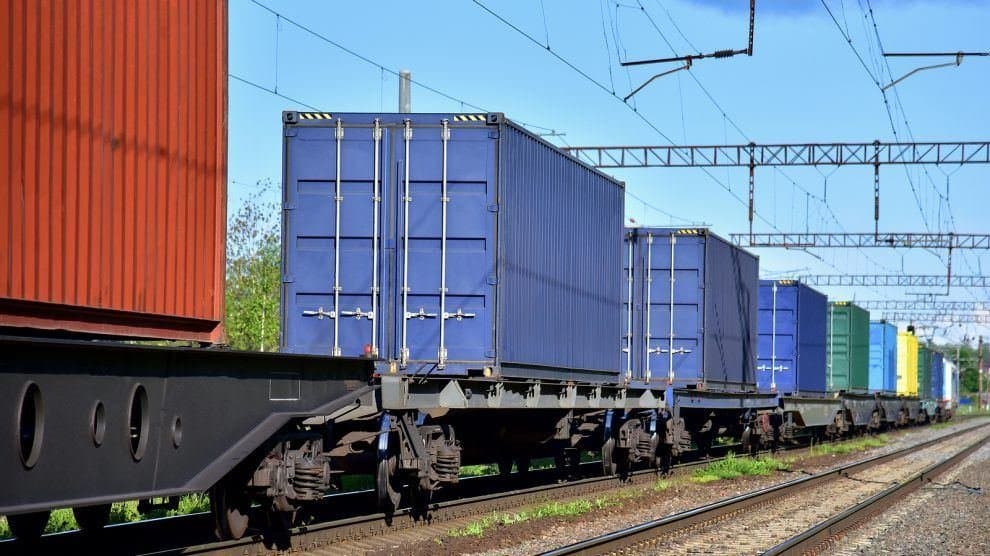
During the C6 Heads of State Summit in Avaza, Turkmenistan, President of Kyrgyzstan Sadyr Japarov proposed collaboration between all six countries’ transport authorities to create a unified freight tariff regime, coordinated schedules and digital cargo tracking. Citing the future China-Kyrgyzstan-Uzbekistan railway, President Japarov asserted that these reforms are necessary in order to sustain momentum and attract further attention to the Middle Corridor.
Source: Trend
Amulsar Gold Mine Opens in Armenia After Decade of Protests and Deliberation
The Amulsar gold mine opened in Armenia’s Vayots Dzor province on October 10. Prime Minister Nikol Pashinyan participated in the opening ceremony of the mine, which is expected to generate $130 million in taxes, duties, and royalties for the Armenian government each year. The project, operated by Lydian Armenia, has faced opposition from environmental activists, civil society, and international groups since its genesis in 2016.
Source: OC Media
ExxonMobil, TotalEnergies Block Settlement Proposal with Kazakhstan Over Kashagan
ExxonMobil, with support from TotalEnergies, have rejected the most recent proposal for a settlement with Kazakhstan over a $5.2B fine on environmental grounds related to sulfur storage. Only KazMunayGas, Kazakhstan’s state-owned oil and gas company, has agreed to pay its share of the fine thus far. Kashagan fields are operated in a joint consortium, with KazMunayGas holding a leading stake, followed by ExxonMobil, TotalEnergies, Shell, Eni, CNPC, and Inpex.
Source: Times of Central Asia
Kyrgyzstan Revoked 30 Mining Licenses in 2026
The Kyrgyz Geological Service revoked 30 mining licenses in the first nine months of 2026. The Service for Environmental and Technical Supervision of Kyrgyzstan also issued 394 violation reports for breaches of mining supervision and subsoil protection violations totaling 10.55 million soms. Kyrgyzstan is working to regulate its mining industry more effectively as well as the import, sale, storage, and use of fine coal that worsens air pollution.
Source: 24.kg
Russian fuel shortages push Central Asian importers to explore alternatives
A report published by Al Jazeera on October 7 examined how disruptions to Russian refining capacity are affecting Central Asian countries that depend heavily on Russian petroleum products. Ukrainian attacks on Russian energy infrastructure have contributed to fuel shortages and uncertainty over export availability. Tajikistan, which has traditionally obtained as much as 80% of its petroleum products from Russia, has begun receiving oil and petroleum products from Iran. Kyrgyzstan, which sources more than 90% of its petrol imports from Russia, has also pursued a proposal with Tehran to establish a joint refinery supplied with Iranian crude. The arrangements were announced earlier, but the renewed attention to them underscores a growing regional vulnerability: disruptions in Russia can quickly affect fuel availability and prices across Central Asia. Alternative supplies could reduce that exposure, although transport routes, commercial terms and the feasibility of a proposed refinery remain important considerations.
Source: Al Jazeera
Kazakhstan’s grain shipments to Central Asia and Afghanistan rise sharply
Kazakhstan transported 10.8 million tons of grain by rail during January–September 2026, a 12% increase over the same period last year, according to figures released by the country’s Ministry of Transport. Rail exports rose 14% to 8.4 million tons. Shipments to Central Asian countries increased 33% to 5.5 million tons, including 4.11 million tons to Uzbekistan, up 44%, and 1.18 million tons to Tajikistan, up 16%. Grain shipments to Afghanistan reached 762,000 tons, 4.3 times the year-earlier level, while shipments to China rose 54% to 750,000 tons. The figures underline Kazakhstan’s expanding role as a regional food supplier and the importance of rail infrastructure for connecting its agricultural output with neighboring markets. The increase in deliveries to Afghanistan is particularly notable as the country continues to rely on imported food supplies.
Source: Trend.Az
EU-backed railway opening strengthens the Middle Corridor’s western connection
Türkiye inaugurated the 153-kilometer Çerkezköy–Kapıkule railway section on October 9, improving the rail connection between Istanbul and the Bulgarian border. The project received €275 million in EU grant financing and is expected to ease congestion and increase freight capacity along the western end of the Middle Corridor. Turkish officials said the broader railway project would reduce freight travel time between Halkalı and Kapıkule from approximately 8.5 hours to 3.5 hours. The opening represents a concrete step in the EU’s wider effort to connect Europe with Central Asia through Türkiye, the South Caucasus and the Black Sea. Brussels has set a broader target of mobilizing up to €12 billion in public and private investment for the corridor, with the aim of increasing trade flows and reducing transit times by 2030.
Source: European Commission, The Astana Times, Georgia Today
Politics and Security
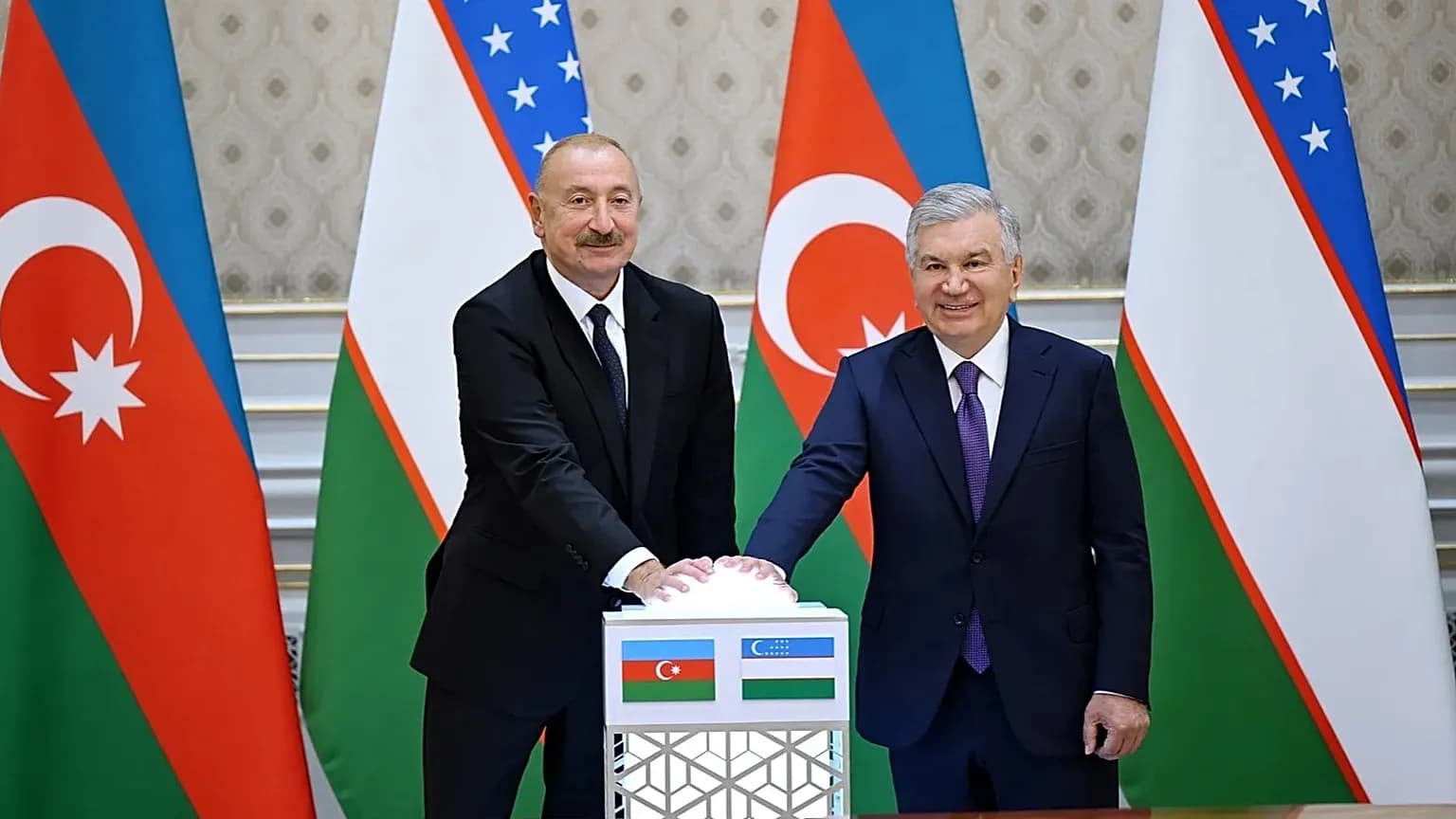
C6 Summit Convenes Heads of Central Asian Nations and Azerbaijan in Avaza, Turkmenistan
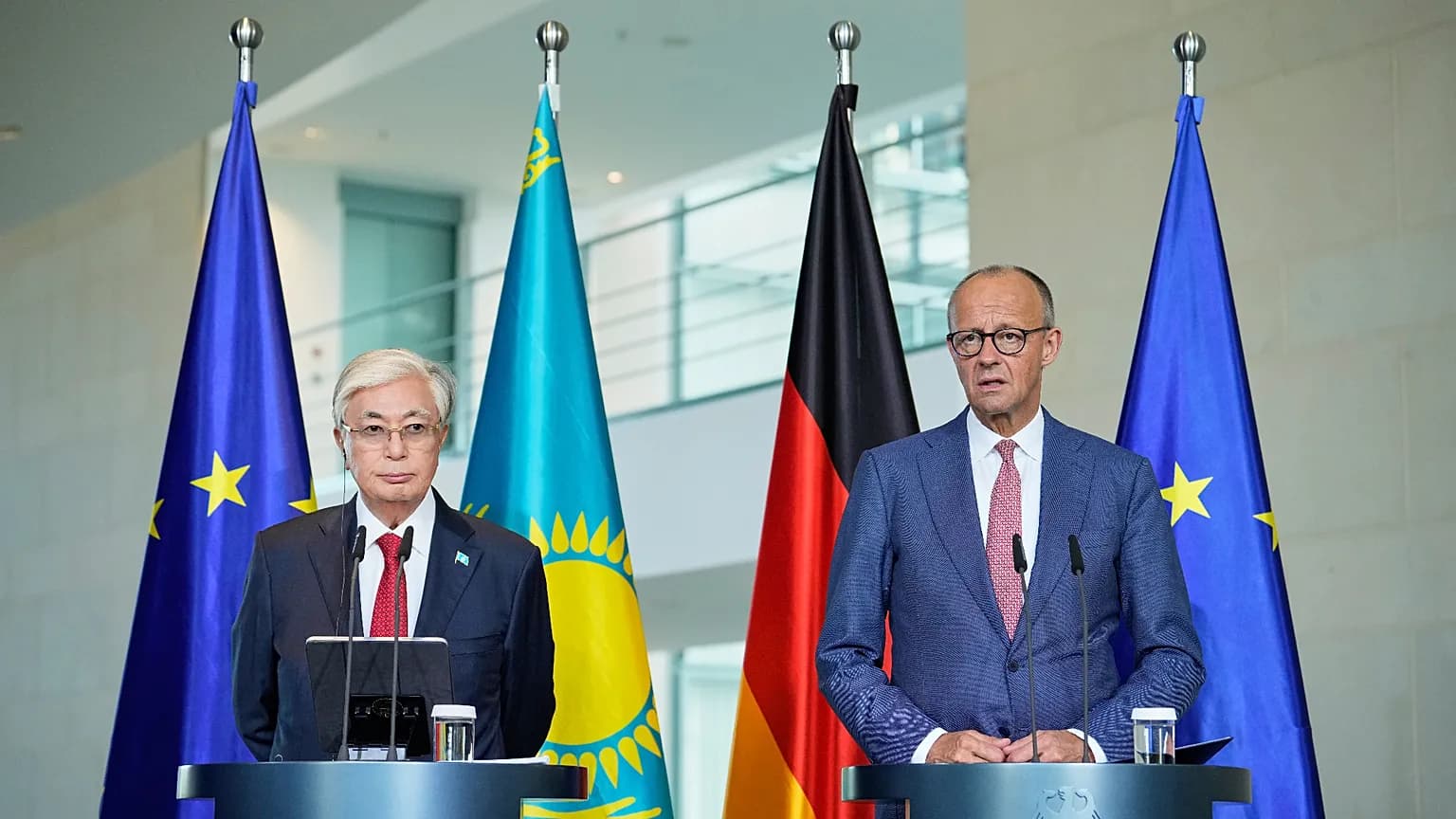
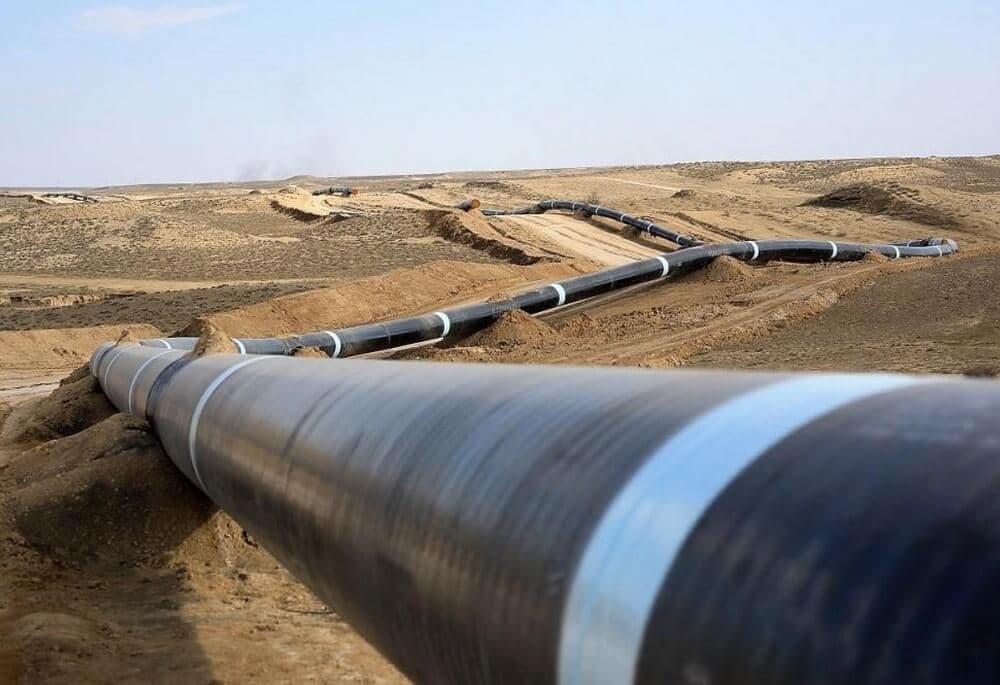
The October 8 Consultative Meeting of the Heads of State of Central Asia and Azerbaijan brought together six leaders for the first summit under the expanded format, following Azerbaijan’s admission as a full participant in November 2025. The 8th Consultative Meeting of the Heads of State of Central Asia and Azerbaijan took place in Avaza, Turmenistan, where leaders discussed regional cooperation in trade, transport, security, and water management. Kazakhstan proposed raising intraregional trade from approximately $13 billion to $20 billion, while Uzbekistan advanced its “Six Economies – One Product” initiative to encourage joint production for international markets. Notably, Turkmenistan President Serdar Berdymukhamedov called for a unified approach to shared issues and endorsed the creation of a trans-Caspian pipeline, both significant developments for the historically isolationist nation.
The leaders also devoted significant attention to solving the region’s water shortages, reflecting intensifying climate challenges that pose a serious threat to Central Asia. Other proposals included regional investment funds, a green-energy corridor across the Caspian, coordinated water management, artificial intelligence cooperation and unified freight tariffs. The summit’s significance lies in the growing willingness to address previously sensitive issues collectively, although most proposals still require financing, technical planning and implementation. Time will tell if these speeches and the joint statement released after the meeting will lead to concrete steps for the region. Azerbaijan will chair the expanded format in 2027.
Source: eurasianet, Times of Central Asia, President of Azerbaijan, President of Uzbekistan
CIS Heads of State Summit Convenes in Avaza, Turkmenistan
A meeting of the Council of Heads of State of the Commonwealth of Independent States (CIS) took place in Avaza, Turkmenistan, on October 9. The C6 heads of state were joined by President of Belarus Alexander Lukashenko, President of the Russian Federation Vladimir Putin, Prime Minister of Armenia Nikol Pashinyan, and CIS Secretary General Sergey Lebedev. President of the Islamic Republic of Iran Masoud Pezeshkian also attended as a special high-ranking guest. On the sidelines, Azerbaijani and Iranian presidents also discussed bilateral relations and reported that work on the Aghband–Kelaleh project, an important transport link between the two countries, was nearing completion.
Russian President Vladimir Putin said Russia’s trade with CIS countries exceeded $110 billion in 2025 and claimed that 90% of Russia’s trade settlements with CIS partners were conducted in national currencies rather than dollars or euros. Turkmenistan is the current chair of the CIS, a year-long position that will pass to Uzbekistan on January 1, 2027. President Shavkat Mirziyoyev said Tashkent would emphasize practical results in economic cooperation, new technologies, transport, security, education and human-capital development.
Source: Orient, President of Russia, News Central Asia, Trend, Kremlin, Kyiv Post, President of Uzbekistan, President of Azerbaijan
Central Asian States Strengthen Border Checks Amidst Fears of Plague from Russia
The health ministries of the Central Asian states, aside from Turkmenistan, have publicly affirmed that border control will conduct stricter checks on people entering their respective countries. Health inspections of individuals and cargo will take place at border crossings, while Kazakhstan specifically stated that “sanitary and quarantine controls” have been established. This comes after a worker at an anti-plague research institute in Irkutsk, Russia, died after reportedly contracting pneumonic plague, though no other cases have been confirmed as of now. The Kremlin has stated that there is no epidemic risk, while the World Health Organization (WHO) has called for more transparency from Russia, as a member state.
Source: Times of Central Asia, CNN
Drone Strike to Russian Data Centers Affects Yandex
Ukrainian drone strikes hit Yandex data centers across Russian territory in Sasovo, Kaluga, and Vladimir from October 9-11, disrupting certain applications and Internet operations in Russia and across post-Soviet space. Media reports have also indicated that Yandex taxis, food delivery, and cloud computing infrastructure were disrupted in Russia, Central Asia, and Armenia. Ukraine claimed that the attacks were retaliation against Russia for previous strikes on its own data infrastructure, while Russian government officials are discussing ways to protect their data centers and make repairs. Kazakhstan’s Ministry of Artificial Intelligence and Digital Development said domestic servers holding users’ personal data were operating normally, but acknowledged that some components essential to the services were located abroad. Yandex likewise attributed its vulnerability to the distributed nature of its infrastructure, although the company did not directly confirm that the Russian strikes caused the Kazakhstan outage.
Source: turkiyetoday.com , reuters.com, The Times of Central Asia, Moscow Times
Trans-Caspian fiber-optic cable expected to begin operating by year-end
Azerbaijan’s Deputy Minister of Digital Development and Transport said on October 6 that the Trans-Caspian fiber-optic cable connecting Sumgait and Aktau is scheduled to enter service by the end of 2026. The approximately 380-kilometer cable has reached the Kazakh coast and forms a key component of the Digital Silk Road, intended to improve high-speed data connectivity between Asia and Europe. Azerbaijan is also pursuing plans to develop a regional artificial-intelligence data center in the Alat Free Economic Zone. The project would add a digital dimension to the Middle Corridor, which has primarily been discussed in terms of freight, railways, ports and energy. Reliable data infrastructure could support cross-border digital services and trade, although the broader corridor’s competitiveness will also depend on compatible regulations, cybersecurity and investment in regional technological capabilities.
Source: Trend.Az
Armenia and Azerbaijan advance practical cooperation on TRIPP and missing persons
Armenian and Azerbaijani officials held a technical meeting in Goris on October 8 to discuss the placement of power-transmission lines associated with the Trump Route for International Peace and Prosperity (TRIPP). The meeting focused on technical coordination and next steps, offering evidence that work on the proposed connectivity project is moving beyond political declarations. Separately, Armenian Prime Minister Nikol Pashinyan said he and Azerbaijani President Ilham Aliyev had discussed strengthening cooperation between their commissions investigating people missing from decades of conflict. The two countries have exchanged information on missing persons since 2025, including DNA profiles and lists of individuals believed to have been taken prisoner or hostage. Pashinyan also described peace between the countries as an established reality, pointing to the absence of recent casualties from exchanges of fire, the movement of Azerbaijani cargo through Armenia-related routes and the beginnings of bilateral trade. Nevertheless, the peace agreement initialed in Washington in August 2025 remains to be formally signed, and unresolved humanitarian and territorial issues continue to complicate normalization.
Source: Reuters, Public Radio of Armenia, Armenpress
Central Asian states diversify arms suppliers as Russia’s export capacity weakens
A Radio Free Europe/Radio Liberty report published October 11 highlighted growing diversification of military procurement across Central Asia. India’s defense secretary said New Delhi had delivered its Akash air-defense system to Tajikistan and Turkmenistan, although neither government has publicly disclosed the details of the reported purchases. The systems provide alternatives to Russian equipment, which has historically dominated regional arsenals. According to figures from the Stockholm International Peace Research Institute cited in the report, Russian arms exports fell 64% between the 2016–2020 and 2021–2025 periods, reducing Russia’s share of global arms exports from 21% to 6.8%. Western sanctions and the demands of the war in Ukraine have also raised concerns about Russia’s ability to supply spare parts, maintenance and new equipment. Central Asian governments are increasingly looking to India, China, Türkiye and European suppliers. Diversification offers greater procurement flexibility but introduces interoperability, training and maintenance challenges for militaries operating mixed equipment inventories.
Source: Radio Free Europe/Radio Liberty
Aliyev Advances Commission on Caspian Sea Levels
President Aliyev of Azerbaijan proposed the creation of a Commission to monitor and reverse the dropping Caspian Sea level. The proposal was accepted by all five Caspian littoral nations during an event held in Avaza, Turkmenistan, on October 9. The Commission will coordinate various working groups, bringing together government officials and experts from all five nations, to investigate the cause of decreasing sea levels. The Commission’s first meeting will occur next year in Baku.
Source: Trend
Georgia Petitions for OSCE Chairmanship 2027, Backed by EU
Georgia applied for Chairmanship of the Organization for Security and Cooperation in Europe (OSCE) earlier this year and reiterated its intentions during the UN General Assembly in late September. Reacting to claims that the EU opposes Georgia’s bid in favor of Cyprus, Georgian Dream’s Foreign Minister Maka Botchorishvili announced on October 8 that Slovakia, alongside other unnamed EU states, have shown their support. Botchorishvili’s comments follow a declaration made by the OSCE over the summer regarding “serious concerns” about the state of Georgia’s democracy.
Source: Civil, Front News, APA, Civil