Blackouts in Turkmenistan Reveal Vulnerabilities in Power Infrastructure
Recent Articles
Author: Liam Gibson
10/01/2026
 shutterstock
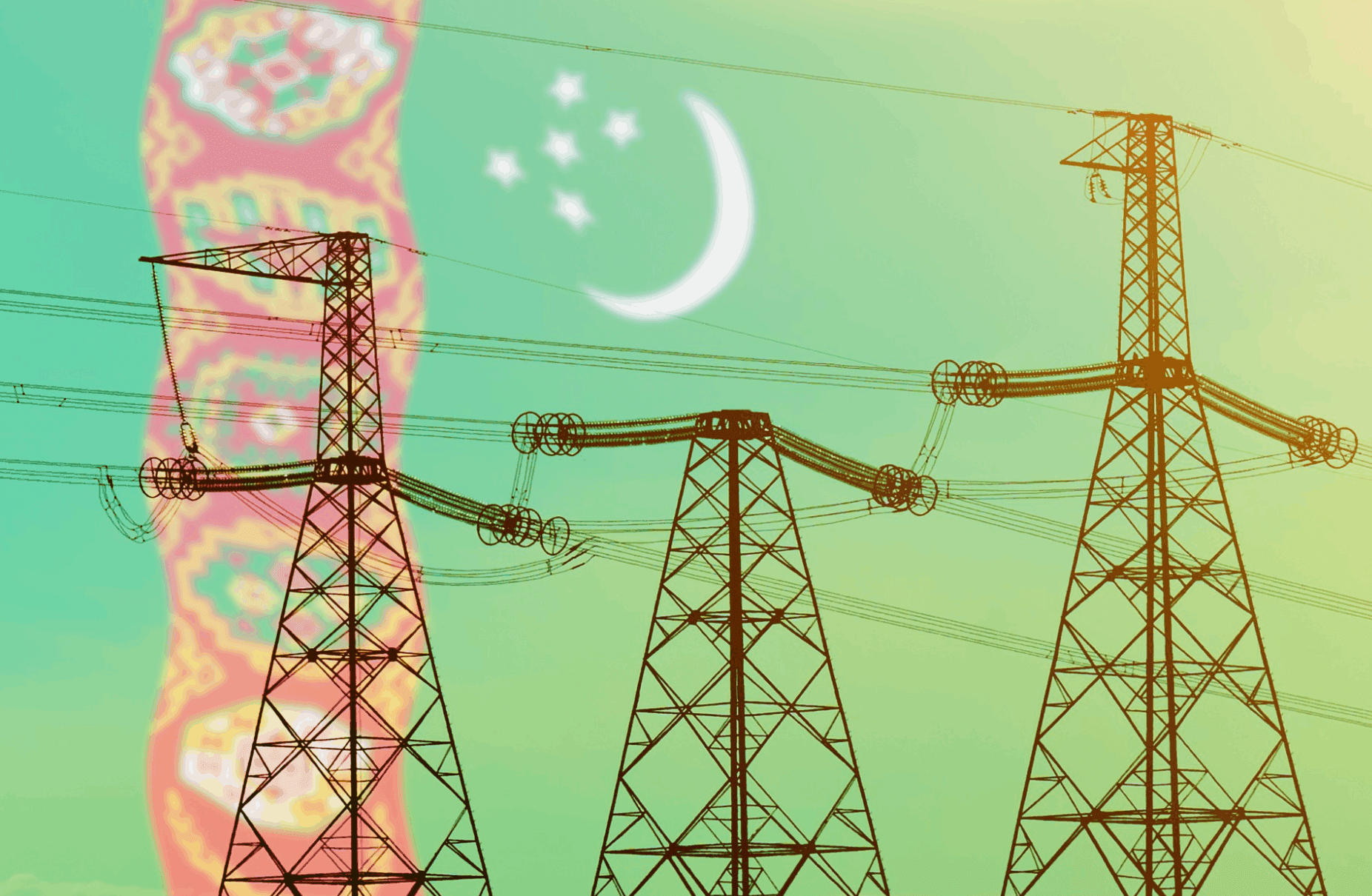
Blackouts thrust four of Turkmenistan’s five regions into darkness and led to power outages in neighboring Afghanistan on August 30. The interruption highlights persistent reliability issues in Turkmenistan and the wider region as temperatures rise and power consumption continues to grow rapidly.
The power outage began around 5:30 pm on Sunday and affected the Ahal, Balkan, Lebap, and Mary regions in Turkmenistan. This was the first widespread blackout to hit Turkmenistan since December 2020. Residents of Ashgabat lost mobile phone and internet service, and traffic lights ceased working, making it difficult to contact first responders and local authorities. Water service was also disrupted in certain parts of the country because of the outage. Temperatures reached 97 degrees Fahrenheit (36.1degrees Celsius) on Sunday, forcing many people to leave overheated apartments and homes and seek relief outdoors. Police and military personnel assisted with the government’s response to the blackout.
Six provinces, Balkh, Jowzjan, Sar-e-Pul, Faryab, Badghis, and Herat, in neighboring Afghanistan faced total power loss, while the Samangan and Baghlan provinces were partially affected by the blackout. Turkmenistan is a primary supplier of electricity to northern Afghanistan, exporting roughly 700 million kilowatt-hours of electricity every year. Afghanistan was forced to turn to Uzbekistan, Iran, and Tajikistan to offset the shortfall while the problem was resolved.
Turkmen.news, an independent media outlet covering Turkmenistan, reported that the cause was an explosion at Mary State Power Station, Turkmenistan’s largest power plant with a generating capacity of 3,000 MW. While the actual cause has not been verified, power was gradually restored across the country. The electricity supply to Afghanistan only returned to normal on September 2, indicating a prolonged recovery.
Notably, Deputy Chairman of the Cabinet of Ministers of Turkmenistan Baymyrat Annamammedov announced that the country was taking measures to increase power generation and ensure uninterrupted electricity supplies only one day before the blackouts. Earlier, on June 17, hundreds of people staged a rare demonstration over the country’s power outages.
Eight of Turkmenistan’s twelve thermal power plants came online this century. Further, an ongoing $500 million Asian Development Bank (ADB) project has completed 1,400 kilometers of new transmission lines and 11 substations since 2018. Perhaps greater investment is required; problems persist that require transparency to identify and address. The issue is also exacerbated by lengthening periods of extreme heat that raise energy consumption and stress the country’s power network.
Besides Turkmenistan, the rest of Central Asia has seen massive investments in power generation and grid infrastructure in recent years. Kazakhstan and Uzbekistan are building new nuclear plants, while countries begin to embrace efficient and cheap natural gas-powered plants and renewables. Kazakhstan invested $13 billion to revitalize its power plants and grid network by 2029, upgrades which include new digital monitoring and management systems to improve transparency and security and reduce distribution losses. The European Bank for Reconstruction and Development (EBRD) provided Kyrgyzstan €61.7 million to modernize its power grid in January 2026. The EBRD and EU similarly invested $43 million in Tajikistan’s grid one month prior. Uzbekistan allocated $50 million to supplement a $100 million concessional credit from the World Bank to enhance aging electricity distribution infrastructure.
Trans-boundary electricity trade in Central Asia also allows countries to mitigate seasonal differences in supply and demand. The Soviet Union constructed the Central Asian Power System (CAPS) to this end. However, Turkmenistan disconnected from the trans-boundary grid in 2003 when it was more widely viewed as a vulnerability and source of disagreement. The other four Central Asian countries have since embraced reintegration, although CAPS is not a silver bullet for the region’s power problems. This was recently highlighted when an interruption at the Toktogul Hydroelectric Power Plant in Kyrgyzstan caused outages in Kazakhstan, Tajikistan, and Uzbekistan on August 14. Disputes and a lack of transparency hindered recovery in the aftermath of the outage, indicating a need for deeper cooperation for this project to succeed. On the other hand, trans-boundary transmission networks granted Afghanistan the flexibility required to mitigate the blackout with alternative suppliers while Ashgabat quietly resolved the issue.
While Turkmenistan has remained outside the regional grid, perhaps sparing it from the August 14 blackouts, trans-boundary power architecture defines a region plagued by reliability issues. Modernization projects and regional cooperation promise to improve resilience and efficiency. However, more time is required for these projects to be realized, and only greater transparency among nations will make their implementation successful. Meanwhile, it’s not getting any cooler as intensifying heat continues to drive high electricity consumption.