Trans-Caspian Security Trends in 2025: A Year of Regionalism, Evolution, and De-Escalation
Recent Articles
Author: Katherine Birch
12/24/2025
 kun.uz
In 2025, Washington’s South Caucasus and Central Asian partners continued to engage external powers through both established frameworks and newly emerging channels of security cooperation. The region also witnessed a parallel push to formalize and deepen security coordination internally, appearing to deliberately sideline traditional external security partners. The growing emphasis on intra-regional security cooperation was particularly evident in Central Asian states’ efforts to craft a more cohesive and autonomous policy toward Taliban-led Afghanistan, underscored by the creation of a regional Contact Group on Afghanistan that also signals a maturing regional posture toward the Taliban. At the same time, the security environment benefited from a notable easing of tensions following meaningful advances in resolving two protracted disputes that long hindered stability and economic integration: border disagreements in the Ferghana Valley and the conflict between Azerbaijan and Armenia over Nagorno-Karabakh.
Throughout the year, states across the Trans-Caspian continued to foster security cooperation with external actors such as Russia, China, India, Turkey, Iran, and the United States through both old and news ways. It was by no means a quiet year on the military exercise front, for example. Central Asians participated in military training exercises with the Collective Security Treaty Organization no less than three times, India, the United States, and in the Shanghai Cooperation Organization’s first-ever, Iran-based – though reportedly largely symbolic – counterterrorism exercise, Sahand 2025. Countries in the South Caucasus also demonstrated a willingness to engage traditional partners in this manner, with participation in various bilateral and trilateral military exercises similarly punctuating their year.
Defense ties were bolstered via new agreements in the political realm, too. This was seen as all five Central Asian states signed the Treaty of Eternal Good-Neighborliness, Friendship, and Cooperation with Beijing during the 2nd Central Asia-China Summit in June which in part called for an enhancement of regional security governance and law enforcement partnerships between all parties. Across the Caspian, Kazakhstan and Azerbaijan’s naval commanders signed onto the Caspian Sea Comprehensive Strategic Cooperation Agreement with Russian and Iranian naval officials, as all parties pledged to collaborate with one another to mitigate security issues in the Caspian and prevent outside powers from intervening in the sea’s affairs.
The prevalence of these conventional military engagements and security-oriented diplomatic initiatives suggest that the Trans-Caspian states continued to prioritize maintaining ties with traditional partners through both new opportunities and established methods.
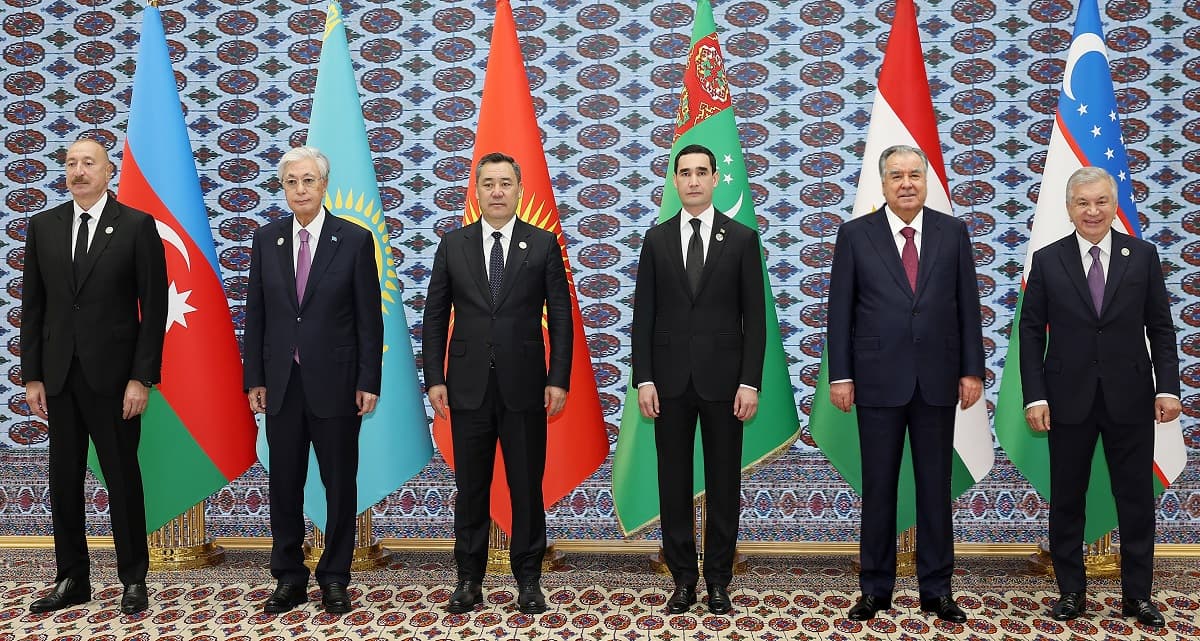
More notable, however, were Trans-Caspian states’ efforts to further institutionalize security ties among each other at the exclusion of these often-present external state actors. Indeed, 2025 was a precedent setting year in this regard. In April, intelligence agency chiefs from all five Central Asian countries held talks for the first time within the framework of the 7th Consultative Meeting of Central Asian Leaders in Tashkent. Discussions among these security sector officials reportedly included support for developing more region-wide approaches to security issues affecting all participants as well as streamlining cooperation between the region’s various national intelligence agencies.
Months later, the first-ever multilateral meeting between all of Central Asia’s defense ministers took place in Samarkand on October 20 in which perspectives on regional military cooperation were shared. Bilateral meetings between Uzbekistan’s Minister of Defense, Shukhrat Kholmuhamedov, and his fellow defense ministers occurred with similar discussions. This historic summit was quickly followed the next day by the Trans-Caspian region’s inaugural Birlik-2025 (“Unity” 2025) multinational military exercise, an event that convened Uzbekistan, Kazakhstan, Kyrgyzstan, Tajikistan, and Azerbaijan’s armed forces for military drills focusing on counterterrorism and broader defensive operations. Azerbaijan’s inclusion in this military exercise preceded news that Baku and Astana had also finalized a military cooperation plan for 2026.
Only time will tell as to whether or how effectively this apparent deepening of defense ties among Trans-Caspian countries themselves will solidify moving forward. However, these activities at the very least signal an increasing boldness among these countries to forge previously unexplored relationships with one another in an era of declining Russian influence and growing strategic autonomy.
The trend towards the development of intra-regional security ties is exemplified not least through Central Asian states’ efforts to develop a more unified and independent approach vis a vis Taliban-led Afghanistan, with the establishment of a regional Contact Group on Afghanistan. The Contact Group suggests a potential shift in Central Asia’s thinking towards the Taliban more broadly.
Although Central Asian capitals still largely acknowledge the destabilizing threats potentially stemming from their southern neighbor, the contact group’s discussions of how to best collaborate as a bloc with Taliban authorities on regional security priorities reflect an evolution in Central Asia’s mindset. Whereas in the past leaders of the region perceived the Taliban as being a significant, albeit temporary, threat to their countries’ security, the region appears to increasingly view Taliban-led Afghanistan is a relatively stable authority that can be worked with to mitigate security threats like extremism and drug trafficking from trickling across the borders into their own countries. Further, as opposed to deterring Afghanistan-based extremist threats almost exclusively through the vector of counter-terrorism efforts, the Central Asians have instead pivoted to address common root causes of extremism, such as poverty, in part through strategic investments in Afghanistan’s energy and infrastructure sectors.
The formation of the Afghanistan Contact Group could have several important implications for Central Asia’s relationship with Kabul and regional stability at large. First, depending on the degree to which this body is further institutionalized and/or expanded, the Contact Group could become a major dialogue platform between Central Asia and Afghanistan as the former strives to engender stability in Afghanistan through political inclusion and investments rather than isolation. Second, it could streamline Central Asia’s collective counter-terrorism measures in light of the threat the Islamic State Khorasan Province (ISKP) and other Afghanistan-based militants continue to pose to regional security. It will be interesting to see if a separate Contact Group is formed to generate regional policy towards ISKP or if its mandate is expanded to include Kabul in counter-ISKP discussions. Meaningful counter-terrorism collaboration between Central Asian governments and Kabul – whether through the Contact Group or another platform – could be the push in the right direction, at least from Kabul’s perspective, that Central Asia needs to follow Russia’s suit and formally recognize it as Afghanistan’s legitimate government.
Finally, the countries of the Trans-Caspian witnessed a marked deescalation of tensions after the significant progress was made towards resolving of two decades-long disputes that historically posed acute security challenges and stifled deeper socio-economic integration across the region: border contestation in Central Asia’s Ferghana Valley as well as Azerbaijan and Armenia’s conflict over Nagorno Karabakh.
The Ferghana Valley – a heavily populated, ethnically diverse, and extremely fertile part of Central Asia nestled between Uzbekistan, Kyrgyzstan, and Tajikistan – had been afflicted by violent skirmishes in April 2021 and September 2022 between Bishkek and Dushanbe’s militaries. The clashes, which resulted in hundreds of deaths, hundreds of thousands of evacuees, and the destruction of property, represented an escalation from traditionally smaller-scale violent spats amongst locals and appeared to risk animating further open hostilities between the two countries.
Rather than allowing these armed incidents to overwhelm recent regional advances in recent stability and connectivity, the three Ferghana Valley countries with the most to lose sought instead to resolve their grievances. The first quarter of 2025 saw the announcement of successfully concluded bilateral and trilateral peace and border delimitation agreements in quick succession after border dispute-related diplomatic progress occurred incrementally in 2023 and 2024. Following a trilateral meeting on January 8, 2025, between Uzbekistani, Kyrgyzstani, and Tajikistani officials at their shared border junction, officials from Bishkek and Dushanbe announced the signing of a long-awaited border delimitation agreement, alongside two infrastructure and energy agreements, during the next month on February 21.
Subsequent progress continued as the Kyrgyzstani and Tajikistani presidents signed a border agreement on March 13; announced, in conjunction with Uzbekistan, that the three countries had agreed on their shared border junction on March 19; and formalized this decision via signing the Khujand Declaration at a trilateral summit on March 31. Confidence building measures – such as the reopening of the Kyrgyz-Tajik border and the establishment of the Ferghana Peace Forum – followed these monumental diplomatic achievements.
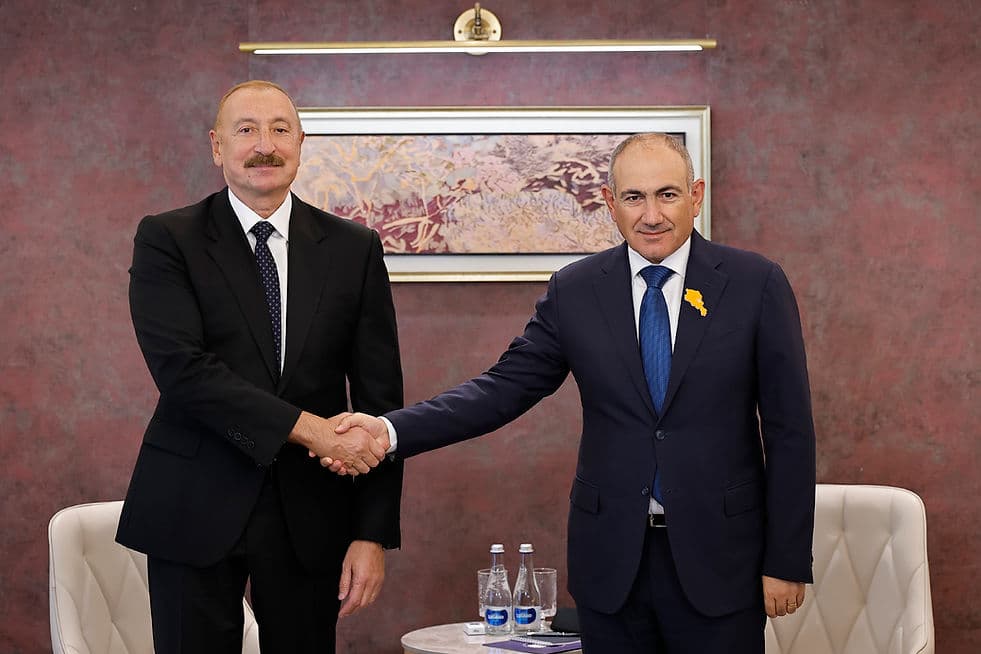
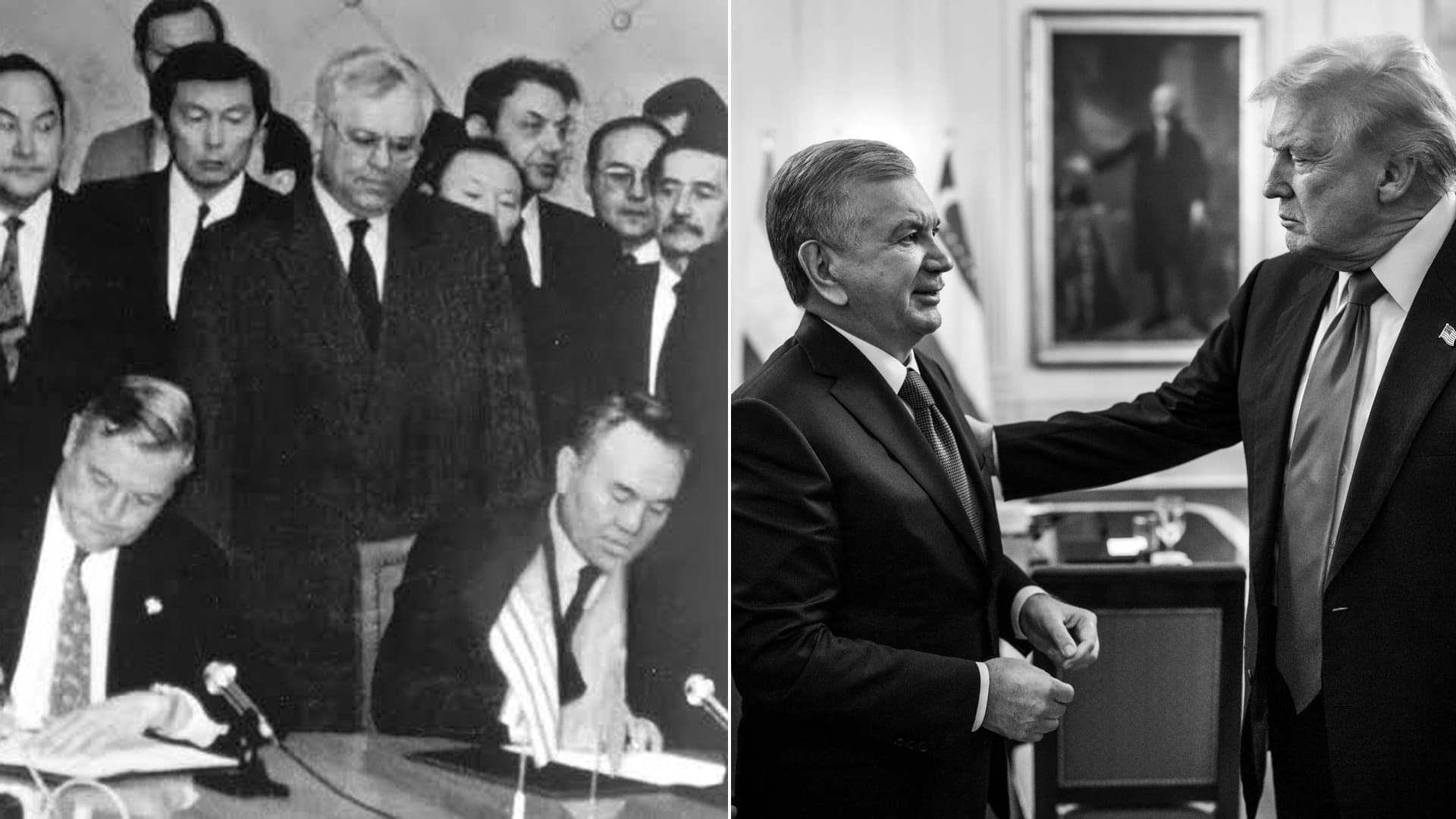
Across the Caspian Sea, bilateral talks between Baku and Yerevan over the past year resulted in Azerbaijani President Ilham Aliyev and Armenian Prime Minister Nikol Pashinyan initialing an “Agreement on Establishment of Peace and Inter-State Relations” at the White House in Washington on August 8, 2025. This peace framework formalizes both states’ commitments to a litany of objectives ranging from the initiation of formal bilateral relations and the recognition of their modern internationally recognized borders as defined in the 1991 Alma-Ata agreement to pledges of resolving any future disputes through sustained diplomatic dialogue and cooperating on humanitarian and economic projects.
Arguably the most notable portions of the peace framework hint at alleviating past grievances and security concerns that have in the past complicated ending the armed conflict and territorial disputes. Both sides formally agreed to walk back any previously held claims against the other’s territory, abstain from threatening force and permitting other entities to use their territory to initiate military measures against the other, and refrain from meddling in the other country’s domestic political environment.
While full compliance with this peace agreement still hinges on Prime Minister Pashinyan’s ability to persuade Armenian voters to approve a constitutional referendum slated for 2026 (specifically addressing removal of a clause that Baku believes could create the pretext for a future Armenian incursion into the Karabakh region), this agreement represents a historic step towards ending the frozen conflict and normalizing relations between the two South Caucasus countries nonetheless.
An additionally important outcome of the August 8 trilateral summit was the inclusion of an agreement to create the Trump Route for International Peace and Prosperity (TRIPP)—or TRIPP Corridor. This transit corridor, when completed, will wind along Armenia’s southern border with Iran and connect mainland Azerbaijan to its ethnic enclave of Nakhichevan. Construction is expected to begin in the second half of next year according to recent statements by Armenian Prime Minister Pashinyan. Actualizing the TRIPP – and, more importantly, ensuring its safe transit of future goods provides tangible benefits to both Armenians and Azerbaijanis – would join the other historic confidence-building measures taking place between the two countries that may persuade both societies of the utility of cementing peace, particularly via trade and connectivity, with one another once and for all.