Iran Shockwaves Reverberate across the Caspian
Author: Dr. Akbota Karibayeva Meyer, Jack Halsey
03/04/2026
 shutterstock.com
When U.S. and Israeli forces struck Iran on February 28, killing Supreme Leader Ayatollah Ali Khamenei and decimating the Islamic Republic’s military command, the shockwaves reached far beyond the Persian Gulf. Within hours, Central Asian and South Caucasus governments were convening emergency security sessions, airlines were diverting flights mid-air, and thousands of stranded citizens were scrambling for exits. With no clear indication of how long this conflict will last, who will end up leading Iran, and what will be the state of Iranian post-war economy and infrastructure, Trans-Caspian leaders are carefully hedging their bets. The war is exposing both the vulnerabilities of Iran-dependent corridors and the urgency of strengthening alternative routes, positioning the Caspian region not only as a diversification pathway for Eurasian trade, but potentially as a future bridge in Iran’s post-conflict reintegration.
DIPLOMATIC HEDGING
Central Asian and South Caucasus governments have responded with strategic ambiguity. Within hours of the strikes, Kazakhstan’s President Kassym-Jomart Tokayev convened an emergency Security Council session, placed security forces on 24-hour alert, and dispatched messages of solidarity to the leaders of the United Arab Emirates, Saudi Arabia, Qatar, Bahrain, Kuwait, and Jordan, condemning military actions that threaten the “sovereignty and security of states that are friendly and brotherly to Kazakhstan.” Tokayev stopped conspicuously short of addressing Tehran, prompting Iran's ambassador in Almaty to publicly express displeasure at receiving no communication from Astana. Kazakhstan’s Foreign Ministry eventually issued condolences to the Iranian people over civilian casualties in a carefully worded balancing act that acknowledged suffering without endorsing either side.
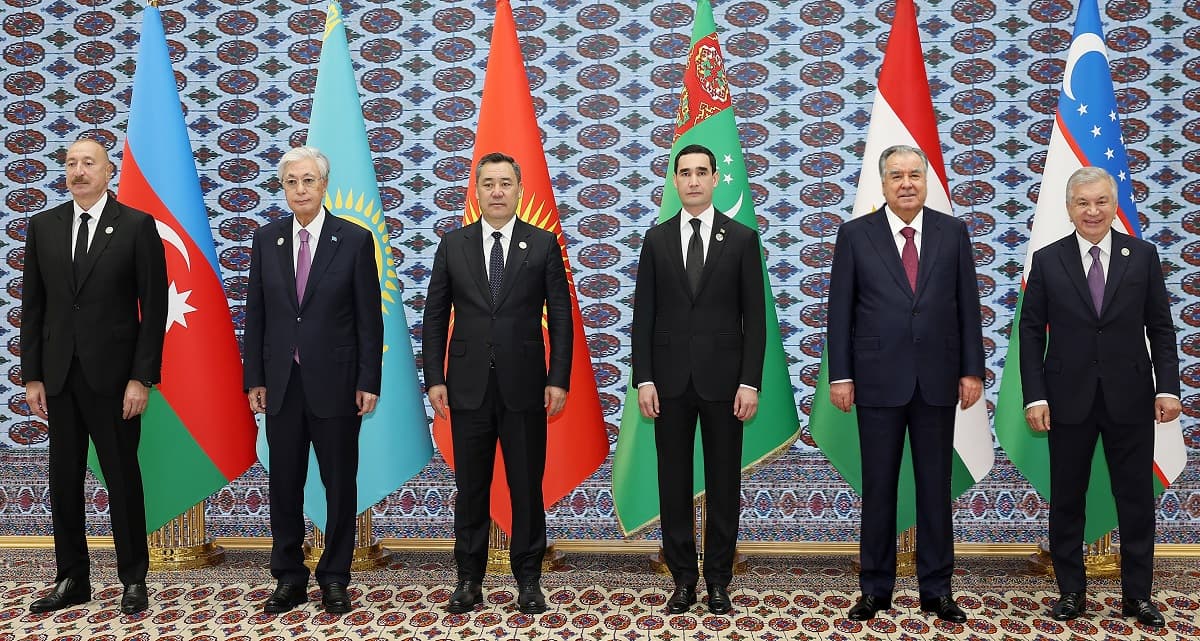
In the rest of the region, Armenia, Azerbaijan, Tajikistan, Turkmenistan, and Uzbekistan all sent condolences regarding Khamenei’s passing, with the Uzbekistani Foreign Ministry urging “all parties to show full restraint, to immediately halt military actions, and to resolve the conflict through political and diplomatic means.” Issued in a text by Tajikistan’s embassy in Iran, President Emomali Rahmon stated, “I would like to emphasize the enduring role of Martyr Ayatollah Seyyed Ali Khamenei in developing comprehensive and constructive relations between Tajikistan and Iran and strengthening cooperation between the two ancient and civilized nations.”
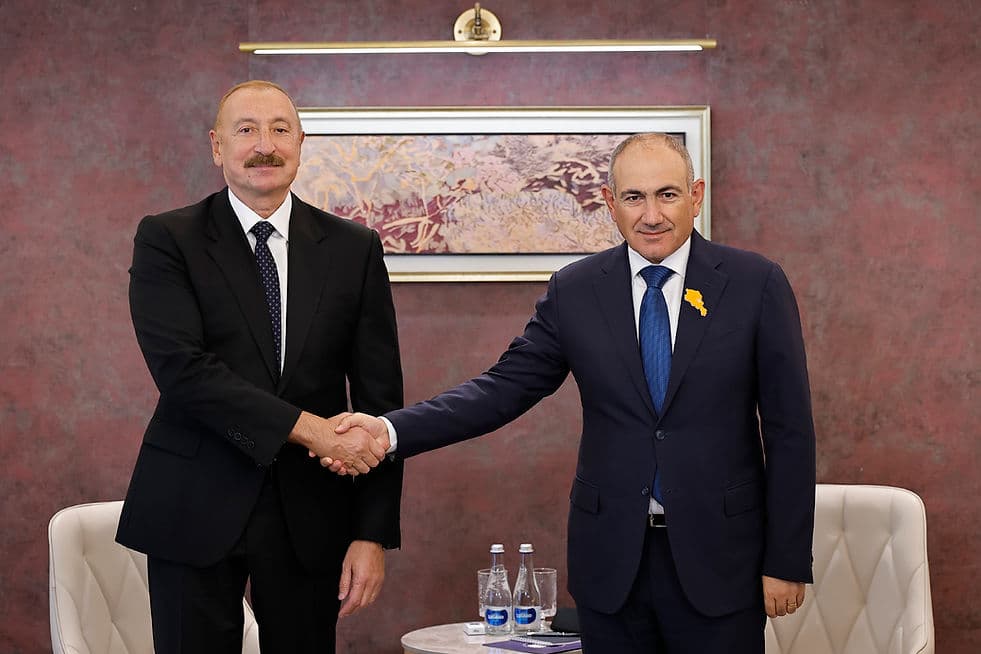
Azerbaijan presents the most complex case requiring tactical hedging. Sharing a 428-mile border, Iran is Azerbaijan’s access point to the Gulf and the nascent Southern Corridor trading route. The two states are also bonded through shared culture, especially with a sizeable Azerbaijani population that currently reside in Iran and maintains familial ties to Azerbaijan. However, Azerbaijan has also been looking west, striking deals with both the United States and Israel, most recently initialing the Peace Agreement with Armenia in Washington allowing for the construction of the Trump Route for International Peace and Prosperity (TRIPP).
EVACUATIONS
The most immediate humanitarian dimension of the crisis has been the exposure of many Central Asian nationals caught in the war zone. Kazakhstan alone had approximately 4,000 tourists stranded in Gulf states with the majority in the UAE, where Iranian drone strikes struck the iconic Burj Al Arab hotel and residential areas on Palm Jumeirah. Another 96 Kazakhstani citizens were trapped in Iran itself, 70 of them employed at the Zarkukh gold mining plant. UAE authorities covered hotel costs; Kazakhstan's embassy coordinated food deliveries and began organizing evacuation flights.
Given the closure of Iranian airspace, Kazakhstan directed its nationals inside Iran to seek overland crossings into Azerbaijan, Armenia, Turkey, or Turkmenistan. Azerbaijan emerged as the primary route: 312 people crossed from Iran into Azerbaijan between February 28 and March 2, representing 19 nationalities including Chinese, Russian, and Pakistani citizens alongside 101 Azerbaijanis. Russia's embassy in Baku reported that approximately 500 Russian nationals were also preparing to transit through the Astara crossing.
Uzbekistan activated a separate corridor. The Uzbek embassy in Ashgabat launched an operation to facilitate the return of Uzbekistani citizens through Turkmenistan, designating the border city of Serakhs on the Turkmen-Iranian frontier as the primary assembly point. Embassy vehicles were mobilized to transport evacuees, while diplomats coordinated with Turkmen authorities to accelerate border processing.
TRADE DISRUPTIONS
Beyond the immediate humanitarian emergency, the war is already disruptions in trade and tourism. Air Astana suspended or rerouted all Middle East-bound flights on February 28, with planes to Dubai, Medina, and Doha returning to departure airports or diverting to Delhi. Uzbekistan Airways similarly turned back flights on the Tashkent–Dubai and Andijan–Medina routes. Beyond passenger inconvenience, airspace closures resulted in an 18 percent decline in global air cargo capacity. Companies like FedEx, along with canceling flights throughout the Middle East, have temporarily suspended pickup and delivery services in Bahrain, Kuwait, Iraq, Qatar, and United Arab Emirates.
Oil prices jumped approximately 10 percent on March 1, with analysts warning of movement toward $100 per barrel if disruption in the Strait of Hormuz intensifies. Roughly 20 million barrels of oil per day, or about one-fifth of global petroleum consumption, transit the Strait of Hormuz, making it the world’s most critical energy chokepoint. For Kazakhstan, a major crude exporter, higher prices offer short-term revenue gains, but those gains are offset by regional inflation, rising shipping insurance premiums, and the broader economic volatility that a sustained conflict would bring. Landlocked importers across the region face immediate exposure to higher fuel and food costs.
MIDDLE CORRIDOR AND TRIPP: SHORT-TERM RISKS AND LONG-TERM INCENTIVES
The crisis is also testing the Middle Corridor, the Trans-Caspian route through the South Caucasus that bypasses both Russia and Iran. This corridor has been the preferred diversification vehicle for Central Asian exporters since Russia's 2022 invasion of Ukraine triggered the first great rerouting. But its infrastructure remains strained. Greater freight diversion toward the Middle Corridor will intensify congestion at Caspian ports, strain ferry capacity, and slow border processing at nodes that were already approaching saturation.
The UAE's AD Ports Group has invested $775 million in Kazakhstan's Kuryk terminal and acquired a 60 percent stake in Tbilisi Dry Port, investments that are now both more strategically valuable and more operationally pressured. The conflict makes the case, more urgently than before, for accelerating port expansion, advancing the Trans-Caspian pipeline, and continuing to make the route more reliable and efficient, turning the Middle Corridor into a main trading route rather than just a promising alternative.
The Trump Route for International Peace and Prosperity, designed to connect Azerbaijan with its Nakhchivan exclave through Armenian territory passes geographically close to the Iranian border and will be partly staffed by American contractors. Iran has consistently opposed the route, viewing it as a U.S. footprint on its northern doorstep. Iranian President Masoud Pezeshkian, himself an ethnic Azerbaijani, has vowed retaliation against U.S. and Israeli interests and over the medium term, TRIPP represents precisely the kind of high-profile American-backed infrastructure that could become a target. Armenia and Azerbaijan are clearly aware of this risk; both have staked out carefully neutral positions that they hope will serve as a buffer against Iranian retaliation.
China's strategic exposure is perhaps the most acute of any outside power. Roughly half of China’s crude oil imports originated in the Middle East in 2024, with much of that seaborne oil transiting the Strait of Hormuz. Iran itself was supplying China with approximately 1.38 million barrels per day in 2025, around 13 percent of total Chinese crude imports at heavily discounted prices made possible by sanctions. Against this backdrop, volumes sourced from Russia, Central Asia, and non-Hormuz regions have acquired new strategic weight, elevating Central Asia's value as an energy supplier at precisely the moment when the region needs major infrastructure investment to scale up.
The Iran crisis has exposed how much work remains before Central Asia's connectivity infrastructure can bear the weight now being placed on it. Caspian port capacity needs significant expansion, the Middle Corridor's rail links are still mid-upgrade, and the southern corridor's border crossings where freight must be transferred between incompatible rail systems remain a persistent chokepoint. The window for closing those gaps is narrowing, and the cost of failing to do so is now visible in real time.
On the diplomatic front, Central Asia and South Caucasus countries’ careful hedging is a necessary form of risk management. Kazakhstan’s Tengiz and Kashagan fields, operated by ExxonMobil and Chevron, sit within range of Iranian drones if Astana is perceived as siding with Washington; the strikes on a Saudi Aramco–ExxonMobil facility early in the conflict made clear that Iranian targeting of Western-affiliated energy infrastructure is not off-limits. The proposed TRIPP project, likewise, is within reach geographically and exposed politically to Iranian retaliation precisely because of its American footprint. For now, Central Asia and the South Caucasus countries watch, hedge, and prepare by managing the immediate human emergency of stranded citizens while preserving the diplomatic options that a genuinely uncertain conflict demands.