TRIPP and the Return of Choice to the Caspian Region


Author: Dr. Eric Rudenshiold
11/02/2026 · 6 min read

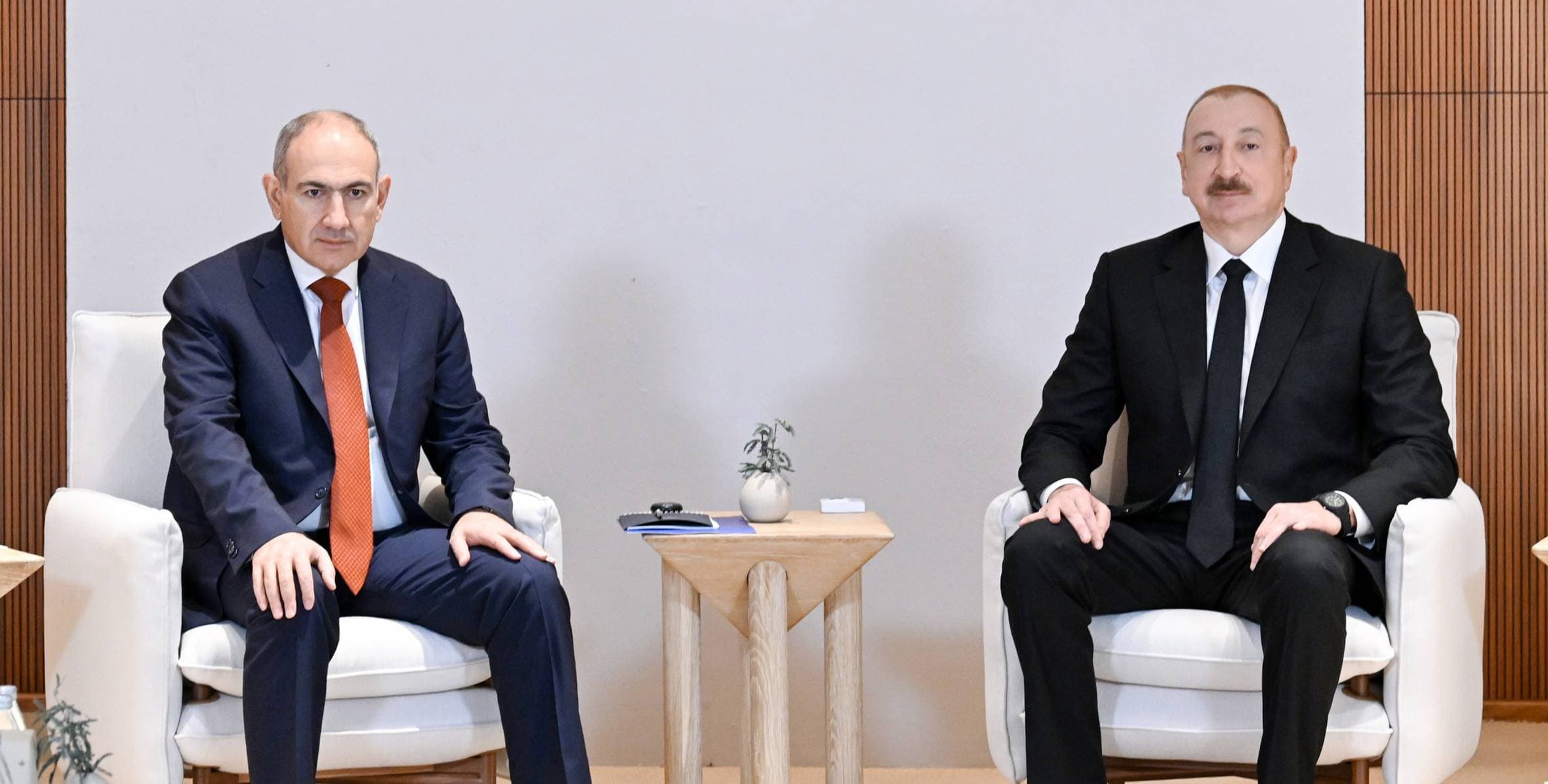
Something fundamental is changing across the South Caucasus and Central Asia, and the process of change is accelerating. The proposed Trump Route for International Peace and Prosperity (TRIPP), linking Azerbaijan and Armenia and opening another key connection to Türkiye and on to Europe, is widely being recognized as a major diplomatic achievement that brings together two former adversaries.
However, TRIPP’s normalization of relations between Baku and Yerevan is a steppingstone for something far more transformational—economic interdependence built around trade, transportation, and investment; the return of intraregional cooperation; and the opportunity for both countries to facilitate and profit from burgeoning transcontinental trade. But TRIPP matters for reasons far beyond new road and rail infrastructure.
It harbors something much larger—the reemergence of choice. This is a critical observation. For most of the modern history of the South Caucasus and Central Asia, the region’s geography has served as both a blessing and a curse. Situated between Europe and Asia, Russia and the Global South, China and the Black Sea, its trade routes to the outside world have depended on infrastructure and political relationships controlled by larger powers.
The war in Ukraine exposed the vulnerability of that model. It demonstrated the risks of depending too heavily on a single power, a single route, a single market or a single political system. The response across the region has increasingly been to build alternatives.
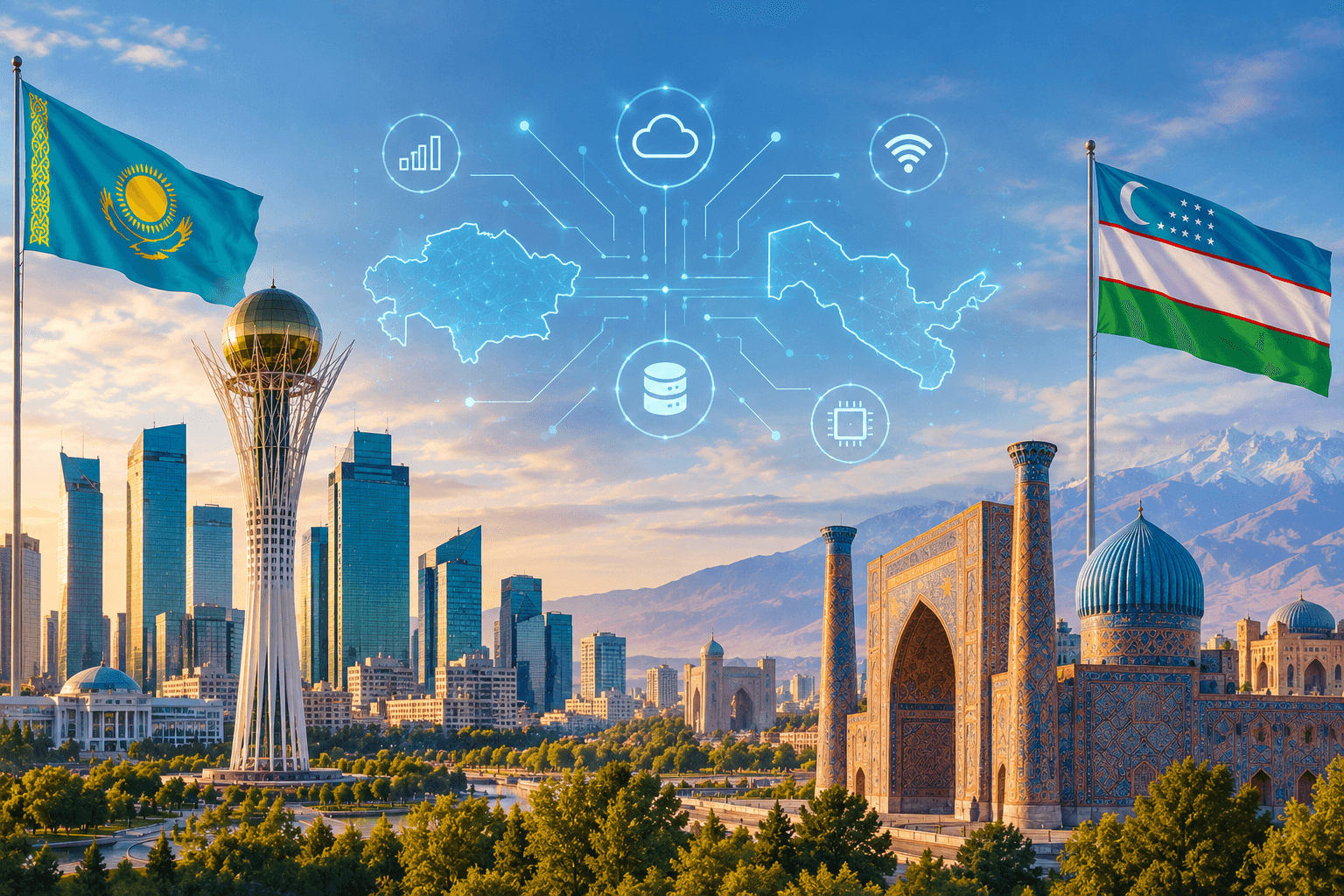
That is why the Trans-Caspian or Middle Corridor is becoming more than another transportation route. New ports, railways, energy connections, fiber-optic networks, and investment projects are beginning to form an interconnected system linking Central Asia with the South Caucasus, Türkiye, and European markets.
According to Kazakhstan's Ministry of Transport, freight volumes on the Trans-Caspian International Transport Route rose from roughly 800,000 tons to 4.5 million tons between 2018 and 2025, while container traffic reached approximately 77,000 TEUs last year. [A TEU is a Twenty-Foot Equivalent Unit – i.e., a standard intermodal shipping container.] Kazakhstan aims to increase that figure to 300,000 by 2029. Kazakhstan’s President Tokayev notes the increase in intra-regional trade because of reductions in trade barriers to $13 billion last year, and he proposes increasing that figure to $20 billion.
TRIPP can add another important link as an expansion of this emerging network. The significance of TRIPP is not to replace the existing Middle Corridor, but to complement it. The objective should be an integrated regional logistics system in which TRIPP, the Trans-Caspian route, the China-Kyrgyzstan-Uzbekistan railway, and other connections reinforce, rather than compete, with one another.
That is a profound change in how the countries in the region are thinking about working with each other. Connectivity is power: pipelines, railways, ports, telecommunications networks, energy systems, and digital infrastructure determine not only where goods move, but also where investment flows, which markets are accessible, and how resilient a country's economy can be.
Yet connectivity without choice can simply create a new form of dependence. The countries of the region understand this particularly well. Since independence, they have generally pursued what might be called multi-vector diplomacy: maintaining relationships with Russia, China, Europe, Türkiye, the United States, the Gulf, and others, rather than placing their economic future entirely in the hands of any one partner.
The objective is not to replace one dependency with another. It is to make dependency itself less necessary. That is what makes the current transformation so consequential. For centuries, this region was one of the great centers of Eurasian commerce. Caravans crossed its territory. Goods, languages, religions, technologies, and ideas moved between East and West. The region was not a peripheral space; it was a crossroads. Then empires hardened borders and redirected routes. Decisions about the region's connectivity were frequently made elsewhere.
What we are seeing today is not the creation of a new region. It is the reawakening of an old one under modern conditions. The countries of the South Caucasus and Central Asia are increasingly building connections that allow them to participate in global commerce on more diversified terms.
At the Caspian Policy Center’s 2026 Business Forum in New York, that vision was repeatedly connected to practical requirements. Azerbaijan emphasized the importance of efficient transport links, digital customs, and infrastructure. Georgia described the Middle Corridor as an essential component of Eurasian connectivity. Kazakhstan emphasized TRIPP's potential as an additional gateway toward European markets. Kyrgyzstan stressed the importance of integrating TRIPP with other regional transportation networks rather than treating individual corridors as isolated projects.
Those discussions point to the next challenge. The region does not simply need more infrastructure. It needs infrastructure that works as a system. That means harmonized customs procedures, coordinated railways and ports, digital documentation, predictable regulations, and long-term financing. It means attracting private capital and ensuring that projects are commercially viable, not simply geopolitically desirable. The Middle Corridor's future will ultimately depend on whether businesses find it reliable, competitive, and efficient.
The same principle applies to TRIPP. A successful corridor is not merely a line on a map—it is an economic ecosystem. The potential rewards extend well beyond transit fees: better connectivity can attract manufacturing, energy investment, technology companies, logistics providers, and new supply chains. It can connect landlocked economies more directly to global markets. It can turn geography from a constraint into an economic advantage.
For Armenia and Azerbaijan, there is an additional dimension: commerce can reinforce peace. Shared infrastructure creates shared interests. Trade creates constituencies for stability. Roads and railways that connect former adversaries can make cooperation economically valuable in ways that political agreements alone cannot.
This is why TRIPP deserves to be understood as more than a transportation project. It is a test of whether peace can produce prosperity—and whether prosperity can help sustain peace. There is also a broader historical lesson.
For generations, the countries of this region were often described as objects of great-power competition. Their geography made them strategically important, but their strategic choices were constrained by the powers around them. That construct is beginning to change.
The countries of the South Caucasus and Central Asia are not waiting for someone else to decide what their geography means. They are building the connections that allow them to decide for themselves. The TRIPP Corridor, the Middle Corridor, new digital links, energy infrastructure, and emerging investment partnerships are pieces of the same larger transformation.
Choice is becoming infrastructure. And infrastructure, in turn, is creating choice. History professors sometimes teach that great powers make history while smaller countries react to it. The Trans-Caspian experience is beginning to challenge that assumption. This region is not simply emerging from the shadow of history; it is once again making its own history.