Central Asia Balances Multiple Vaccine Diplomacy Efforts


Author: Dante Schulz
03/30/2021 · 3 min read
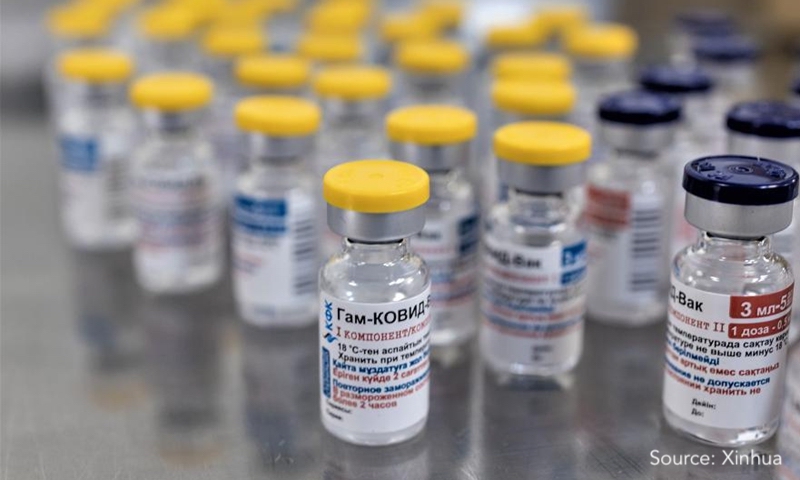
The largest vaccination effort in history is underway as governments scramble to acquire sufficient supplies of vaccines to inoculate their populations against COVID-19. Like much of the world, the five Central Asian republics have themselves at the center of competition between great powers hoping to use vaccines as a diplomatic tool in the region. Moscow and Beijing are both seeking to employ soft power diplomacy by advocating for the import of their own vaccines, the Sputnik V and Sinovac shots respectively. In addition, the less affluent Central Asian republics, such as Kyrgyzstan, Tajikistan, and Uzbekistan are eligible to acquire vaccine supplies through the World Health Organization’s COVAX initiative. Central Asia finds itself between great powers as it chooses which vaccine or vaccines to import and administer.
Bureaucratic hurdles in the United States and the European Union and more developed countries buying up the vaccine supply have resulted in Central Asian countries being unable to purchase the Pfizer vaccine on the open market. Kyrgyzstan, Tajikistan, and Uzbekistan are still betting on the COVAX initiative to secure doses of Western vaccines for their countries, but even then, the COVAX initiative limits the three Central Asian countries to only vaccinating 20 percent of their populace with this supply. The scramble to reach herd immunity through mass vaccination initiatives has left Central Asia relying on Russia or China to fill this void, both of whom are eager to expand their soft power through vaccine diplomacy.
Russia has made some headway in advancing the use of its Sputnik V vaccine across Central Asia. Kazakhstan was the first country in the region to receive a massive supply of Russian vaccines in early February. Kazakhstan has plans to inoculate six million of its 19 million citizens by the end of the year using the Russian Sputnik V vaccine. Kazakhstan is also slated to produce its own doses of the Sputnik V vaccine in the city of Karaganda, which officials hope will facilitate the rapid distribution of vaccines later this year.
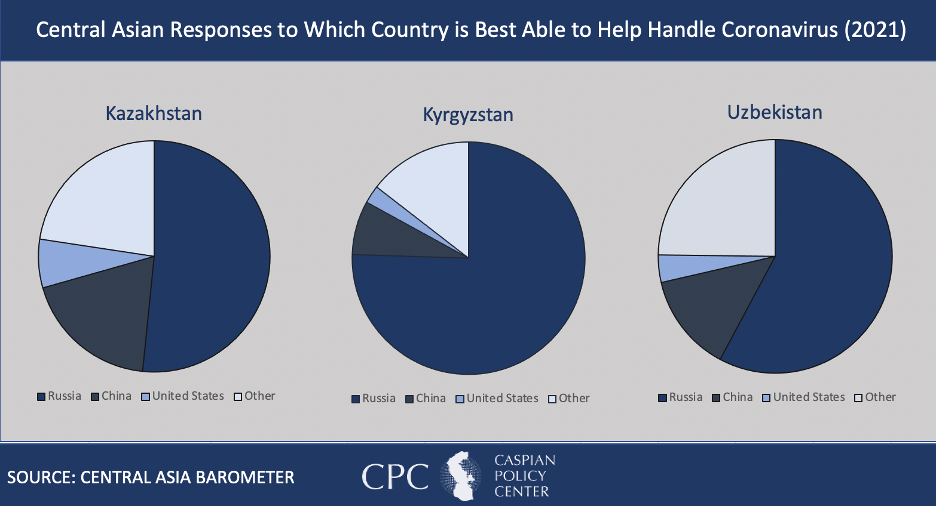
Uzbekistan’s government has put its support behind Chinese produced vaccines instead. While Tashkent ordered more than 35 million doses of the Sputnik V vaccine last September, it is still conducting trials for a COVID vaccine with China’s Anhui Zhifei Longcom Biopharmaceutical. Since the outbreak of the pandemic, Uzbekistan has been the most receptive of China’s COVID diplomacy. For example, in April 2020, a Chinese medical team touched down in Uzbekistan to provide tactical assistance to Uzbek medical workers battling rising COVID cases. While Tashkent is hoping to stay in Beijing’s good graces by using its vaccine, the Uzbek populace has overwhelmingly voiced their desire to receive aid from Russia.
Despite China’s attempts to expand its soft power through the export of COVID vaccines in Central Asia, a majority of Central Asians still prefer to receive assistance from Russia.
Both China and Russia have ambitions to fill the void that the West has left in terms of vaccine distributions. Central Asia’s multi-vector foreign policy can also apply to its vaccine roll out programs. Relying too heavily on one country to supply vaccines could lead to societal backlash, disdain from a foreign power, or the risk of running out of supply. Instead, Central Asian countries should diversify their vaccine supply to ensure that they are able to vaccinate as much of their populace as soon as possible.