Azerbaijan Ukraine Relations
Recent Articles
Author: Luke Coffey
08/28/2026
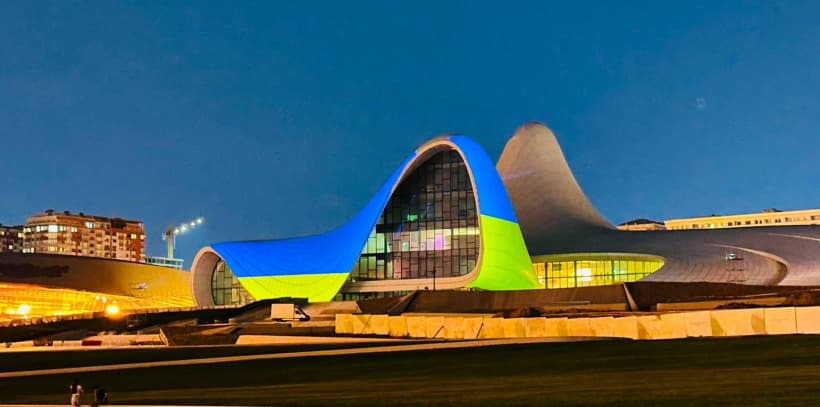
On Ukraine’s Independence Day, the Heydar Aliyev Center in Baku was illuminated in the colors of the Ukrainian flag. In addition to marking Ukraine’s 35th anniversary, the blue and yellow display was an appropriate tribute, given how much relations between Azerbaijan and Ukraine have deepened this year.
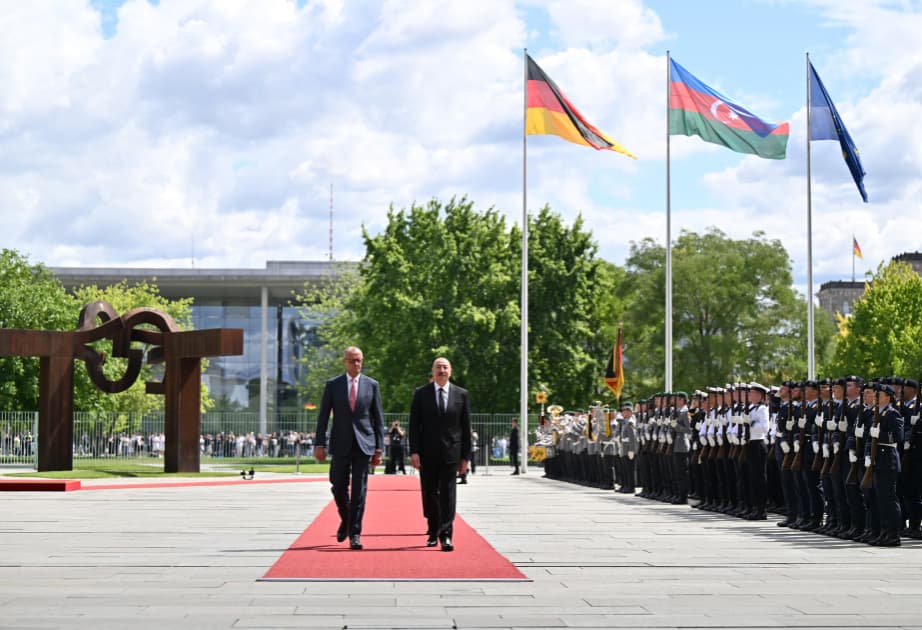
In April, President Volodymyr Zelenskyy made a surprise visit to Azerbaijan, where he and President Ilham Aliyev signed six agreements covering areas that included defense cooperation. But the meeting did not take place in Baku, as one would expect. Instead, the two leaders met in Gabala, less than 20 miles from the Russian border.
The symbolism was hard to miss. Gabala was once home to a major Soviet-built early-warning radar station that Russia continued to operate after Azerbaijani independence until 2012. Now, almost a decade and a half later, the Ukrainian president was in the same city discussing closer defense ties with Azerbaijan. Even more extraordinary, Ukrainian specialists are now on the ground, sharing battlefield expertise on protecting critical infrastructure from drones and other aerial threats.
And then in July, Azerbaijan Foreign Minister Jeyhun Bayramov made his first visit to Ukraine since Russia’s full-scale invasion. In Kyiv, he followed up on the April agreements between the two presidents, including defense-industrial cooperation and the so-called “Drone Deal.”
Close Azerbaijan-Ukraine relations are nothing new. What many might not realize is that today’s partnership rests on a deep historical foundation.
During Baku’s oil boom in the late 19th century, Ukrainian engineers played an important role in developing Azerbaijan’s emerging petroleum industry. Later, factories in Mariupol and then-Yekaterinoslav, today’s Dnipro, manufactured steel pipes for the Baku-Batumi kerosene pipeline. Officially opened in 1907, it was the longest pipeline in the world at the time and the first to link Caspian energy to the Black Sea and global markets.
The political relationship between the two nations also has roots predating the Soviet Union. During the Russian Civil War, the Azerbaijan Democratic Republic and the Ukrainian People’s Republic—short-lived predecessors of the modern states—established diplomatic ties and exchanged representatives while both struggled to maintain their independence amid the advance of Russian Bolshevism.
After independence was restored in 1991, cooperation quickly returned. During the economic hardships of the 1990s, Azerbaijan helped Ukraine obtain badly needed oil and lubricants. Ukraine, for its part, became an important defense supplier to Azerbaijan, transferring tanks and combat aircraft in the 1990s and later selling MiG-29 fighters to Baku.
The two countries also understood early the importance of connectivity and political cooperation among the newly independent states in the aftermath of the dissolution of the Soviet Union. In 1997, Azerbaijan and Ukraine joined Georgia and Moldova in establishing GUAM, (the Organization for Democracy and Economic Development–GUAM). Its early focus on sovereignty, trade and a Trans-Caucasus transport corridor anticipated much of the logic behind what is now called the Middle Corridor.
Azerbaijan and Ukraine share the experience of foreign occupation and wars fought over internationally recognized borders. Ukraine consistently supported Azerbaijan’s territorial integrity during the Armenian occupation of Azerbaijan’s Karabakh and surrounding regions. Likewise, Azerbaijan has continued to recognize Ukraine’s sovereignty and territorial integrity within its internationally recognized borders, including Crimea and the regions Russia claims to have annexed.
Since Russia’s full-scale invasion of Ukraine in February 2022, Baku and Kyiv ties have deepened further. Azerbaijan’s first humanitarian shipment arrived in Ukraine only three days after the invasion. Since then, Baku says its assistance has exceeded $50 million. It has included medicines, food, generators, transformers, demining assistance, and rehabilitation programs for Ukrainian children traumatized by the war. In the opening days of the invasion, Azerbaijan’s SOCAR gas stations across Ukraine also provided free fuel to ambulances and emergency vehicles, while Azerbaijan later helped with fuel for Ukraine’s agricultural sector.
Officially, Baku’s support has remained humanitarian. But there have long been questions about whether quieter military assistance also reached Ukraine, directly or indirectly. Images on social media of Azerbaijani-made 82-mm mortars and other munitions in Ukrainian service have appeared, for example. Baku has denied providing military aid, and there is no public evidence proving that the Azerbaijani government authorized these transfers, but their presence on the battlefield is notable.
The most intriguing case involves fighter aircraft. When Russia invaded, three Azerbaijani MiG-29s were reportedly undergoing repair and modernization at the Lviv State Aircraft Repair Plant. That was hardly unusual: Azerbaijan had originally purchased much of its MiG-29 fleet from Ukraine and routinely sent aircraft back there for maintenance. For months after the invasion, the fate of the three fighters was unclear. Then, in September 2025, a photograph emerged showing a MiG-29 in distinctive Azerbaijani camouflage carrying Ukrainian Air Force markings and a combat missile load. Neither government has explained how it entered Ukrainian service, and the fate of the other two aircraft remains unknown.
None of this means Baku is abandoning its careful geopolitical balancing act—but how Baku is balancing is changing. Azerbaijan remains the only country in the world with the dubious distinction of sharing land borders with both Russia and Iran. It has not joined Western sanctions against Moscow and generally avoids unnecessary confrontation with the Kremlin.
But the strategic environment around Azerbaijan has changed. Russia’s influence in the South Caucasus has weakened as Moscow has become consumed by its war in Ukraine. Azerbaijan’s restoration of control over Karabakh, its deepening relationship with Türkiye, and the growing prominence of the Organization of Turkic States have given Baku greater confidence and room for an increasingly independent foreign policy.
That space has allowed Azerbaijan and Ukraine to grow closer, even while Russia wages war against Ukraine. Zelenskyy’s April appearance in Gabala—near the Russian frontier, in the former home of a Russian radar station, while Ukrainian experts were helping Azerbaijan prepare for modern drone warfare—was perhaps the clearest illustration yet of just how much the regional balance has changed.