Baku and Berlin: The Partnership Beyond the Pipeline
Author: Zohra Movsumova
07/30/2026
 azertag.az
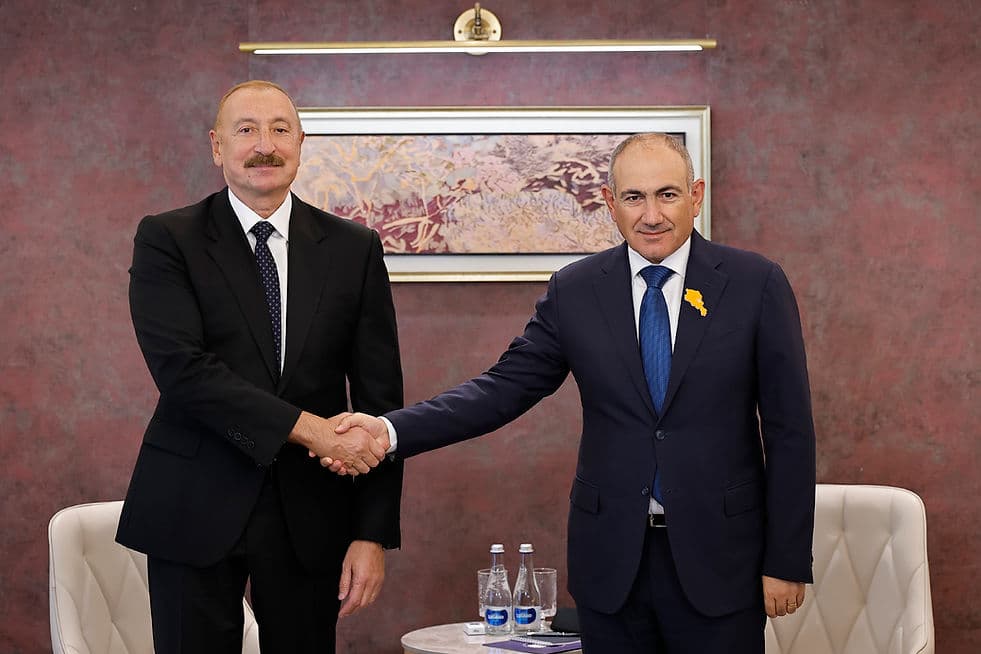
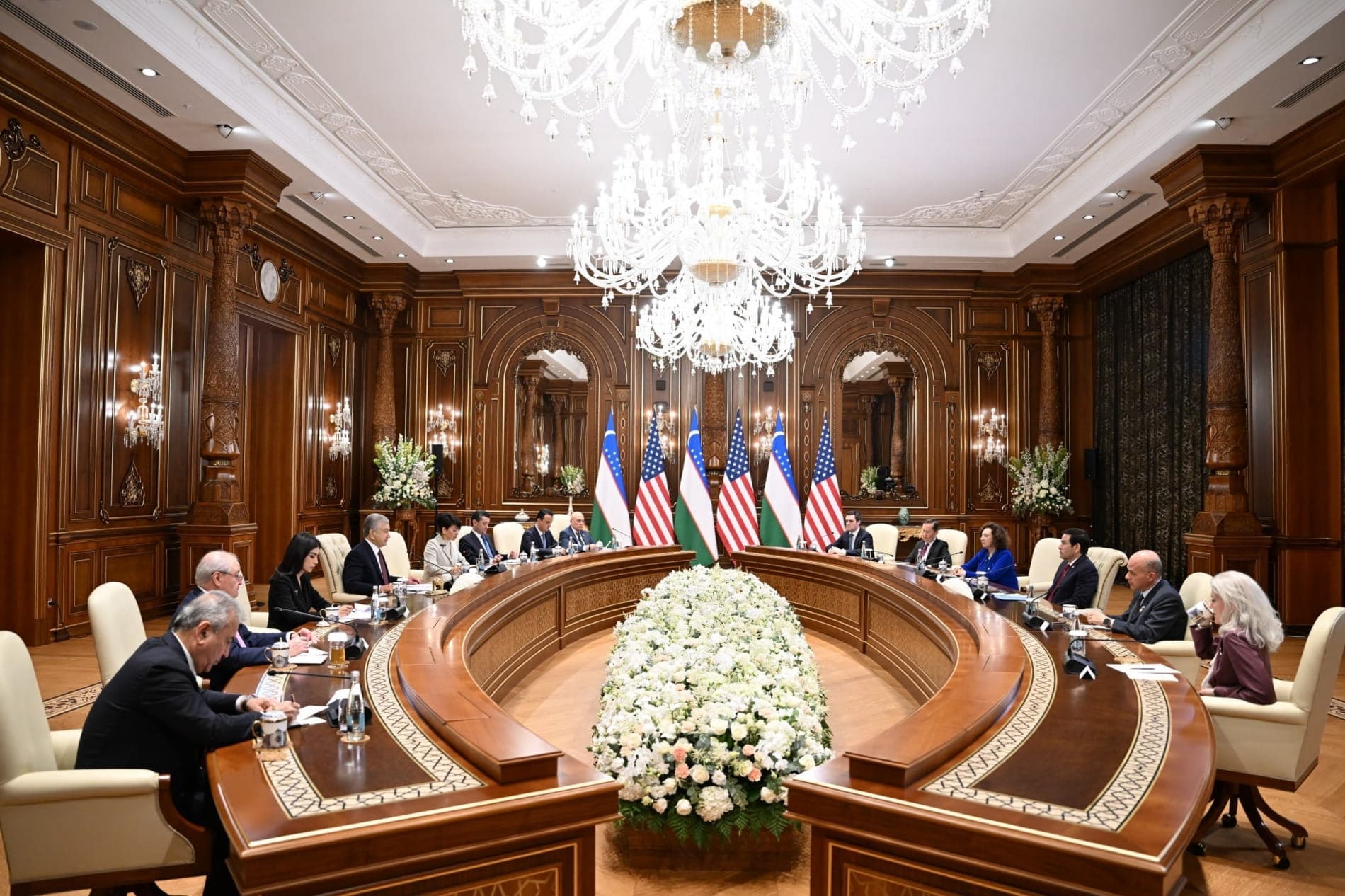
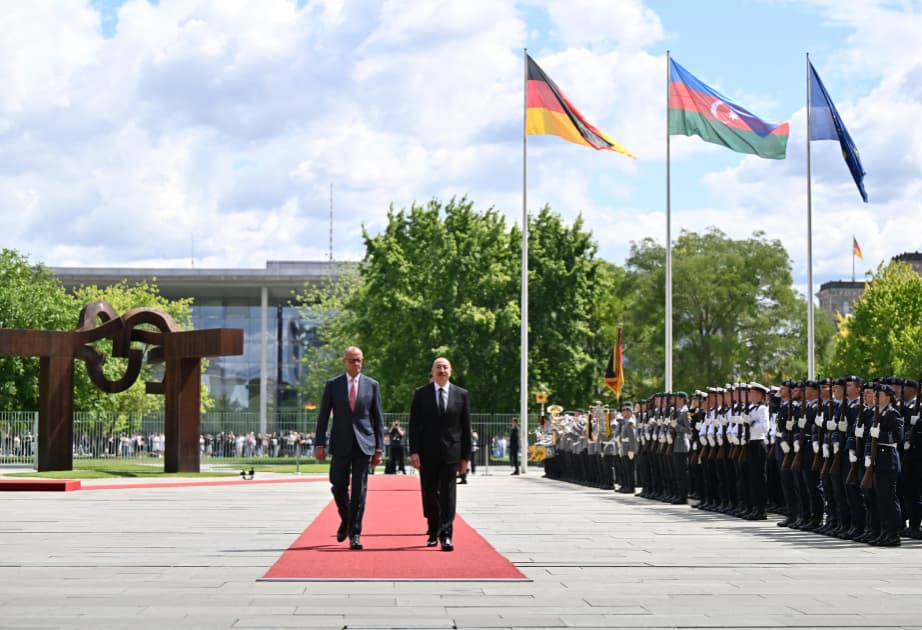
Germany and Azerbaijan are building a new relationship that goes beyond critical energy trade. On July 20-21, German Chancellor Friedrich Merz and Azerbaijani President Ilham Aliyev met in Berlin to sign a Joint Declaration on a Strategic Agenda for Bilateral Partnership on the strength of that trade and what both governments expect to build around it. This is the second framework agreement Azerbaijan has concluded with a major Western European state, following a similar memorandum with Italy. Germany currently buys about 1.5 billion cubic meters of Azerbaijani gas a year, a volume equal to slightly more than 1.7 percent of what it consumes. The bilateral declaration and substantial gas volumes are a strong indicator of a growing relationship.
Moving beyond energy partnerships, the new agreement also covers transport, infrastructure, trade and investment, defense-industrial cooperation, and scientific and technological cooperation. A significant outcome of the signing was the establishment of the Azerbaijan-Germany Business Council. Currently, more than 200 German companies operate in Azerbaijan across manufacturing, construction, logistics, and energy. The Council is intended to facilitate regular dialogue between government institutions and private companies, as well as address any barriers to investment.
What’s at Stake
Germany’s search for new suppliers is a direct consequence of how the last arrangement ended. Russia supplied 52 percent of German gas imports in 2021, and the relationship was political as much as it was commercial. Chancellor Gerhard Schröder signed the declaration of intent for the Nord Stream pipeline in September 2005, days before losing the election to Angela Merkel and then joining the consortium’s board upon leaving office.
Merkel in turn defended Nord Stream 2, despite opposition from Washington, Kyiv, and much of Eastern Europe. At the 2019 Munich Security Conference, she reiterated that Russia remained a viable partner, despite the fact that the warning signs had been apparent for over a decade, especially during transit disputes with Ukraine, which cut supplies to much of the region in 2006 and 2009.
The resulting collapse was rapid. Deliveries through Nord Stream 1 ran at roughly 1.7 TWh daily until mid-June 2022, then fell by 60 percent, then 80 percent, and reached zero in early September. Russia’s share of German gas imports dropped to 22 percent across 2022. Wholesale prices quadrupled, peaking at $359.3 per megawatt hour at the end of August. Berlin’s response was to nationalize Gazprom Germania, which was renamed Securing Energy for Europe (SEFE).
Germany had spent two decades treating a supplier’s reliability as a commercial question, and discovered it was actually a political one as well. Berlin now appears to be acting on that lesson seriously rather than restating it. Where Merkel argued in 2019 that a Russian gas molecule was the same molecule regardless of which pipeline carried it, Merz’s government is treating the identity of the supplier as the variable that actually matters.
Azerbaijan has spent the same period building the record Russia forfeited during its war with Ukraine. Its export geography has widened steadily, and Azerbaijani gas now reaches fourteen European destinations. Adding Germany, Europe’s largest economy, to that list is what converts a regional supplier into a strategic one.
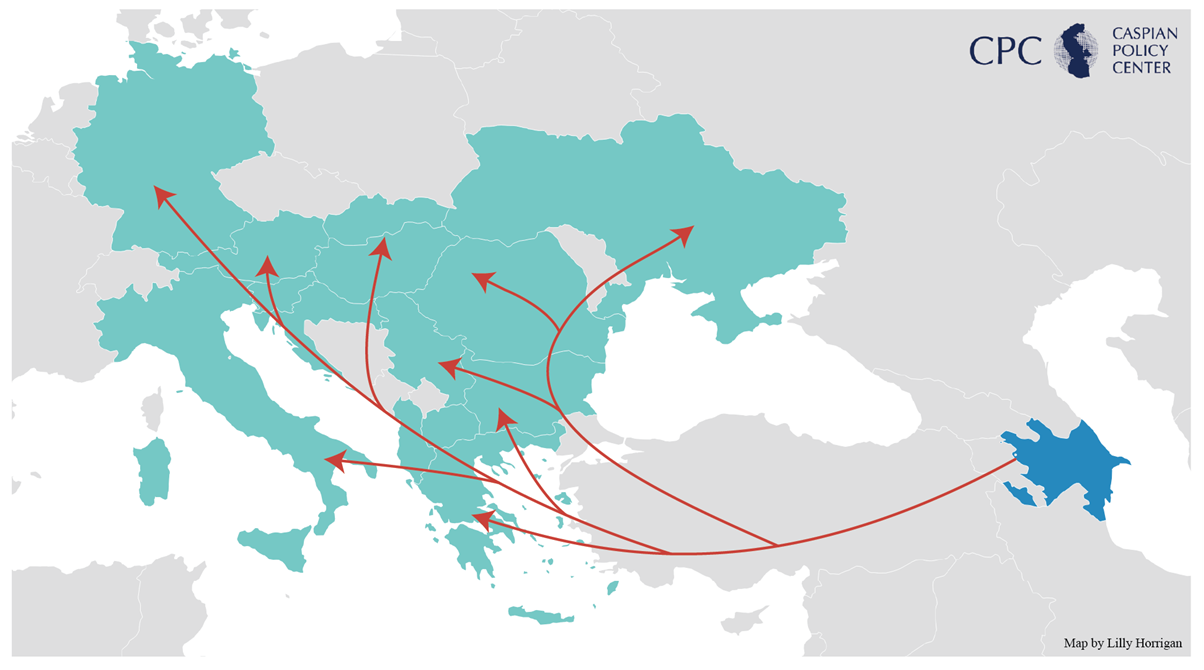 Azerbaijan now supplies natural gas to 14 European markets: Albania, Austria, Bulgaria, Croatia, Germany, Greece, Hungary, Italy, North Macedonia, Romania, Serbia, Slovakia, Slovenia, and Ukraine.
Beyond the Pipeline
Merz was direct about what Germany wants. “In the current crisis, cooperation in the supply of crude oil and natural gas via the Southern Gas Corridor is of particular importance,” he said.
In June 2025, SOCAR and the German state-owned firm SEFE signed a ten-year contract that allowed Azerbaijan to deliver gas directly to Germany and Austria in January 2026, with volumes rising to 1.5 billion cubic meters next year. For context, Azerbaijan exported 25 billion cubic meters of gas in total last year, a significant share of it to Europe. The German contract accounts for roughly six percent of Azerbaijan’s total exports, a small share of a small trade. What it does buy for Baku is position. Germany is the EU’s largest economy and its largest gas market, and a supplier that reaches it is no longer a regional player serving southern and eastern Europe.
That share is unlikely to grow soon. Aliyev said Azerbaijan is prepared to supply more, but under three conditions: additional purchase requests from importers, expanded pipeline infrastructure, and new investment. The first is notable because it places part of the burden on European buyers rather than completely on Baku. Both the Trans-Anatolian Pipeline and the Trans Adriatic Pipeline are operating at full capacity, which caps what the Southern Gas Corridor can carry regardless of what the governments agree to. Merz noted that additional Azerbaijani volumes could go primarily to southern Germany, where the necessary infrastructure partly exists or could be expanded.
The investment figures indicate more about the relationship’s direction than the trade figures do. German direct investment in Azerbaijan stands at $937.5 million, of which $884.1 million has gone to the non-oil sector and $53.4 million to oil and gas. Azerbaijani direct investment in Germany stands at $667.5 million.
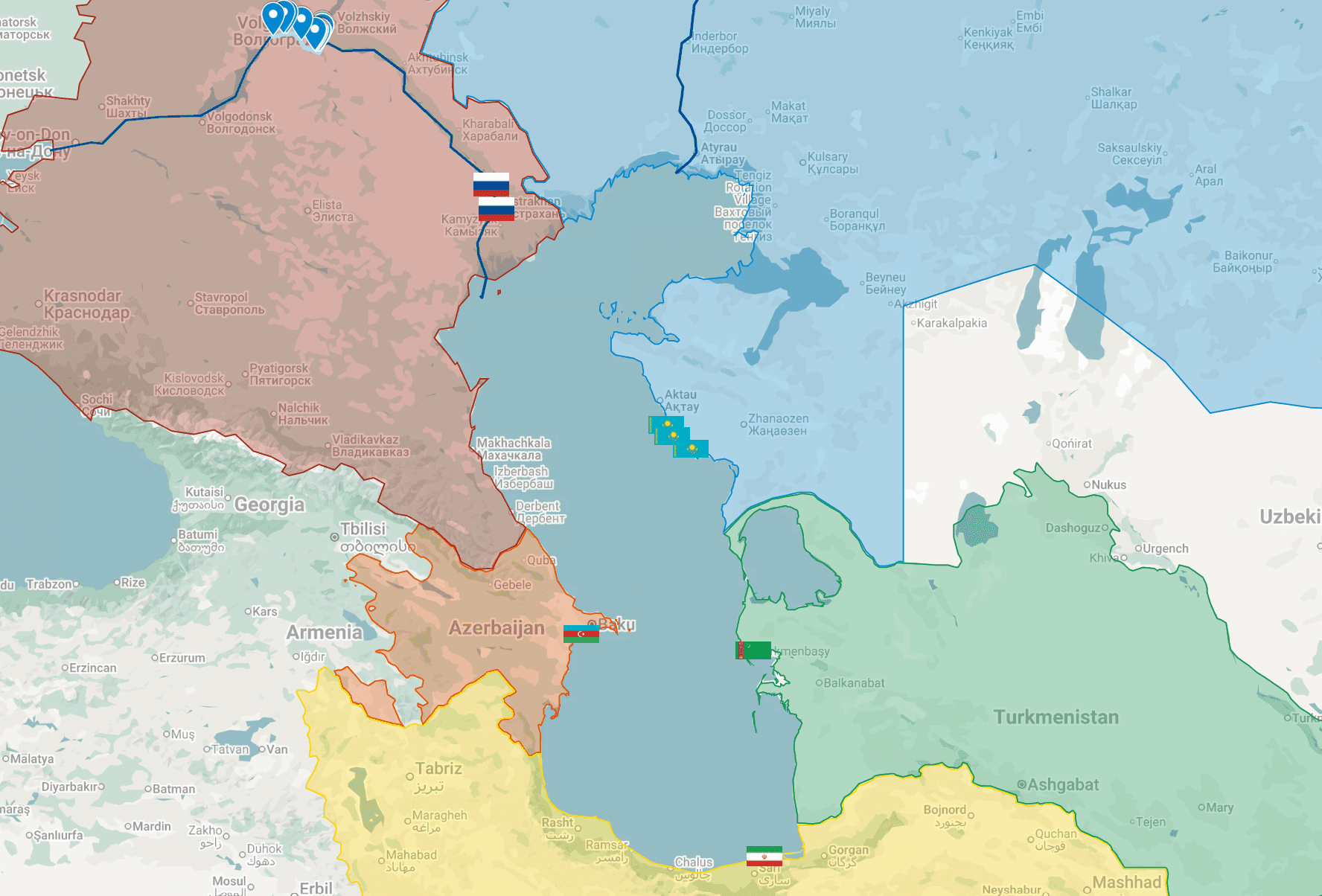
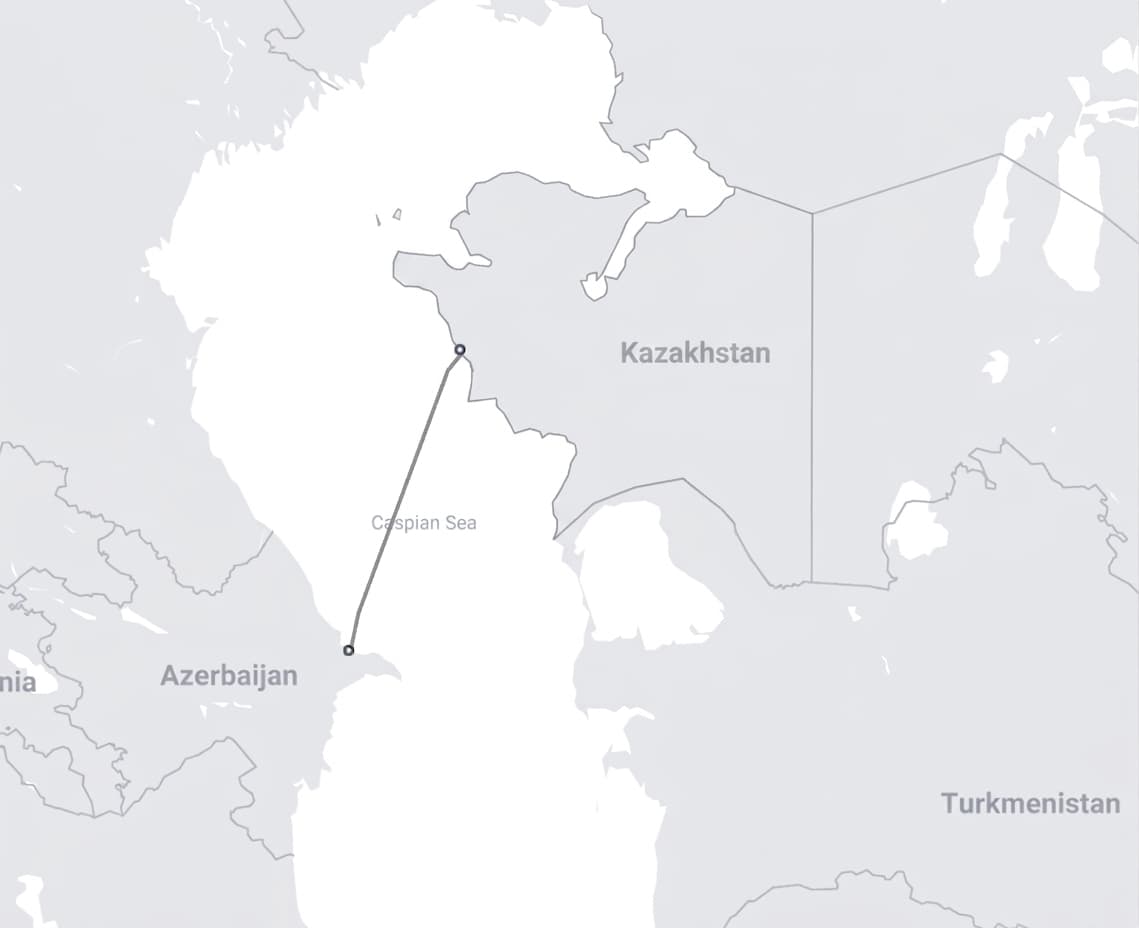
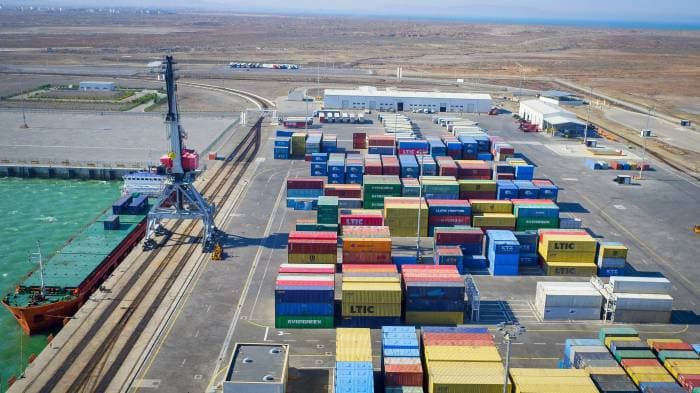
Bilateral trade reached more than $1.3 billion in 2025 and roughly $573 million already in the first six months of 2026, with Azerbaijani exports of $234 million against German exports of $338 million. German exports consist largely of industrial equipment, machinery, and transport systems, which is the composition of an industrial relationship rather than energy one. Merz described the South Caucasus as a key connectivity hub linking Europe and Asia, a reference to the Middle Corridor, which carries goods from China and Central Asia to Europe across the Caspian Sea, and through Azerbaijan, Georgia, and Turkey while bypassing Russia. For German firms, Azerbaijan is less a destination than an entry point to Central Asia.
Peace as Infrastructure Policy
Merz congratulated Aliyev on the initiation of the peace agreement with Armenia. “This is a historic agreement,” he said. He was explicit why this is in the interest of Berlin as well, “Peace, security, and stability in the South Caucasus are also essential for us,” adding that “greater stability in the region creates new opportunities for broad cooperation between our countries in the economic sphere.”
For Germany, a settlement makes regional infrastructure investments safer and improves the commercial viability of east-west transport routes, which places the peace process upstream of the connectivity agenda rather than alongside it. Aliyev credited the German government's role as intermediary and noted that more than 40,000 tonnes of transit cargo had crossed Azerbaijan to Armenia, with Azerbaijani fuel exports supporting Armenian energy security. Reconstruction in the Karabakh and East Zangezur regions create further openings for European expertise and investment in transport, renewable energy, urban development, and technology.
A Wider Pattern
The Berlin visit follows a sequence of European engagements with Baku. European Council President António Costa travelled to Azerbaijan in March, EU foreign policy chief Kaja Kallas visited in May, and European Commission President Ursula von der Leyen arrived on July 1, noting the importance of the partnership and its momentum to the European Union. Italy remains the largest European buyer of Azerbaijani gas via the Trans Adriatic Pipeline and was the first to sign a comparable framework. Germany, the EU's largest economy, is now moving along the same path.