
CPC - Caspian Policy Center
Events
7th Caspian Business Forum: Connectivity, Finance, and Energy along the Middle Corridor
7th Caspian Business Forum: Connectivity, Finance, and Energy along the Middle Corridor
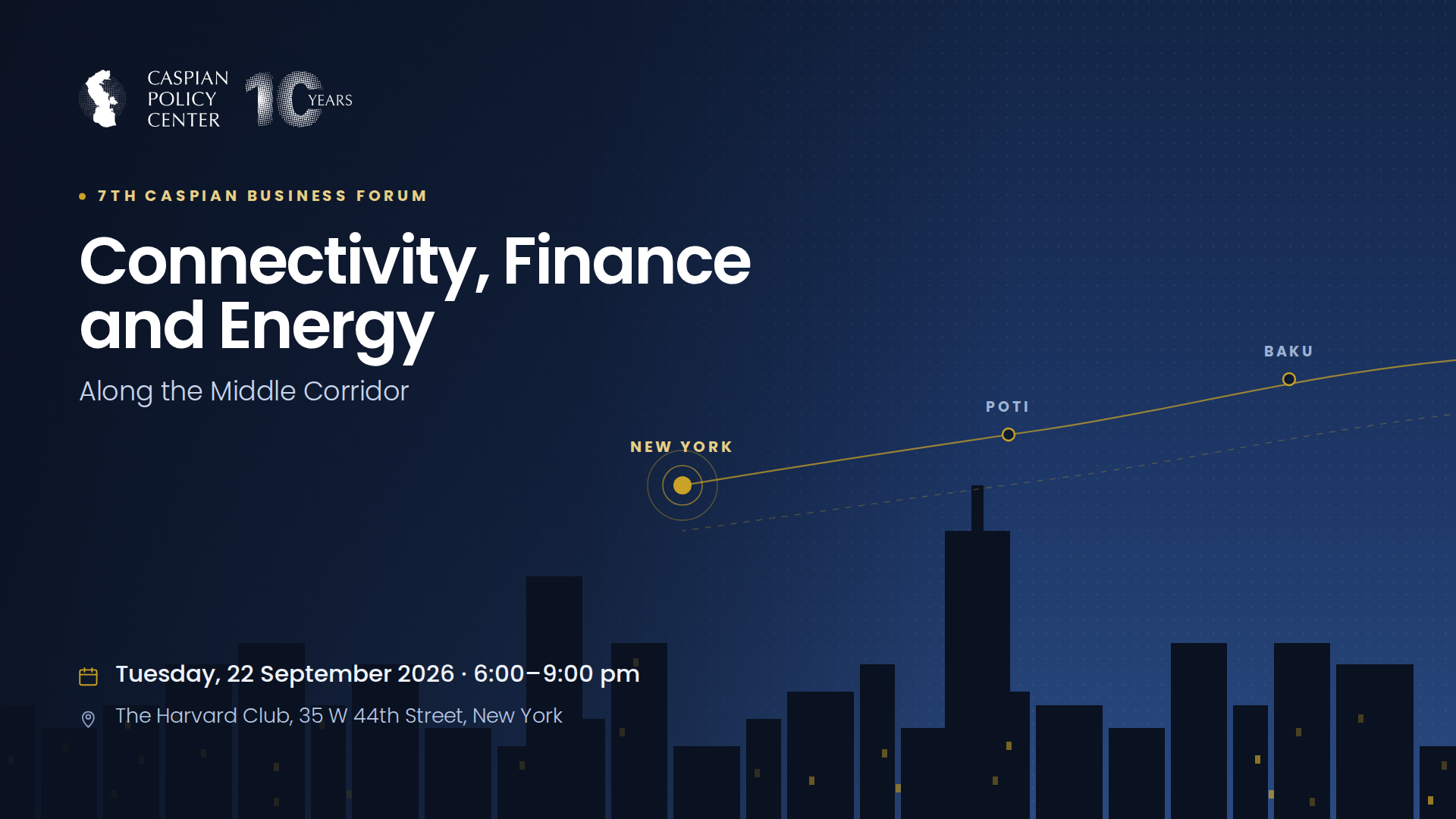
7th Caspian Business Forum: Connectivity, Finance, and Energy along the Middle Corridor
Marking its tenth anniversary, the Caspian Policy Center is pleased to host its annual Business Forum at the Harvard Club in New York bringing together a select group of senior government and business leaders to discuss the rapidly evolving economic, energy, and geopolitical landscape of the Trans-Caspian region. Held as the global community convenes for the United Nations General Assembly, this year’s CPC Business Forum will focus on practical challenges, emerging opportunities, and concrete next steps for strengthening regional connectivity, investment, and commercial cooperation.
As the region marks the one-year anniversary of the Joint Declaration between Armenia and Azerbaijan, new opportunities are emerging to expand the Middle Corridor, including the proposed Trump Route for International Peace and Prosperity (TRIPP). These developments have the potential to further strengthen regional connectivity, facilitate trade, and accelerate investment as countries across the Trans-Caspian region and beyond deepen their commercial ties along this strategic corridor linking Asia and Europe.
International business has played a vital role in promoting and facilitating cooperation as new supply chains and transportation networks seek to capitalize on the region’s emergent Middle Corridor. Given the increased international interest and engagement in the broader region, the Caspian Policy Center is convening an evening discussion with government and business leaders engaged in the region’s energy, financial, infrastructure, and connectivity sectors.
The discussion will focus on practical issues and next steps: what is needed to translate the region’s growing strategic importance into investment, infrastructure, and commercial opportunities; where remaining obstacles can be addressed; and how governments and the private sector can continue to deepen their efforts to advance the Trans-Caspian region’s next phase of growth.
EVENT PROGRAM
6:00 – 6:25 PM Registration and Welcome Reception
6:25 – 6:35 PM Welcome Remarks – Efgan Nifti, CEO, Caspian Policy Center
6:35 – 6:45 PM Policy Speech – Peter Andreoli, Deputy Assistant Secretary, Bureau of European and Eurasian Affairs (TBC)
6:45 – 6:55 PM Policy Speech – Mark Cameron, Deputy Assistant Secretary, Bureau of South and Central Asian Affairs, U.S. Department of State
7:00 – 7:45 PM Panel Discussion: “Investing in the Middle Corridor: What does the new
TRIPP Corridor mean for the region?
The proposed Trump Route for International Peace and Prosperity (TRIPP) can reshape connectivity between the South Caucasus and Central Asia, creating new opportunities along the broader Middle Corridor and beyond. But transforming the concept into a functioning commercial passage will require more than political agreement. Governments and businesses must address infrastructure, border procedures, customs, financing, security, and regulatory coordination, as well as integrating into the existing broader Middle Corridor.
This discussion will examine the practical challenges and opportunities along the proposed TRIPP corridor, including how the route can connect with existing transportation and trade networks, attract private investment, and strengthen east-west connectivity. Government and business leaders will consider what needs to happen next to move from political vision to commercially viable infrastructure and what role the United States and other international partners can play in supporting its development.
- Yalchin Rafiyev, Deputy Minister of Foreign Affairs of Azerbaijan
- Lasha Darsalia, Deputy Minister of Foreign Affairs of Georgia
- Erzhan Kazykhan, Representative of the President of Kazakhstan for Negotiations with the United States
- Bakyt Sydykov, Minister of Economy and Commerce, Kyrgyz Republic
- Berris Ekinci, Deputy Minister of Foreign Affairs of Türkiye
7:45 – 8:00 PM Congressional Address
Congressman Abraham J. Hamadeh, U.S. Congressman from Arizona
8:00 – 8:50 PM Panel Discussion: “Next Generation Business Along the Middle
Corridor: Energy, Connectivity, and Critical Minerals”
The Trans-Caspian region is entering a new phase in which its strategic importance extends well beyond traditional oil and gas. Energy remains fundamental, but the region's future growth will increasingly depend on critical minerals, diversified supply chains and infrastructure, as well as new forms of energy production and connectivity.
This discussion will examine how governments and businesses can translate the region's growing resource and technological potential into investment and economic growth. Panelists will explore opportunities in energy and critical minerals, and the role of international investment in building the next generation of the Trans-Caspian economy. The focus will be practical: where are the most promising opportunities, what obstacles remain, and what concrete steps can governments and businesses take now?
Moderator: Mark Menezes, President and CEO of U.S. Energy Association (USEA); Former U.S. Deputy Secretary for Energy
Panel Keynote: Alparslan Bayraktar, Minister of Energy and Natural Resources of Türkiye
- Kimberly Harrington, Head of U.S. International Affairs, bp America
- Claire Kaiser, Head of Strategy and Senior Managing Director, Eurasia, at McLarty Associates
- Jamshid Ehsani, Head of Global Principal Structured Finance, Apollo Global Management
- Marat Birimzhan, Head of the Representative Office in the United States, Kazakh Invest
- Eldor Aripov, First Deputy Secretary of the Security Council, Uzbekistan
8:50 – 9:00 PM Closing Remarks and Awards Ceremony
Marking its tenth anniversary, the Caspian Policy Center is pleased to host its annual Business Forum at the Harvard Club in New York bringing together a select group of senior government and business leaders to discuss the rapidly evolving economic, energy, and geopolitical landscape of the Trans-Caspian region. Held as the global community convenes for the United Nations General Assembly, this year’s CPC Business Forum will focus on practical challenges, emerging opportunities, and concrete next steps for strengthening regional connectivity, investment, and commercial cooperation.
As the region marks the one-year anniversary of the Joint Declaration between Armenia and Azerbaijan, new opportunities are emerging to expand the Middle Corridor, including the proposed Trump Route for International Peace and Prosperity (TRIPP). These developments have the potential to further strengthen regional connectivity, facilitate trade, and accelerate investment as countries across the Trans-Caspian region and beyond deepen their commercial ties along this strategic corridor linking Asia and Europe.
International business has played a vital role in promoting and facilitating cooperation as new supply chains and transportation networks seek to capitalize on the region’s emergent Middle Corridor. Given the increased international interest and engagement in the broader region, the Caspian Policy Center is convening an evening discussion with government and business leaders engaged in the region’s energy, financial, infrastructure, and connectivity sectors.
The discussion will focus on practical issues and next steps: what is needed to translate the region’s growing strategic importance into investment, infrastructure, and commercial opportunities; where remaining obstacles can be addressed; and how governments and the private sector can continue to deepen their efforts to advance the Trans-Caspian region’s next phase of growth.
EVENT PROGRAM
6:00 – 6:25 PM Registration and Welcome Reception
6:25 – 6:35 PM Welcome Remarks – Efgan Nifti, CEO, Caspian Policy Center
6:35 – 6:45 PM Policy Speech – Peter Andreoli, Deputy Assistant Secretary, Bureau of European and Eurasian Affairs (TBC)
6:45 – 6:55 PM Policy Speech – Mark Cameron, Deputy Assistant Secretary, Bureau of South and Central Asian Affairs, U.S. Department of State
7:00 – 7:45 PM Panel Discussion: “Investing in the Middle Corridor: What does the new
TRIPP Corridor mean for the region?
The proposed Trump Route for International Peace and Prosperity (TRIPP) can reshape connectivity between the South Caucasus and Central Asia, creating new opportunities along the broader Middle Corridor and beyond. But transforming the concept into a functioning commercial passage will require more than political agreement. Governments and businesses must address infrastructure, border procedures, customs, financing, security, and regulatory coordination, as well as integrating into the existing broader Middle Corridor.
This discussion will examine the practical challenges and opportunities along the proposed TRIPP corridor, including how the route can connect with existing transportation and trade networks, attract private investment, and strengthen east-west connectivity. Government and business leaders will consider what needs to happen next to move from political vision to commercially viable infrastructure and what role the United States and other international partners can play in supporting its development.
- Yalchin Rafiyev, Deputy Minister of Foreign Affairs of Azerbaijan
- Lasha Darsalia, Deputy Minister of Foreign Affairs of Georgia
- Erzhan Kazykhan, Representative of the President of Kazakhstan for Negotiations with the United States
- Bakyt Sydykov, Minister of Economy and Commerce, Kyrgyz Republic
- Berris Ekinci, Deputy Minister of Foreign Affairs of Türkiye
7:45 – 8:00 PM Congressional Address
Congressman Abraham J. Hamadeh, U.S. Congressman from Arizona
8:00 – 8:50 PM Panel Discussion: “Next Generation Business Along the Middle
Corridor: Energy, Connectivity, and Critical Minerals”
The Trans-Caspian region is entering a new phase in which its strategic importance extends well beyond traditional oil and gas. Energy remains fundamental, but the region's future growth will increasingly depend on critical minerals, diversified supply chains and infrastructure, as well as new forms of energy production and connectivity.
This discussion will examine how governments and businesses can translate the region's growing resource and technological potential into investment and economic growth. Panelists will explore opportunities in energy and critical minerals, and the role of international investment in building the next generation of the Trans-Caspian economy. The focus will be practical: where are the most promising opportunities, what obstacles remain, and what concrete steps can governments and businesses take now?
Moderator: Mark Menezes, President and CEO of U.S. Energy Association (USEA); Former U.S. Deputy Secretary for Energy
Panel Keynote: Alparslan Bayraktar, Minister of Energy and Natural Resources of Türkiye
- Kimberly Harrington, Head of U.S. International Affairs, bp America
- Claire Kaiser, Head of Strategy and Senior Managing Director, Eurasia, at McLarty Associates
- Jamshid Ehsani, Head of Global Principal Structured Finance, Apollo Global Management
- Marat Birimzhan, Head of the Representative Office in the United States, Kazakh Invest
- Eldor Aripov, First Deputy Secretary of the Security Council, Uzbekistan
8:50 – 9:00 PM Closing Remarks and Awards Ceremony
All events
Showing 4 events