DFC’s Trans-Caspian Tour Signals Expanding Investment Pipeline
Recent Articles
Author: Dr. Akbota Karibayeva Meyer
07/14/2026
 Kazinform
The United States appears to be serious about increasing significant and strategic investments in Central Asia. Ben Black, the head of the U.S. International Development Finance Corporation (DFC), held a series of highest-level meetings during his June trip to the Caspian region. He met with President Kassym-Jomart Tokayev in Astana, President Shavkat Mirziyoyev in Tashkent, as well as Azerbaijan’s Foreign, Economy, and Digital Development ministers in Baku. The trip produced a major letter of interest (LOI) covering a telecommunications upgrade in Kazakhstan, a newly launched bilateral investment platform in Uzbekistan, and renewed discussion of opening a permanent DFC office in Astana. The visit offers an early read on how the reauthorized DFC intends to convert its expanded authorities into deployed capital across the Caspian region.
The tour came six months after Congress reauthorized DFC through 2031 as part of the FY 2026 National Defense Authorization Act (NDAA). The legislation raised the agency’s maximum contingent liability from $60 billion to $205 billion and established a new $5 billion equity revolving fund at the U.S. Treasury that allows DFC to make equity investments and reinvest returns into future deals. Importantly, the NDAA broadened country eligibility, for the first time granting DFC the authority to invest in select high-income markets in sectors deemed central to U.S. strategic supply-chain security: energy, critical minerals, and information and communications technology. Black framed the agency’s post-reauthorization mission as the return of “American economic statecraft” in his April speech where he identified Central Asia among the regions essential to U.S. economic security and strategic competition.
Baku: Strategic Connectivity
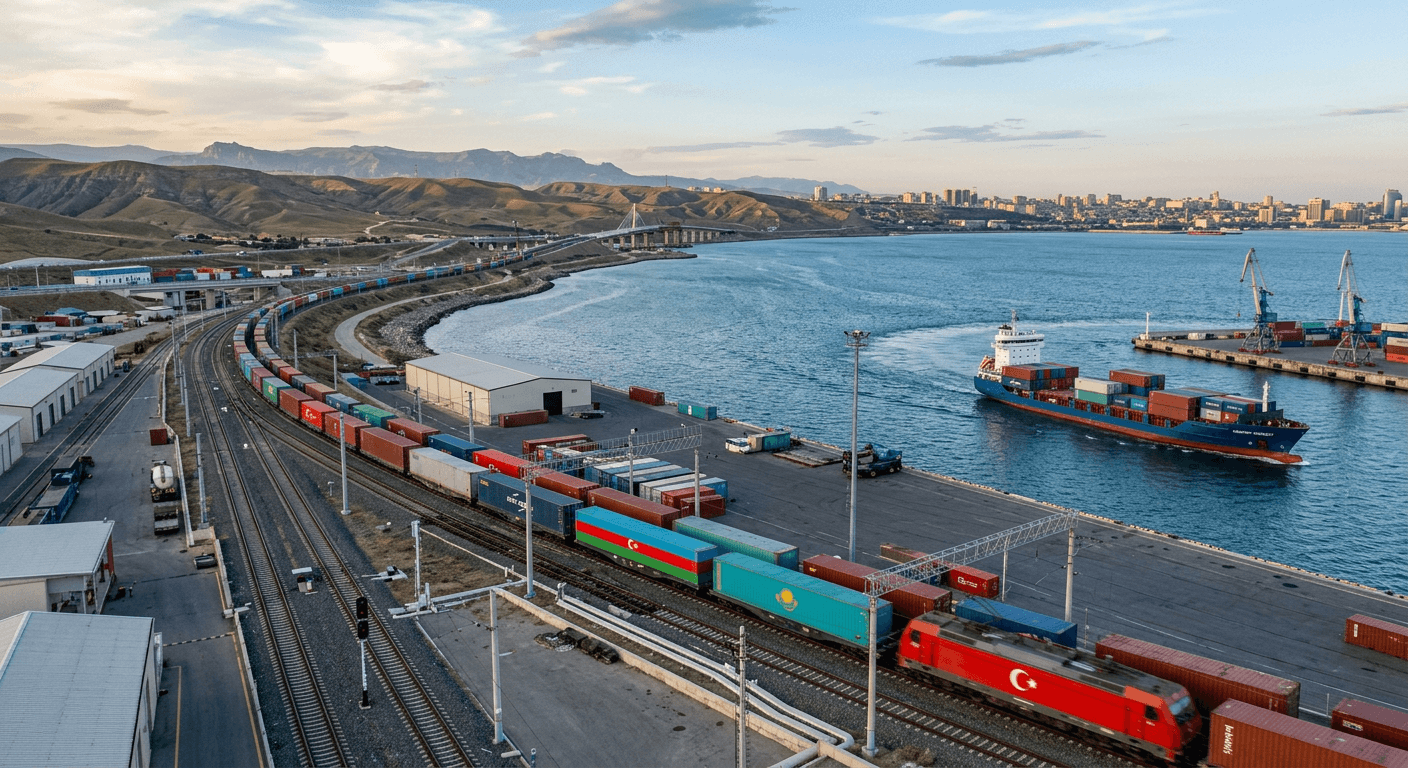
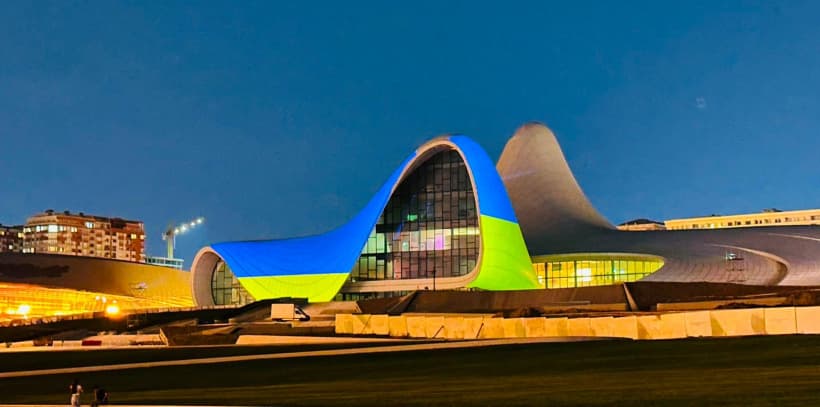
While in Baku, Black met with Foreign Minister Jeyhun Bayramov, Economy Minister Mikayil Jabbarov, and Digital Development and Transport Minister Rashad Nabiyev. Discussions covered port and logistics infrastructure, energy security, and regional transport, including the Trump Route for International Peace and Prosperity which would connect mainland Azerbaijan to its Nakhchivan exclave and on to Türkiye through southern Armenia. The Baku visit consolidated the political and strategic framework for deepening U.S.-Azerbaijani economic cooperation across the Middle Corridor and broader Europe-Central Asia connectivity, where Azerbaijan remains an indispensable partner. The DFC CEO’s meetings built on the February 2026 Strategic Partnership Charter and the inaugural U.S.-Azerbaijan Economic Dialogue convened on June 2, which established a standing bilateral mechanism for coordinating policy on key areas of cooperation.
Astana: Securing Supply Chains
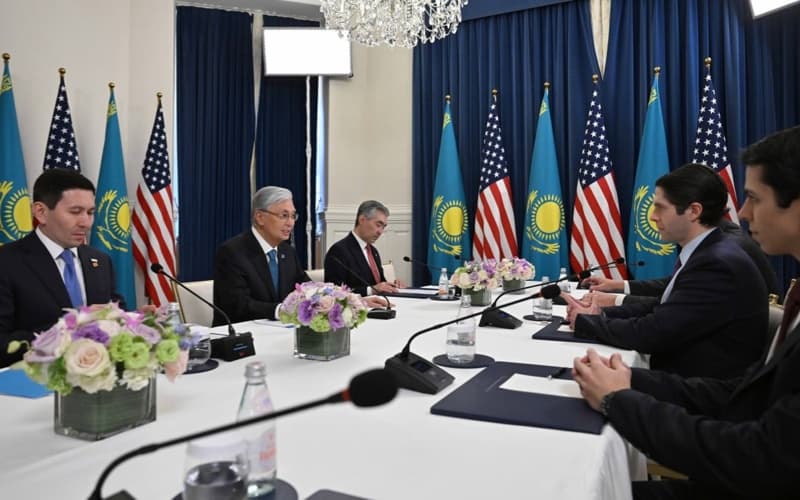
On June 15, Black met with President Tokayev to discuss critical minerals, transport connectivity, agriculture, digitalization, and artificial intelligence, and to review the prospect of opening a permanent DFC office in Astana. Tokayev framed the visit as a continuation of agreements reached during his November 2025 Washington meetings, describing Kazakhstan’s engagement with the United States in strikingly direct alignment terms: “We fully support the bold vision and pragmatic approach of the President of the United States to diplomacy. Kazakhstan plays an active role in advancing key American initiatives, including the Abraham Accords, the Board of Peace, the TRIPP initiative, and other projects.”
Two days later, Black and Power International Holding (PIH) Group CEO Ramez Al-Khayyat signed a LOI covering a proposed DFC partnership to upgrade Tele2 Kazakhstan and transition the network toward “trusted vendors.” PIH, a Qatari holding company, acquired Tele2 and Altel from Kazakhtelecom in January 2025, in a deal Kazakh authorities valued at approximately $1.1 billion. The proposed DFC engagement would finance the modernization of an already-acquired asset rather than greenfield network construction. The modernization centers on equipment transition to support 5G rollout, mobile data services, e-commerce and digital payments, and the cybersecurity infrastructure that Black described as “an essential prerequisite for attracting global investors and best-in-class businesses” into Kazakhstan’s digital economy.
The strategic importance of the deal lies in its supply-chain logic. DFC positioned the transaction as a way to diversify currently over-concentrated 4G and 5G equipment supply chains, signaling intent to offer an alternative to Chinese telecommunications equipment with hardware sourced from U.S. and allied manufacturers. Black indicated in an interview with National Business Kazakhstan that the project could reach roughly $2 billion. If executed, it would represent the first major DFC-backed telecom transition project in Central Asia.
The Tele2 commitment sits within a growing DFC pipeline in Kazakhstan. In February 2026, DFC issued LOIs exploring up to $700 million for Cove Kaz Capital Group’s investment in the Severniy Katpar Tungsten Mine, one of the world’s largest untapped tungsten deposits, estimated to contain more than 10 percent of global reserves. The rationale aligns with the telecom deal: tungsten is essential to U.S. defense and industrial manufacturing, and Chinese suppliers account for more than 80 percent of global tungsten production. During the June visit, Black indicated DFC was actively examining approximately ten projects in Kazakhstan, including three to four additional mining transactions, technology and AI data center projects, and Caspian port and logistics infrastructure. In Black’s words, regional DFC investment “will be measured in billions of dollars. It could be more than $10 billion.”
The Astana visit also followed the first in-person C5+1 Critical Minerals Dialogue, held in Kazakhstan’s capital on June 10. U.S. Special Envoy Sergio Gor used that platform to position DFC as a central instrument for converting Central Asia’s mineral deposits into processing-stage industrial capacity. DFC Chief Policy Officer Caroline Vik separately briefed the American Chamber of Commerce in Astana on the agency’s expanded $205 billion ceiling and its pipeline interest across connectivity, energy, infrastructure, healthcare, agriculture, and critical minerals.
Tashkent: Institutionalizing the Bilateral Investment Platform
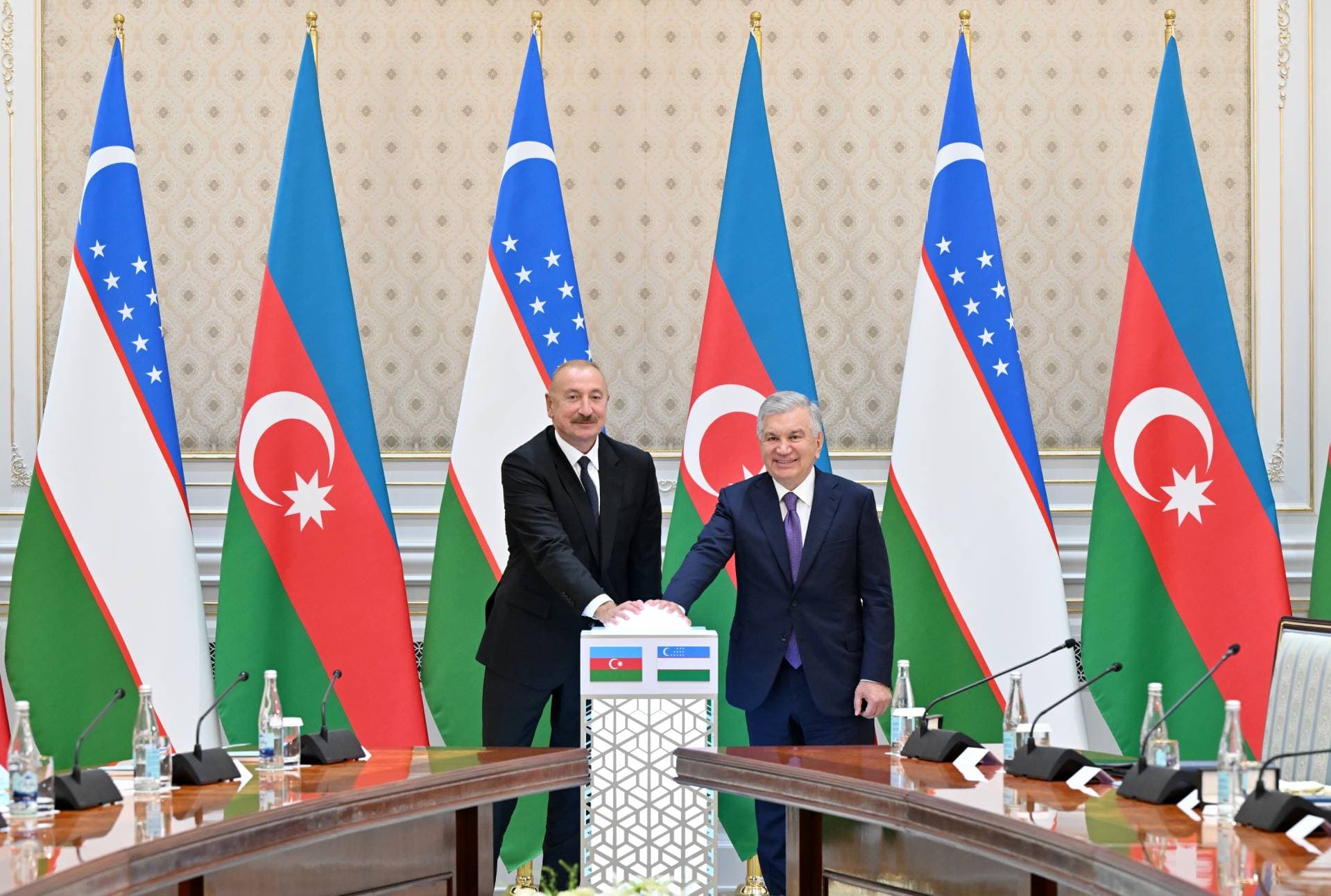
The Tashkent leg was anchored by the Tashkent International Investment Forum. On June 16, DFC and the EXIM Bank, together with Uzbekistan’s Ministry of Investment, Industry and Trade and the Fund for Reconstruction and Development, launched the U.S.-Uzbekistan Joint Investment Platform, building on the framework signed by both governments in Washington in February 2026. The platform targets energy, infrastructure, critical minerals, transport and logistics, and advanced manufacturing, and is structured to mobilize co-investment from sovereign wealth funds, multilateral development banks, and other institutional partners. Mirziyoyev’s discussions with the U.S. delegation also identified a specific project shortlist: a new Tashkent international airport, a medical complex in the Fergana region, a digital banking platform, data centers, and dry ports.
Mirziyoyev separately convened a corporate roundtable spanning energy, technology, finance, and aerospace that included Boeing, BlackRock, JPMorgan, Visa, Meta, Air Products, Templeton, and Cove Capital. The Cove Capital presence is notable, as it is the lead U.S. partner in the Severniy Katpar tungsten project in Kazakhstan, suggesting that DFC and the broader U.S. investor base are approaching the region as a single integrated theater rather than as discrete bilateral relationships. Mirziyoyev also used the forum to announce a Tashkent International Financial Center offering zero rates on profit tax, value-added tax, property tax, and customs duties, alongside an Uzbek proposal for a special economic zone tailored to American firms.
DFC’s Growing Role
Diplomatic achievements over the past year have confirmed U.S. interest in prioritizing the Caspian region. This DFC visit confirms the region’s operational priority for the Trump administration. The combination of a CEO-level visit, a sizable telecom LOI, a new bilateral platform, an active mining pipeline anchored by the tungsten deal, and ongoing discussion of a permanent in-country office in Kazakhstan goes beyond standard agency diplomacy. The visit also clarifies how the administration intends to operationalize DFC as its primary instrument for converting strategic engagement into financed projects, particularly in markets where supply-chain diversification away from China carries direct national-security implications.
DFC is itself a Trump 1.0 creation. The agency launched in December 2019, and then-CEO Adam Boehler made his own Central Asia trip in January 2021, signing memoranda of understanding with Kazakhstan and Uzbekistan under the Central Asia Investment Partnership, a $1 billion regional commitment anchored institutionally through the Astana International Financial Centre. Those MOUs went largely unimplemented under the Biden administration. The June 2026 trip revives that unfinished architecture with substantially expanded authorities and a sharper supply-chain focus.
Against that precedent, execution remains the central question. Continuous engagement and formal commitments move the relationship a step beyond diplomatic rhetoric, but the pace remains slower than the region had hoped. According to Congressional Research Service reporting, DFC committed roughly $3.6 billion across 30 transactions in FY 2025 – a substantial step down from the $12.1 billion committed in FY 2024 – and the agency has signaled it will pursue “fewer, larger deals” going forward. The $205 billion contingent-liability ceiling set by the FY 2026 reauthorization expands what is possible; the ten-project Kazakhstan pipeline and Black’s $10 billion-plus regional estimate define what is intended. But neither figure represents capital that has yet been deployed. The relevant test for the region over the next 12-18 months will be the conversion of June’s letters and platforms into signed financing packages and project-level disbursement.