From Chevron to AI: The Surprising History of U.S. Economic Engagement with Central Asia
Recent Articles
Author: Dr. Eric Rudenshiold
10/11/2026
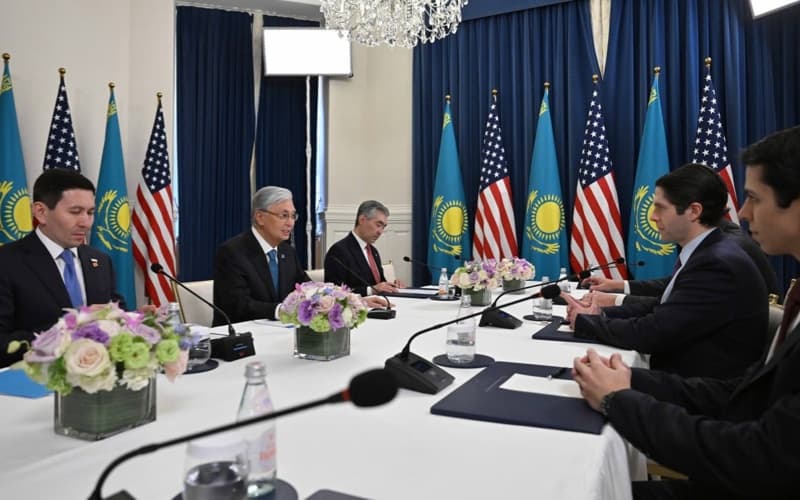
As a U.S. business delegation of more than 100 companies prepares to travel to Uzbekistan, it is worth remembering that American economic engagement with Central Asia did not begin with today's renewed interest in critical minerals, with the Middle Corridor, or with technology and artificial intelligence. The United States has been steadily engaged with this region since its independence, providing economic assistance, supporting market reforms, investing in energy, promoting alternative transportation and energy routes, and repeatedly working to introduce American businesses to Central Asians.
From Chevron's landmark investment in Kazakhstan to Commerce Secretary Wilbur Ross's and the Commerce Department's business delegations in 2018 and 2019, Washington has consistently tried to translate diplomatic relationships into commercial opportunities. Until recently, the results have been mixed. Corruption, weak institutions, Russian-oriented infrastructure, relatively small markets, and competition from other outside powers hampered the translation of any individual business success into a larger, self-sustaining American economic presence. But Central Asia itself has changed dramatically since 2022.
However, despite Russia's war in Ukraine, the rise of the Middle Corridor, or other developments that seem fresh today, the following timeline offers the surprising revelation that most of today’s innovations were proposed and pursued by Washington years ago. A Middle Corridor, Trans-Caspian energy pipelines, economic sovereignty, reducing dependence on large neighbors? Not new ideas.
The Economic Timeline
1991— Independence and first U.S. economic engagement
The United States immediately recognized the newly independent Central Asian states, working to build diplomatic and economic relationships.
1992-1994 – U.S. continues to provide transition incentives
The U.S. provided millions of dollars in technical assistance programs to help Central Asian countries transition from command economies to free markets via the Freedom Support Act. Washington also quickly signed bilateral trade agreements with the new republics, granting them conditional Most Favored Nation status (now termed Normal Trade Relations) to lower tariffs on Central Asian goods entering the U.S. market. A Generalized System of Preferences program allowed duty-free access for thousands of products as an extra incentive for market reforms in Kyrgyzstan, Kazakhstan, and Uzbekistan. The Overseas Private Investment Corporation and the U.S. Ex-Im Bank extended credit guarantees and political risk insurance to major U.S. corporations investing in the region. A Central Asian Enterprise Fund was established to promote investment in the region’s local private economy sectors.
1993—Caspian oil’s investment cornerstone, Nunn-Lugar funding
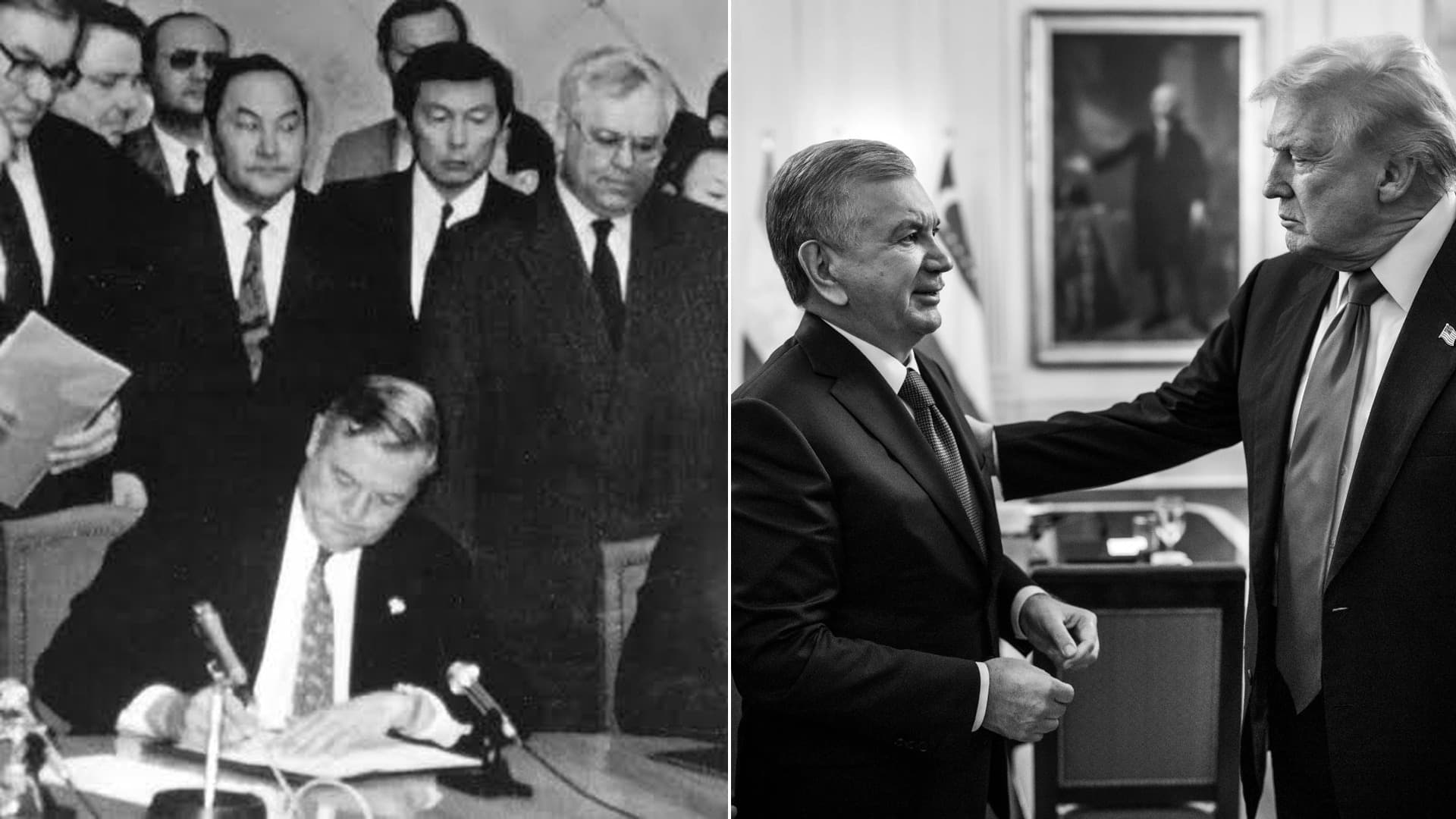
Chevron and Kazakhstan concluded the landmark Tengiz agreement, establishing one of the largest early examples of American investment in the post-Soviet region. The agreement became a foundation for decades-long U.S.-Kazakhstan economic ties. At the same time, the U.S. and Kazakhstan signed nuclear non-proliferation agreements that leveraged significant financial defense-to-civilian conversion funding and commercial compensation to support Kazakhstan's economy in exchange for complete denuclearization.
1996–1998 — Caspian energy diplomacy expands
Washington increasingly focused on the Caspian as a potential source of energy diversification. U.S. officials promoted routes that could connect Central Asian resources with international markets while encouraging cooperation among the United States, Russia, and regional governments. While intense efforts failed to establish Trans-Caspian gas and oil pipelines, the Caspian Pipeline Consortium became a major example of this approach to move Central Asian energy to global markets.
1998-1999 — Secretary of State Madeleine Albright's Central Asia focus
The Clinton administration elevated Central Asia within broader U.S. strategic planning, emphasizing energy, nonproliferation, terrorism, and regional stability, along with general development in independent states. Albright saw Central Asia as strategically consequential. The administration signed the Silk Road Strategy Act in 1999, targeting Central Asia and the South Caucasus for the creation of an East-West trade and political corridor that would bypass the traditional North-South reliance on Russia and Iran. The legislation intended to promote regional sovereignty, independent democratic governments, conflict resolution, market-driven economies, and U.S. business investment.
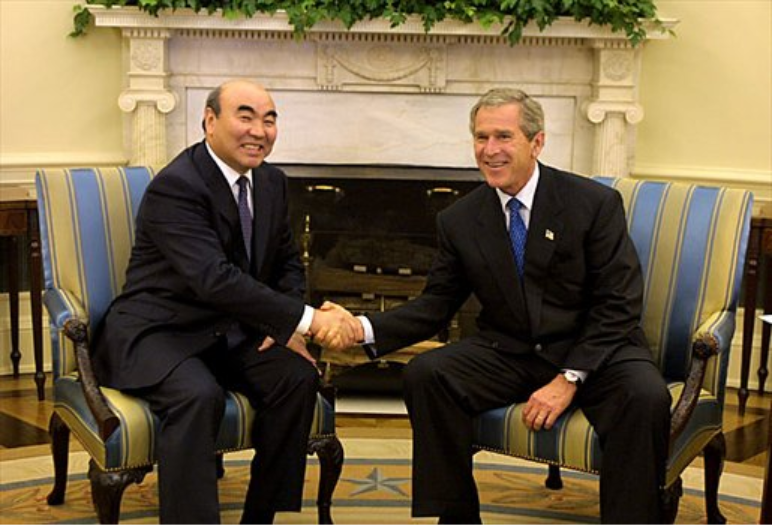 President George W. Bush hosts a visit by President Askar Akayev of the Kyrgyz Republic to the Oval Office. Source: The White House Archives
2001–2008 — Security predominates U.S. interest after 9/11
Central Asia became central to U.S. military logistics and the Afghanistan campaign, after the September 11 attacks. Washington expanded and deepened security cooperation with Russia and several regional states, viewing the region primarily through a security rather than economic lens. The 2004 U.S.–Central Asia Trade and Investment Framework Agreement established regular joint council meetings to promote trade and investment, with Afghanistan as an observer and target for building north-south trade. Continuing efforts to promote energy resource development, Washington provided technical assistance to address the 2008 global economic downturn.
2010–2012 — Renewed economic and regional engagement
The Obama administration complemented its continued Afghanistan/security focus with “New Silk Road” trade, development assistance, and regional economic initiatives, including a renewed push for Central Asian accession to the World Trade Organization. U.S. officials promoted a 2011 private sector trade delegation to Uzbekistan with Boeing, General Electric, ExxonMobil, Honeywell, Case New Holland, and Sikorsky Aircraft, while Kazakhstan topped $2.5 billion in bilateral trade. Despite uneven results outside of energy and a limited group of sectors, Washington continued to promote investment and commercial ties with Central Asia, including through the establishment of the Northern Distribution Network to foster connectivity with Afghanistan and also to supply U.S. forces there. U.S. assistance programs launched the Central Asia Trade Forum in 2011 to serve as a regional platform for business executives, government leaders, and industry experts from Central Asia, the United States, Europe, and the Middle East.
2014 — Ukraine crisis reinforces diversification concerns
Russia's annexation of Crimea heightened Central Asian concerns about sovereignty and overdependence on Moscow. As Washington considered withdrawal from Afghanistan, funding was continued to emphasize Central Asian independence and the need for diversified economic and transportation relationships by expanding its New Silk Road initiative and targeted private-sector funding to build alternatives to Russian-dominated trade infrastructure.
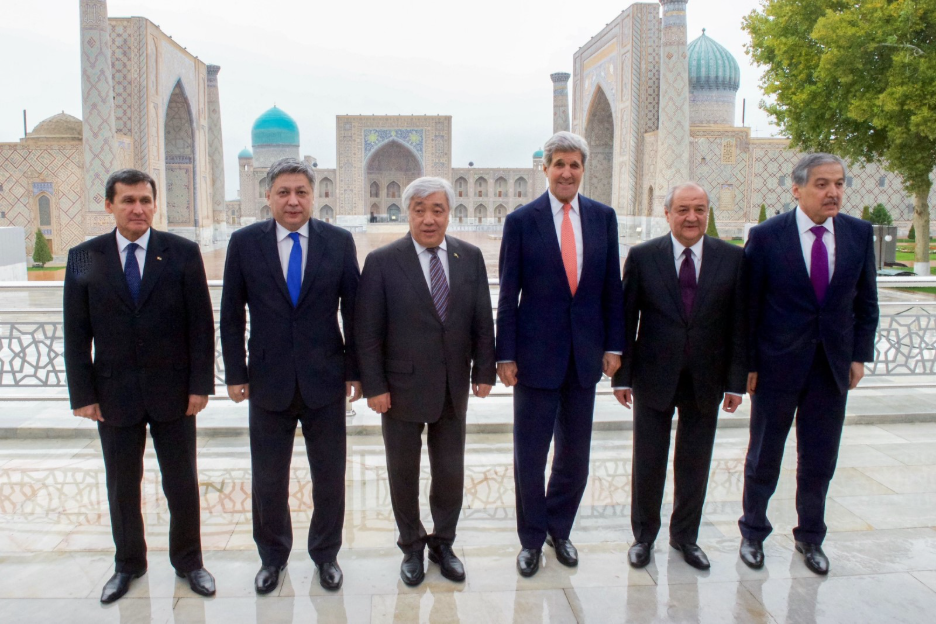 C5+1 Foreign Ministers Pose for a Photograph in Front of Registan in Samarkand, Uzbekistan. Source: U.S. Department of State, Flickr
2015-2018 — Secretary John Kerry C5+1 visit, promoting diversification
After the United States closed its Manas Transit Center in Kyrgyzstan in 2014, Kerry traveled to each Central Asian republic, chaired an inaugural C5+1 ministerial meeting in Samarkand, and signed the Samarkand Declaration which established a more institutionalized U.S.-Central Asia framework. The new U.S. effort emphasized regional connectivity to South Asian markets, commercial efforts encouraging regulatory reform and transparency, and greater engagement within Central Asian economies. Kerry also emphasized C5+1 energy and infrastructure projects aimed at diversifying export routes away from the region’s total reliance on its large neighbors, a theme he reiterated during the fourth U.S.-Kazakhstan Strategic Partnership Dialogue in Astana.
2018 — White House visits, Trump emphasizes commercial engagement
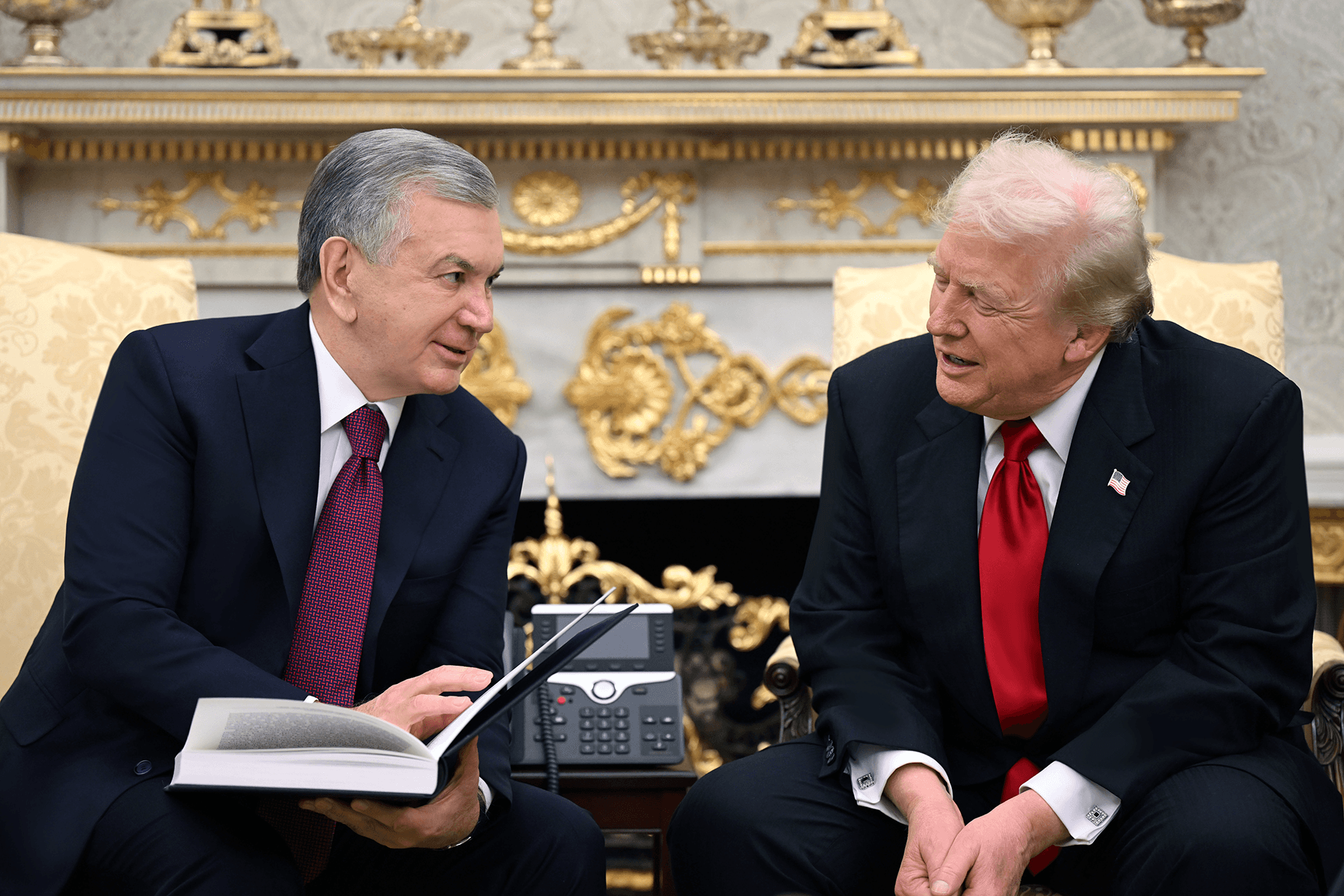
Kazakhstan President Nursultan Nazarbayev's January 2018 visit to Washington produced roughly $7 billion in commercial agreements, helping set the stage for a more explicitly business-oriented U.S. approach. In May, Uzbek President Shavkat Mirziyoyev made his first official visit to the United States, with American and Uzbek officials emphasizing trade, investment and business opportunities.
2018 — Commerce Secretary Wilbur Ross leads major business delegation to Central Asia
Ross traveled to Uzbekistan and Kazakhstan with a major American business delegation. In Kazakhstan, representatives of included Valmont, MasterCard, Honeywell and Sierra Nevada Corporation were among the 16 U.S. companies seeking new commercial partnerships. Nine bilateral documents were signed in agriculture, infrastructure, aircraft manufacturing, hydrometeorology, digitalization and information technology. In Uzbekistan, Ross participated in an American Business Week in Tashkent, with executives and representatives of major U.S. industrial companies, financial and investment corporations and banks to focus on trade, high technology, agriculture, logistics and transport.
2019 — First U.S. Commerce Department certified trade mission to Uzbekistan
The Commerce Department followed Ross's 2018 visit with the first certified U.S. trade mission to Uzbekistan. Thirteen U.S. companies participated, including GE, Bechtel, Procter & Gamble, John Deere, Medtronic, Bell Helicopter, Autodesk, Silverleafe, and ETS. Tashkent responded in April and June by sending business delegations to the United States to seek out expanded business and financial partnerships.
2020 — New U.S. Strategy, Secretary Mike Pompeo visits Central Asia
Rolling out Washington’s new regional strategy supporting deeper U.S.-Central Asia engagement, Pompeo visited Kazakhstan and Uzbekistan, emphasizing sovereignty, territorial integrity, economic cooperation, regional connectivity, and the importance of resisting excessive dependence on any single outside power.
2021-2022 — Afghanistan withdrawal changes the strategic equation
The U.S. withdrawal from Afghanistan eroded a key security rationale for Washington’s interest in Central Asia. Skeptics’ questions about post-Afghanistan engagement in the region were answered by massive U.S. provisions of free COVID vaccines and assistance to the region, working to help restart Central Asia’s frozen economies.
2022 — Russia invades Ukraine, U.S. launches Economic Resilience Initiative in Central Asia (ERICEN)
Russia’s February invasion dramatically changed Central Asia's strategic environment, as the region’s transportation, financial, and commercial relationships that depend upon Moscow fall under U.S. and European sanctions threat. The region is incentivized to diversify becomes much stronger and the Biden administration launches ERICEN to promote economic growth, diversify trade routes, expand investment, and create employment.
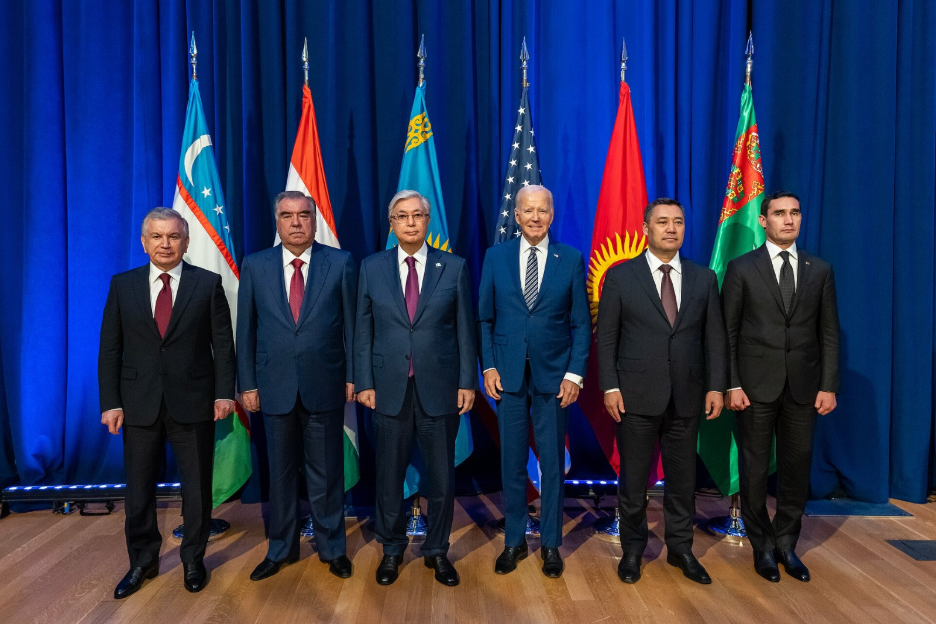 President Biden hosts a meeting with central Asian presidents. Source: Wikimedia Commons
2023 — C5+1 upgraded to the presidential level
The C5+1 framework becomes a more prominent mechanism for U.S.-Central Asian engagement, reflecting Washington's effort to bolster region-wide cooperation as the region works to diversify its economic and trade relationships. President Biden met with his Central Asian peers for the first time at the executive level, marking a high point in relations.
2023–2024 — Middle Corridor becomes a major U.S. and Western interest
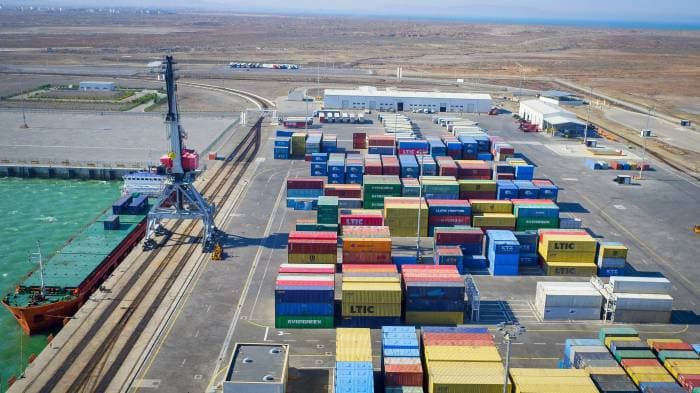
The Trans-Caspian/Middle Corridor gains new importance with companies and governments developing alternatives to transport routes through Russia. U.S. engagement increasingly intersects with Kazakhstan's and Azerbaijan's efforts to build east-west connectivity.
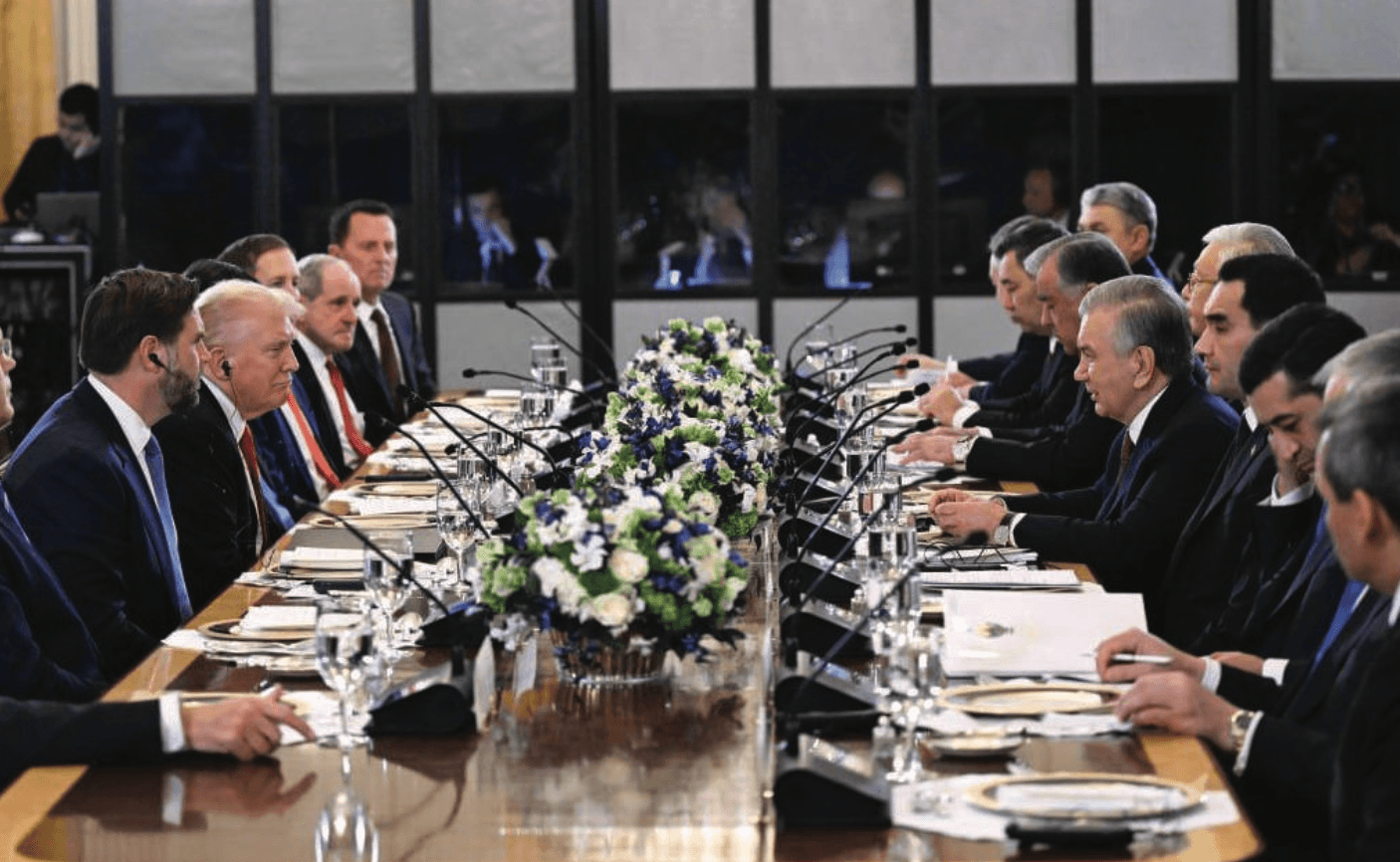
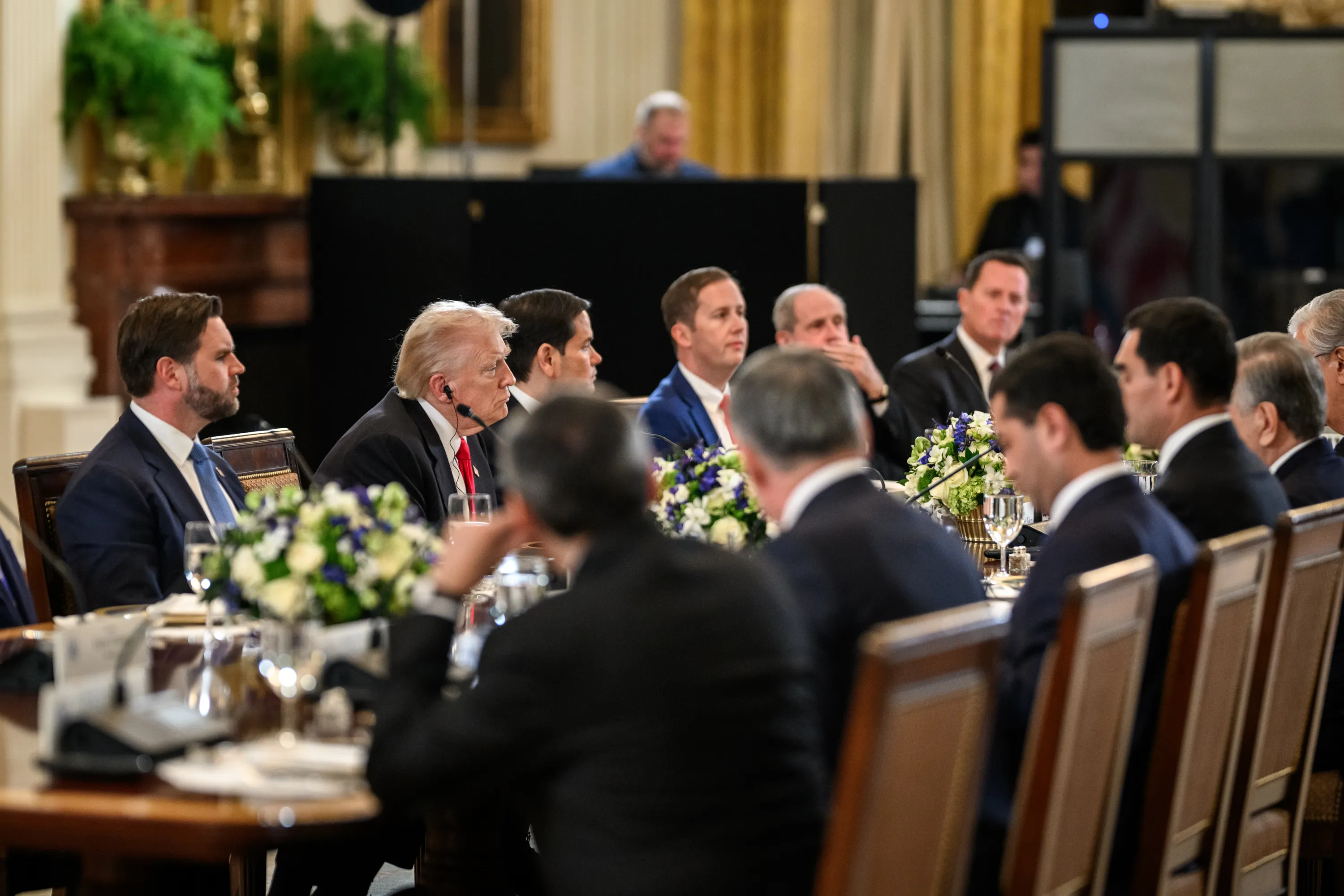 President Trump hosts a dinner with C5 leaders at the White House. Source: The White House
2025 — Commercial and strategic engagement broadens
U.S. attention widens, naming a Presidential envoy to the region, hosting a second C5+1 Summit in Washington, signing critical mineral MOUs with Kazakhstan and Uzbekistan, and increasing efforts to promote energy, transportation, technology and investment. With direct access via the new Middle Corridor, Kazakhstan and Uzbekistan emerge as particularly important U.S. economic partners for diversifying strategic supply chains. Boeing, Wabtec, John Deere, Cove Capital, Nvidia, Starlink, and other U.S. businesses sign cooperation and purchase agreements worth billions, greatly expanding American economic partnership footprints across the region.
2026 — From diversification to strategic investment
With Central Asian countries working more closely together, increasing U.S. engagement in Central Asia intersects with China's own expanding efforts, particularly in technology and infrastructure. U.S. envoys and high-level officials step up engagement with the region, highlighting mineral opportunities, as well as capitalizing on new transportation openings across the Caspian. A U.S. International Development Finance Corporation joint partnership agreement was signed to encompass potential investments in critical minerals, AI, data centers, digital infrastructure, telecommunications, and the Middle Corridor.
The history captured in this timeline refutes viewing today's American interest in Central Asia as sudden or unprecedented. The United States has continually been engaged with Central Asia since its independence and has always been willing to showcase American business in the region. From the early wildcat energy investment days and market-transition programs to the Boeing, GE, Honeywell and large-scale business delegations of the Obama era, through Wilbur Ross's 2018 delegation and its 2019 follow-up, Washington has consistently sought to turn diplomatic engagement into commercial opportunity.
What has changed is the region itself. Central Asian governments are more motivated, more capable, and more determined to diversify their economic relationships. The Middle Corridor, critical minerals, new technologies and the decline of Russia's geo-economic position seemed unrealizable only five years ago.
However, Washington faces the same challenge that it has confronted for the last three-and-a-half decades—converting individual investments, agreements, and business delegations into a self-sustaining American economic juggernaut. The question isn’t whether Washington can establish relationships, but whether it can foster a cumulative and enduring American economic and strategic presence in a region that is itself becoming increasingly important to the global economy.