Live Map of Ukrainian Strikes on Russian Refineries and Depots: Ukrainian Drone War Strikes Russia, the South Caucasus and Central Asia
Recent Articles
Author: Jack Halsey, Joshua Bernard-Pearl, Nigel Li
07/29/2026
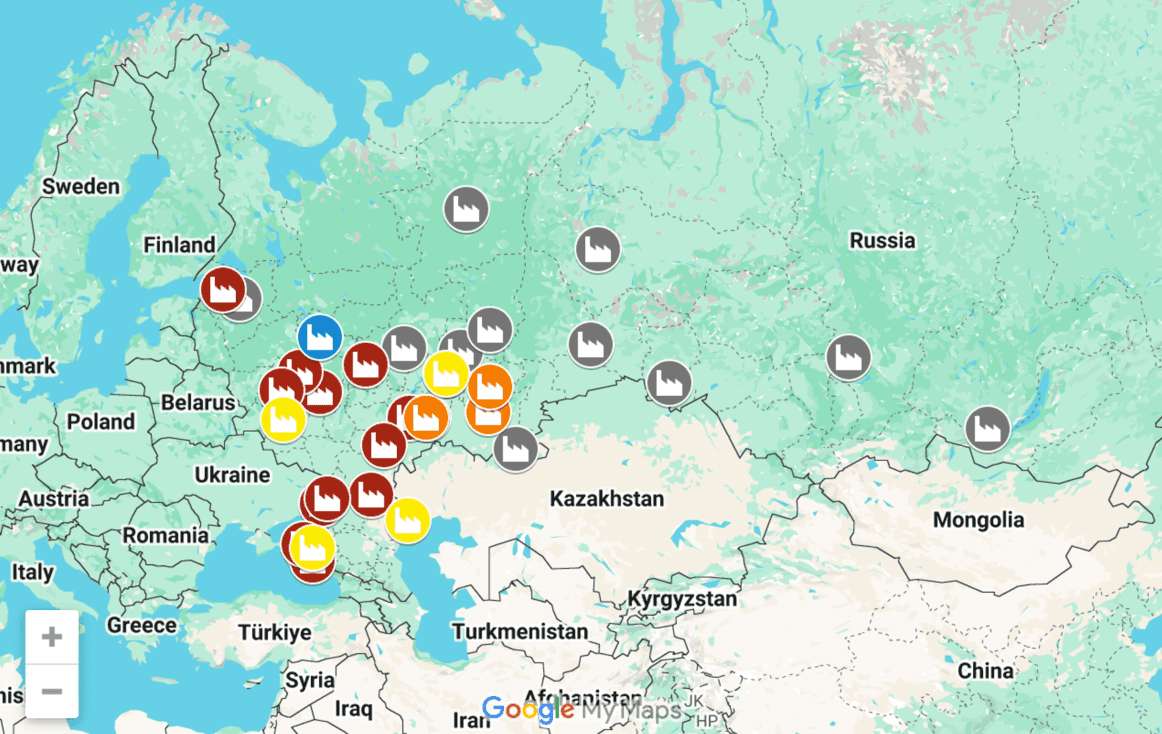
Since August 2025, Ukrainian forces have steadily been increasing the pressure on the lives of everyday Russians, as well as residents of Central Asia and the South Caucasus. During his June 26 announcement, President Volodymyr Zelenskyy declared a 40-day campaign to drastically “[influence] the aggressor state in order to compel it to end the war.” More than halfway through his promised 40 days, the Ukrainian military have struck eight major refineries with unsustainable damages, forcing refineries and processing plants to cut back or cease production and the government to implement reactionary policies.
The independent Russian media outlet, Mediazona, has tracked fuel sale restrictions in 56 out of 89 Russian regions. These federal provinces and territories face government and/or private business sales restrictions that limit the amount of both diesel and regular fuel that is can be purchased.
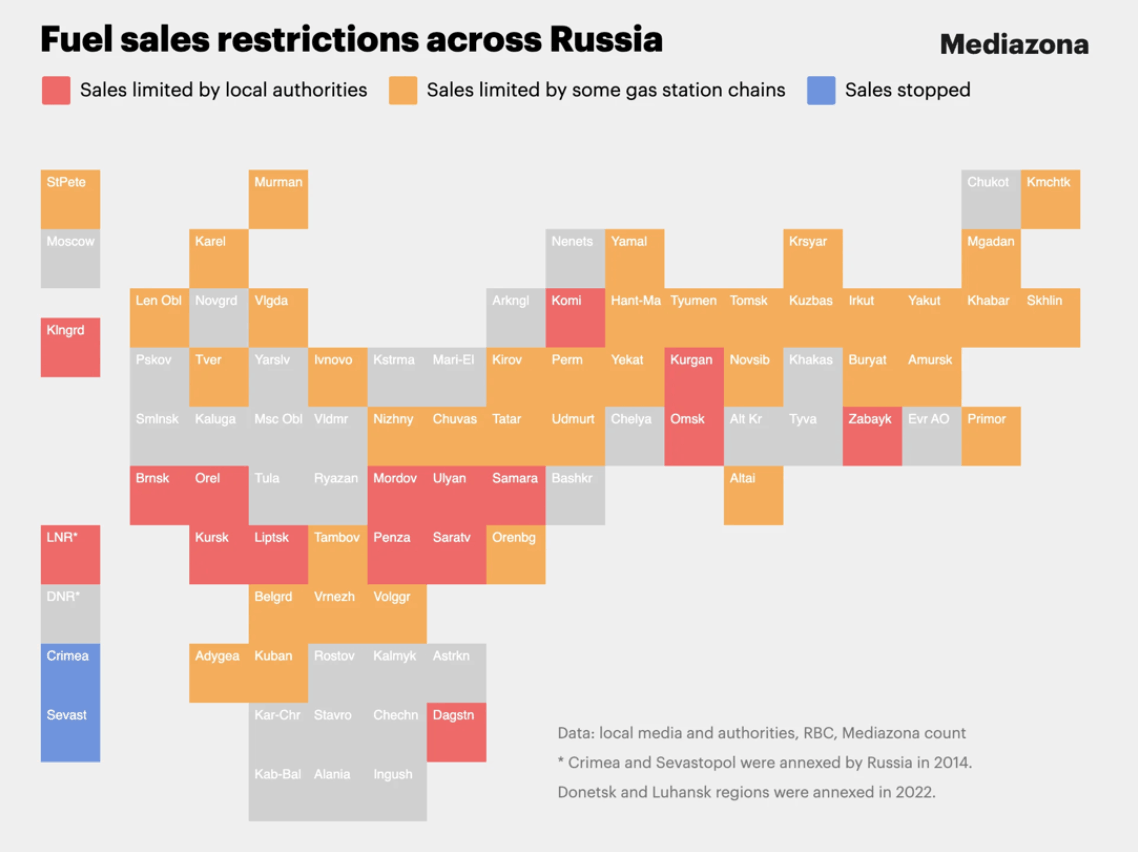 Source: Mediazona
Although Zelenskyy’s 40-day campaign has had an impact on Russia’s fuel economy, this pressure did not occur overnight. The recent push builds on a culmination of strikes over the past year. Since August 2025, there have been 102 recorded strikes on oil refineries, processing plants, and other essential infrastructure. In total, Russian refineries were processing an average of 3.91 million barrels of crude oil per day in early July, about 1.4 million barrels per day lower than previous yearly averages.
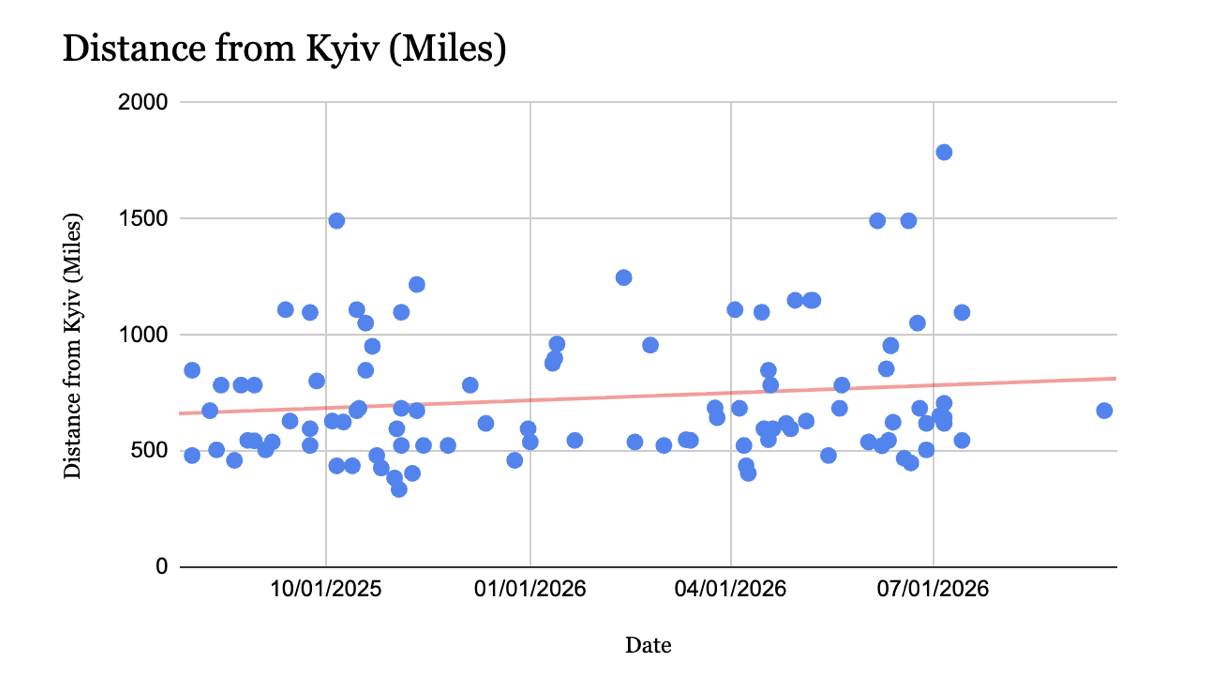
When tracking the distances of these strikes from Kyiv, some were as short as 335 miles (Russian controlled Ukrainian refinery) and others as far as 1,787 miles (Omsk) away. Over time, strike distances gradually increased to an average of 728 miles.
 Ukrainian forces averaged eight strikes per month on Russian fuel infrastructure. While February 2026 produced only three strikes, the fewest number in a one-month period, June produced 15, the greatest number in a single month.
As a means to support the Russian population, Moscow has banned the export of diesel until the end of July 2026 to increase domestic supplies. Similarly, jet fuel exports have been banned until November 2026. Although this has softened the blow for the Russian national economy, neighboring states that depend upon Russia for fuel supplies are suffering. Tajikistan’s Minister of Energy and Water Resources, Daler Juma, stated that Dushanbe has 60 days of fuel reserves, enough to last only until mid-September 2026.
A dependence on Russia for petroleum fuel has meant Kyrgyzstan is also facing significant shortages and challenges. Tied to Russian supply chains, the republic has now decided to build its own refinery to produce gasoline and diesel fuels. In the meantime, Bishkek is rationing fuel as it awaits imports from China and Belarus. Likewise, across the Caspian Sea, Armenia has depended upon Russia for fuel supplies for agriculture and domestic uses. In the new era of post-war reconciliation, Azerbaijan has stepped in to provide its neighbor with supplies that derisk Russian dependence and support Yerevan’s energy security.
In a different vein, Kazakhstan had to cut back gas production at its oil fields due to a Ukrainian drone strike in late June at the Orenburg gas processing plant in Russia. With reduced processing capabilities, Russia has been unable to accept imported gas. Then in late July, following attacks on oil tankers at the Caspian Pipeline Consortium’s (CPC) Black Sea terminal, CPC announced that it would be suspending receipt of further oil from Kazakhstan. Reuters reported that with oil tankers destroyed, the CPC has no off-take capability. Oil reservoirs at the terminal are full. A cessation of Kazakhstani oil into the CPC is a blow to Astana’s economy, which exports 80 percent of its oil through the CPC pipeline.