China’s Growing Railway Influence in the Caspian Region


Author: Dante Schulz
10/21/2020 · 4 min read
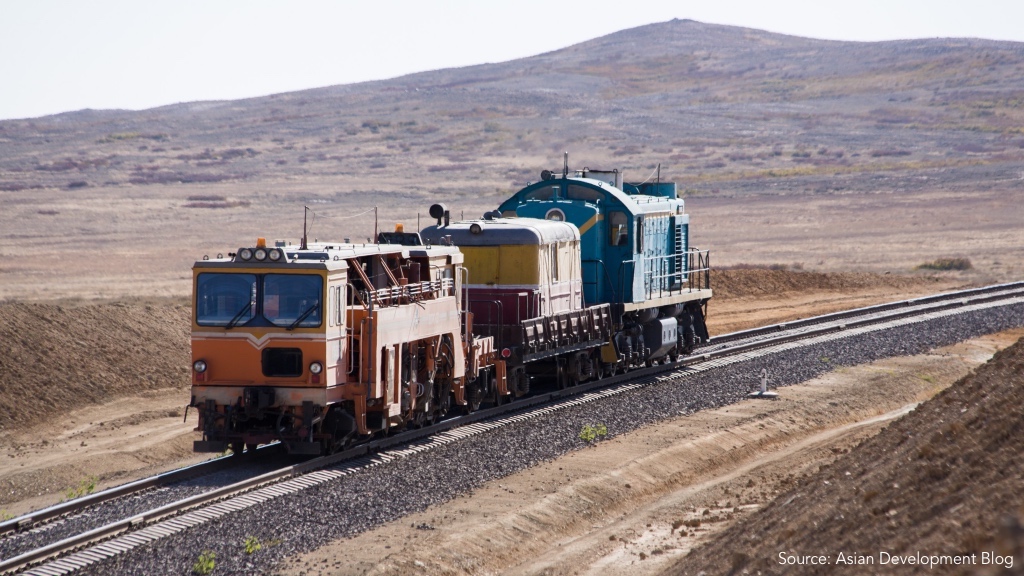
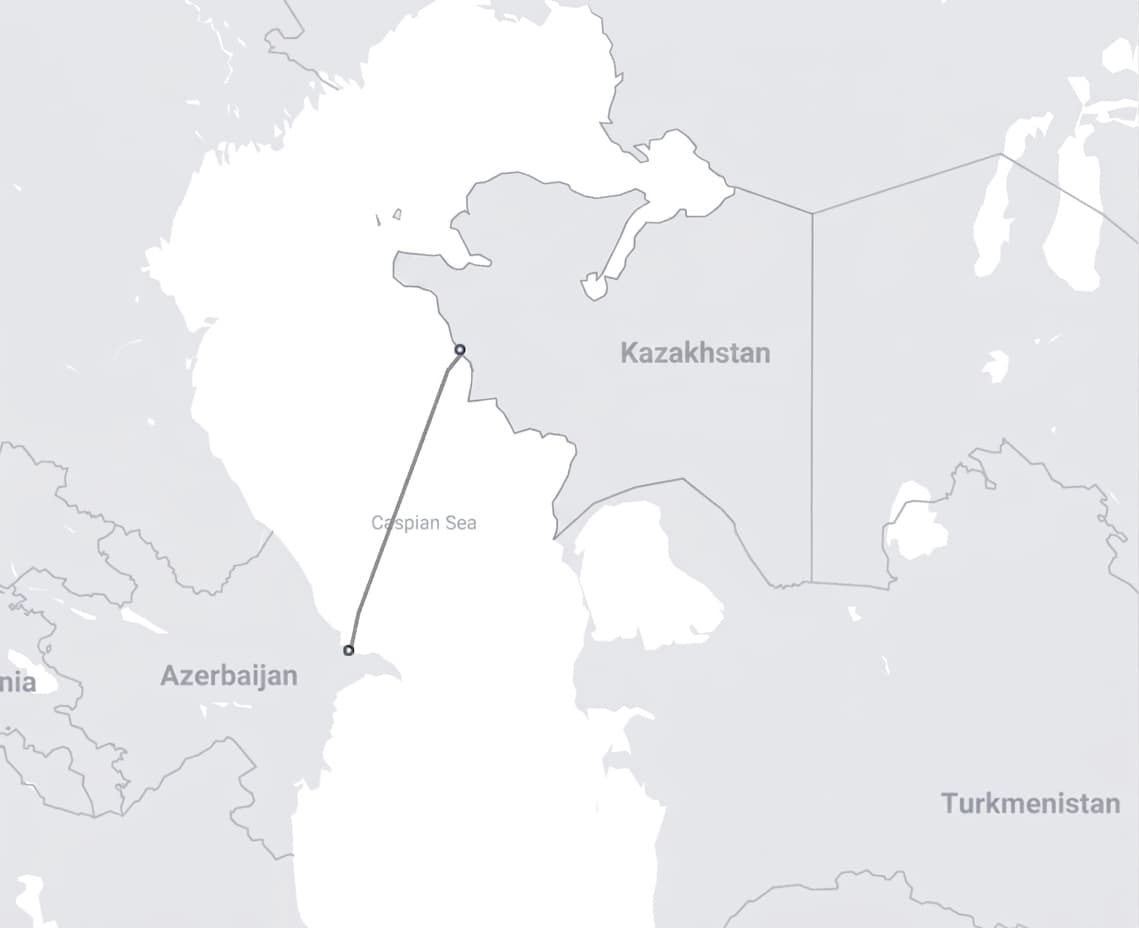
Railway projects spurred by China’s trillion-dollar Belt and Road Initiative (BRI) have heralded a rise in Chinese economic activity in the Caspian region. In doing so, it is providing an outlet for countries typically reliant on routes through Russia to export goods to reduce their economic dependence on the Caspian region’s northern neighbor. In addition, China is constructing railways along east-west routes. Due to Russia’s historical role in the region and Central Asia’s treacherous terrain, most railways run along north-south routes. The modernized east-west routes and use of Caspian Sea ports will provide new opportunities for countries in the Caspian region to circumvent Russian transit routes when moving goods within the region and to markets in Europe and Asia.
China has spent the past two decades investing in Caspian railway links. In 2008, the first China-Europe block container train between Beijing and Hamburg began test operations. More recent developments have further cemented China’s position in the region. The China-Kyrgyzstan-Uzbekistan Railway would cut the time required to transport goods from China to Europe and would provide an alternative route for Kyrgyz and Uzbek goods. Moreover, Chinese investment could boost rail transport in the Kyrgyz Republic by 30 percent. The rail line was proposed in the 1990s but political pushback by the Kyrgyz Republic has stalled construction. However, the Kyrgyz Ministry of Transport recently published a statement praising the project and highlighting its importance for the economy of the country. Completion of the railway would mark a milestone for Chinese presence in the region.
On September 9, the longest container train from China arrived in Turkmenistan after transiting through Kazakhstan on a two-day journey. This 5,455-mile railway line would allow for goods to be transported between China and Turkmenistan in record time and improve trade efficiency between China, Central Asia, and the South Caucasus. Moreover, the new Jinhua-Baku train route inaugurated in September increased the number of China-Europe freight train routes crossing Central Asia from Jinhua to twelve. The number of China-Europe freight trains peaked in August 2020 with 1,247 trips taken that month, an increase of 62 percent year on year. The China-Europe freight trains, launched in 2011, will bring the Caspian littoral states closer into China’s economic orbit and deepen multilateral engagement among Azerbaijan, Turkmenistan, and China.
One major barrier to Chinese rail connections in Central Asia is that Central Asian rail lines are incompatible with the ones used by China and much of the world. Russian and Soviet tracks use a wider gauge (59.8 inches) rather than the international standard gauge (56.60 inches). The difficulty in converting the Central Asian countries to narrow-gauge tracks is a substantial hurdle to China’s rail ambitions in the region. While this conflict provides some assurance to Moscow that Chinese encroachment in Central Asia will prove to be more difficult with railroads, China is pressuring Central Asian states to allow the use of its narrower gauge rails. Furthermore, logistics firms have argued that the discrepancy in gauge rails increases costs because train wheelbases must be altered at the borders of post-Soviet states and China. China can leverage its growing railway influence to persuade Russia and Central Asian states to use its narrower gauge rail or lay dual-width tracks.
China is also becoming an increasingly desirable export destination for Central Asian goods. Bilateral trade between Central Asian states and China grew in the past decade. Chinese railway projects are key contributors to heightened bilateral trade.
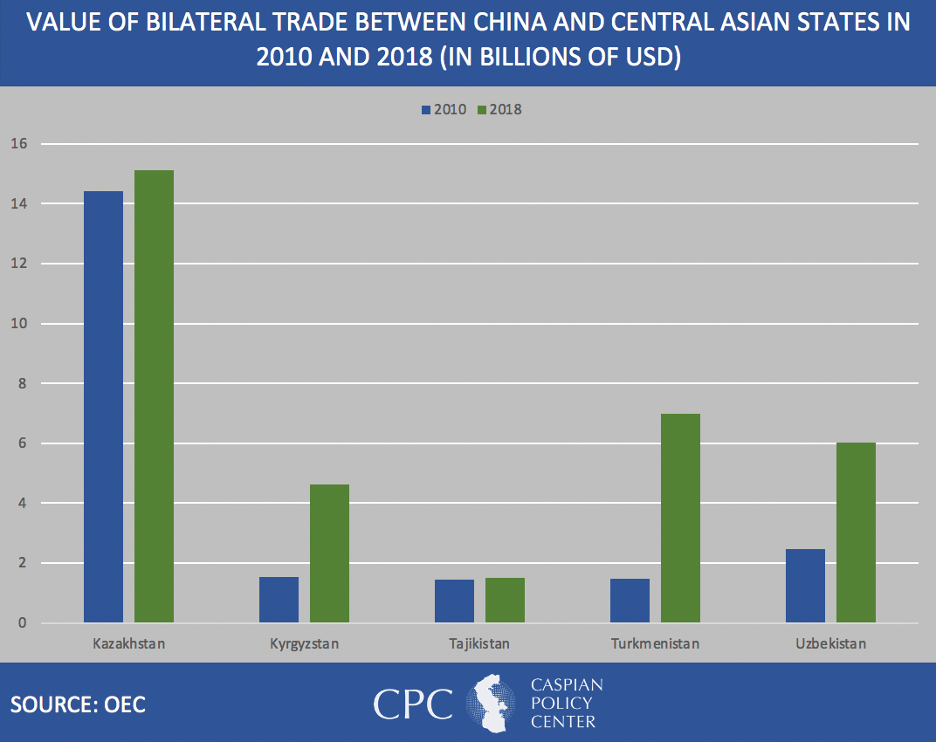
Russia views China’s actions in Central Asia with suspicion. In recent history, Russia, and the Soviet Union and Russian Empire before it, has considered Central Asia to be within its sphere of influence. Chinese railway projects pose a threat to one of Russia’s key legacies in its old colonial domain. Russia initially responded to the growing Chinese presence in the region by rolling out new energy projects and developing the Eurasian Economic Union. However, Western-imposed sanctions on Russia have hampered its economy since 2014 and caused Central Asia to view Chinese investment more favorably, resulting in Russia electing to collaborate with China on its Belt and Road Initiatives in Central Asia instead of fighting against it. However, Russia and Central Asian states still remain skeptical of Chinese intentions in the region.
Railway lines are vital in sustaining the economies of landlocked Central Asian states. Without direct access to seaports, rail is the most viable option to export goods to global markets. An influx of Chinese investment in the region has stimulated significant advances in east-west railway routes and calls to modernize the existing railway system. These modern routes will allow Caspian countries to directly access a greater array of markets in Europe and China by bypassing Russian railway lines. In addition, these new railroad lines will tie the region closer to China and lessen its dependence on Russia to export its goods to markets in Europe and Asia.