Uzbekistan Looks West: Georgia Emerges as a Critical Gateway to Europe
Recent Articles
Author: Zohra Movsumova
07/17/2026
 President of the Republic of Uzbekistan
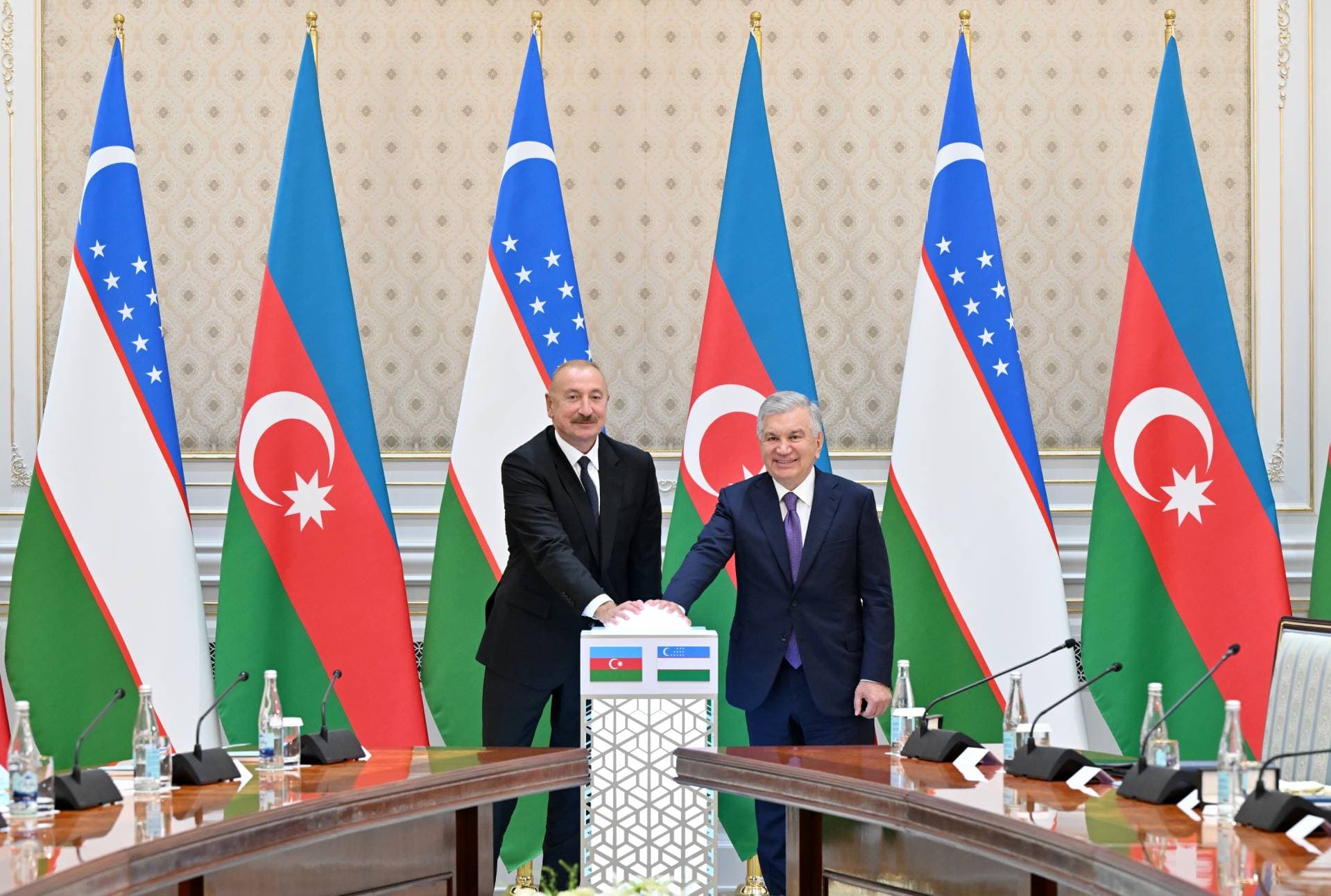
President of Uzbekistan Shavkat Mirziyoyev’s July 2-3 state visit to Tbilisi delivered more than a Strategic Partnership Declaration between the two countries. Doubly landlocked Uzbekistan, one of only two countries surrounded entirely by landlocked neighbors, is looking for a reliable path to open water and has placed its bet on routes through Georgia’s Black Sea coast.
Beyond the declaration, the visit produced a series of agreements covering trade, transport, investment, regional connectivity, and tourism. Notably, it was the first visit by an Uzbekistan head of state to Georgia in 23 years. Georgian President Mikheil Kavelashvili presented Mirziyoyev with the Order of the Golden Fleece, the country’s highest state award, while Prime Minister Irakli Kobakhidze described Uzbekistan as not just a reliable partner, but also as a friend.
Georgia and Uzbekistan first established diplomatic relations on August 19, 1994, formalized a year later by a Treaty on Friendship and Cooperation, and the relationship has been accelerating for the past several years. Since 2022, a succession of presidential meetings, ministerial consultations, and intergovernmental commissions has given the partnership a systemic footing it previously lacked. Kobakhidze’s own visit to Tashkent in March 2025 helped set the stage for the July summit, while Uzbekistan’s plan to open an embassy in Georgia is a concrete signal that Tashkent intends to remain engaged.
Access to the sea
Every export bound for European markets must cross at least two borders before it reaches a port, and Tashkent has spent years trying to diversify away from routes that run through Russia or Iran. Georgia provides a trans-Caspian alternative for Uzbekistan: a friendly transit corridor on the Black Sea.
Georgia’s existing ports at Poti and Batumi are expected to experience increasing volumes of Uzbek cargo. During the summit, the two governments agreed to expand the use of both ports and supported the creation of a logistics hub with an industrial zone and permanent showroom for Uzbek goods. Furthermore, evidence of Tashkent’s long-term commitments to Georgian ports include an $18.3 million investment in a logistics terminal at the Port of Poti.
In the longer term, Georgia’s ambitions are focused on the Anaklia deep-sea port, which is the only planned facility capable of receiving the large container vessels that existing Georgian harbors cannot accommodate and potentially could serve the China-Kyrgyzstan-Uzbekistan transport corridor. Tbilisi reduced Anaklia’s 2026 budget allocation from GEL 150 million to GEL 50 million, saying that updated engineering assessments had lowered the expected cost of key infrastructure.
After years of stalled negotiations and political disputes, Georgian officials have now opted to develop Anaklia under a state-led “landlord model.” The state will own and develop the core maritime, road, and railway infrastructure, while international investors and private operators lease and develop individual terminals.
The Middle Corridor links Central Asia to Europe across the Caspian Sea and through the South Caucasus, bypassing Russia entirely. Its share of Uzbekistan’s foreign trade cargo rose from 12 percent in 2021 to 28 percent today, while volumes doubled over five years to reach 1.2 million tons in 2025, and container train transit times to Georgian ports fell from 18-23 days to 12-15 days.
During the visit, Mirziyoyev proposed synchronizing the planned China-Kyrgyzstan-Uzbekistan railway with the Baku-Tbilisi-Kars corridor, a linkage that would establish a continuous rail artery from western China to the Black Sea and onward to Turkish and European markets.
Trade and industrial cooperation
Bilateral trade reached $270 million in 2025, following a record $326 million in 2024, and has already exceeded $100 million in the opening months of this year. Both governments have adopted a dedicated roadmap targeting $1 billion in annual trade, to be achieved by reducing trade imbalances and expanding mutual exports through reciprocal industrial exhibitions.
The two sides also agreed to establish a joint investment fund and pursue industrial projects across agriculture, electrical engineering, pharmaceuticals, renewable energy, food processing, construction materials, digital technologies, digital banking, and tourism. A joint business forum held alongside the visit produced a cooperation program running through 2027. The existing free trade and investment protection agreements that were signed in 1995 remain underutilized, and Uzbek analysts have identified the shift from trade growth to industrial and investment cooperation as the relationship’s principal untapped opportunity.
Three days before Mirziyoyev’s arrival, Tbilisi signed a strategic partnership with Kazakhstan and across three consecutive weeks in June, a series of ministerial visits to Kyrgyzstan, Tajikistan, and Kazakhstan took place, with a visit by Turkmenistan’s president reportedly anticipated. Uzbekistan is not the only Central Asian state on Tbilisi’s radar. This eastward orientation coincides with a marked distance by Georgia from its Western Partners, especially after engagement with the European Union has largely been frozen.
The Strategic Partnership Declaration formalizes a reorientation already underway. For a state without coastline, route diversification functions as insurance against dependence on any single neighbor, against chokepoints, and against the leverage geography confers on transit states.
Yet the agenda extends beyond logistics. The joint investment fund, the industrial cooperation program, the planned education and tourism forums, and the decision to establish a resident embassy all point toward institutional depth rather than transactional exchange. Whether that depth materializes depends on execution: whether Anaklia is built, whether the railways connect, and whether cargo volumes justify the infrastructure. The intent, at least, is no longer ambiguous.