Uzbekistan’s Fifth Tashkent Forum Closes with $43 Billion in Deals and a Broader Pitch for Reform
Recent Articles
Author: Zohra Movsumova
07/27/2026
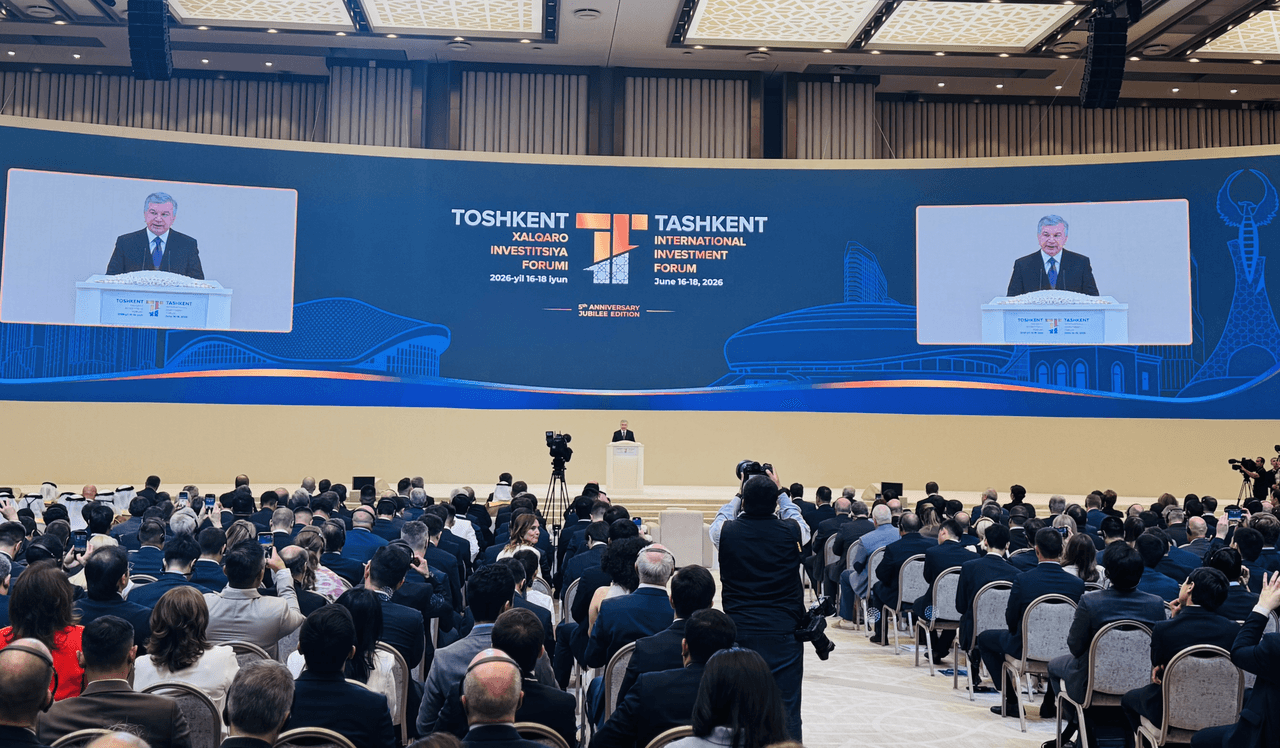
Tashkent hosted its fifth annual Tashkent International Investment Forum (TIIF) that closed with 166 signed agreements totalling $43.1 billion, among them 139 new projects worth $31.8 billion. Taking place June 16-18, the event drew over 3,800 foreign delegates from 102 countries, which was more than triple the foreign attendance of the inaugural forum in 2022. These are numbers that Uzbekistan’s government has been building toward for years.
In May, Uzbekistan’s National Investment Fund completed the country’s first international equity offering, raising $603.6 million through a dual listing on the London and Tashkent stock exchanges. The IPO generated more than $2.8 billion in investor demand and ranked as the largest London Stock Exchange listing of 2026 to date.
The theme of TIIF 2026 was “Investment Resilience: New Frontiers, New Partnerships,” aimed to answer a question investors have been asking: when will Uzbekistan’s reform story produce results that can be financed, built, and held? Whether the agreements signed in June can translate into operating projects will depend on factors, such as access to buyers and workforce capacity, which are beyond anything one annual forum can resolve.
President Shavkat Mirziyoyev addressed the forum on June 17 and framed recent economic performance as evidence of growing investor confidence. In 2025, the nation’s GDP grew by 7.7%, foreign investment reached $43 billion, and the country rose 14 places in the Index of Economic Freedom. At the first TIIF, four years ago, Mirziyoyev set a target of reaching a $100 billion economy by the end of 2026; today, Uzbekistan’s GDP is expected to exceed $180 billion.
The centerpiece announcement of the forum, however, was the Tashkent International Financial Center (TIFC), a dedicated financial zone operating under English common law, with zero rates on corporate income tax, VAT, property tax, and customs duties for 50 years – through 2076. The center will have an independent commercial court staffed with foreign judges, English as its official language, and free movement of capital in any currency. Officials project it will draw an additional $20 to $25 billion into the economy by 2030 and create 15,000 high-skilled jobs, placing Uzbekistan alongside Dubai, Abu Dhabi, and Astana in a select group of jurisdictions building internationally-recognized financial hubs.
Washington and Tashkent’s Partnership
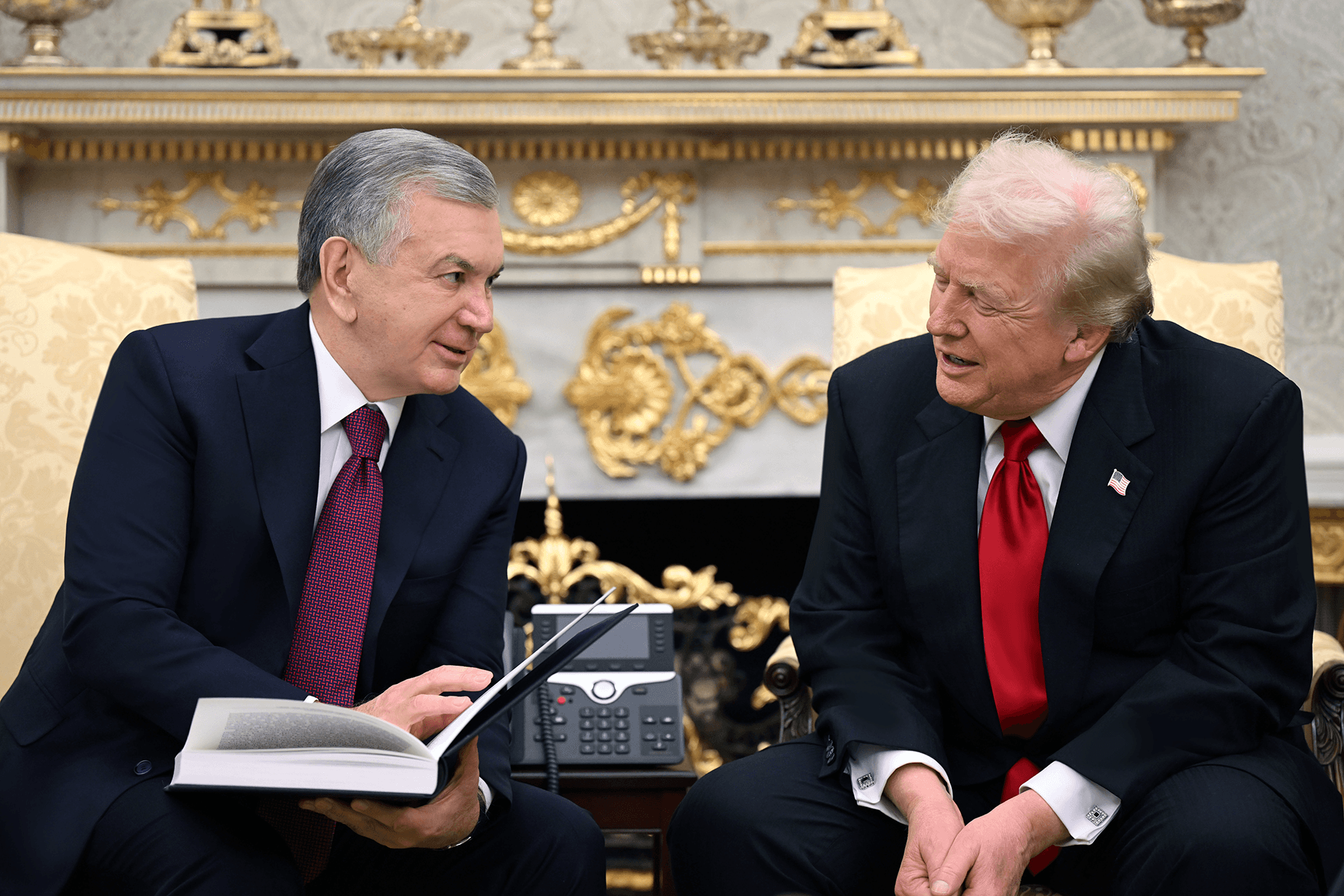
Most notable about the forum was the U.S. presence, which was the largest in the history of bilateral relations, with 193 company representatives attending the curtain-raiser U.S.-Uzbekistan Business Forum on June 16. Carolyn Lamm of the American-Uzbekistan Chamber of Commerce said U.S. investments announced for Uzbekistan had already surpassed $2 billion in 2026.
The U.S. International Development Finance Corporation (DFC) launched the U.S.-Uzbekistan Joint Investment Platform alongside EXIM Bank and Uzbek officials, focusing on energy, infrastructure, critical minerals, transport and logistics, and advanced manufacturing. DFC chief executive Ben Black described the Trans-Caspian region as “one of the most strategically significant economic corridors in the world.” Critical minerals are the strategic glue: a February Joint Investment Framework formalized bilateral cooperation on exploration, extraction, and processing. Uzbekistan’s Ministry of Investment proposed a special economic zone tailored for U.S. companies, with minerals, pharmaceuticals, fertilizers, and textiles named as priority sectors.
Russia Still on the Horizon
Prime Minister of Russia Mikhail Mishustin was also one of the notable attendees of the forum, which emphasizes the weight of Uzbekistan’s existing relationship with Moscow. Roughly 3,000 Russian companies are engaged in some 150 major investment projects in Uzbekistan worth a combined $55 billion. Two-way trade has more than tripled over the past decade to surpass $13 billion.
The key aspect of this relationship, however, is the construction of Uzbekistan’s first nuclear power plant, being built by Russia’s Rosatom in the Jizzakh region. First contracted in 2024, the project has since then grown in scope. Once fully constructed, the plant is expected to generate about 17.2 billion kWh per year, which would meet 14% of Uzbekistan’s total energy needs. Concrete work at the site began in March of this year, and there have been wider developments on nuclear cooperation between the two states, such as personnel training and the development of a future “nuclear city” at the site.
The forum underscores Tashkent’s ability to deepen ties and encourage investors from the United States and the West in general, while still maintaining the crucial relationship with Moscow. This is a balance that most of the states in the region have found increasingly difficult to hold.
Transport and Minerals
The China-Kyrgyzstan-Uzbekistan railway, which has been under construction since December 2024 with a 2030 completion target, was a prominent topic of discussion during the forum. According to estimates, the 533-kilometer line could increase container traffic through Uzbekistan fivefold, but 90% of its Kyrgyz section runs through some of the most mountainous terrain in the region, requiring 29 tunnels and 50 bridges. The differing gauge between China and Central Asian rail standards adds more complexity to the project.
On the topic of critical minerals, Uzbekistan’s $4.2 billion program covering 120 projects runs from 2026 to 2030, with a first tranche of 12 projects worth $166 million targeting high-purity selenium, tellurium, and rhenium this year. Uzbekistan Technological Metals Complex promotes a “mine-metal-market” model aimed at retaining value inside the country rather than exporting concentrates.
UN Trade and Development projects that lithium demand will rise 353% between 2024 and 2040, which is a demand that is moving favorably in Uzbekistan’s direction. The test is whether the first 12 first-year projects deliver on schedule.
Implementation Question
The $43.1 billion in signed agreements and projects is more than just an economic signal: it's also a political one. What distinguishes Uzbekistan is a combination of geography, a Soviet-era resource base, and a reform trajectory that is now backed by a successful international IPO, and balancing relationships with the West, Beijing, and Moscow. The real test of TIIF 2026 is what gets built now that the delegates have gone back to their home nations.