Rosatom Might no Longer be the Reliable Energy Partner it Once Was in Central Asia
Author: Kurtis Yan
08/05/2026
 Rosatom.ru
The Central Asian states now view nuclear energy as an integral instrument to address energy security and environmental concerns. Rosatom—Russia’s state-owned enterprise that oversees nuclear energy projects—has been viewed as the region’s primary financier and technical partner. Even now, the broader Caspian region continues to enter into deals with Rosatom while hedging with alternative partners.
However, the company’s latest financial outlook and project delays intensify concerns over this strategy to address energy shortages. Rosatom’s project portfolio faces serious strains that place doubts on the future of projects across the globe, suggesting that the typical perception of reliability from Central Asia’s historic partner may be waning.
Rosatom’s Wartime Challenges
With Russia’s war in Ukraine dragging on, forecasts for Rosatom are pessimistic. Russia’s fiscal troubles and inflation have already forced cuts across the state apparatus. Sanctions on Russia’s nuclear sector have had a lighter-than-desired effect due to the EU, UK, and U.S.’s reliance on Rosatom’s nuclear fuel. Nevertheless, Western sanctions have hampered the company’s access to key construction materials for nuclear power plants (NPPs) and reactors.
The Akkuyu NPP project in Türkiye, which was originally expected to launch in 2023, was pushed back to at least the end of 2026 as a result of difficulties in obtaining turbine parts. Likewise, the Paks II NPP in Hungary faced significant delays and only began construction in February 2026, similarly due to material sanctions.
The latest announcement by Rosatom’s Director General Alexey Likhachev most starkly speaks to this. Likhachev stated that the company will cut total operating costs by 10 percent by 2028. It is also set to slash its investment program by 50 percent, placing it at 900 billion rubles, or approximately $11.5B. Meanwhile, Likhachev remained optimistic that the company could compensate for financial costs by increasing profits and continuing to implement new projects.
Perhaps most worrisome of all was Likhachev’s admission that several projects have been postponed to later deadlines or cancelled entirely. Likhachev did not specify which projects have been subject to delays, but this might, nonetheless, raise skepticism among Rosatom’s prospective partners, barring any reassurances from the company itself.
Rosatom’s Portfolio in Central Asia
Rosatom seeks to capitalize on Central Asia’s rising push for nuclear energy development. With a historic reliance on hydrocarbons, coal, and hydropower, the region is grappling with a two-pronged challenge. Newfound interest in developing greater critical minerals capacity and data centers for artificial intelligence (AI) are expected to place additional strain on the region’s existing electrical infrastructure. Meanwhile, rising temperatures and water shortages have reduced energy security for states dependent on hydropower, leading to blackouts in both wintertime and summertime. As such, nuclear energy provides a promising opportunity to revitalize the region’s energy security.
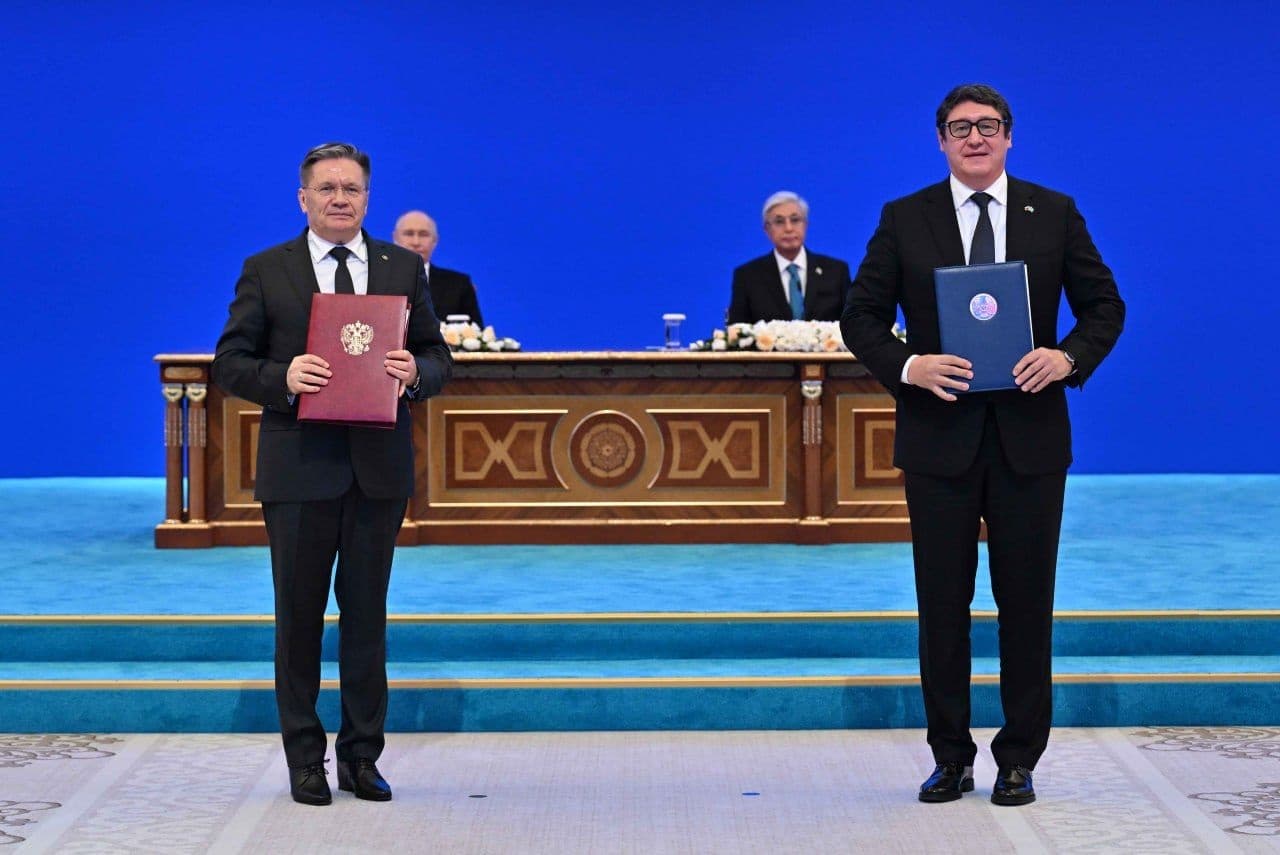
In October of 2024, Kazakhstan passed a referendum on the construction of a new NPP on Lake Balkhash. Kazakh officials met with several potential nuclear partners but settled on Russia’s Rosatom to complete construction by the mid-2030s. An intergovernmental agreement for the $16.5B project was signed in May 2026 in the presence of Kazakhstan’s President Kassym-Jomart Tokayev and Russian President Vladimir Putin. No final contract on financing has yet been signed, and several issues have arisen, including delays and concerns over where the nuclear fuel will be refined.
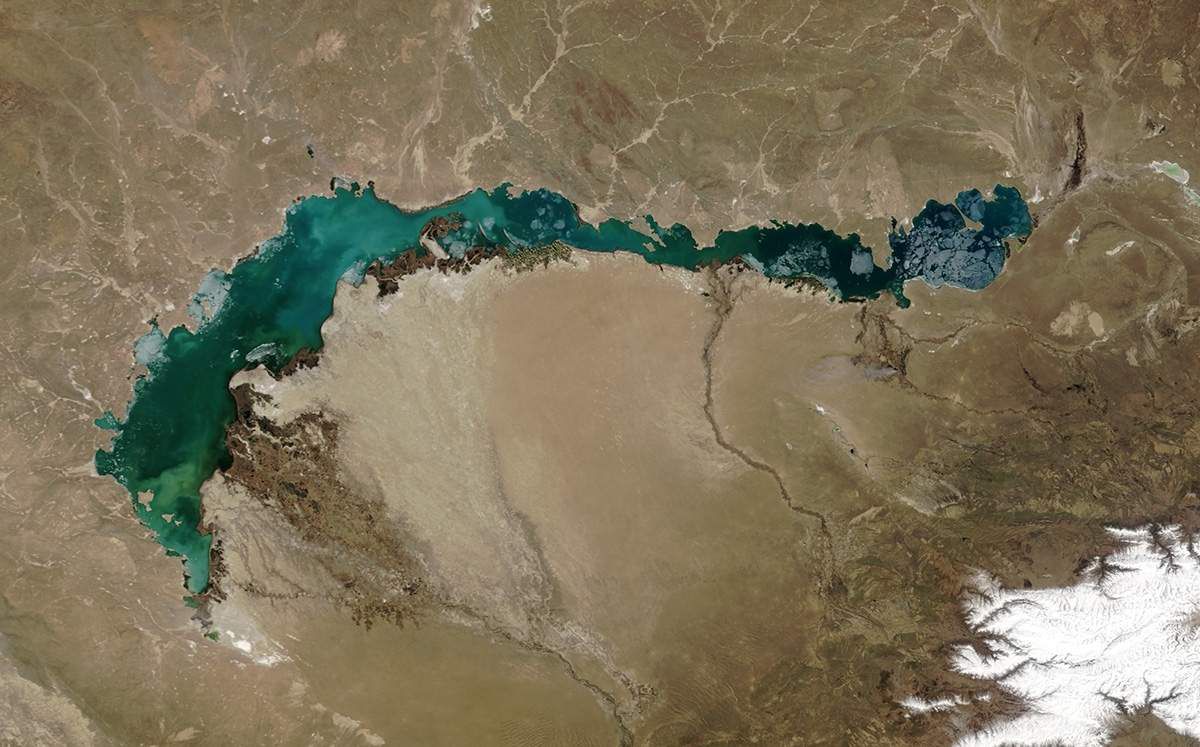
Satellite image of Lake Balkhash. Source: oq.gov.kz
Kazakhstan aims to maintain greater state control of the nuclear fuel cycle within its country, with hopes that its uranium reserves will serve as feedstock for domestic NPPs. Feedstock requires enrichment, and Kazakhstan has been historically satisfied with allowing Rosatom to extract its uranium in exchange for enrichment in Russian territory. However, recent amendments to its Subsoil Use Code dictate that Kazatomprom must receive a 90 percent stake in joint uranium ventures, or a foreign entity may transfer and construct uranium enrichment technologies in Kazakh territory.
Likhachev’s recent announcement likely adds to doubts over Kazakhstan’s choice to partner with Rosatom, despite the latter’s successful track record across the globe. After all, Kazakhstan already selected the China National Nuclear Corporation (CNNC) to construct its second and third NPPs, indicating that Astana can shift to other potential partners if necessary.
Rosatom’s project portfolio in Central Asia goes beyond Kazakhstan. Rosatom has agreed to build small nuclear reactors in Uzbekistan, with the first concrete poured in June of this year. That said, any future delays might encourage Uzbekistan to look elsewhere, especially given the interest it has fielded from the United States to build “small-modular reactors.” Kyrgyzstan and Rosatom have also actively engaged in initial negotiations for NPP construction, although any final contract is dependent on a national referendum on civil nuclear energy use.
Overextension and New Energy Competition
Rosatom remains an important instrument to expand Russia’s integration in global energy markets. It currently maintains a foreign portfolio of over $200B across 41 projects. With rising interest in NPPs across the Global South, demand will continue to grow in the future, but Rosatom’s financial constraints might transform its global expansion into overextension and a blow to its reputation.
Rosatom typically provides a comprehensive package beyond construction, which drives its success and competitiveness. This includes technical education, operational management, and nuclear fuel loading. This strategy has worked well because it locks in Russia’s integration into foreign jurisdictions for the long term.
This strategy also relies on aggressive financial backing from Moscow, but with little capital to spare in its wartime economy, Rosatom will face deeper pressure to deliver on its current and upcoming projects. Worse, the burden would then pass to recipient states to provide the funds, damaging its image of reliability and full-package NPP development. Armenia’s Metsamor NPP is a clear example of this dilemma. Metsamor requires upgrades to ensure its operability until 2036, but its old age means that Yerevan will require an entirely new NPP. Rather than again relying on its historic partner, Armenia has reviewed project proposals from China, France, South Korea, and the United States.
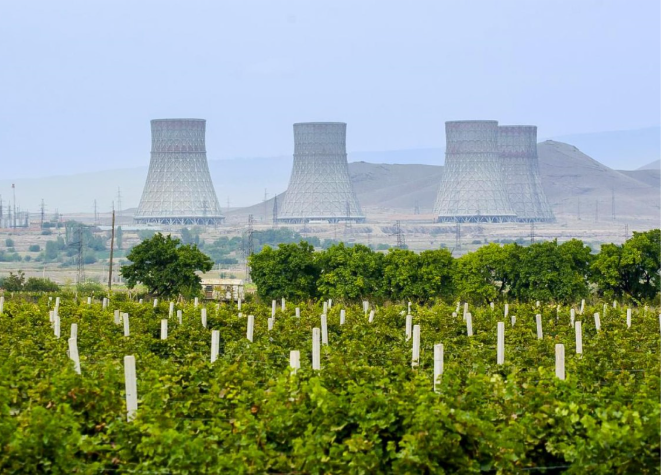
Metsamor Nuclear Power Plant near Yerevan, Armenia Source: rosatom.ru
Beyond reduced confidence in the company, these troubles might be compounded by potential troubles in adding value to the nuclear energy fuel cycle. Historically, Rosatom reinforced Kazakhstan’s economic and energy dependence on Russia by importing its unenriched uranium. Kazakhstan’s new pursuit of uranium enrichment capabilities demonstrates its interest in reducing its foreign dependence. Strengthening domestic control of the nuclear fuel cycle would allow it to independently fulfill demand from its prospective NPPs. Furthermore, Astana could enter export agreements with potential buyers in Western markets for enriched uranium, as opposed to just yellowcake. For example, French President Emmanuel Macron had visited Kazakhstan and Uzbekistan in 2023, looking to acquire yellowcake and enhance nuclear cooperation.
Rosatom is still continuing to enter agreements in post-Soviet areas and beyond. It most recently signed agreements to help construct small modular reactors in Myanmar, Rwanda, and Vietnam. The landscape has clearly changed. Such reactors are the new buzz in the nuclear energy market, and Rosatom clearly looks to support the pursuit of them, along with small floating reactors. True small modular reactors, however, have yet to be deployed in a commercially scalable form. Thus, competition has intensified from other nuclear states to develop them, from China to the United States and the United Kingdom.
As the Russia-Ukraine War rages on and saps its budget, Rosatom’s financial difficulties will likely continue to delay projects and make future ones uncertain. These difficulties, along with sanctions, have damaged the traditional role that Russia plays in global energy markets. From Rosatom’s budgetary cuts to the sale of Lukoil, Rosneft, and Gazprom assets, Russia’s entire state energy apparatus faces a dire situation. For Central Asia, this is more reason to pursue alternative partnerships that enhance energy diversification and bolster energy sovereignty.