The White Wolves: Uzbekistan’s World Cup Participation Expands the Nation’s Reach
Recent Articles
Author: Kurtis Yan
07/15/2026
Few would have imagined a day when soccer fans in traditional Uzbek armor would take to the streets of the United States on horseback. But that day did arrive in Houston, becoming a viral moment for many who knew very little about the Central Asian nation. The World Cup is known for bringing together cultures for a month of healthy competition. This year’s edition in North America, with its expanded format from 32 to 48 teams, has amplified the tourney’s competitiveness, brought surprising stories of underdog teams, and fostered a unique cross-cultural experiences for fans.
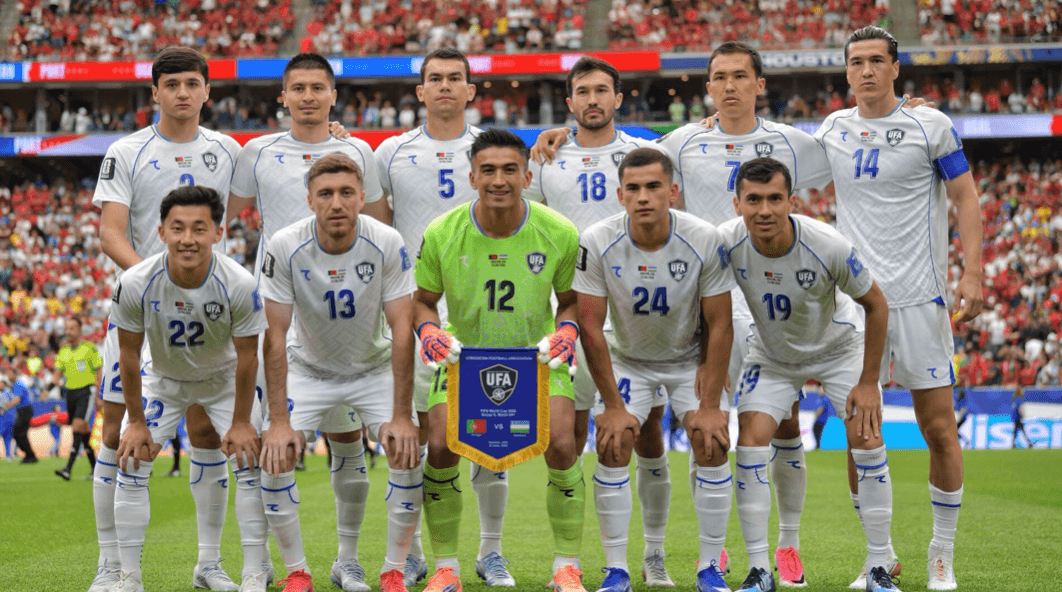
Uzbekistan’s national team, the White Wolves, became the first Central Asian nation to ever qualify for the World Cup. While they made an early exit from the tournament, the country’s top footballers still showcased the grit that propelled them into the competition. For a region where soccer possesses immense popularity, Uzbekistan’s qualification and participation in the tournament was a monumental achievement. The White Wolves won the hearts of fans from Central Asia and across the world, and they reinforced that everyday interpersonal connections can drive the expansion of a nation’s global reach and exposure.
How Uzbekistan Stacked up Against its Competitors
Uzbekistan faced a near-impossible task entering the World Cup. The FIFA draw placed them in Group K with European powerhouse Portugal, which features legend Cristiano Ronaldo. They also had to face off against Colombia, a traditional force in Latin America, and the Democratic Republic of the Congo (DR Congo), a team that defeated a swathe of formidable African teams to qualify for the World Cup.
All three of Uzbekistan’s group-stage competitors consisted of talent that plays in the world’s most competitive leagues in Europe, such as the Premier League, La Liga, and Bundesliga. Uzbekistan’s story is different. Many of its stars currently play in Uzbekistan, Iran, and the United Arab Emirates. The White Wolves have historically relied on the leadership of their captain and veteran leader, Eldor Shumurodov, who formerly played for AS Roma in Serie A, Italy’s premier soccer league. Shumurodov is Uzbekistan’s all-time national leading goal scorer.
However, a new wave of talent is emerging from the country. Most notable is 22-year-old center-back Abdukodir Khusanov, who signed with Manchester City in 2025 to become the first Uzbek player ever to play in the Premier League—England’s top flight of soccer. Another 22-year-old, winger Abbosbek Fayzullaev, spent his last season in the Turkish Süper Lig.
This trend of youth talent is only growing in Central Asia. Dastan Satpayev—a 17-year-old Kazakh star on FC Kairat, Almaty’s club for the Kazakhstan Premier League—has shown enough promise to secure a contract with renowned English club Chelsea FC. FC Kairat had an unforgettable run to qualify for and compete in the UEFA Champions League earlier this year, adding to the list of Central Asia’s recent footballing achievements.
Leaving an Impression
Young talent, combined with the veteran leadership and calm of the team’s older players, carried the squad into the tournament. Unfortunately, it was not enough to secure a victory or a draw in any of their Group K matches. That said, the White Wolves left viewers with unforgettable moments on the pitch and demonstrated their quality.
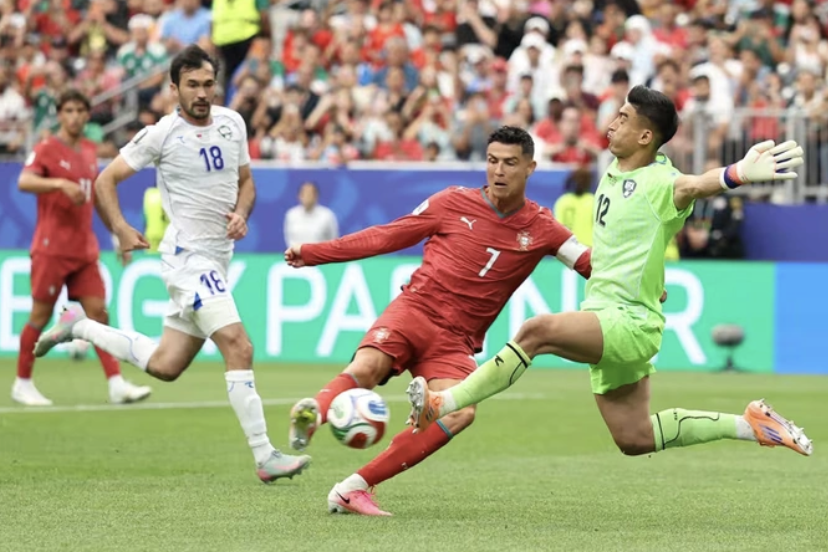 Uzbek goalkeeper Abduvohid Nematov attempting a save against Portuguese striker Cristiano Ronaldo. Source: gazeta.uz
Fayzullaev’s header against Colombia marked the country’s first-ever goal in the World Cup, while Shumurodov scored the opening goal against DR Congo. Perhaps the most breathtaking moment for Uzbekistan was Aziz Ganiev’s thunderous strike past the Portuguese goalkeeper in the game’s 29th minute. Fans in attendance were in shock and erupted in cheers, though Ganiev’s goal was later overturned after video review due to a foul committed in the buildup.
Moreover, qualification is a test that only the top nations in each continent pass after months of matches. Uzbekistan achieved hard-fought victories and draws throughout 2024 and 2025 to earn a spot in the tournament, with significant results against other World Cup qualifiers like Iran, Saudi Arabia, and Qatar. Therefore, the White Wolves left an impression on the football world, establishing the expectation that they will continue to be a force from Asia in future tournaments.
A Swell of Support and Unity
While Uzbekistan is just one of five Central Asian nations, the full backing of the entire region was on display. Uzbek fans gathered outside stadiums before matches, waving their nation’s flag. But many instances also showed other Central Asians waving their respective nation’s flags in support of Uzbekistan. Meanwhile, fans and content creators across social media demonstrated the unity of the region behind the White Wolves. Both Turkic diaspora and residents of Central Asia helped amplify cheers and coverage for Uzbekistan on the Internet, outside stadiums, and in the stands during matches.
Similarly, Uzbek embassies and consulates held screening parties across the world, from Dushanbe to Shanghai and Tokyo. These events brought together not just the Uzbek diaspora but also local fans and those from other ethnic groups of Central Asia.
Much like the Central Asian governments setting aside intraregional competition in political affairs, they also took a central role in bolstering brotherly support to the White Wolves. At a meeting during the fifth Tashkent International Investment Forum in June, Tajik Prime Minister Kokhir Rasulzoda congratulated Uzbek President Shavkat Mirziyoyev, adding that the national team’s participation in the World Cup is “historic for the region.” Azerbaijan’s Prime Minister Ali Asadov and Kyrgyz Cabinet Chairman Adylbek Kasymaliev also congratulated Uzbekistan at the meeting.
For the region at large, Uzbekistan’s participation reminded others of its consistent soccer heritage. Until this year, the popularity of soccer throughout the region had yet to translate into a World Cup qualification. As such, one nation’s success became an achievement worthy of shared recognition.
Building People-to-People Connections
In recent years, Uzbekistan has prioritized raising its popularity in the eyes of both political leaders and ordinary people. The country has successfully fielded increased investment from the U.S., with mutual interest in enhancing economic cooperation. However, common interactions at all levels of society are important to building resilient, holistic interstate relations. This includes human connectivity.
Part of human connectivity is the success of a country’s tourism industry, and Uzbekistan is no different in its ambitious goals. The revival of cultural hotspots, namely Bukhara and Samarkand, has contributed to the country’s increased exposure, while the implementation of high-speed rail has improved the ease of intercity travel. Just in the first half of 2026, Uzbekistan registered 5 million foreign visitors to the country.
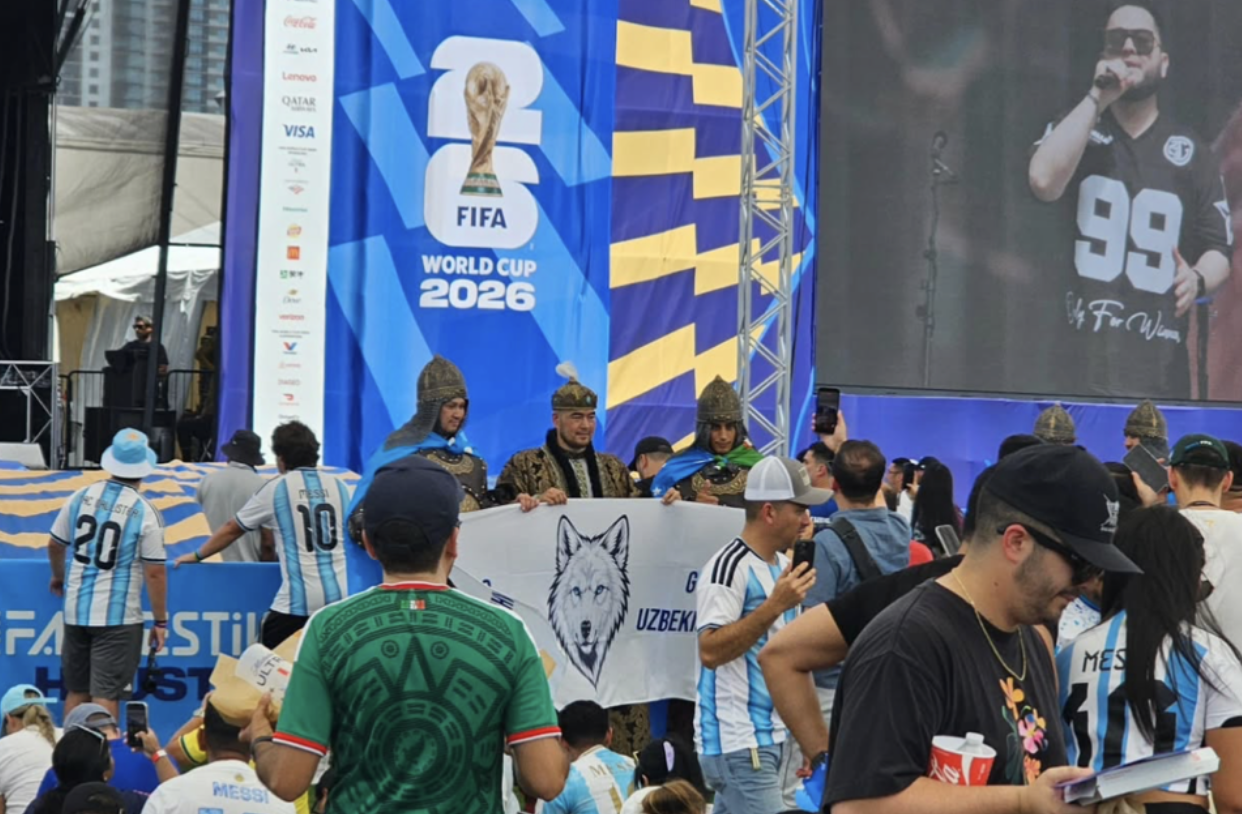 Uzbekistan fans in armor at a FIFA Fan Festival in Houston. Source: Ambassador Furqat Sidikov
Expanding global reach also entails bridging interstate gaps in familiarity. The World Cup did exactly that. Millions of viewers who tuned in were greeted with Uzbek fans filling the stands in tyubeteikas. Enthusiasts played the drums and the karnay, a traditional brass instrument, to liven spirits in the stadiums and at fan festivals, and the festivities also included Uzbek cuisine. Likewise, the viral spectacle of armored fans on horseback in Houston was not just a brief stunt. Rather, it was a moment of real cultural exchange, encompassing Uzbekistan’s rich heritage to those in attendance and to millions online.
Furthermore, Uzbekistan’s Ambassador to the U.S. Furqat Sidiqov highlighted a spike in Internet traffic related to the country. Uzbek government sources claimed that searches for “Uzbekistan” increased by 450 percent during the World Cup compared to prior averages. The performances of Uzbekistan’s young star players could also contribute to more consistent recognition and media coverage of the country from soccer fans and sports networks alike.
For a country that receives relatively little fanfare in the world, Uzbekistan’s World Cup participation proved monumental. While the White Wolves were defeated on the pitch, their real victory was their journey to becoming a recognized high-level team from Asia. More broadly, both Uzbekistan’s tourism goals and its aims to become a more influential force in geopolitics rely on the country’s heightened exposure. Expanding this reach starts at an individual and societal level, and the World Cup provided a unique and beneficial platform to do so.