An Enterprising Region: What the Trans-Caspian Enterprise Fund Means for the Middle Corridor

Author: Julia Mohr
10/06/2026
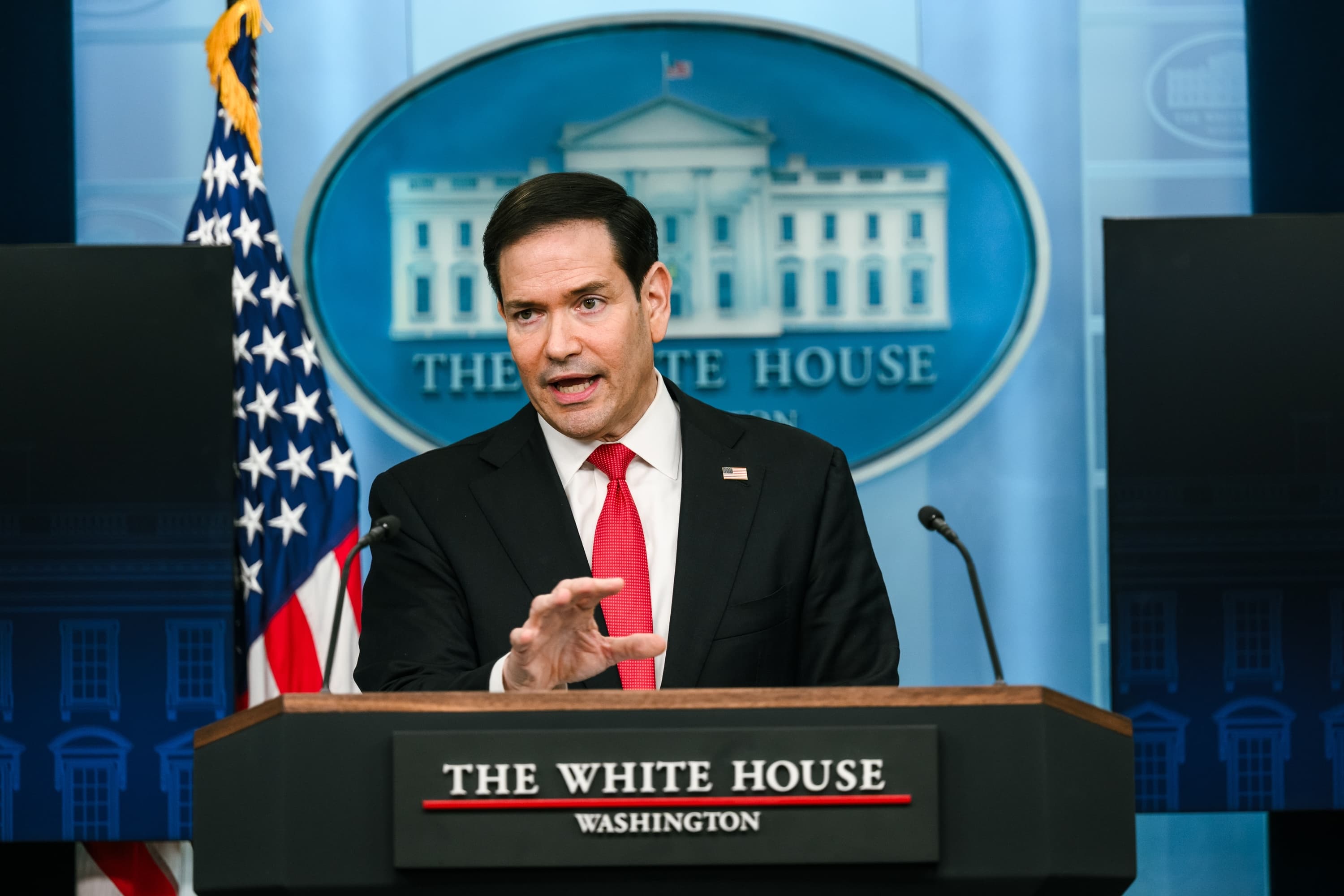
Speaking at a press conference on the one-year anniversary of the Joint Declaration between Armenia and Azerbaijan, which established the basis for the Trump Route for International Peace and Prosperity, or TRIPP. Secretary of State Marco Rubio announced the launch of the Trans-Caspian Enterprise Fund, or TCEF. The TCEF, worth $201 million, is not earmarked for TRIPP’s implementation alone, revealing that the U.S. government no longer views TRIPP in a vacuum. Rather, Secretary Rubio framed TRIPP as part of the larger Trans-Caspian Trade Route, also known as the Middle Corridor:
“TRIPP is more than an infrastructure project — it is a vital link in the Trans-Caspian Trade Route, a driver of commercial opportunities for the United States and others, and a model for how economic cooperation can cement peace following the resolution of long-standing disputes.”
The TCEF signals an important shift in American engagement with the region: a hyperfocus on TRIPP has given away to lasting U.S. interest and investment in Central Asia and the Caucuses, along with recognition of the centrality of connectivity and trade logistics for the region’s future prosperity.
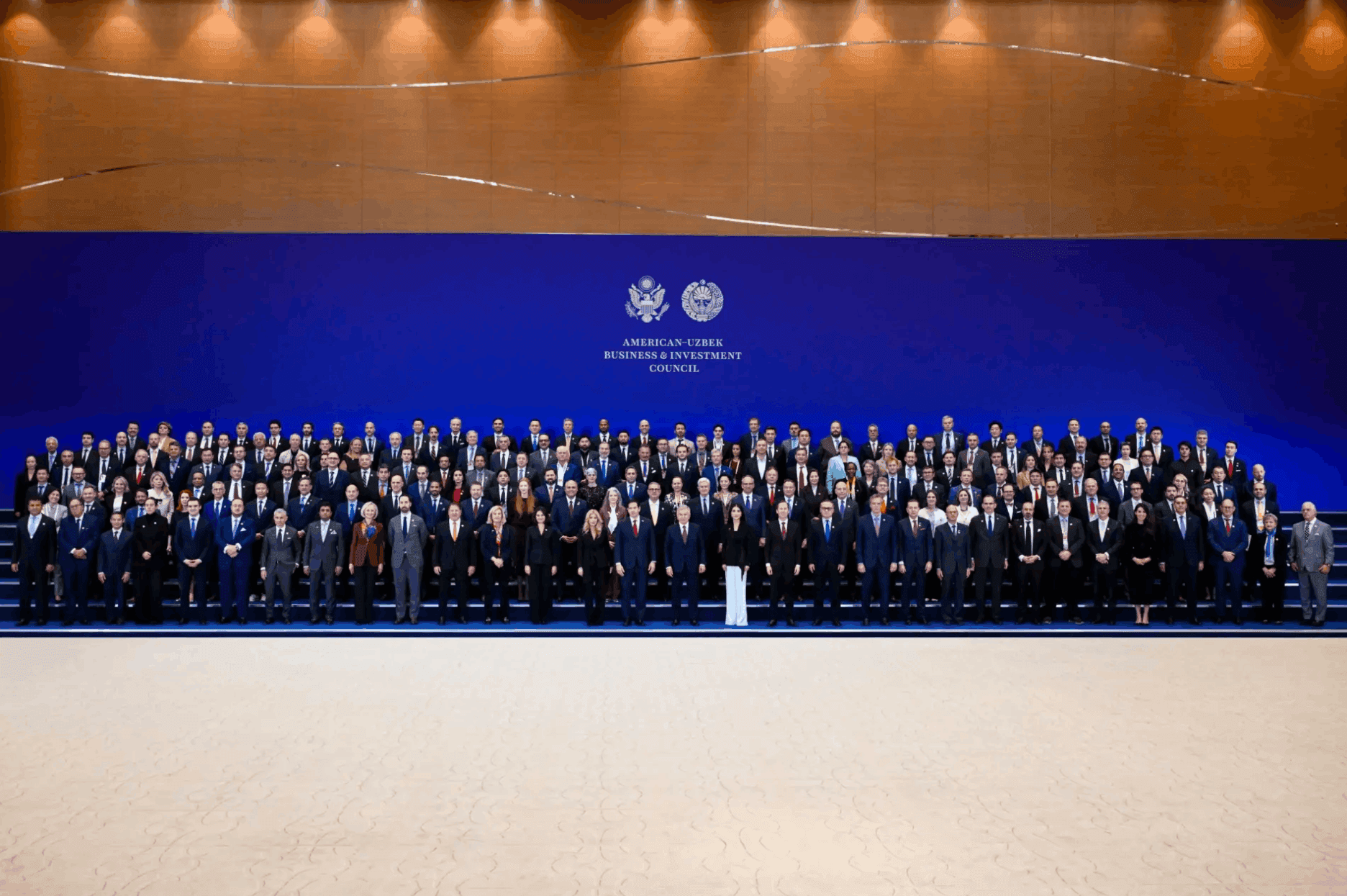
Eight weeks later, during the 81st UN General Assembly, the Fund once again made headlines. Regional government officials and American businessmen representing over 40 companies convened for a conference titled “Prosperity Through Peace: Investing the Trans-Caspian Trade Route and TRIPP”, where investment in Central Asia and the Caucuses took center stage. The meeting reinforced Secretary Rubio’s message: TRIPP will no longer be the sole American focus, but will be understood as part of a broader trade network, spanning the Caspian region. The Trans-Caspian Trade Route, or TCTR, has seen an exponential rise in international interest, particularly since Russia’s invasion of Ukraine effectively ceased Western usage of the more well-established Northern Corridor. But the TCTR owes its increasing acclaim to leaders, government officials and business representatives of Central Asia and the Caucuses, who consistently advocate on behalf of the Middle Corridor. That the Trump administration is responding with material interest –and is setting long-term goals with regards to the route’s success –speaks to its future durability.
From TRIPP to TCEF
The Trans-Caspian Enterprise Fund, self-described as a “a non-profit investment fund”, represents a dramatic departure from traditional methods of American assistance abroad. Drawing from funds from the Department of State, the TCEF will direct and seek to attract investment across seven specific sectors, spanning physical transport infrastructure, support for trade logistics and finance, critical mineral mining and processing, and promoting small business development. The Fund asserts that the successful deployment of investments towards these sectors could “triple [the] freight volumes and halve travel times” of the Trans-Caspian Transport Route by 2030. Given that trade volume reached 4.12 million tons in 2025, a monumental increase from just a few years prior, the Fund’s plans are quite ambitious.
The TCEF also evolved alongside the Trump administration’s broadening regional focus. The TRIPP Enterprise Fund was first announced by J.D. Vance during a trip to Yerevan in February of 2026. In August, following a visit by the Fund’s chairman, Konstantin Sokolov, to Yerevan, the TRIPP Enterprise Fund was publicly renamed the Trans-Caspian Enterprise Fund, a name under which the organization is also registered. Besides signaling a shift in American interest from TRIPP to the prosperity of the entire region, the name change is a welcome differentiator between the TRIPP Development Company –which will oversee financing and construction of TRIPP –and the formerly eponymous Enterprise Fund.
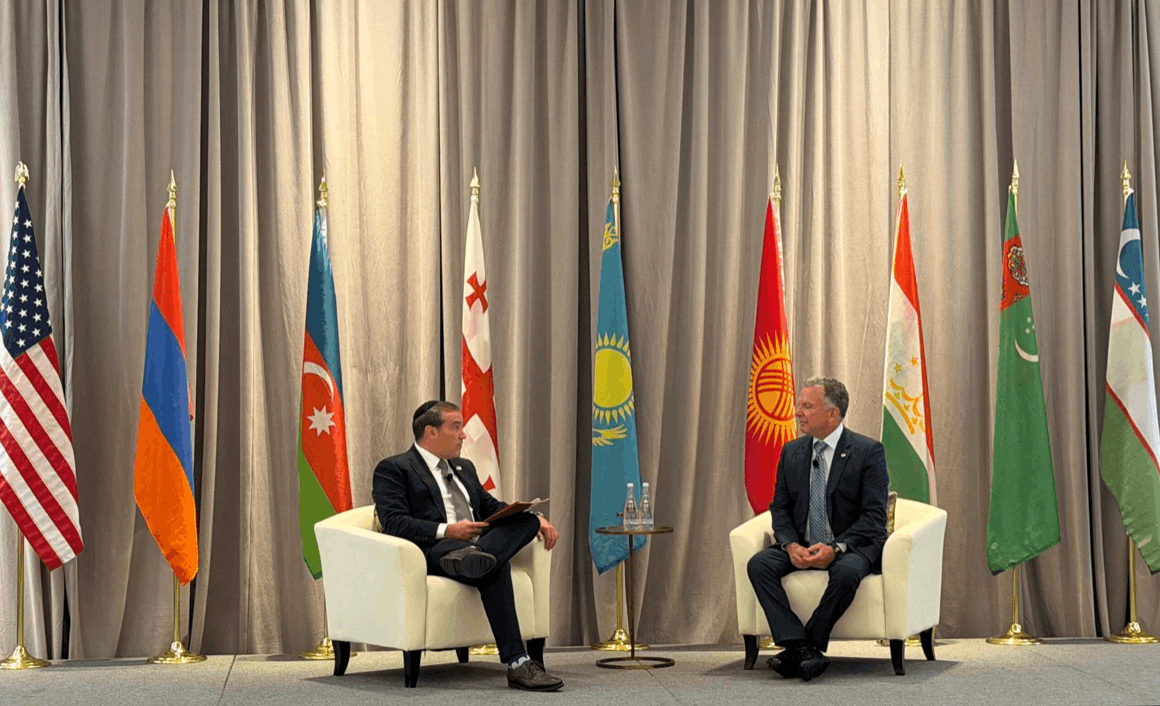 Senior Advisor to the Board of Peace Aryeh Lightstone and Special Envoy Steve Witkoff at the event, “Prosperity through Peace: Investing in the Trans-Caspian Trade Route and TRIPP” in New York City on September 23, 2026
A Short History of Enterprise Funds
The Trans-Caspian Enterprise Fund’s website lists myriad examples of American enterprise funds, which first directed investment into Central and Eastern Europe in the 1990s, and later into Egypt and Tunisia. Since then, American enterprise funds have mobilized over a billion dollars in total abroad, creating over 300,000 jobs and returning 40% of the money invested. Assuming that the TCEF will operate similarly to previous enterprise funds, the Egyptian-American Enterprise Fund, or EAEF, substantiates the value of the investment as a vehicle for assistance abroad. Over 10 years, the EAEF created 15,000 jobs, seeded 235,000 small and medium-sized businesses, and raised FDI directed towards Egypt by a factor of 20, reaching $1.4 billion. The largest difference between the EAEF and the TCEF is the focus of the investment. While the EAEF targeted Egypt’s private equity market to attract Foreign Direct Investment, the TCEF’s main objective is modernizing and building infrastructure along the Middle Corridor. Importantly, enterprise funds target only the private sector and avoid much involvement in governance or government support of the private sector itself, leading to unbalanced economic gains which do not always benefit the overall economy. However, a hyper-focus on certain industries and investments bodes particularly well for the application of an enterprise fund to the TCTR.
Diplomacy Through Deals
Despite the TCEF’s emphasis on its private-sector identity, its initial capitalization comes entirely from the US government. In that case, the government intends to monitor the usage of TCEF funds. The Fund’s mandate requires private-sector decision-making, continual reviews, and a close partnership between the Fund and the State Department. As an entirely new operation, the TCEF has thus far adhered to these principles: the Fund’s leadership boasts big names in energy and finance –crypto and investment –alongside decades of experience in entrepreneurship and senior leadership. TCEF’s Founding Chairman, Konstantin Sokolov, has extensive experience in private equity investment, including in Armenia itself: he holds stake in Armenian telecommunications company Viva and Teghout CJSC, an Armenian copper-molybdenum mine and processing plant. Consequently, Sokolov himself has an interest in the Fund’s success.
The Trump administration is characterized by its fervent belief in diplomacy through deals, rather than aid. Here, the Trans-Caspian Enterprise Fund is yet another example of that conviction in action. And while the administration’s large-scale projects in the region have yet to materialize –TRIPP’s construction already faces delays and TCEF’s website has only existed for three months –the foundations have been laid for continual American interest in the region’s success. Even early hiccups confirm the hype around American investment: in early August, it was reported that the TRIPP+ Enterprise Fund was doubled to $402 million. Unfortunately, the fanfare resulted from USG restructuring, which momentarily doubled the amount when a second entry was made to reflect the new source of funding.
Regardless, what matters is continued engagement. American and regional senior leadership have demonstrated their commitment to strengthening trade through continual engagement. The C5+1 framework has proven an important platform for mobilizing funds and investment; along the same lines, Secretary Rubio is scheduled to visit Uzbekistan with 100 American businessmen to strengthen economic ties and increase investment between Central Asia and the United States. A recent C5+1 conference in Astana saw $5 million dollars in funds dedicated to Central Asian cybersecurity, an essential factor for expanding international trade. Alongside such engagement, the Trans-Caspian Enterprise Fund promises to generate durable and transformative changes to the Middle Corridor.