Russian and Chinese Presidents Display United Front Against the United States: What it Means for the Caspian


Author: Dante Schulz
02/08/2022 · 5 min read
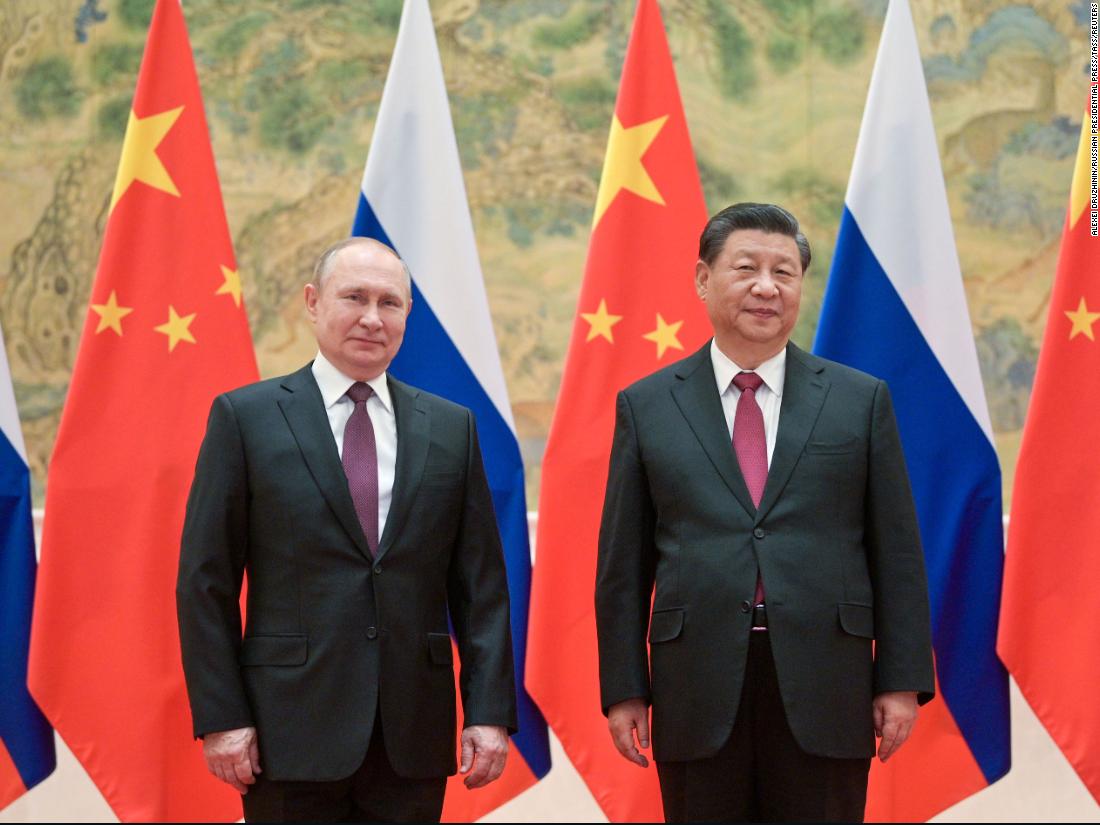 Alexei Druzhinin/Sputnik/AFP
Russian President Vladimir Putin and Chinese President Xi Jinping met in Beijing just before the opening ceremony of the Winter Olympics. The meeting marks the first time President Xi has met with a foreign counterpart in person since the COVID-19 outbreak two years ago. The two delegations released a joint statement which was largely accusatory towards the United States. Putin and Xi criticized NATO expansion and the Aukus trilateral security pact between the United States, the United Kingdom, and Australia. The two leaders also vowed to bolster strategic cooperation between Russia and China. This united front exemplifies the worsening state of Russian and Chinese resrelations with the United States, which could lead to serious implications for U.S. involvement in the Caspian region. The United States must affirm its support for its South Caucasus and Central Asian partnerships and call on leaders in the region to maintain multi-vector foreign policies.
Foreign policy coordination between Russia and China has been steadily growing as tensions mount with the United States and its allies. In a December 2021 phone call, Putin praised the Russian-Chinese relationship and referred to Xi as his “dear friend.” This appears to be the case. Xi’s first overseas visit after becoming president in 2013 was to Russia, where he was greeted with the highest level of protocol. In addition, Xi’s visit to the Sochi Winter Olympics in 2014 marked the first time a Chinese leader was present at an international sporting event. Whether the united front displayed by the two leaders is merely a facade to concern their shared global competitors or if the relationship is genuine, the Caspian region is likely to once again find itself in the midst of a geopolitical contest.
Chinese involvement in the Caspian region has skyrocketed in the past decade. Ever since, Xi launched his Belt and Road Initiative (BRI) in September 2013 at Nazarbayev University in Kazakhstan, investment from Beijing has been flooding into the region. According to the Chinese Embassy in Kazakhstan, China invested $19.2 billion in the Central Asian country between 2005 and 2020 to complete 56 China-financed projects. Similarly, Chinese investors are heavily involved in Kyrgyzstan’s mining sector. About 111 Chinese mining companies operate in the small Central Asian state, accounting for roughly half of its $338.05 million foreign direct investment (FDI) flows into Kyrgyzstan in 2019. In addition, China is eager to tap into Turkmenistan’s vast hydrocarbon reserves to supply its rapidly-developing economy. In February 2022, reports revealed that Chinese and Turkmen state owned enterprises are slated to sign additional agreements to supply Turkmen gas to China worth $106.2 million. However, Chinese investment in the region has raised alarms in Kyrgyzstan and Tajikistan. More than 40 percent of Kyrgyzstan’s and Tajikistan’s foreign debt is owed to China. Piling public debt is unsustainable for Central Asia and could lead to concessions being made in China’s favor if loans remain unpaid.
Not only that, but Chinese investment is modeled after the Japanese method of distributing aid. Thus, Beijing adheres to the trinity development cooperation: aid, trade, and investment. China has ramped up its involvement in the Caspian region by pushing for an increased trade volume with its partners. Bilateral trade between China and the South Caucasus nearly doubled from $1.9 billion to $3.6 billion in just four years. Moreover, additional shipping capacity spurred by Turkmenistan’s growing trade volume has also contributed to Chinese trade increasing with its Caspian partners. In 2021, container volumes increased by over 100 percent along the China-Kyrgyzstan-Uzbekistan-Turkmenistan-Azerbaijan-Georgia-Turkey-Europe multimodal route. Chinese companies also donated personal protective equipment to the Caspian countries during the onset of the COVID-19 pandemic. There is no doubt that China has become a significant player in Caspian economic affairs. This leaves Moscow the ability to assert its security dominance over the region.
The Russian-led Collective Security Treaty Organization (CSTO) bloc deployed troops for the first time since its inception at the request of Kazakhstani President Kassym Jomart-Tokayev to quell nationwide protests in Kazakhstan in early January 2022. While the small 2,000-member force withdrew from the country soon after the violence subdued, some worry that it has opened the door for future Russian intervention in the region. U.S. Secretary of State Antony Blinken warned that “once Russians are in your house, it’s sometimes very difficult to get them to leave,” suggesting that heightened Russian involvement in the Caspian could threaten the Caspian countries’ sovereignties. Still, Russia has always maintained a security presence in the region. Moscow deployed peacekeepers to Nagorno-Karabakh a year after the bloody war between Armenia and Azerbaijan to maintain stability for a volatile region. Also, residents from the Ferghana Valley, which has been the site of numerous clashes over resources, have suffered due to Russia’s increasingly-hostile attitude towards migrant workers from the region. However, CSTO involvement in Kazakhstan benefitted China. Beijing was keen to see the situation quickly stabilize to safeguard its investment interests in the country. Chinese Foreign Minister Wang Yi praised CSTO intervention in Russia for resolving the conflict. China depends on Russia to maintain the security situation in the Caspian region to ensure that its economic interests are protected.
Moscow and Beijing have each managed to carve out a sector within the Caspian region to advance their own interests. While Moscow hopes to retain its cultural and security influence over the post-Soviet states, Beijing is advancing its economic agenda by heavily investing in the region’s infrastructure and energy potential. Furthermore, the public display of unity between Xi and Putin exemplifies their commitment to maintaining a stable relationship. Russia plays a considerable role in Caspian affairs that has yet to overstep into Chinese ambitions for the region. The United States should work with its Caspian counterparts to determine its role in the region. As great power competition becomes more relevant on the geopolitical stage, the United States should do its part in engaging with the region more directly.