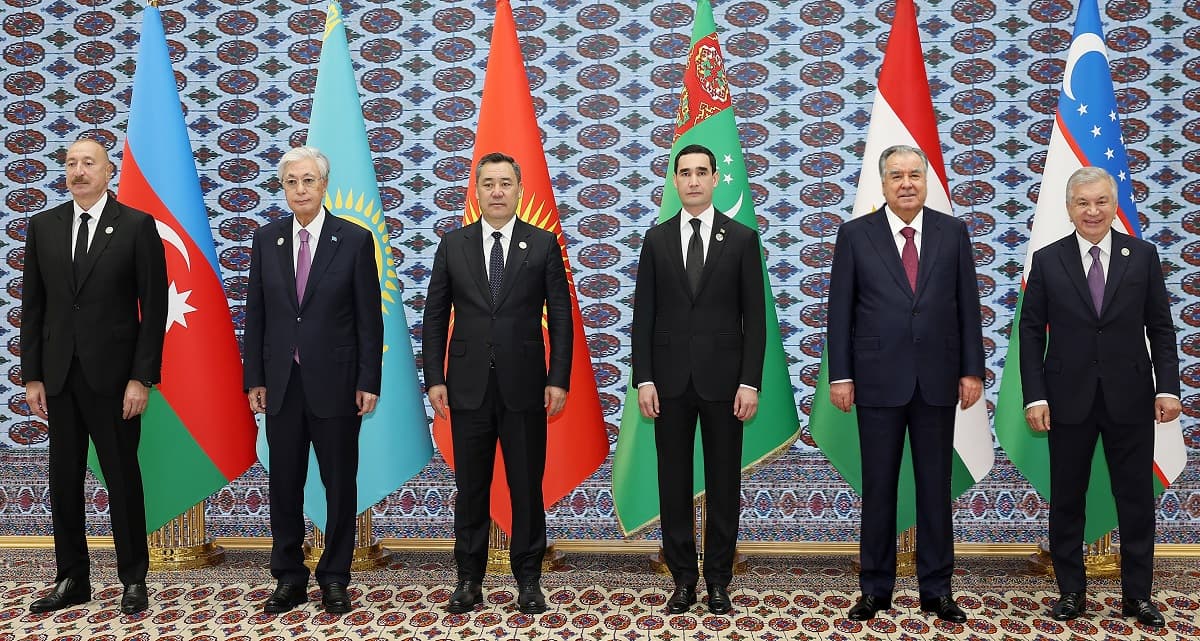
Security of the Middle Corridor

Author: Luke Coffey
05/13/2026
 RUSI
RUSIThe war in Iran has had many geopolitical consequences. This is particularly true in the Middle East, where the fighting exposed how vulnerable traditional transportation corridors and critical trade infrastructure are to hostilities. Across the Gulf, airports closed intermittently, long-established flight routes become unsafe, and shipping through the Strait of Hormuz still remains blocked, despite a shaky ceasefire. There is little doubt that this will have a significant impact on the global economy. At the same time, however, the conflict has underscored the importance of diversifying trade and transit routes and should serve as a wakeup call to others.
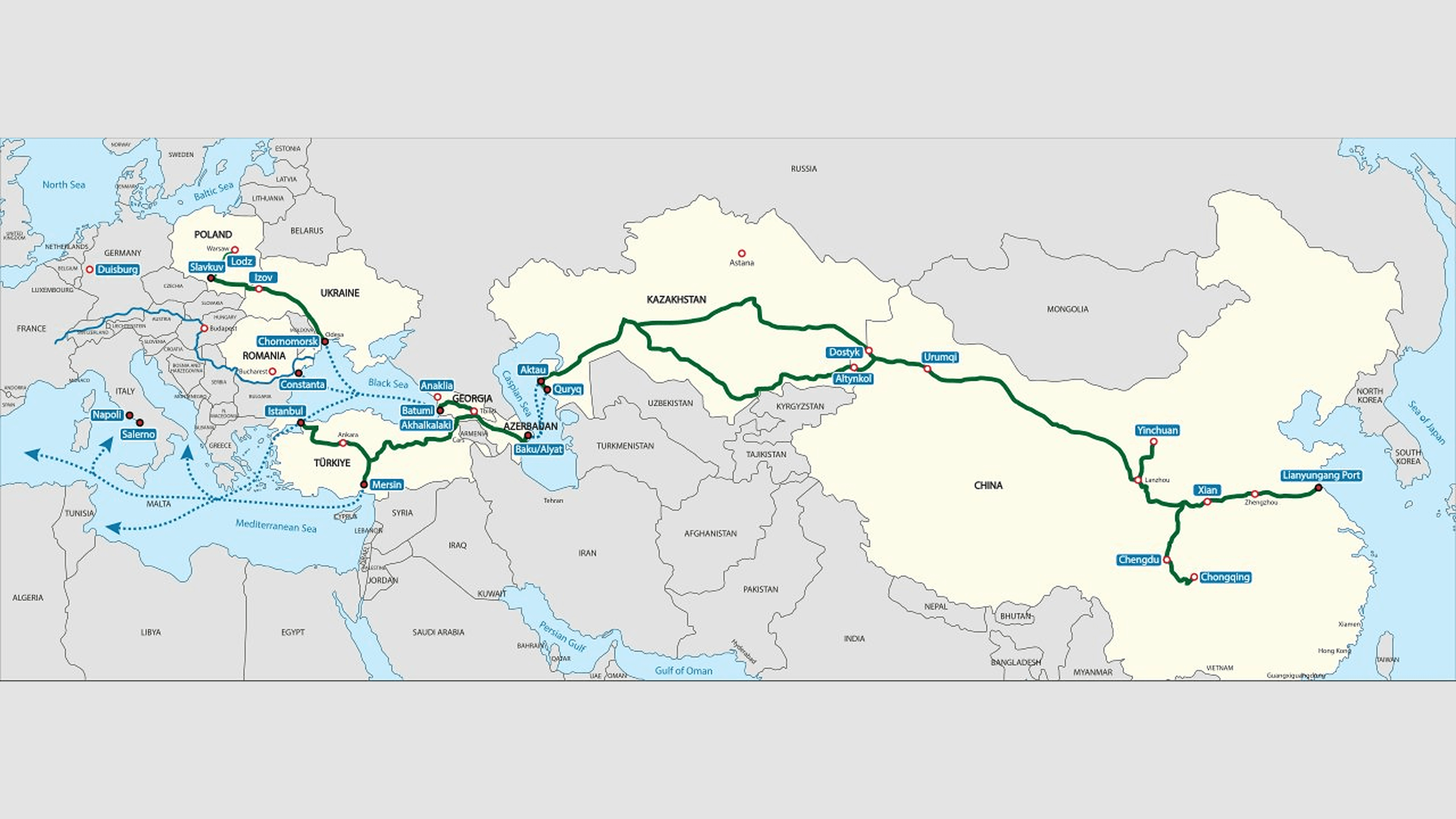
In this context, the Trans-Caspian International Transport Route—commonly referred to as the Middle Corridor—has grown in importance. This trade corridor runs from Türkiye through the South Caucasus, across the Caspian Sea, and into the heart of Central Asia. Geographically, it is positioned between Russia to the north and Iran to the south. For policymakers seeking to bypass both countries while maintaining historic east-west trade links, the Middle Corridor offers a viable alternative that broadly follows historic trade routes.
One thing is certain: the global economy cannot tolerate disruptions to the Middle Corridor, especially at a time of heightened instability in the Middle East. Policymakers should learn the lessons of the current war in Iran, take steps now to enhance the Middle Corridor’s security, and ensure that future geopolitical shocks do not undermine its viability.
As policymakers consider how best to secure the Middle Corridor, three areas merit particular attention: air defense, maritime security, and infrastructure resilience.
First, air defense requires both technological adaptation and closer coordination. The airspace along the Middle Corridor has become a key artery for east-west aviation, particularly since conflict in the Middle East has disrupted other routes. Iran’s recent drone strikes targeting the airport in Nakhchivan, an exclave of Azerbaijan, illustrate the vulnerability of this airspace. Countries in the South Caucasus must improve coordination and management of shared airspace, while Türkiye and Azerbaijan, as the two principal military powers in the region, should expand the deployment of their air defense systems, especially those capable of countering unmanned aerial systems.
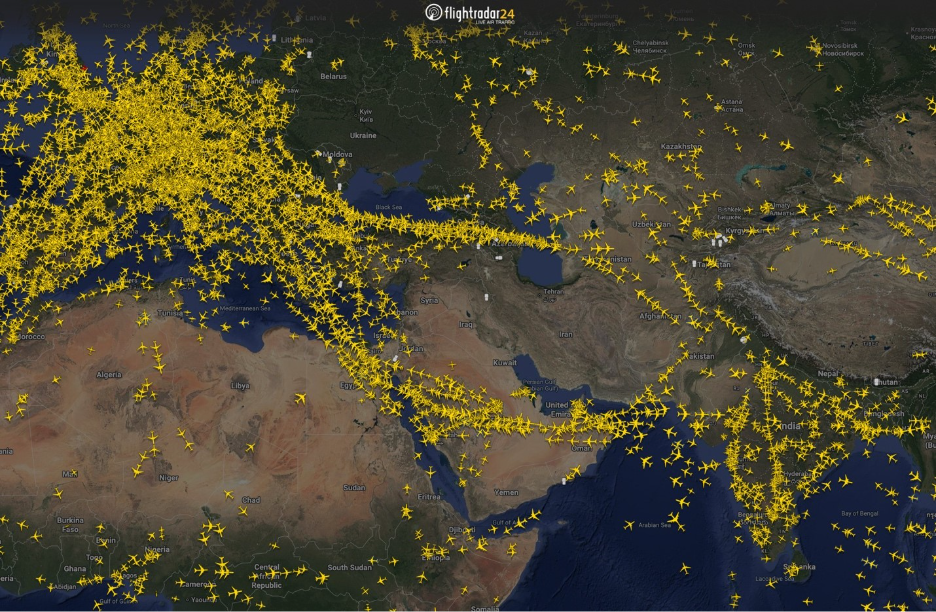
Flight routes redirected following the outbreak of conflict in the Middle East, Source: Flightradar24
Two practical steps could support this effort. First, Türkiye and Azerbaijan could establish a Middle Corridor Air Defense Initiative, either bilaterally or through the Organization of Turkic States (OTS). The OTS has already signaled interest in expanding into the security sphere, and Azerbaijan has proposed joint military exercises. The evolution toward security cooperation is a natural step for such an organization, and air defense for a critical trade corridor presents a politically acceptable and low-risk starting point. Second, following on President Zelenskyy’s successful visit to Azerbaijan, regional countries should follow Baku’s lead and consult with Ukraine to incorporate its battlefield experience in countering drones. Ukrainian tactics, techniques, and procedures are already informing air defense improvements in the Gulf and could be adapted for use along the Middle Corridor. The Gulf states are now relying on Ukrainians to improve their air defense systems in the Gulf. Both Türkiye and Azerbaijan have maintained good relations with Kyiv, which creates opportunities for security and defense cooperation.
Second, maritime security in the Caspian Sea is essential. Without secure transit across the Caspian, the Middle Corridor cannot function. Any disruption in this body of water would sever vital trade links between east and west. Thankfully, Israel’s airstrikes targeting Iran’s Caspian fleet makes the region safer and, at least indirectly, did the other Caspian littoral states a favor. The United States has already taken steps by announcing support for Azerbaijan’s maritime security capabilities, including the provision of patrol boats and related equipment. However, key gaps remain, particularly in situational awareness, coastal radar coverage, and maritime patrol capacity.
Efforts should not be limited to Azerbaijan alone. The United States should expand cooperation with other Caspian littoral states, particularly Kazakhstan and, where possible, Turkmenistan. One option would be to revive or replicate elements of the Caspian Guard initiative created in the early 2000s, which aimed to enhance regional maritime security capabilities. A broader, cooperative approach would strengthen collective resilience across the Caspian.
Finally, policymakers must prioritize resilience and redundancy in infrastructure. The primary Middle Corridor route, running from Türkiye through Georgia into Azerbaijan, is well established and includes major pipelines, rail links, highways, and fiber-optic networks. However, reliance on a single route creates a potential point of failure. Efforts to diversify transit options are therefore essential.
In this regard, the Trump administration’s initiative to broker peace between Armenia and Azerbaijan, including the proposed Trump Route for International Peace and Prosperity, could provide an important supplementary corridor linking Azerbaijan to its exclave of Nakhchivan through Armenian territory. While not a replacement for existing routes, it would add valuable redundancy to the Middle Corridor.
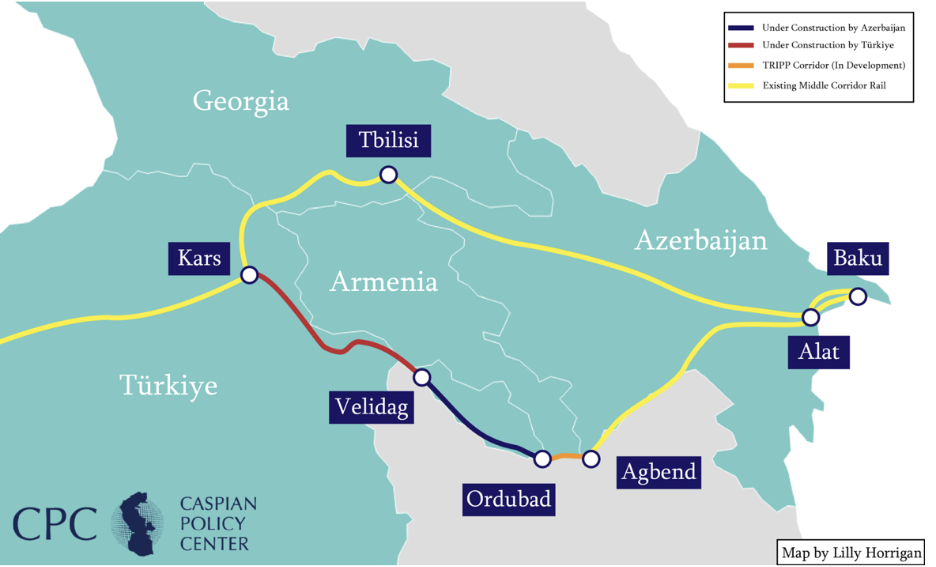
The Trump Route for International Peace and Prosperity (TRIPP)
Beyond new routes, existing infrastructure must be better protected and modernized. Key transit nodes such as bridges, tunnels, ports, and airports should be hardened against attack and regularly updated. Regional governments, potentially under the auspices of the OTS, could also establish a shared list of critical infrastructure similar to the European Union’s designation of “critical entities.” Such a framework would help prioritize investment and improve coordination in protecting essential assets.
With Russia’s war in Ukraine continuing into its fifth year and the geo-political impact of conflict with Iran still being felt, this moment should serve as a wake-up call. Regional policymakers must act now to ensure that the Middle Corridor remains secure, reliable, and capable of supporting global trade. At the same time, policymakers in the United States, the United Kingdom, and Europe must recognize the strategic importance of the corridor and deepen cooperation with regional partners.
In an increasingly dangerous and uncertain world, the importance of the Middle Corridor will only grow. Ensuring its security is not just a regional priority—it is a global imperative.