Kazakhstan’s Major Oil Fields – Kashagan and Tengizchevroil: Production, Export Infrastructure, and Diversification Prospects
Recent Articles
Author: Aigerim Orynbassar
09/18/2026
 S&P Global Commodity Insights
Since its independence in 1991, Kazakhstan has been one of the world’s leading hydrocarbon-producing countries. Kazakhstan ranks 12th in the world in oil production and 25th in gas production. For the country, crude oil accounts for about 51% of the country’s total exports, and revenues from the oil and gas sector cover a significant portion of government expenditures through the national fund and tax collections. The country’s main oil fields are Karachaganak, Kashagan and Tengiz. Kashagan accounts for about 21% of total oil production and about 42% of natural gas reserves, while Tengiz accounts for about 40% of total oil production and about 27% of crude gas production in Kazakhstan.
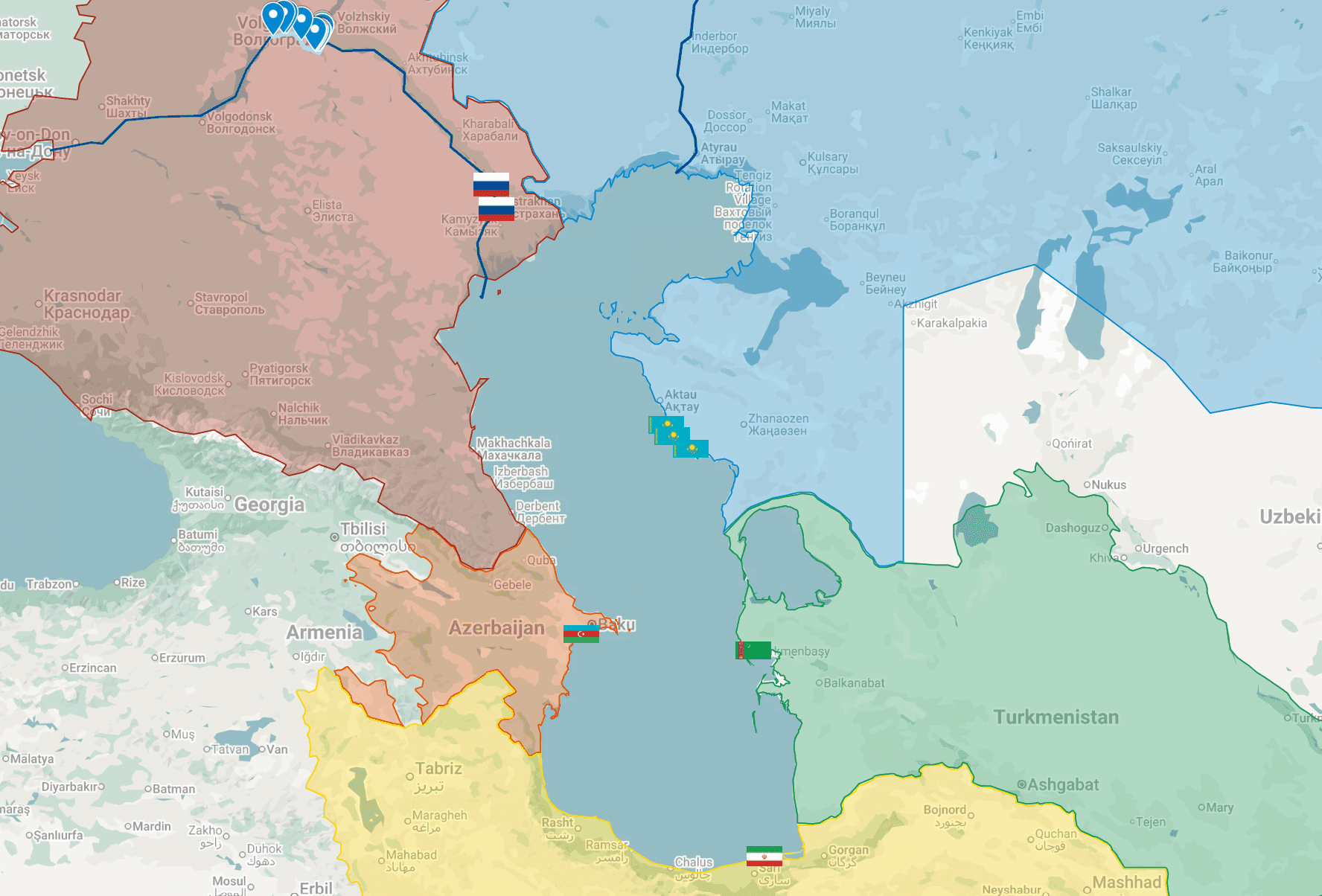
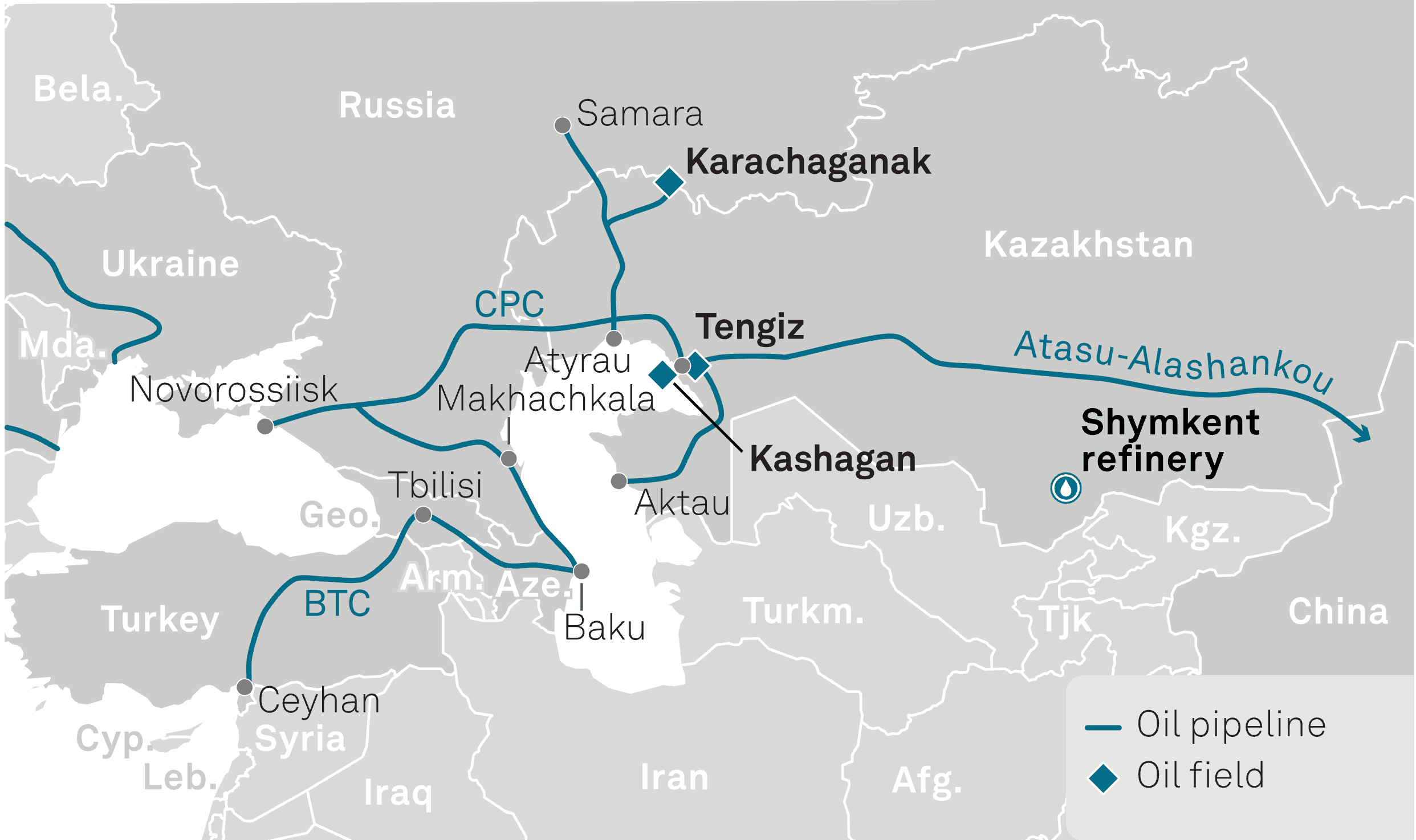
Beyond strategic importance, Kazakhstan’s major oil fields have recently faced growing challenges related to export security. The Caspian Pipeline Consortium (CPC) marine terminal near Novorossiysk in Russia, the primary export route for both Kashagan and Tengizchevroil (TCO), was repeatedly targeted by drone attacks from February 2025 to July 2026. Several tankers, including Nordic Zenith, ASIA, NISSOS IOS, NELSA, Nissos Sifnos, and Marathi, were damaged while approaching or loading at the terminal, causing temporary suspensions of loading operations. Although no accidents or oil spills were reported, the attacks disrupted crude oil exports and prompted condemnation from the Government of Kazakhstan, which described them as an infringement on the country’s economic interests and reserved the right to seek compensation. These incidents highlighted Kazakhstan’s vulnerability to reliance on the CPC and showed the importance of diversifying export routes for the country’s major oil fields.
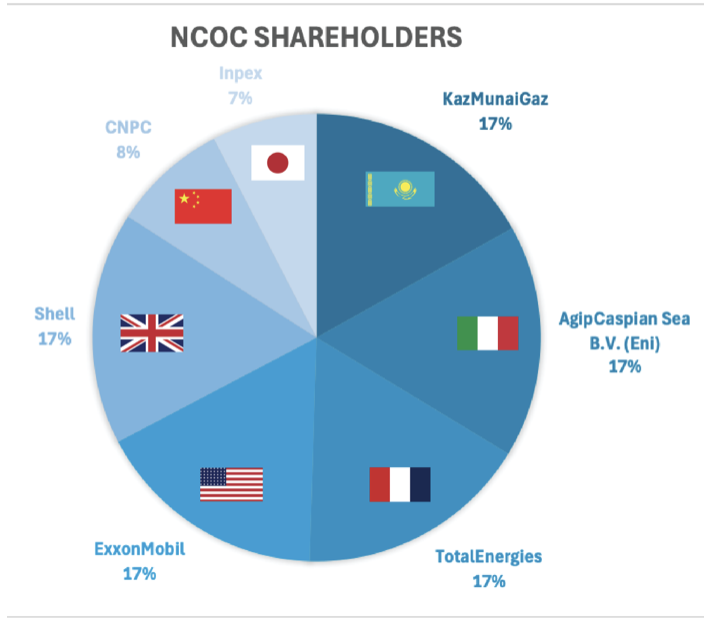
An interesting aspect of Kazakhstan’s largest oil projects is the relatively limited state ownership stake. In both Kashagan and Tengiz, KazMunayGas owns less than one-fifth of the projects (16.88% in the North Caspian Operating Company (NCOC) and 20% in TCO), while the remaining shares are held by international energy companies. This ownership structure reflects the production sharing agreements (PSAs), established in the early years of Kazakhstan’s independence, when the country lacked the capital, technology, and technical expertise needed to develop its complex hydrocarbon reserves.
An interesting aspect of Kazakhstan’s largest oil projects is the relatively limited ownership stake held by the state. In Kashagan and Tengiz, KazMunayGas owns 16.88% and 20%, respectively, while the remaining shares are held by international energy companies under PSAs concluded in the early years of Kazakhstan’s independence, when foreign capital and technical expertise were essential to developing the country’s hydrocarbon resources. In November 2024, Majilis Deputy Adil Zhubanov renewed public debate over these agreements, arguing that Kazakhstan should gradually strengthen national control over its strategic resources and place greater emphasis on developing domestic refining capacity, downstream industries, and local infrastructure to capture more value from its oil sector.
Kashagan Oil Field
Kashagan (Қашаған) was discovered on June 30, 2000, by the Vostok-1 well, coinciding with the 150th anniversary of the famous 19th-century Mangystau traditional poet-advisor, Kashagan Kurzhimanuly. The word “kashagan” can be translated as “stubborn and elusive.” The western part of Kashagan was discovered in 2001, and the southwestern part was discovered in 2003. In 2001, Agip, a subsidiary of the Italian company Eni, was established as the operator of the North Caspian project. In 2002-2003, four more fields were discovered in the licensed area: Kalamkas-More, South-Western Kashagan, Aktoty, and Kayran. The start of commercial oil production at Kashagan has been repeatedly postponed.
The Kashagan oil field is one of the world’s largest offshore oil discoveries in recent decades and Kazakhstan’s most significant oil-producing field. Located in the North Caspian Sea, 80 km from Atyrau, it is a cornerstone of Kazakhstan’s oil production and exports, with a shelf depth of 3-7 m.
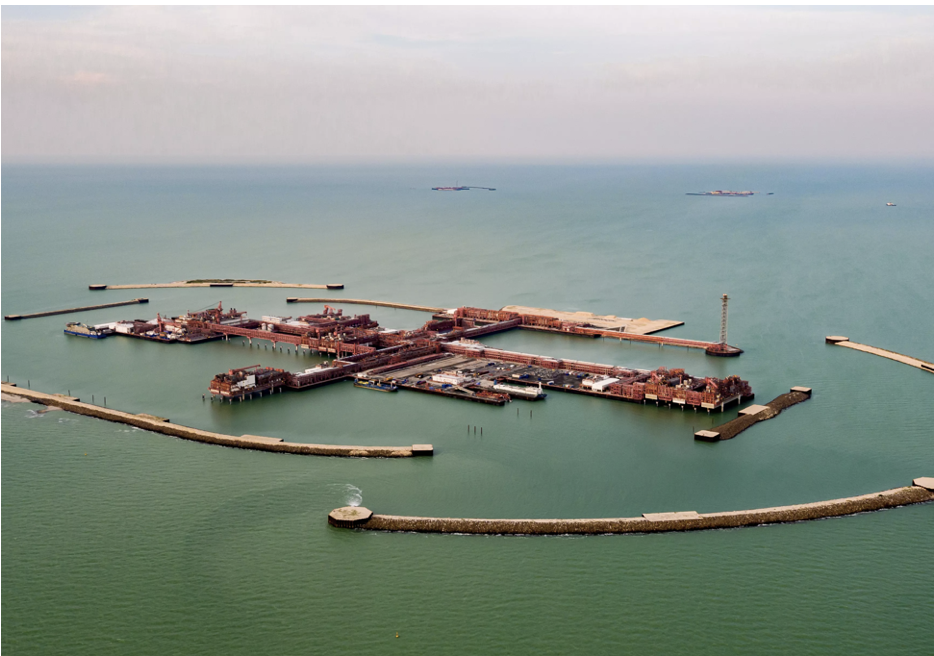
The field is being developed using five artificial islands – the main technological island, D, and four auxiliary islands (A and EPC-2, EPC-3, and EPC-4). It is operated under difficult conditions – the shelf zone, an unfavorable combination of shallow water conditions and ice formation (about 5 months a year), an ecologically sensitive zone, deep reservoirs (up to 4,800 m), high reservoir pressure (80 MPa), and high hydrogen sulfide content (up to 17%).
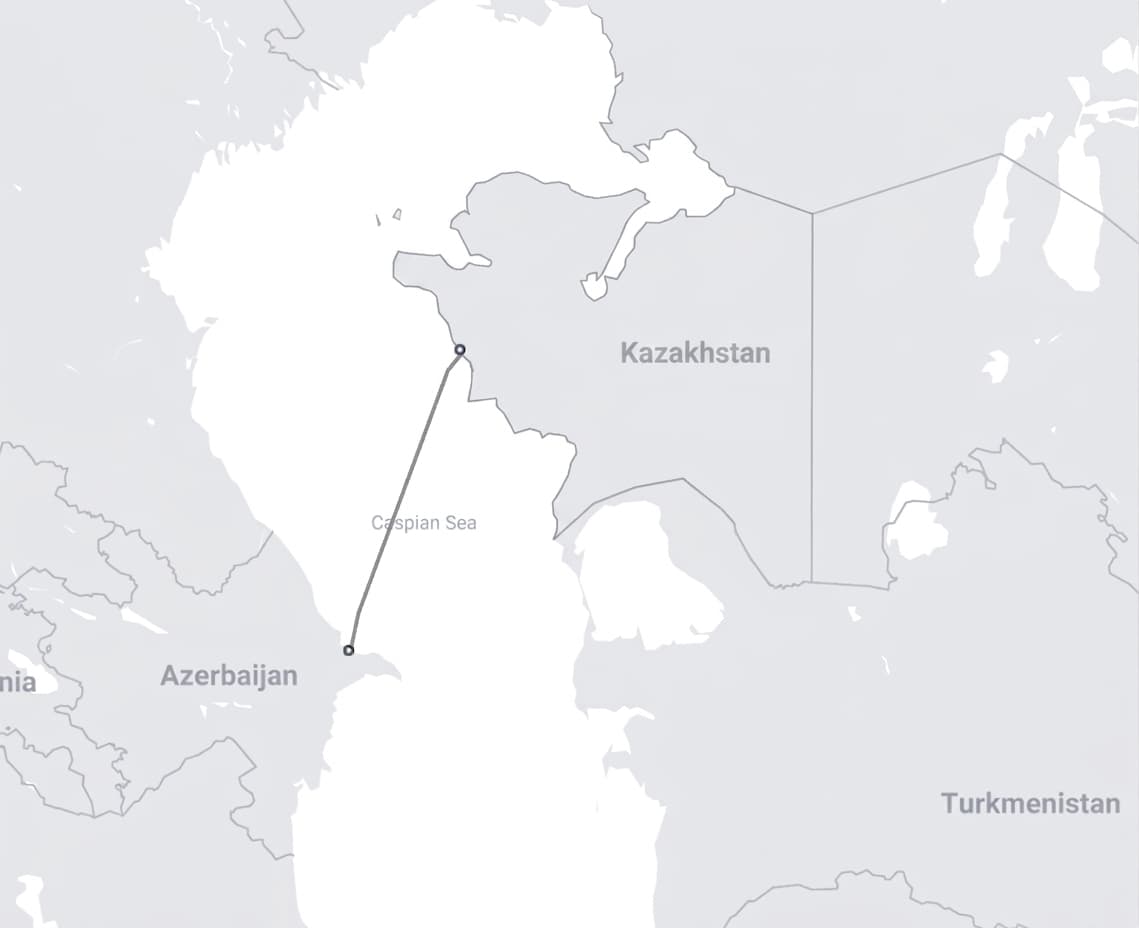
Kazakhstan’s landlocked geography makes export infrastructure critical to the commercial success of the Kashagan field. While most crude oil is exported through the Caspian Pipeline Consortium (CPC) pipeline, Kazakhstan has gradually expanded alternative routes via pipelines elsewhere in Russia as well as in China, and also by ship via the Trans-Caspian Corridor (see Table 1).
Table 1. Major Export Routes for Kashagan Crude Oil
|
Export Route |
Transit |
Export Terminal |
Final Markets |
Volume |
|
CPC |
CPC Pipeline |
Yuzhnaya Ozerayevka (Black Sea) |
Italy, Netherlands, France, Romania, Greece |
>15 million tons/year (2025) |
|
Ozen - Atyrau - Samara |
Samara |
Ust-Luga, Primorsk, Novorossiysk |
Europe and Asia |
~1 million tons/year (2023) |
|
Atyrau - Atasu - Alashankou |
Kazakhstan → China Pipeline |
Xinjiang |
Chinese refineries |
50-70 thousand tons/month |
|
Trans-Caspian |
Aktau → Baku → BTC Pipeline |
Ceyhan (Turkey) |
Turkey, Greece, India |
240-250 thousand tons/year (2025) |
Kashagan is among the world’s largest offshore oil fields, with reserve estimates varying by geological assessment and recoverability. Tables 2 and 3 summarize the principal estimates of the field’s oil and natural gas reserves.
Table 2. Kashagan Reserve Estimates
|
Estimate |
Volume |
|
Broad estimate of oil reserves |
1.5-10.5 billion tons |
|
Geological oil reserves |
4.8 billion tons |
|
Total oil reserves |
38 billion barrels (~6 billion tons) |
|
Recoverable oil reserves |
|
|
Natural gas reserves |
More than 1 trillion m³ |
Table 3. Estimated Oil Reserves by Kashagan Structure
|
Structure |
Eastern |
Western |
South-Western |
|
Estimated Oil Reserves |
1.1–8.0 billion tons |
Up to 2.5 billion tons |
150 million tons |
Numerous failures by Agip to meet its obligations included delaying the start of oil production by eight years and the project becoming significantly more expensive. Following a $5 billion court settlement for lost revenues, Astana’s stake in the project was doubled and the consortium members reorganized the project’s management system. Since 2009, the operator of the Kashagan oil field has been the North Caspian Operating Company (NCOC), which manages the project on behalf of an international consortium of shareholders.
Tengizchevroil (TCO)
Discovered in 1979, Tengiz is a giant oil and gas field located 350 kilometers southeast of Atyrau. The Tengiz field is the 12th largest oil field in the world. It is operated by Tengizchevroil (Теңізшевройл), a joint venture engaged in the development, production, and marketing of oil and related products. Tengizchevroil, the largest oil-producing company in Kazakhstan, was founded on April 6, 1993, by the President of the Republic of Kazakhstan, Nursultan Nazarbayev, and the American company, Chevron. Tengiz is the second-largest oil field in Kazakhstan, after the Kashagan field.
TCO has also been involved in a corporate responsibility program. As part of the voluntary “Igilik” program, TCO funds $25 million annually for social infrastructure projects in the fields of healthcare and education. For example, in October 2002, the construction of a school for 1,200 students was completed in Atyrau; TCO fully funded the project as part of the “Igilik” program. In 2014, the budget of the voluntary socio‑infrastructure program, “Igilik,” will amount to $25 million, the bulk of which will be directed towards the construction of kindergartens and schools in the city of Atyrau and in the Zhyloy district. Since 1993, TCO has invested over $3.5 billion in social projects and programs.
Since its establishment in 1993, TCO has become one of the most prominent examples of foreign investment in Kazakhstan’s oil industry. This pie chart shows the company’s shareholder composition, with Chevron (50%), ExxonMobil (25%), KazMunayGas (20%), and Lukoil (5%).
As Kazakhstan’s largest oil-producing company, TCO plays a central role in the country’s energy sector. Its large production capacity and substantial reserves are complemented by an extensive export network, although the company remains heavily dependent on the Caspian Pipeline Consortium (CPC). Tables 4 and 5 summarize TCO’s production profile, reserve estimates, and principal export routes.
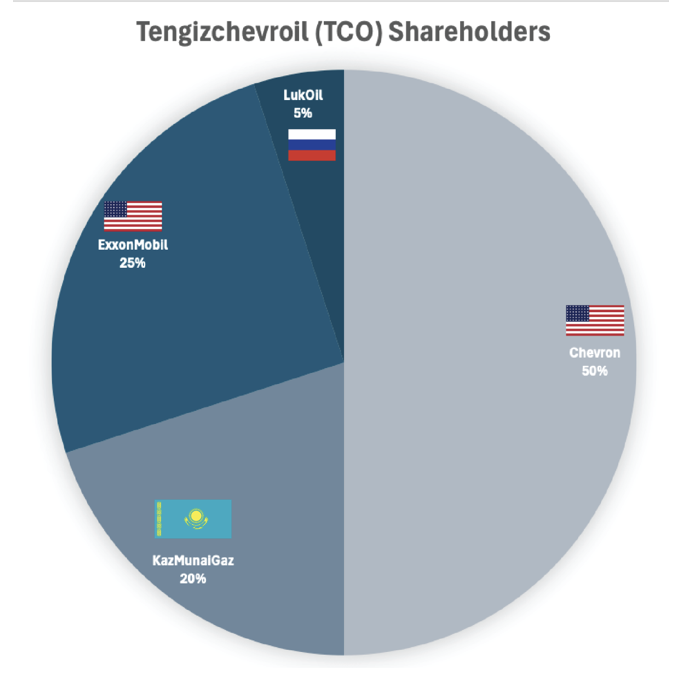
Table 4. Tengizchevroil (TCO) Production and Reserve Profile
|
Category |
Metric |
Value |
|
Production (2025) |
Annual oil production |
39 million tons (311.3 million barrels) |
|
Average daily production |
120,000 tons/day (876,000 barrels/day) |
|
|
Geological Reserves |
Tengiz Field |
3.1 billion tons (25 billion barrels) |
|
Korolev Field |
200 million tons (1.6 billion barrels) |
|
|
Recoverable Reserves |
Tengiz & Korolev (combined) |
1.4 billion tons (11 billion barrels) |
Table 5. Major Export Routes for Tengizchevroil (TCO) Crude Oil
|
Export Route |
Share/Volume |
Transit Route |
Final Markets |
|
Caspian Pipeline Consortium (CPC) |
>95% of TCO exports |
TCO → CPC → Novorossiysk (Russia, Black Sea) |
Italy, Netherlands, France, China, India |
|
Trans-Caspian Route |
Alternative |
TCO → Aktau → Baku → BTC Pipeline → Ceyhan |
Mediterranean and global markets |
|
Rail Route (Georgia) |
Alternative |
TCO → Railway → Port of Batumi |
Black Sea export markets |
|
Domestic Supply |
Domestic |
TCO → ANPZ, PKOP, PNKhZ |
Kazakhstan’s domestic refineries |