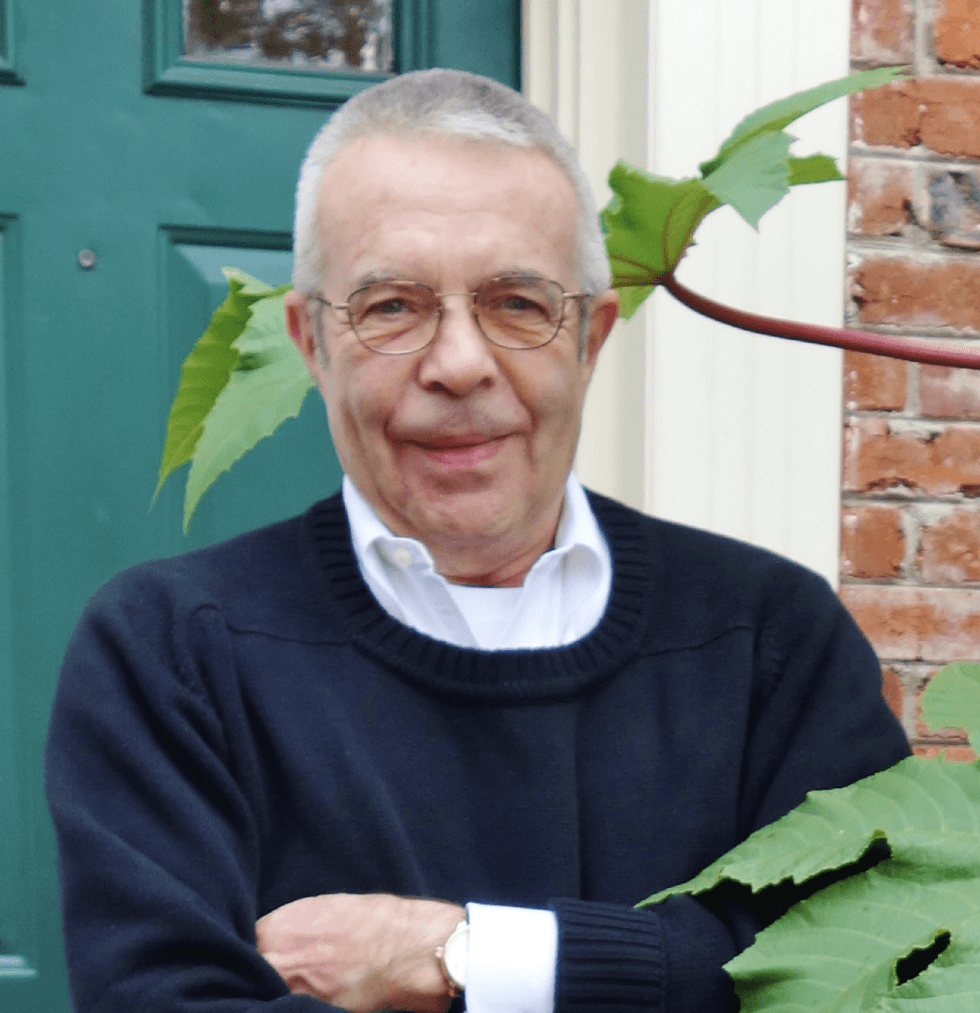
The Long Watch: Four Decades at the Center of Central Asia and the Caucasus
Recent Articles
Author: Caspian Policy Center
10/20/2026
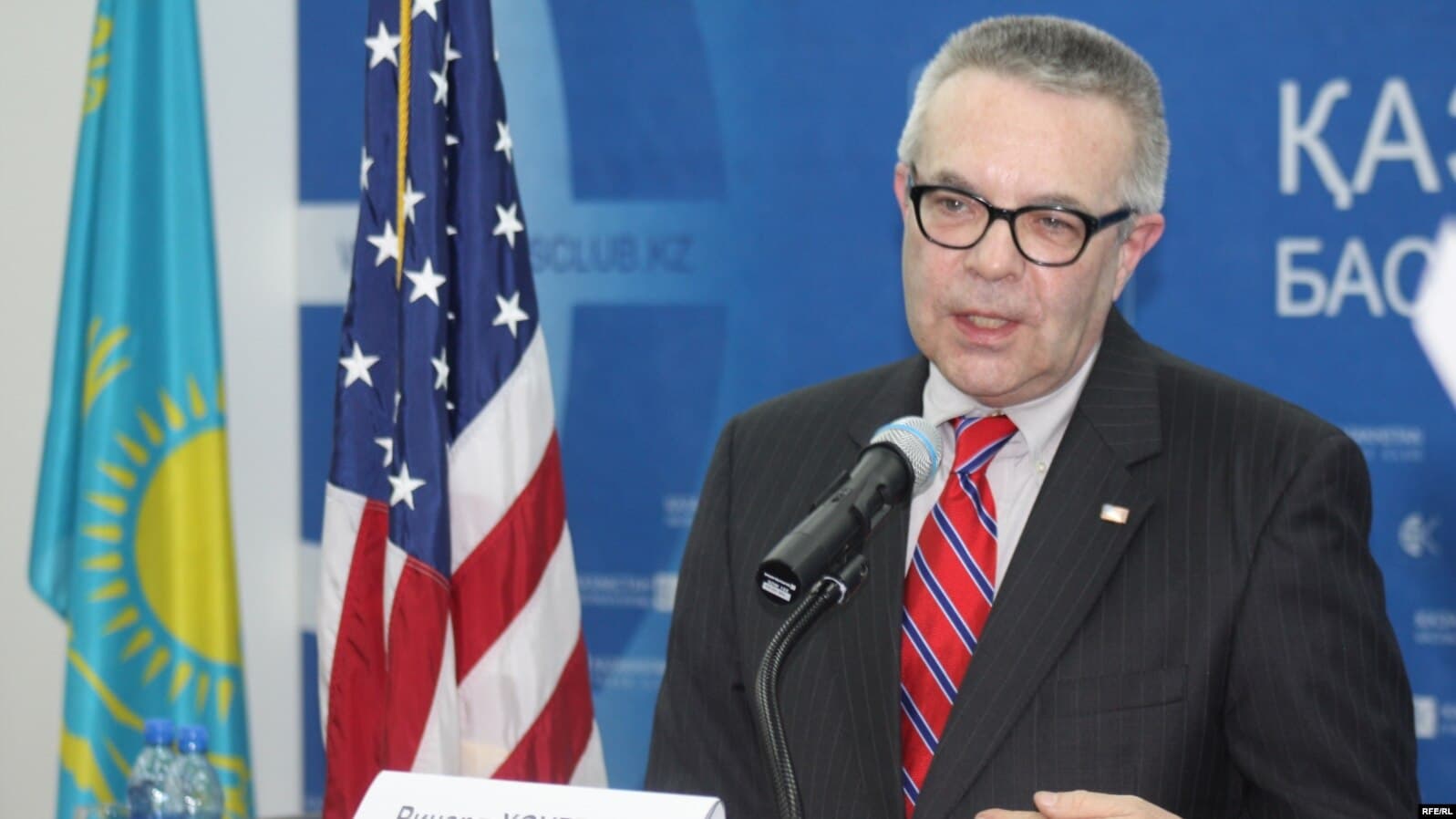 RFE/RL
Originally Posted in CAMCA Talking Magazine, Issue 5 ©07/2026
PART I: AN UNLIKELY BEGINNING
Q: Before you were a diplomat, you were a teacher of English in Zaire and a professor of African literature - about as far from the Foreign Service as a career can start. What carried you from a literature classroom into diplomacy, and looking back, what did those years of teaching and listening to other people's stories give you that a more conventional path into the State Department would not have?
A: I grew up intrigued by the idea of living and working in a foreign country. At the earliest age, I was entranced by missionaries working in Africa who would return home “on furlough” and, usually at Sunday evening services, show slides (and attempt to raise money) at our First Missionary Church in Fort Wayne, Indiana. Also, some of my own 19th-centruy relatives had been pioneer missionaries in West Africa, and my maternal grandfather kept a few of their mementoes in a glass-doored bookcase in the parlor of his retirement farmhouse; to this very day, from his small collection, I have a 19th-century brass ankle bracelet from Nigeria.
When I returned from two years of teaching in the then-Zaire as a volunteer with the Mennonite Central Committee – the first year deep in the central jungle in the village of Wembo Nyama and the second year in Goma on the shore of Lake Kivu – I worked at Oberlin College for a few years and then moved to Charlottesville, Virginia, to attend grad school at the University of Virginia. After I earned an MA in English Language and Literature and an MFA in Fiction Writing, the chairman of the English Department pushed me to begin a PhD program, offering me full financial support. But I knew that I didn’t really want to be a professor, and I also knew it was more than high time to “grow up” and find a profession. I had a friend who had joined the Foreign Service, and that seemed like a good idea because it involved living and working overseas. And so I took the Foreign Service exam, passed it on the second try, and began my diplomatic career. I felt that I had finally grown up and become an adult, even though I was already 10 years older than many of my peers in that entry class.
PART II: WRITING THE ARCHITECTURE OF A NEW RELATIONSHIP
Q: In the two years after September 11, as Director of the Office of Caucasus and Central Asian Affairs, you wrote and negotiated four of the founding bilateral documents that would define how Washington engaged with the region for a generation. What did it mean to be drafting that architecture in real time, with no settled precedent to fall back on, at a moment when the entire relationship between the United States and Central Asia was being reinvented almost overnight?
A: The four agreements focused on gaining access of various types at airports, both civilian and military, in Central Asia for U.S. and NATO troops fighting the Taliban in Afghanistan. Writing the documents meant close collaboration with the Department of Defense and the National Security Council and working closely with the relevant Central Asian embassies in Washington. At that time, it simply seemed to me like one more assignment to fulfil accurately: I put my head down and got to work.
Once we had draft agreements that had been cleared by the relevant U.S. departments and agencies and provisionally OKed by the relevant embassies in Washington, I then flew to the capitals in Central Asia to work with those governments to conclude and sign the final agreements. In a few cases, that meant flying on U.S. military aircraft, because some international routes for public airlines were still shut down out of an abundance of caution after 9/11.
In the end, we had agreements with three countries for U.S. basing rights: Kyrgyzstan, Tajikistan, and Uzbekistan. When it came to the final decision, U.S. Secretary of Defense Donald Rumsfeld reportedly picked up the decision document folder out of his inbox and said, without input from his top aides, “What? Three bases? Why three? I think we need only two! Let’s see. I choose Kyrgyzstan and Uzbekistan.” To its credit, the government of Tajikistan kept a stiff upper lip, even though they, too, had very much wanted to be part of this historic military response to international terrorism.
I’m sure you noticed that I said “three potential bases,” but what about the fourth country? That was “permanently neutral” Turkmenistan. That government, too, was eager to participate but insisted that its agreement had to remain secret. The fact is that U.S. and NATO troops and their supplies did, indeed, have landing and transit rights in Turkmenistan but not an actual full-time base on the ground, as we had at Karshi Khanabad in Uzbekistan and at Manas in Kyrgyzstan. And the very small number of U.S. and NATO military personnel who were posted to Turkmenistan to assist the landing and transit of troops and supplies were not allowed to wear military uniforms; they had to be in civilian dress at all times, or else the West would have lost the landing and transit rights there for its troops and supplies.
Q: Very few American diplomats have returned to this region as many times, in as many roles, as you have - Tajikistan, Turkmenistan, Kazakhstan, and Pakistan, spanning a decade of consecutive postings. What does a diplomat see on a third or fourth tour in the same region that is invisible on the first, and how did that accumulated view change the advice you gave Washington over the years?
A: I think it’s important to note that all over the world people are fundamentally much the same; it’s governments that differ. The great majority of people are generally polite and want to be helpful with each other and even with strangers. However, over time, after multiple postings in the region, especially in Central Asia, subtle differences in how people think and make decisions became more apparent to me.
After wondering whether I was really observing this accurately and pondering why it might be true, I came to believe that it’s a question of the intellectual heritage of ethnic origin and, especially, of colonial tradition. In Central Asia, the former Soviet Socialist Republics became independent countries after about seven decades of Soviet rule and before that, up to two centuries of Tsarist rule. Also, layered into that, you need to recognize the influence of Turkic culture and, in the case of Tajikistan, Persian culture. This means that these governments and even business people in daily life subtly do not think and make decisions in the same way that we in the West do. That is because the Western intellectual and cultural tradition has grown out of the Renaissance, the Reformation, and, at least for the United States and the United Kingdom, the 18th-century English Enlightenment, whereas the Soviet-Tsarist culture skirts these historical cultural formulations and goes directly back to Byzantium and then even further back into the ancient Mediterranean world.
Once I came to understand this, my job was, in part, to try to help Washington understand how our counterparts in Central Asia made their decisions and to use that understanding to try to achieve bilateral agreements more smoothly and with background understandings and with words on paper that satisfied both sides earlier on in the process, rather than dragging out negotiations for weeks and weeks, and sometime months and even years.
PART III: DIPLOMACY IN FRAGILE MOMENTS
Q: You arrived in Tajikistan in 2003, six years after its civil war formally ended but while the country was still working through the slow, uneven process of post-conflict reconstruction, and you later served in Turkmenistan during a significant period of change in its national leadership. What does diplomacy actually look like inside a country that is still learning how to trust its own stability, and how did you calibrate what to say publicly versus what could only be said behind closed doors?
A: In those earlier years, almost all of a foreign diplomat’s work was conducted behind closed doors. Public diplomatic events, other than showing up on demand with all the other foreign diplomats when the head of state was conducting a public event, was somewhat unusual and fairly limited. In fact, I can tell you how cautious these countries were very soon after their independence about allowing foreign diplomats to appear, let alone to speak, in public.
I first arrived in Uzbekistan in 1993, literally just months after their unexpected independence. From day one, the foreign ministry made clear to me that I was not allowed to meet with any citizen of Uzbekistan, either in public or even in private, unless Uzbekistan’s “minder” who had been assigned to me was present – and, of course, that “minder” was from their intelligence service. As the U.S. embassy’s Public Affairs Officer, I was concerned that such a requirement might inhibit my work that focused on press and information as well as cultural and educational affairs. But it didn’t. And what’s more, over time, my “minder” increasingly relaxed and began asking me more and more questions about life and work in other countries beyond his own very narrow experience. I can’t say that we ever became good friends. But, in the end, he didn’t really limit the work I was assigned to accomplish that included getting to know key media people and, over time, helping to choose participants for the first-ever U.S.-Uzbekistan cultural and educational exchanges.
Q: Is there a specific moment from either posting - a conversation, a small gesture, an unscripted encounter - that told you more about where that country was truly headed than any classified cable could have?
A: If I had to pick one detail to answer this excellent but difficult question, I think it would be this. The original U.S. embassy in Dushanbe had formerly been a relatively small one-story residential villa in an older part of the city. In fact, it was so small that the U.S. government had to rent several other nearby villas to house various components of the embassy like USAID. Although the settings were lovely, all of this was a far cry from a “normal” U.S. embassy.
When the U.S. government began its post-9/11 program to build new, more highly secure embassies with high perimeter walls and limited access to local citizens in less-populated suburban settings, it chose essentially an unpopulated rural site outside Dushanbe’s city limits. But before that new embassy building was completed and our U.S. diplomats and Tajikistan local employees could move in, local developers and other investors had already designed and started to build a new suburban neighborhood around our new embassy compound, an entirely new neighborhood that in subsequent years expanded exponentially.
Here is one way to look at that interesting development. While local investors wagered that such a site would become an upscale neighborhood with good security, I think that additionally people were in a way eager to join the outside world beyond what they then saw as their relatively narrow and limited Soviet heritage. It was a way to take a concrete, even if tentative, step to join the outside world.
Another way to answer this intriguing question is to say that in my experience there never was that one clear moment when I could say, “Aha!” and everything became clearly focused. However, I was often intrigued by some of the cultural traditions in Central Asia as I came to understand what they were really about. Here is one key example. One of the stereotypes that I grew up with in mid-20th-century America about citizens of the Soviet Union is that they were heavy vodka drinkers, and to be blunt, that they were quite often drunk.
As an American diplomat, I was very frequently invited to presidential dinners in the countries where I was serving. And in those early days of their independence, the Soviet-era traditions still strongly prevailed. Official dinners in public always started with three consecutive toasts: the first one by the host to the honored guests, the second one quite often by the most senior guest to the gracious host, and then “the silent toast to those who are no longer with us,” where all stood for the toast and observed a moment of silence. And these toasts were always, always required to be “bottoms up.”
I remember clearly that one of the presidents from these two countries always insisted that I be seated within his line of sight, so that when he called for “bottoms up,” I, like all the others at the table, would be required to turn my shot glass upside down to prove that I had done “bottoms up” and not just sipped a bit. And then, more and more toasts would continue around the table.
I am convinced that the purpose of this tradition of multiple toasts was not just to get drunk. What it did was relax the atmosphere. During the ongoing toasts, those making the toast would become incrementally more frank to the extent of carefully criticizing the government and even the leader himself. And, at least in my experience, this was always tolerated. Why? “What starts in Stoli, stays in Stoli!”
PART IV: KAZAKHSTAN'S ARRIVAL ON THE WORLD STAGE
Q: Your posting as Ambassador to Kazakhstan, from 2008 to 2011, coincided with a period when the country was actively stepping into a larger international role. From your vantage point inside the embassy, what changed in how Kazakhstan carried itself on the world stage during those years, and how do you see that foundation continuing to shape the country's credibility today?
A: I believe it’s important to note the three significant decisions that President Nursultan Nazarbayev made at the very beginning of his presidency even before his nation started to rake in the vast income from international investment in its world-class hydrocarbon deposits.
First, Kazakhstan committed almost from the beginning to macro-economic reform away from the Soviet command-economy model so that its banking and other financial systems would be compatible with the world economy. The follow-up from that decision was so important and so effective that today Kazakhstan is now recognized as a rising middle-income nation in the world economy.
Second – and, in fact, this might be the most important of the early decisions Nazarbayev made – he said that if Kazakhstan were to be an independent nation that emerges successfully onto the world stage, it would need a new generation of leaders who think differently from their Soviet forbearers. Therefore, he created the Bolashak Program (bolashak means future in the Kazakh language) that sent young Kazakhstani citizens abroad to Europe, to the United States, and to Singapore for full university educations and, for some, even graduate degrees; and he established this far-sighted policy in the earliest days of his nation’s independence even before Kazakhstan started to rake in the wealth from its Caspian oil deposits. The result is that Kazakhstan now has a cohort of tens of thousands of alumni of the Bolashak Program, globalized (and often speaking English and other world languages) young leaders already in positions of authority and continuing to rise in both the public and private sectors.
Third, and of special importance to my nation and to the entire world, Kazakhstan is an exemplary nuclear non-proliferation partner of the United States and other leading nations. At its independence, Kazakhstan found itself with the fourth-largest nuclear arsenal in the world, but President Nazarbayev committed to total denuclearization, in part because of the devastation that Soviet-era nuclear testing had inflicted on the land and population around Semipalatinsk in northeastern Kazakhstan. The quiet but highly-effective decade-long U.S.-Kazakhstan effort to clean up the BN-350 nuclear fast-breeder reactor site at Aktau on the shore of the Caspian Sea reached a significant milestone in November 2010 when Kazakhstan secured and locked down, under International Atomic Energy Agency safeguards at Baikal-1, near Semipalatinsk, 3,000 kg of weapons-grade plutonium and 10,000 kg of highly enriched uranium, enough to have made well over 700 nuclear weapons had it fallen into the wrong hands.
Looking in retrospect at my entire diplomatic career, I believe that formal lock-down day was the high point of my entire career. Along with just a few other key, international officials, we flew in a Soviet-Era helicopter to Semipalatinsk where, because the United States had played such an essential role in this historic project, I gave remarks on behalf of my nation’s president. Not only that, but in the subsequent hands-on ceremony I was allowed to take a symbolic lock-down turn of the wrench on one of the storage silos designed to remain secure for at least a century.
PART V: PEACEMAKING AT THE EDGES
Q: In 2016, you served as the senior American liaison to a Russian military reconciliation effort in Latakia, Syria - a role that placed you inside a highly unusual channel of U.S.-Russia engagement at a moment of deep mutual mistrust. What did that experience teach you about the difference between formal diplomacy and the kind of direct, practical coordination that has to happen even between adversaries?
A: I would say, looking at this experience in retrospect, that it made clear to me, like little else in my past experience at that time, that even nations with difficult bilateral relations can carve out very specific and mutually beneficial relations that lead to specific actions and even sometimes mutually acceptable solutions. The actual purpose of my daily telephone call with the Russian military commander based at Latikia in Syria was purportedly so that we could tell each other the positions and pending military activities of our troops in the region in order to avoid any unexpected U.S.-Russian military confrontations, even unintended and accidental, that might lead not only to a publicized international incident but also to loss of human life. I think this project, the daily telephone call, was reasonably successful.
There are two things that I especially remember from this experience. One was that we both – my Russian colleague and I – occasionally chuckled and noted how many other nations’ intelligence services were almost certainly covertly tapping into our calls on the open lines that we used. And, two, I recalled telling journalists facetiously when they asked me what we were doing on such calls, “We tell each other lies and pretend to believe each other’s lies.” Of course, that wasn’t usually true, but it was a way both to break the ice and to slightly divert questions that shouldn’t have been answered in detail.
Q: A year later, you served as interim U.S. co-chair of the OSCE Minsk Group, coordinating international peace-making efforts on Nagorno-Karabakh. Mediation on a conflict of that history and sensitivity asks a great deal of a diplomat's patience and restraint. What did that experience teach you about what outside mediators can realistically offer a conflict that ultimately only the parties themselves can resolve?
A: When I was tapped to be the interim U.S. Co-Chair of the OSCE’s Minsk Group for Nagorno-Karabakh for nine months in 2017, I had little knowledge of that particular historic issue between Azerbaijan and Armenia. And further, I have to admit that I hesitated a bit when asked to take on this assignment because in 2006, when I was coming to the end of my tour as U.S. Ambassador to Tajikistan, I had been nominated as U.S. Ambassador to Armenia. That nomination was placed on permanent hold by a certain member of the Senate Foreign relations Committee who had reportedly accepted a six-figure “gift” from a certain Armenian diaspora organization active in the United States and especially on Capitol Hill because during my confirmation hearing in the Senate I had not used the word genocide to describe the horrendous atrocities against the Armenian people in 1915. (Ironically, that former senator is now in prison for corruption that occurred after my own personal experience with his willingness to be paid under the table.) During my Senate Foreign Relations Committee hearing to be ambassador to Armenia, I elaborated in great detail what had happened back in 1915 but was careful not to use the word genocide precisely because it was U.S. policy at that time to avoid disrupting the U.S.-Türkiye relationship.
However, always eager to experience something new, I did indeed accept that assignment for nine months in 2017 as the interim U.S. Co-Chair of the Minsk Group. And almost from the beginning, I found it not only fascinating but also enjoyed tremendously working with my small group of peer colleagues, the other two Co-Chairs, Russian and French ambassadors, and the Minsk Group Chairman, the distinguished Polish diplomat, Ambassador Andrzej Kasprzyk. Not only did I have superb colleagues, but we were also allowed – required! – to travel into Nagorno-Karabakh itself, from which most foreign visitors, and certainly U.S. government officials, were banned, and meet with the Armenian leaders of their so-called Republic of Artsakh on the sovereign territory of Azerbaijan.
My Minsk Group colleagues and I were eager to try to devise new methods of reconciling the opposing forces in this issue – the governments in Baku and Yerevan. But after only several trips to the region and extensive meetings with officials from all sides, I remember stepping aside with Ambassador Kasprzyk after one of our superb restaurant meals with world-class wine (he liked only the best in life) and tentatively telling him that I was beginning to think the Nagorno-Karabakh issue could never be resolved peacefully because both sides were so deeply dug into their own views. Andrzej just slightly smiled and said, “Yes, of course, it will only be solved by war. But this is our internationally assigned job, and so we do it.” And, indeed, it was only a few years later that Azerbaijan militarily reclaimed its territory from Armenia’s historic occupation of it.
PART VI: THE CASE FOR A CONNECTED REGION
Q: You have publicly argued that U.S. policy should stop treating Central Asia and the Caucasus as separate files, and instead recognize them as one connected region - a case that will sound very familiar to readers of this magazine. What is it, from your vantage point across four decades and two sides of that supposed divide, that Washington still fails to see when it draws that line on the map?
A: In my view, the problem is not so much that State Department and other U.S. government departments and agencies involved in foreign affairs don’t see the commonalities linking the Central Asia and South Caucasus nations. It’s simply a bureaucratic issue. There was a time when the State Department had a Caucasus and Central Asia Office, and, in fact, I was once the director of that office. But then, in a subsequent administration, a senior official decided to break up the Near East and South Asia Bureau. But wait: a South Asia Bureau would be too small, so let’s add Central Asia to it, OK? And now, with the State Department being drastically changed by the current presidential administration, there’s a new office of Russia and the South Caucasus; whether that makes any current logical policy sense doesn’t seem to matter. In the end, what really matters is how the United States sets its policy and conducts its diplomacy, both in the individual countries of the Caspian Region – meaning the eight independent nations of both Central Asia and the South Caucasus – and in the region as a whole. What role does Washington see Russia and China playing in the region and, quite frankly, what role does it see for itself? In my humble opinion, those are fundamental policy questions that the current White House still needs to answer. And the answer certainly won’t come from jiggling around a few offices in the bureaucracy.
Q: A final, personal question: across a career spent returning again and again to this part of the world, is there one conviction about Central Asia and the Caucasus - about their people, their potential, or their place in the world - that has only grown stronger with time, and that you would most want the next generation of diplomats and regional leaders to carry forward?
A: I think there might be two ways to try to answer this question. The first is that I would urge our diplomats to remember that these countries have been independent and sovereign nations for only three and a half decades. Considering the entire arc of history, that’s hardly the blink of an eye. But to balance that, it’s likewise important to remember that each of these countries has centuries and centuries of their own cultural and intellectual heritage. Much of their first generation of leadership necessarily looked inward, working to define who they were as a nation in the contemporary world, what it meant to be truly independent and to be required to make one’s own decisions without bowing and scraping to a foreign leadership a thousand miles away.
That first generation of leadership looked inward to define what it meant to be a new nation and to decide how to set a path to the future. What is essentially now the second generation of leadership can build on that foundation created in the very recent past but can also, now that they have that solid foundation, look outward, first and foremost to their immediate neighbors, and work together with them to create mutually beneficial ways to move forward on the world stage as a region. My own view is that I would hope that this current generation of leadership is ready to find concrete ways to build on, at first, the C5 concept and establish an organization, as the Southeast Asian nations did when they created ASEAN, that presents a common face on the world stage for Central Asia and the South Caucasus. Of course, this international organization’s member states would maintain their own individual independence even while making policies to benefit the entire group.
My second way to answer this question would be to give a bit of advice, if I may, to our American diplomats about how to do their jobs when they are assigned to our embassies in the region. I have always believed that diplomacy is not so much intellectual concepts formulated into talking points printed on paper as it is simply building personal relationships. You are not doing your job well as a diplomat if you think that all it entails is reading your talking points to a foreign counterpart, shaking hands, and then racing back to your embassy to hang out with colleague friends at the Americal Club bar. No! I firmly believe that true diplomacy is achieved by building human relationships at the highest possible level, meaning taking time to build a relationship of trust with someone respectable and socially responsible, a high-level insider who has the ear of and is trusted by that nation’s leader. You don’t have to become best friends, but you do most certainly need to spend time with that person, frequent one-on-one lunches or dinners with, when appropriate, enough alcohol to loosen the lips. During such meetings, I often practiced something I called “give a little to get a lot.” What that means is pass along a bit of our own classified information because that almost always surprises your interlocutor and releases a flow of sensitive information back at you. After all, that’s one of the key parts of our diplomats’ jobs: to report back to their own government as accurately and in as much detail as possible what is really going on behind the scenes in the host country’s government.
DOC: CAMCA Talking Interview from Issue #5 - 2026