Special Commentary on the Caspian Business Forum: How Can the U.S. and Caspian Region Advance Business and Investment?


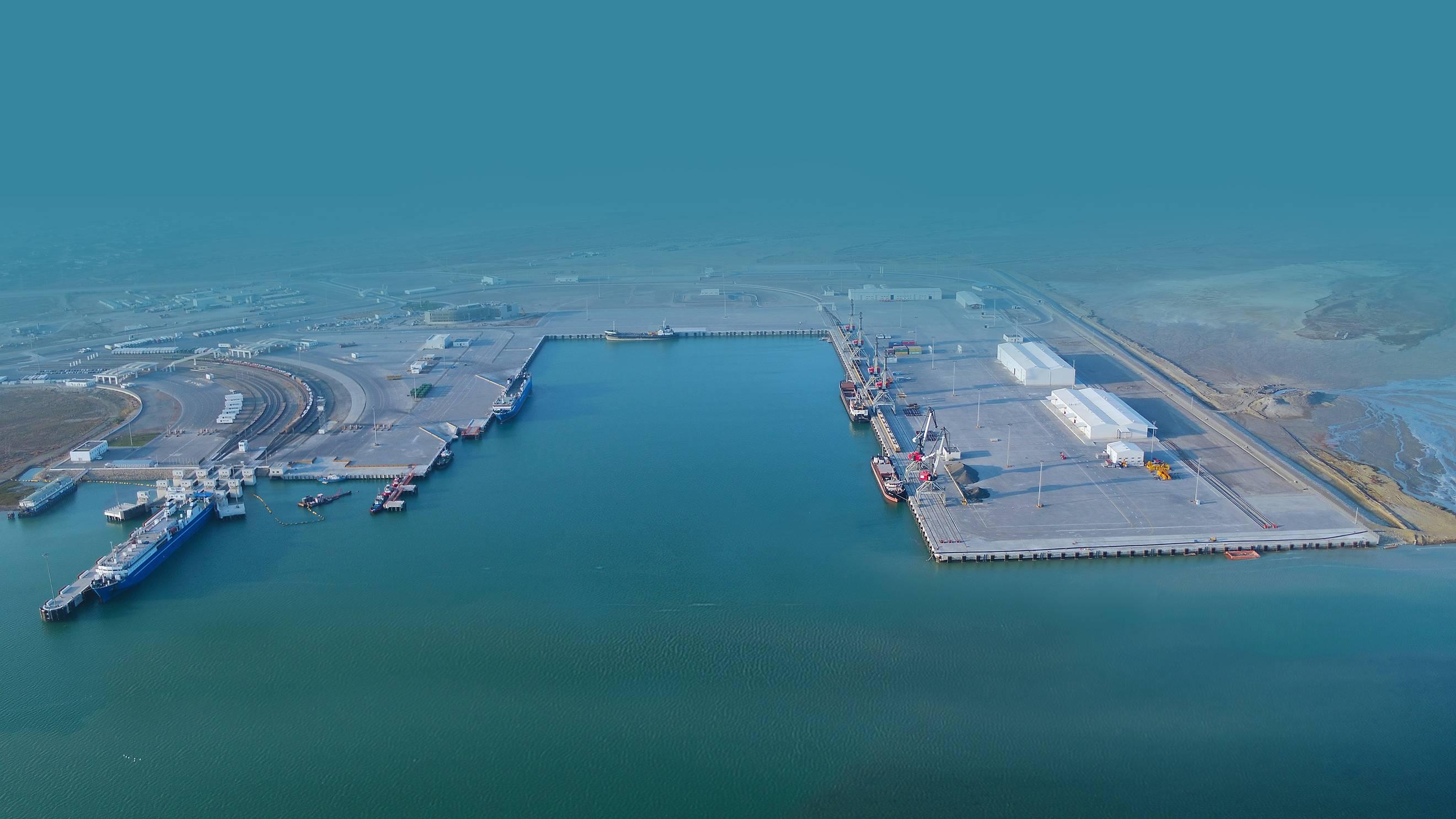
The cover picture was taken by SJ Martinez and features the following people seated at the table, from left to right: H.E. Yerzhan Kazykhanov (Ambassador of Kazakhstan to the U.S.), H.E. Elmar Mammadyarov, Foreign Minister of Azerbaijan, Efgan Nifti (Executive Director, Caspian Policy Center), Ambassador Alice Wells (Principal Deputy Assistant Secretary, Bureau of South and Central Asian Affairs, U.S. Department of State), Yashar Aliyev (Permanent Representative of Azerbaijan to the United Nations), and H.E. Elin Suleymanov (Ambassador of Azerbaijan to the U.S.). Business and government leaders met in the Caspian Policy Center’s Business Forum in New York to discuss trade and investment opportunities in light of the growing connectivity within the region and other parts of the world. Noting the progress that has been made to date, especially in the energy, transport, and communications sectors, business people and other leading figures from the Central Asia, the South Caucasus, and the United States (U.S.) looked at how all sides can be more successful and effective. The region, home to over 110 million people, already sees multi-billion-dollar projects and investments. Azerbaijan’s Foreign Minister pointed to the $40 billion Southern Gas Corridor project bringing needed natural gas from the Caspian to Europe. Kazakhstan’s Ambassador stated that there has been $42 billion in U.S. investment in his country, with over 500 U.S. firms operating there. Other participants pointed to sales of Boeing aircraft and high-tech products, as well as to the sizable interest and activity by American small and medium-sized companies. The growing connection among the Caspian basin countries, including construction of new rail, ports, and road links, was highlighted as especially important—strategically as well as commercially. New surface connections through Kazakhstan and Turkmenistan, and on to Azerbaijan and Georgia with Western Europe, drastically cut the time to ship goods to or from China. North/South connections are growing as well as those associated with the New Silk Road or China’s One Belt One Road Initiative. The U.S. State Department’s Ambassador Alice Wells stressed the value the United States places on the New Silk Road effort, on the importance of goods moving efficiently and freely across these new routes, and U.S. commitment to strengthening connectivity in the region. Afghanistan’s Deputy Foreign Minister amplified the point noting that with this new connectivity, Afghanistan now sees its geographic position in the heart of Asia as an advantage. Business and government figures flagged a number of steps that are important for the region’s further growth and prosperity. Azerbaijani, Georgian, and Kazakh government speakers all cited the reform and other market-opening programs underway in their countries. Private sector representatives stressed what particular steps governments and domestic companies in the region should take. These steps include ensuring good governance, fighting the Soviet era legacy of corruption, boosting transparency and predictably, continuing to strengthen human capital, and developing increased on-going communication between governments and companies/business groups. Such communication channels with the private sector can provide real-time input on the situation within a country, on steps to boost economic growth and prosperity, and on technological developments. In an age when technologies and applications in the communications (life and computer sciences sectors and other areas) are rapidly developing, such communication can be especially important. This level of communication is important too as countries in the region develop and need to protect critical infrastructure systems such as electrical grids, information technology networks, and the new surface transport systems. While governments throughout the region seek foreign investment and other commercial activity, private sector panelists said they must also be strategic. They must recognize the global competition for capital; through cooperating with each other, as they have been with energy and surface transport projects, they can make themselves more attractive to foreign companies. An especially important point made is that hundreds (and perhaps thousands) of small and medium-sized American companies want to do business with the region. These companies frequently have cutting-edge technologies or the solutions necessary for particular situations. While OPIC, embassies, large firms, and other U.S. government agencies continue to help, it is critical, as one panelist noted, that potential partners in the region communicate effectively with potential American partners. As one speaker put it, sometimes all it takes is to “pick up the phone.” Photos by SJ Martinez [caption id="attachment_7220" align="alignnone" width="1024"] H.E. Vakhtang Makharoblishvili (Deputy Foreign Minister of Georgia), H.E. Adela Raz (Deputy Foreign Minister for Economic Affairs of Afghanistan), George Kent (Deputy Assistant Secretary, Bureau of European and Eurasian Affairs, U.S. Department of State), Samir Kerimli (CEO, SOCAR Capital), H.E. Robert Scher (Head of International Affairs, BP), and Ambassador (Ret.) Robert F Cekuta (Advisory Board Member, Caspian Policy Center).[/caption] [caption id="attachment_7221" align="alignnone" width="1024"]
 H.E. Elin Suleymanov (Ambassador of Azerbaijan to the U.S.)[/caption] [caption id="attachment_7222" align="alignnone" width="1024"]
 H.E. Elin Suleymanov (Ambassador of Azerbaijan to the U.S.), George Kent (Deputy Assistant Secretary, Bureau of European and Eurasian Affairs, U.S. Department of State), H.E. Adela Raz (Deputy Foreign Minister for Economic Affairs of Afghanistan), H.E. Elmar Mammadyarov (Foreign Minister of Azerbaijan), H.E. Vakhtang Makharoblishvili (Deputy Foreign Minister of Georgia), H.E. Yerzhan Kazykhanov (Ambassador of Kazakhstan to the U.S.), Efgan Nifti (Executive Director, Caspian Policy Center), and Gary Litman (Vice President of Global Initiatives, U.S. Chamber of Commerce).[/caption] [caption id="attachment_7223" align="alignnone" width="1024"]
 Murad Heydarov (Advisor to SOCAR President, SOCAR), Ambassador (Ret.) Robert F Cekuta (Advisory Board Member, Caspian Policy Center), Giorgi Tskolia (Deputy Chief of Mission, Georgia), Bronson Picket (CBO, OBIE Technologies), H.E. Robert Scher (Head of International Affairs, BP), and Luke Coffey (Advisory Board Member, Caspian Policy Center).[/caption] [caption id="attachment_7224" align="alignnone" width="1024"]
 H.E. Erzhan Kazykhanov (Ambassador of Kazakhstan to the U.S.) and Ambassador Alice Wells (Principal Deputy Assistant Secretary, Bureau of South and Central Asian Affairs, U.S. Department of State).[/caption]