Trans-Caspian Fiber Optic Cable — Unpacked
Recent Articles
Author: Dr. Akbota Karibayeva Meyer
10/06/2026
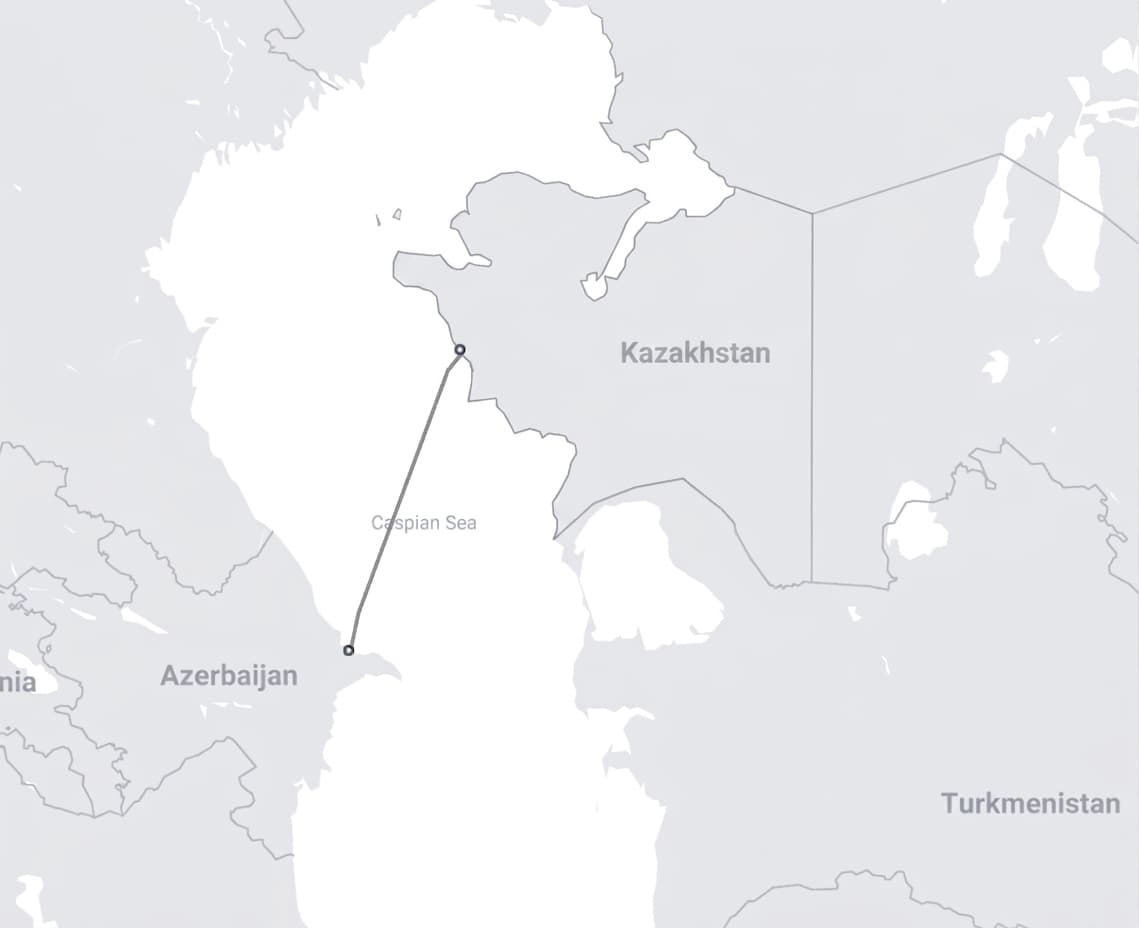
The Trans-Caspian Fiber-Optic Cable, which will finally loosen Russia's grip on Central Asia's internet, cleared its most difficult stage in August with the completion of the undersea portion between Azerbaijan and Kazakhstan. Work now turns to coastal integration and the terrestrial network, with commercial service targeted for the end of 2026. The completed crossing marks a milestone for both regional connectivity and strategic realignment – away from Russia.
The headline benefit is relief from a near-total dependence on Russia for internet connectivity. Today, about 95% of Kazakhstan's outbound traffic passes through 17 cross-border fiber links to Russia. For comparison, Kazakhstan holds only two fiber links to China and six to its Central Asian neighbors — whose traffic in turn must follow the same path through Kazakhstan to Russia.
That concentration carries substantial leverage. Russian law obliges every internet provider to install FSB-operated interception equipment known as SORM (System for Operative Investigative Activities), which gives the security services direct access to traffic on domestic networks without a provider ever seeing a warrant. Encryption protects the contents of a message, but its metadata can still reveal who communicates with whom, when, and at what volume — enough to map a network. In the same way, the rhythm of data moving to and from a country's AI clusters can betray the specs of its capabilities. For the AI ambitions every Central Asian government now actively pursues, a backbone running through territory most of the West treats as adversarial is a foundational vulnerability.
The Trans-Caspian cable directly addresses that vulnerability, giving the region a Europe-bound route that fully bypasses Russia — coming ashore in Azerbaijan and running on through Georgia, across the Black Sea, to Bulgaria. The cable runs roughly 380 kilometers from Aktau to Sumgait as a joint venture between Kazakhtelecom and AzerTelecom International, carrying over 400 Tbps design capacity at 3.7-millisecond latency.
The value of this project lies in redundancy and diversity: a second independent path means a disruption on one route need not take the entire region offline. That risk stopped being hypothetical after Russia's 2022 invasion of Ukraine, when major Western backbone carriers severed or curtailed their Russian connections within weeks, leaving any route that leaned on Russian networks both less reliable and reputationally hazardous for Western-facing customers. Although allocation decisions are yet to determine how much traffic will be rerouted through the Trans-Caspian, its capacity offers the option to absorb Central Asia's international demand many times over. For a region that has spent three decades reaching Europe through Russia, the digital corridor restores choices and control over how its traffic moves.
The geopolitical picture, though, is more layered and geopolitically complex. While the traffic layer avoids Chinese territory, the cable itself is manufactured and laid by HMN Technologies Co. (formerly Huawei Marine Networks), majority-acquired by China's Hengtong Group in 2020. HMN was placed on the U.S. Entity List in December 2021 for seeking U.S.-origin items in support of Chinese military modernization. It spans more than 90 international cable projects and operates as both a commercial firm and an arm of Chinese state strategy, central to Beijing's Digital Silk Road. The corridor thus trades reduced Russian leverage for a measure of Chinese vendor exposure at the hardware layer.
The market context helps explain the choice of contractor. Subsea cables come from a very small field: four firms account for roughly 98% of the world's cables, namely SubCom in the United States, Alcatel Submarine Networks in France, Nippon Electric Company (NEC) in Japan, and HMN in China. All four now face unprecedented demand due to the AI buildout, with hyperscalers booking the limited pool of cable-laying vessels and production lines years ahead. By the operators' account, they ran an open tender and approached the Western suppliers. But the Caspian crossing was a logistically and geopolitically challenging job, yet small in contract value. So it had little chance of jumping the queue ahead of larger, more lucrative projects. That left HMN as the only vendor prepared to build it. Underwritten by Chinese state financing, HMN tends to come in cheaper and faster on small- and mid-size regional links.
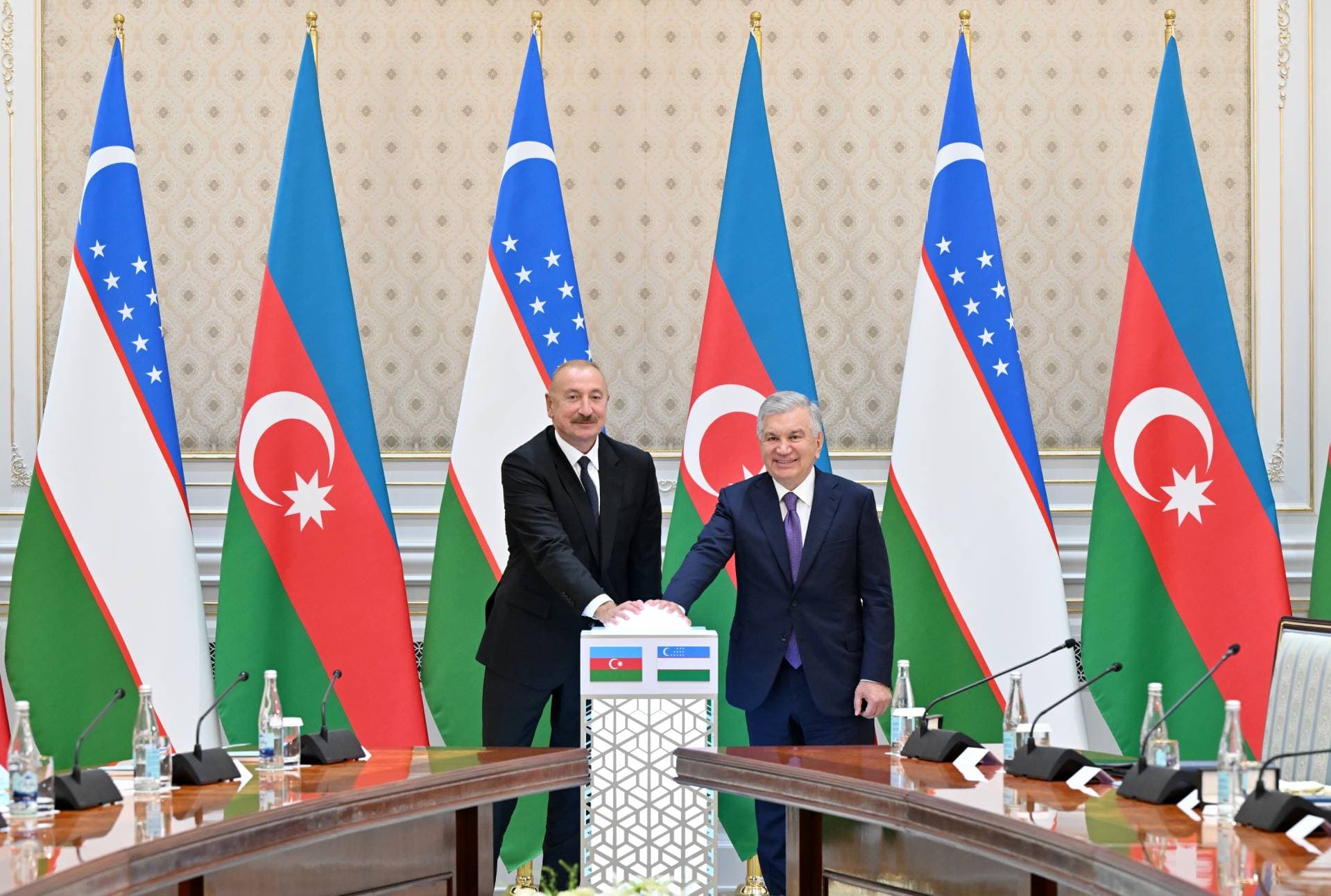
Even so, several factors keep that exposure under constraint. The cable is owned through a 50-50 joint venture, CaspiLink, by Kazakhstan's national operator Kazakhtelecom and Azerbaijan's AzerTelecom International, a privately held company within NEQSOL Holding. U.S.-based Pioneer Consulting has supervised the project since its early design stage, weaving Western-aligned oversight into the build.
Additionally, the cable is designed to carry no submarine repeaters, the powered electronics that would normally rest on the seabed. In their absence, only passive optical fiber runs along the seabed, while components that light and manage the cable stay onshore under the owners' control. The fiber itself is Japanese, cabled in China, and the terminal equipment comes from Western suppliers. Operation and maintenance will rest with Kazakhtelecom and AzerTelecom International, and the operators say HMN retains no access once the cable is installed.
On balance the project still nets extremely positive, a watershed moment for the region. Diversity and redundancy are goods in themselves. A region with more than one way out is harder to coerce and easier to keep online when something breaks. The operators expect testing to begin in October and commercial service in early November. Once operational, the Trans-Caspian cable will loosen Russia's grip on the region's digital connectivity and end its near-full dependence on a single route. The Chinese vendor threaded through the hardware is the price of having the cable at all. For Washington, less Russian control over Central Asian internet is genuinely good news.