President Trump’s Decision to End Iranian Oil Sanctions Waivers for the Remaining Five


Author: None None
04/26/2019 · 6 min read
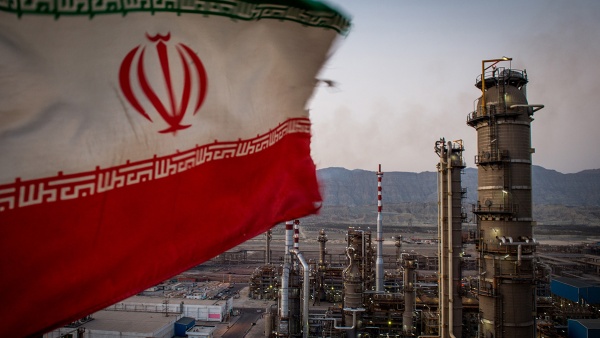
The Trump administration has again amped up the political and economic pressure on Iran in an effort to see to the country’s government change its policies. Just two weeks after President Donald Trump designated Iran’s Islamic Revolutionary Guard Corps as a terrorist organization, the White House announced that the sanctions waivers — the Significant Reduction Exceptions or SREs — provided to eight buyers of Iranian oil would expire on May 2. The reported rumors over potential extensions were therefore rendered moot and a focus was put on the reactions of the remaining five countries that would potentially be affected: China, India, Japan, South Korea, and Turkey. Following the White House decision, the price of global benchmark Brent crude hit $75.60 — the highest in six months; West Texas Intermediate hit a 2019 high at $66.60. As of April 25, the upward trend had begun to weaken. Iranian Oil Minister Bijan Zanganeh delivered his response to the announcement April 23. Zanganeh was quoted by the Islamic Republic News Agency during a parliamentary session as saying, “America has made a mistake by politicizing oil and using it as a weapon in the fragile state of the market.” China Will Likely Continue to Buy The U.S. decision has been made at a questionable time for Beijing, given the Administration’s goal of signing an enforceable trade liberalization deal with China in the near future. China’s government continues to oppose U.S. unilateral sanctions, and a Chinese Foreign Ministry spokesman said Washington’s decision “will contribute to volatility in the Middle East and in the international energy market.” China also remains a party to the JCPOA. Although Secretary of State Pompeo has said that the U.S. is “going to go to zero [Iranian oil exports] across the board,” Chinese imports will not actually reach zero. In fact, China has been increasing its purchases in 2019. Although finalizing a U.S.-trade agreement is a top concern for China, Iran currently exports approximately 500,000 bpd to its long-time customer — making a cut to zero bpd nearly infeasible, and leaving the United States in a sticky situation come May 2. Washington’s hand could find itself forced to carry through on threats to impose sanctions on some Chinese financial institutions — one of which could be the country’s Central Bank, the People’s Bank of China — and risk negative impacts on the global economy — as well as another bilateral dispute further complicating an already difficult relationship. The Impact on the Remaining Four India currently relies on Iran as its main supplier of oil, importing 23.5 million tonnes in 2018-2019 from the country. Though it would seem that India would be severely hit by the U.S. decision, Indian Minister of Petroleum Dharmendra Pradhan signaled New Delhi may have a plan to replace the lost Iranian oil. On April 23, he tweeted, “There will be additional supplies from other major oil producing countries.” Indeed, the White House Press Secretary said on April 22 that the Trump administration noted that the United States, together with Saudi Arabia and the United Arab Emirates, would ensure “global oil markets remain adequately supplied.” Additionally, Saudi oil minister Khalid al-Falih said that the kingdom will coordinate with other producers “to ensure the availability of enough oil” and that “global oil markets are not knocked off balance.” Market analysts, however, have questioned these assertions, especially in light of the uncertainty of Libya’s production levels and the continued drop in Venezuela’s output, due in both cases to on-going disorder and conflict in those countries. The impacts on Japan, South Korea, and Turkey of the end of SREs are also the focus of considerable discussion and speculation. Japanese officials state they expect a minuscule impact from the sanctions; Minister of Economy, Trade and Industry Hiroshige Seko told the press that Iran accounts for less than 3 percent of Japan’s total crude oil imports, down from 5 percent, and that there will be limited impact on gasoline and other energy supplies in Japan. The end of SREs could complicate dealings with another critical partner in negotiations with Pyongyang: South Korea. Seoul is currently making one last appeal for an extension. While not rejecting the White House decision, the ROK Foreign Ministry has noted that South Korea is one of the United States’ closest allies in the Asia-Pacific, and would “use the remaining days until [the sanctions waiver expiry deadline on] May 2 to step up its diplomatic efforts to persuade the U.S. to extend the waiver.” South Korea had halted all oil imports from Iran for four months, but then resumed purchases in January — after an unexpected resurgence in Iranian oil sales helped push spot prices for Middle East crude and condensate to their lowest cost in more than a year. Also making a last-minute effort is Turkey. The New York Times quoted Ibrahim Kalin, a senior adviser to Turkish President Recep Tayyip Erdogan, as saying Turkey has asked for a continued waiver for oil purchases, citing Turkey’s “long border” and “cultural ties” with Iran. Turkey’s Foreign Minister Mevlut Cavusoglu has dismissed the U.S. move outright, saying on Twitter that “Turkey rejects unilateral sanctions and impositions on how to conduct relations with neighbors.” The SRE question could become another in a list of difficult issues complicating relations between the two NATO allies. What happens now? Investment Director at AJ Bell Russ Mould has suggested that the penalties could be quite harsh for those that choose to not abide by the upcoming sanctions. “[This scenario] could damage their trade flows, ability to access global financial markets, and ultimately their currencies and economies.” At the same time, Iran has a long record of finding ways to circumvent sanctions and monitoring — e.g. so-called “ghost ships” and turning off the transponders in their tankers — as well as a habit of discounting to encourage sales. Saudi Arabia may well increase its oil production. Saudi officials made clear their openness to the idea, but while noting it would do so only after they have had time to assess the oil market impacts of the new U.S. sanctions policy, rather than before. This may be due to a desire to maximize profits and manage price levels, or to Saudi Arabia feeling blindsided by U.S. issuance of waivers last year. However, oil markets will likely remain anxious. Iranian oil expert and president of SVB Energy International has said that the Saudis, OPEC, and Russia could cover for Iranian oil, but the market will be really tight, and prices may very well increase significantly — as there will not be much spare capacity left in the market for any potential additional supply interruption. Will this end? President Trump has made no secret of his dislike of the Iranian nuclear deal and determination to force changes in Iranian policies towards others in the Middle East and its support of terrorism. The resumption of sanctions, the “maximum pressure campaign,” and the jawboning of various governments are signals of the desire to hamstring the Iranian government to affect Tehran’s actions and policies beyond those covered in the JCPOA. Secretary Pompeo has previously noted that Iran has earned about $50 billion annually from oil sales, which accounts for as much as 40 percent of its government revenues. The current U.S. administration hopes to bring Iran into an agreement that would end Iran’s ballistic missile program, support for terrorism, and other such policies in addition to ending its nuclear weapons program. The United States will likely continue to impose heavy sanctions against Iran and press governments, including those throughout the Greater Caspian Region, to minimize absolutely, if not end, economic or other relations that help Iran’s government or economy.