Caspian Energy Insight: September 7, 2017
Recent Articles


Author: Caspian Policy Center
09/07/2017 · 5 min read
Oil
Traders have been curious about the results of Hurricane Harvey on oil prices since the hurricane hit gulf has been one of the major areas of extraction for oil as well as a major area for US refineries. While consumption for US crude declined since several refineries were closed down due to the hurricane, the hedge funds are expecting price increases for both refined products and crude oil due to the hurricane. The concerns for supply pushed the prices slightly higher for crude oil. Brent price went above $53 for the first time since May 2017. Due to the devastating hurricane in Mexican Gulf this past weekend, world oil prices were also affected because of the uncertainty regarding the damage the hurricane did. With the hurricane shutting down several refineries, American crude might be heading towards East Asian customers. Some of the refineries in Texas are back on track but with a smaller capacity. Therefore, the excess crude will head elsewhere, whereas European petrochemicals and gasoline are heading towards the American market in order to balance the need.
Russia and PIipeline Politics
Vladimir Putin paid a visit to Budapest within the last week of August and the two countries discussed energy deals during the meeting. Hungary is extremely willing to be a part of Turkish Stream pipeline’s northern expansion route and replace its transit with Ukraine. In addition to the pipeline agreement, Russia will also upgrade the existing Paks Nuclear Power Plant in Hungary. With the incoming pipelines from both Russia and Azerbaijan, Balkans will be a rising energy corridor for Eurasian gas sources. However, this will also increase several countries’ dependence on Russian natural gas. Recently, Victor Orban, the leader of Hungary is at the spotlight with his change in views regarding energy deals with the Russians. Analysts remind the fact that Orban was against any new energy deals with Russia and was vocal about European energy import diversification. Yet, now the Hungarian PM is extremely eager in cutting deals with Russia both on natural gas and nuclear plants. While cutting those deals, Orban also joined ex-German PM Gerhardt Schroder, who was recently appointed a non-executive director of Rosneft. With Russia changing the hearts and minds of current and past European leaders, European energy supply diversification will not be resolved in the near future. Unfortunately, the one European leader, Angela Merkel, who is perceived as the go-to person for leading the Western world at a time of leadership crisis, is not very keen on changing the current outlook.
Turkey, Azerbaijan & TANAP
There are several international banks financing TANAP and last week EBRD concluded its final review to allocate $500M for the pipeline. The project will cost around $8.6 when it is completed and Azerbaijan has been receiving support from infrastructure banks within the past few years. Azerbaijan continues to increase its share in Turkish natural gas market. In recent years, Turkey committed itself to diversify its natural gas sources, especially following the jet crisis with Russia in November 2015. At the height of the crisis, Turkey was vulnerable to any potential supply disruption in winter months. Since then, Turkey has better relations with Russia, yet, the need for import diversification is still there. Towards that end, within the first half of the year, Turkey increased its natural gas imports from Azerbaijan, with Azerbaijan having a 16 percent share in Turkish natural gas market. Especially with TANAP commissioning, the share of Azerbaijani gas in Turkey will continue to increase in the upcoming years. Meanwhile, like TANAP does for social responsibility projects in Turkey, TAP is also engaging with the communities on its way. Recently, TAP delivered support to Albanian authorities with firefighting equipment. The company and the Albanian government are hoping that the aid will be helpful especially in summer time fires. Along with fulfilling its duties to the communities on the path of its pipelines, Azerbaijan is also taking part in decreasing its oil production in accordance with the agreement with OPEC, to cut down world oil supply. The Caspian country cut its production levels by 35K bpd, the agreed amount. The OPEC countries decided to cut daily output by 1.2M bpd in total during their annual meeting in November 2016 while non-OPEC ones decided to cut down an additional 558K bpd. Azerbaijan is taking part in supporting the oil market in the world by cutting its fair share of production.
Baku-Tbilisi-Ceyhan Railway
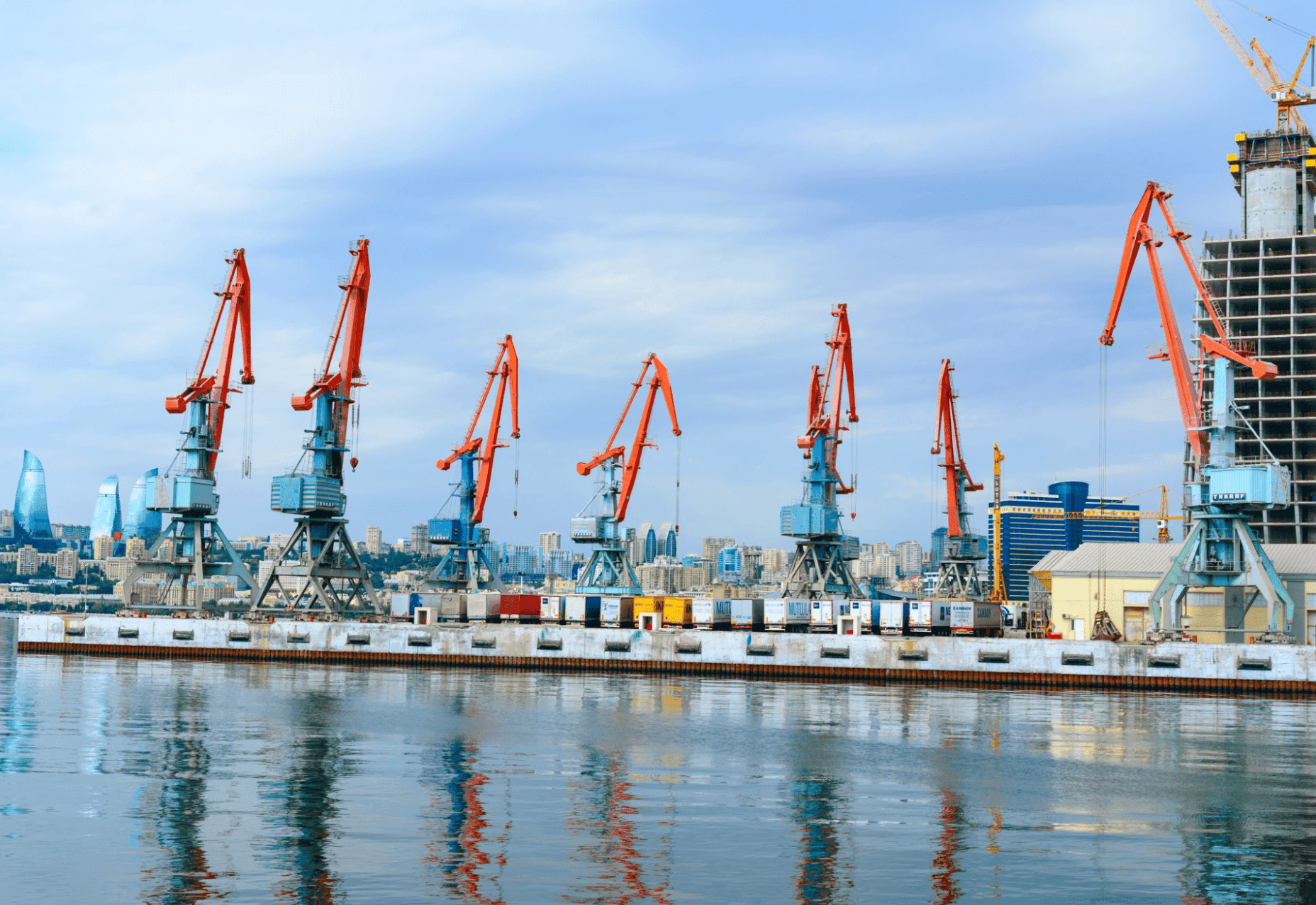
This week the sixth ministerial meeting between the foreign ministers of Azerbaijan, Georgia, and Turkey took place in Baku. With the railway’s conclusion, the three countries are planning to initiate cargo transportation of as much as 17 million tons every year. The ministerial meetings between the countries take place every six months since 2012. The previous meeting was in Tbilisi, Georgia.
Central Asia & Turkmenistan
A recent U.S. Geological Survey estimates that there is at least 35.1 tcf (or 1 trillion cubic meters) of natural gas reserves in the Amu Darya Basin Province of Turkmenistan, Uzbekistan, Iran, and Afghanistan, adding to the importance of the region for the investors. Following a state visit to Azerbaijan recently, Turkmenistan's President Gurbanguly Berdimuhamedov met with Georgian Prime Minister Giorgi Kvirikashvili in Ashgabat last week. The two leaders agreed on initiatives to carry energy sources in a reliable manner, hinting to the possibility that Turkmenistan to sell its natural gas to the European customers through the Caspian route. Despite the ongoing issues regarding the legal status of the Caspian Sea, in recent years, Turkmenistan and Azerbaijan are showing interest in materializing the long-delayed Trans Caspian Pipeline.