Data, Deterrence, Dependence: Armenia’s AI Ambitions and America’s Strategic Calculus
Recent Articles
Author: Zachary Weiss
03/07/2026
 firebird.ai
Armenia and San Francisco-based tech company, Firebird.ai, are planning to construct the first artificial intelligence data center in the South Caucasus, which includes a massive investment of $4 billion — over 10% of Armenia’s nominal GDP. The second phase of the U.S.-endorsed project was announced during Vice President Vance’s visit to Armenia in February.
As the next stage of Armenia’s technology and trade hub ambitions, the project could be a massive driver of economic growth and cooperation between both nations. Few developing countries have had the opportunity to play a part in the artificial intelligence race, let alone those that recently experienced conflict and political upheaval. The AI megaproject will likely be a positive feature of U.S.-Armenian relations, but all parties involved should be cautious about real infrastructure challenges and Russia as an outside threat.
The Project
In June 2025, the largely unknown Firebird.ai announced it would partner with Nvidia and the Armenian government in a public-private partnership to build the facility. In a rare move, the United States has granted an export license of tens of thousands of Nvidia Blackwell GB300 graphics processing units (GPUs) for the site, which are highly valuable items necessary for cutting edge AI. Dell Technologies is supplying the hardware, including Power Edge AI servers. The infrastructure will be built in Hrazdan, a former-Soviet industrial town near Lake Sevan.
The purpose of the project, according to Firebird, is to grant high-speed computing access to Armenian and American companies. This goal aligns with American intentions to develop the Trump Route for International Peace and Prosperity (TRIPP). Specifically, TRIPP includes efforts to develop Armenia as an “economic hub” and bring “foreign investment in Armenian infrastructure.” Both governments appear to be optimistic about the project. Armenia’s Prime Minister, Nikol Pashinyan, said it would encourage tech cooperation with the United States. Vice President Vance called it “a new beginning” for both countries.
Pashinyan and Vance have good reason to think the project could spur economic growth and meaningful cooperation. The tech sector in Armenia is growing rapidly, with workers involved in industries including semiconductors, software development, and more. But the increasingly Western-aligned nation still has a long way to go, as experts have noted the importance of expanding digital infrastructure to support the sector. Firebird’s data center could be a crucial piece of this expansion.
The Risks
Building AI data centers is a complicated endeavor, often lasting for years and requiring inputs including energy, water, and hardware. Despite the United States encouraging AI development, domestic projects of similar scale can still run into issues concerning aging electric grids, pollution, and water scarcity. In Armenia, many of these same issues will be prevalent.
Data centers need a large and continuous supply of water to function, because water acts as a coolant to ensure that the technology does not overheat. Firebird’s data center could require 500,000 gallons of water per day, according to EurasiaNet. Similar sites can pollute water with heavy metals and chemicals for cooling. To make matters worse, contamination and evaporation severely limit how much of this water can be reused.
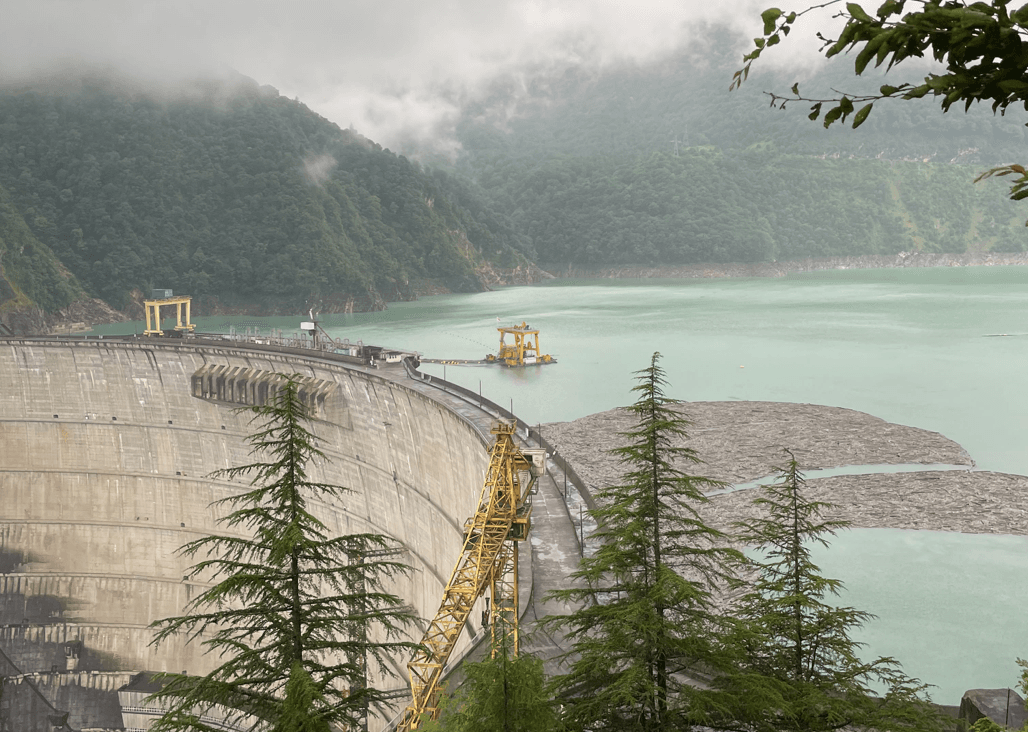
Continuously supplying this amount of water will be a challenge due to Armenia’s poor water security. The country’s reliance on aging hydraulic infrastructure and increasing water scarcity due to climate change have already caused problems. Even Lake Sevan, the largest body of water in Armenia, might not be a reliable source - industrialization has reduced its volume of water, and environmental issues have prompted efforts to reduce the amount of water withdrawn from the lake. Already, established water-reliant industries, primarily agriculture, struggle to transport water due to evaporation in transit and obsolete infrastructure.
The data center will reportedly have a capacity of at least 100 megawatts, a huge amount of electricity that is comparable to the peak demand of a small U.S. city. In any country, similarly sized facilities can strain electricity grids and inhibit access for consumers. Armenia’s electricity sector, though improved in recent years, has substantial problems. About 30% to 40% of electricity generated in Armenia comes from its nuclear power plant, which is aging and has been the subject of concern regarding safety and reliability. The nuclear plant will likely be replaced in the coming years, and the United States is poised to help. Still, nuclear energy infrastructure takes years to develop from start to finish, a dim prospect for Firebird.
Russia as a spoiler
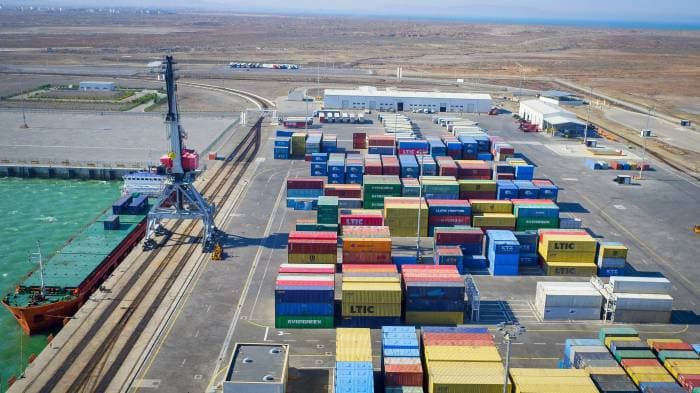
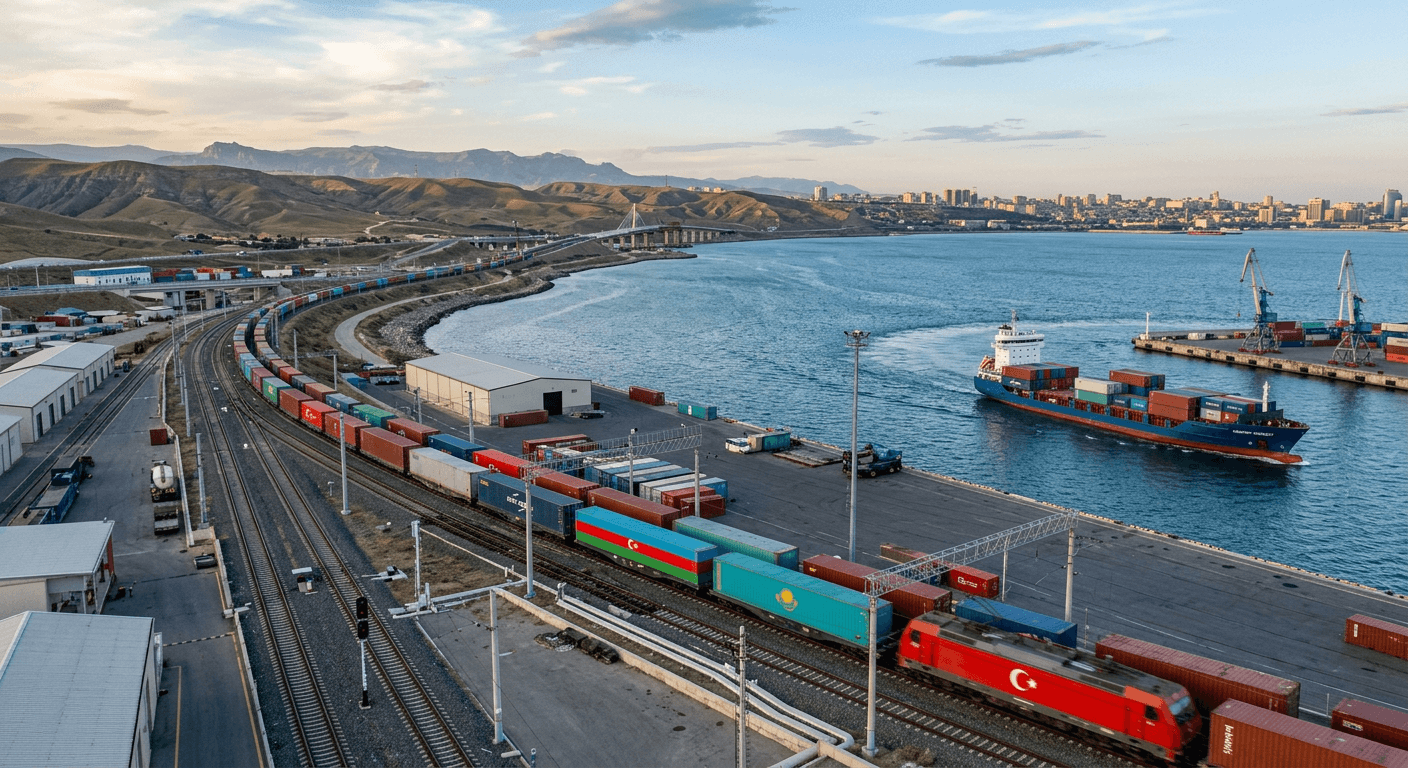
Russia’s engagement in Armenia has been in serious decline since it failed to prevent war with Azerbaijan in 2023. Still, Russia maintains a degree of influence as the United States has increasingly engaged with Armenia, despite once being in Russia’s undisputed backyard. Increased U.S.-Armenian cooperation is in large part motivated by developing the Middle Corridor, an emerging trade route connecting Western Markets to Asia while entirely circumventing Russia. Armenia is a crucial piece of this geographic puzzle, providing a land bridge connecting Azerbaijan to Türkiye, and Türkiye to Europe.
Recently, Russia has stepped up efforts to influence Armenia’s internal politics. The purpose of Russian influence has likely been to reinforce Armenia’s historical alignment as a part of Russia’s security and economic orbit. Russia has reportedly run a disinformation campaign aimed at Armenia’s parliamentary elections to boost pro-Russian political actors and to counter Armenia’s westward shift.
Firebird’s data center could be an easy target for Russian interference in several ways. Through online services and digital platforms, AI data centers enable processing and storage of digital information including user queries, behavioral data, business transactions, and more. This means that they can be the targets of cyberattacks, including from Russia. According to research from the Institute for AI Policy and Strategy, data centers built outside the United States are especially vulnerable.
Additionally, Armenia is highly vulnerable to Russian energy meddling. Russia frequently weaponizes energy, with examples ranging from curtailing gas exports to European nations during conflict to targeting Ukrainian energy facilities during the coldest months of winter. Currently, Russia supplies Armenia’s nuclear reactor with fuel and manages many of the plant’s operations. Russia is also heavily involved in producing the remaining electricity from natural gas. Given the massive electricity requirements of the data center, even a small degree of Russian energy interference could pose a serious operational and strategic vulnerability.
Russian undermining of Western activities in the CIS region has also included political meddling, misinformation campaigns, and economic pressure. In the United States, it has included conspiracies to export valuable technology back to Russia for military purposes. Given the immense value and rarity of Firebird’s GPUs, Russian theft of this technology is a serious risk. Russia’s AI progress is nowhere near that of the U.S., but theft of AI-grade GPUs is a proven aim of American adversaries and threatens domestic AI-dominance.
Artificial intelligence developments have thus created an opening for Russian interference in an industry with clear vulnerabilities, and in Armenia, a country with experience in enduring Russian interference. Only time will tell how successful Russia could be in its exploitation of artificial intelligence. If history is any indicator, now is the time to prepare.
The United States is making a remarkable investment in Armenia by offering some of its most coveted technology and a role in an industry valued in the hundreds of billions of dollars. At the same time, Russia has demonstrated a continued willingness to interfere in the politics and development of the South Caucasus in its effort to remain the dominant regional power. The United States, Firebird, and Armenia will need to prioritize providing adequate energy, infrastructure, and defensive capabilities to ensure that this groundbreaking project can succeed.
____________________________________________
Zachary Weiss is a political risk consultant with Oxford Analytica, graduate student in the Johns Hopkins University School of Advanced International Studies, and former researcher for the Caspian Policy Center.