Turkmenistan’s WTO Journey and Lessons from the Region
Recent Articles
Author: Zhanel Sabirova
04/29/2026
 shutterstock.com
Turkmenistan's officials recently announced increased preparations for World Trade Organization (WTO) membership. The country reported GDP exceeding $77.4 billion in 2025, growth of 6.3%, and a 10.3% rise in foreign trade turnover to $21.8 billion. As such, Ashgabat is accelerating work on its Memorandum on the Foreign Trade Regime (the foundational document that formally triggers accession negotiations), as well as modernizing customs procedures with the help of international partners.
Turkmenistan is the very last post-Soviet republic to have begun formal WTO accession talks. The first post-Soviet state to do so was the Kyrgyz Republic that joined in 1998, followed by Latvia and Estonia in 1999, Georgia in 2000, Lithuania and Moldova in 2001, Armenia in 2003, Ukraine in 2008, and Russia in 2012. Tajikistan acceded in 2013 and Kazakhstan in 2015. As for the rest, Uzbekistan is in advanced negotiations, targeting accession at the WTO's 14th Ministerial Conference in 2026, and Azerbaijan has been negotiating since 1997 with the process recently revived. Turkmenistan, which only received observer status in July 2020, is only just starting the lengthy process. The countries that joined first were usually smaller states that required less structural changes in their economies. Those that came later tended to have strong oil and gas revenues in common, which made reforms feel less urgent.
The formal benefits of WTO membership are well-known: guaranteed non-discriminatory access to the markets of all 166 WTO members, the right to use a common dispute settlement mechanism to challenge unfair trade practices, and a seat at the table in multilateral trade negotiations. For a landlocked, gas-exporting economy like Turkmenistan, these issues matter but are not transformative in themselves. Gas is largely sold through bilateral state-to-state contracts where WTO rules do not directly govern.
However, besides a conventional trade agreement, WTO membership also functions as a mechanism for governance reform. The accession process requires extensive trade policy documentation, legislative alignment, and bilateral negotiations with numerous member states. Required governance audits drive institutional transparency and regulatory modernization in ways that few other external frameworks can enforce. World Bank data from the period 2004–2014 measured this effect using its Distance-to-Frontier metric, tracking improvements in business environment indicators. Ukraine and Russia each saw improvements of 27% and 21% respectively during and after their accession processes. Tajikistan recorded a 10% improvement.
On the example of Kazakhstan, before joining the WTO in 2015, roughly 70% of the country's foreign direct investment was concentrated in the commodity and oil and gas sectors. Eight years after accession, that share had fallen to 50%, with the other half flowing into non-extractive industries. Hence, WTO membership created a predictable, rules-based environment that made diversification possible and attractive to investors.
It is no accident that Kazakhstan has become an explicit template for Turkmenistan's accession strategy. Comprised of officials from the Cabinet of Ministers, the Central Bank, Parliament, and relevant ministries, the Turkmen delegation travelled to Astana specifically to study Kazakhstan's negotiating experience. The officials who actually negotiated Kazakhstan's WTO entry are now advising their Turkmen colleagues on every step in the process, from tariff schedules to strategies for managing bilateral pressure from larger member states. At workshops organized by the International Trade Centre in Ashgabat, Kazakhstan's accession was repeatedly used as the primary teaching case. This mentorship reflects a recognition that the political and economic circumstances of the two countries are comparable: both are large, landlocked hydrocarbon exporters navigating Russian influence.
Kazakhstan’s membership in the Eurasian Economic Union (EAEU) created real legal tensions with its WTO commitments, so its accession required special provisions that applied not only to Kazakhstan but also to EAEU institutions. Turkmenistan is not part of the EAEU, which will make its accession process simpler than Astana’s. However, Ashgabat’s strong economic dependence on main trading partners Russia and China brings challenges during bilateral WTO negotiations.
The experiences of Uzbekistan and Azerbaijan, however, deliver a more cautionary message. Uzbekistan's Working Party was established in 1994, and yet the country is only now approaching the finish line. The process stalled for decades under President Karimov, whose government-maintained restrictive currency controls made basic WTO-compatible trade structurally impossible. It took the 2017 currency reform under President Mirziyoyev (making the Uzbek som freely convertible) to unlock real momentum. This shows that domestic market reform will stand as a prerequisite for accession.
As for Azerbaijan's case, despite applying in 1997, Baku's Working Party stalled for six years between 2017 and 2023. The reason seems to be that oil revenues made structural reform seem optional rather than urgent. Both trajectories are good cases for Turkmenistan in assessing possible future risks. It teaches that when the state budget is cushioned by energy exports, the political cost of reform can seem to outweigh the benefits.
There are still several challenges Turkmenistan faces on its route for internationally integrated trade membership. With the natural gas sector being the backbone of its national revenue, the economy remains heavily state-controlled and largely closed to foreign ownership. Transparency is limited, and many trade-related regulations remain opaque or underdeveloped. Experts have long pointed to the absence of full market-economy conditions as the central obstacle. Even the foundational step of preparing the Memorandum on the Foreign Trade Regime is still in preparation. Ashgabat is very early in a process that typically takes between 10 and 20 years, even for committed applicants.
The broader regional experience suggests that WTO accession can deliver real benefits, but only when paired with meaningful internal reform. When Kyrgyzstan joined in 1998, it was the only WTO member in the neighborhood at the time, limiting the mutual trade gains. Today, with Kazakhstan and Tajikistan already members, and Uzbekistan almost certainly joining in 2026, Turkmenistan would be entering a nearly complete regional WTO ecosystem.
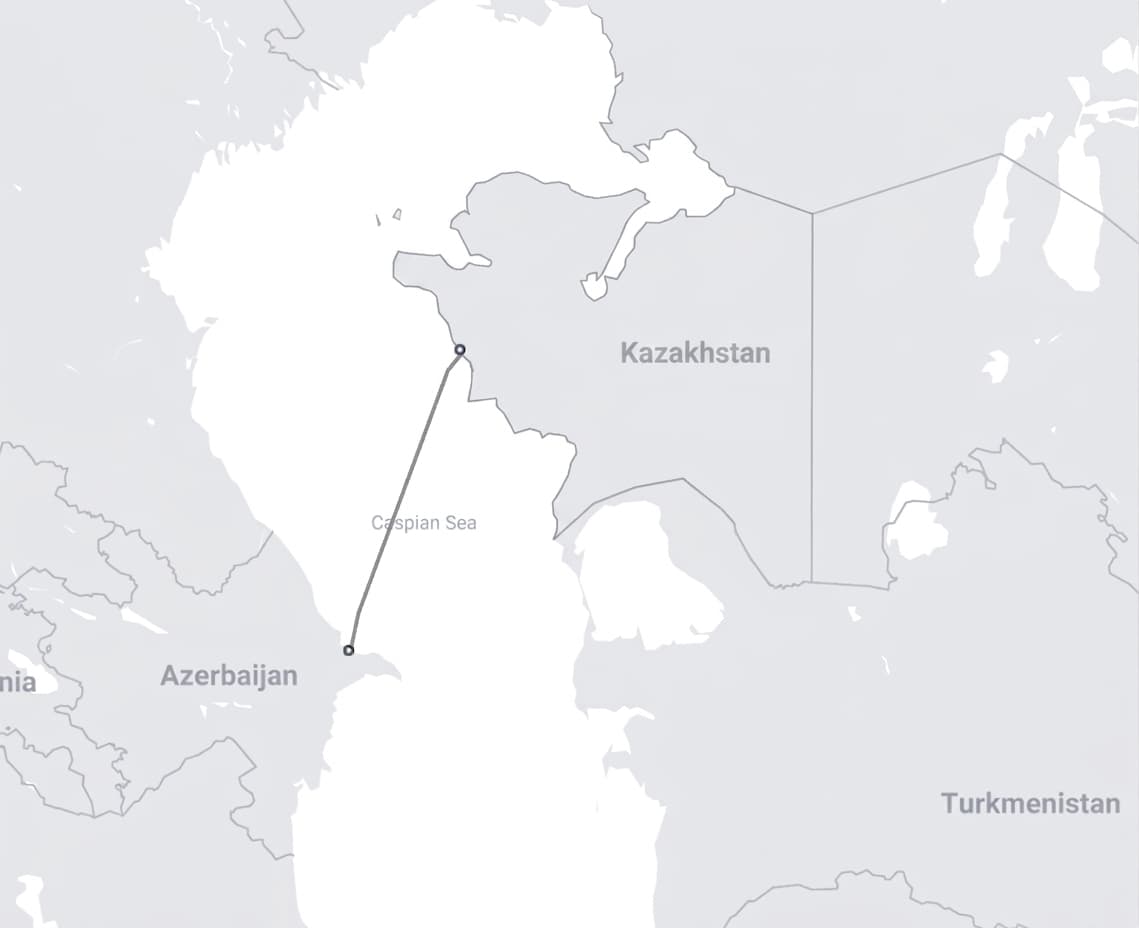
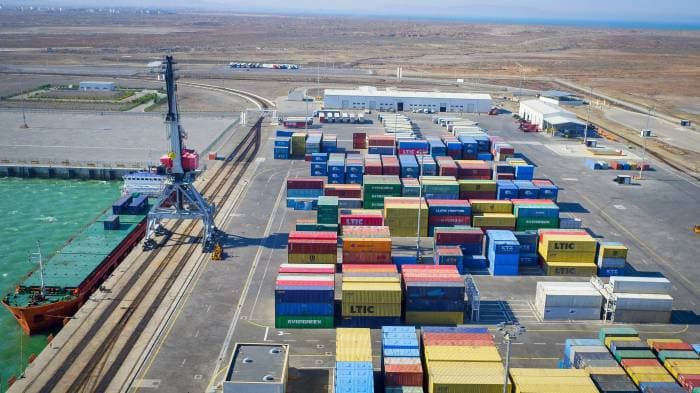
In addition, transit corridors are the most efficient vehicle for implementing trade facilitation measures for LLDCs (Land-Locked Developing Countries). WTO agreements, particularly the Trade Facilitation Agreement (TFA), enhance transit corridors by lowering costs, accelerating customs, and digitizing procedures, reducing transit times by 20–40%. By implementing standardized, paperless, and transparent procedures, WTO membership boosts reliability and reduces non-tariff barriers for landlocked nations, crucial for economic growth. Although being a smaller actor, Turkmenistan is strengthening its role in the Middle Corridor by linking Central Asian rail networks to the Caspian Sea via the $1.5 billion upgraded Turkmenbashi International Seaport. While the country's trade volumes remain relatively modest compared to its neighbors, the country’s geographic location makes an interesting, as well as crucial, case within the evolving Eurasian logistics network.
Therefore, for Turkmenistan, the central question is not whether to join WTO, but whether it is willing to undertake the changes required to make membership count. As the last post-Soviet state to join WTO, it has finally stepped into the waiting room. How long it remains there will depend on the choices made in Ashgabat.