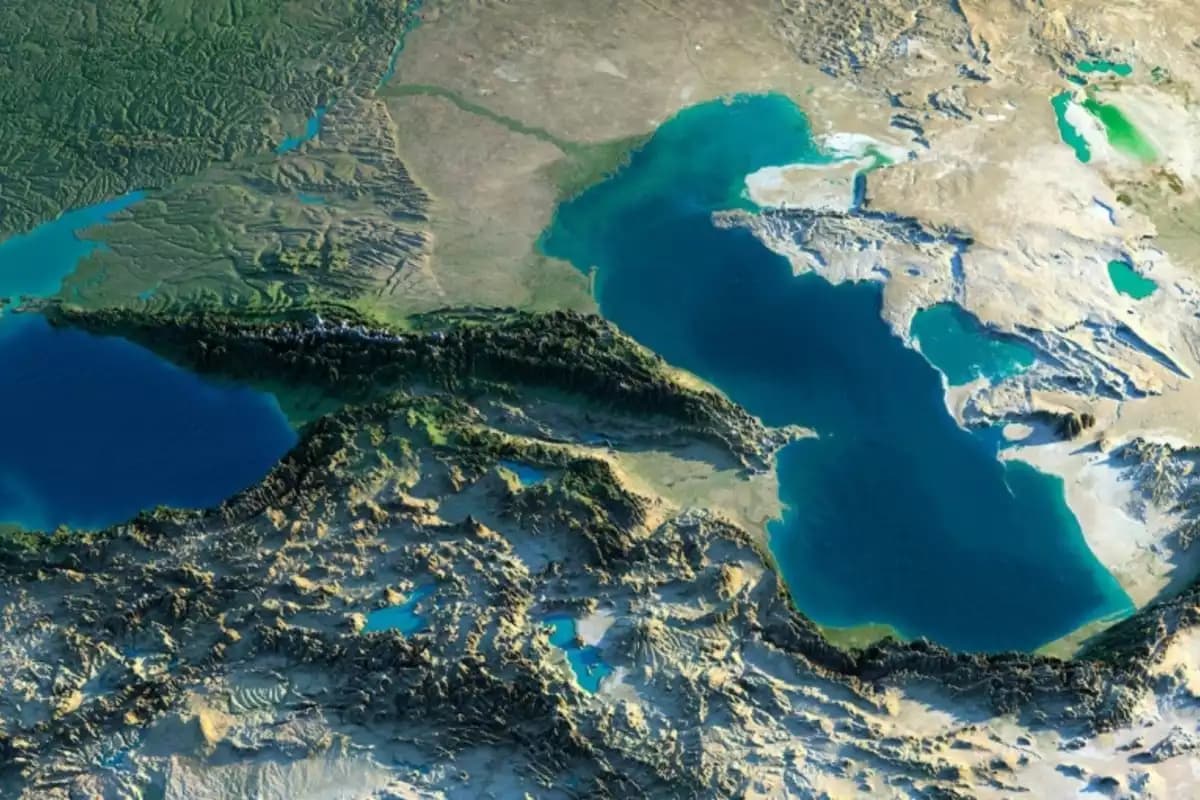
Greater Caspian Region Seeking Out American Business


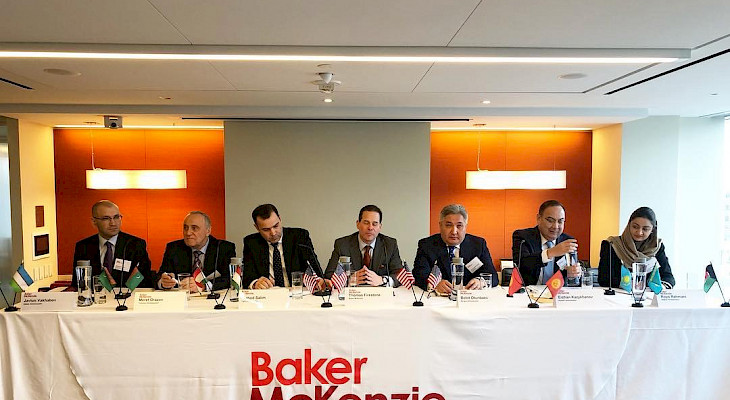
Governments from countries in the South Caucasus and Central Asia are upping their push to boost trade with the United States and to attract U.S. investors. Ministers, ambassadors, and other top figures from the Greater Caspian Region were reaching out to American business people on the margins of the recent Spring Meetings of the International Monetary Fund (IMF) and World Bank in Washington, for example. Programs were also conducted elsewhere in the country to flag opportunities in agriculture, mining, transportation, manufacturing, tourism, and infra-structure development. The region, with about 120 million inhabitants, most definitely offers opportunities for American business, but governments there need to appreciate the intense competition, especially for investment dollars, and work to position themselves well — e.g., by continuing market-based economic reforms — if they are going to realize higher levels of trade and in-vestment. The Greater Caspian Region is Seeking U.S. Business On March 29, ambassadors from Afghanistan, Kazakhstan, Kyrgyzstan, Tajikistan, Turkmenistan, and Uzbekistan came together for a first-time event in Washington to talk about trade and investment opportunities in their countries. There was an important implicit, and in some cases explicit, point in their presentations: Connectivity in the region is growing, which also means a business in one country may be the jumping off point for opportunities elsewhere. After all, the Silk Road did not just connect China and Europe — it was also a network of manufacturers and entrepreneurs who created value across the way. Some of the key opportunities the ambassadors cited were: • Agricultural products and their packaging and other processing along with mining and production of copper, marble, gemstones, and a range of other minerals in Afghanistan; • Kazakhstan’s focus on diversifying its economy from being resource-based to an industrial, knowledge-based, service economy including through steps such as establishing the new financial services center in NurSultan (formerly Astana); • A skilled and inexpensive labor force in Kyrgyzstan along with opportunities in hydropower, solar, wind, and other aspects of the energy sector in addition to tourism, mining, agribusiness, and manufacturing; • The great potential for further hydropower development in Tajikistan as well as opportunities in aluminum processing, cotton, and mining; • Turkmenistan’s growing role in north/south as well as east/west transit traffic across Eurasia as well as renewed efforts such as the Turkmenistan-Afghanistan-Pakistan-India natural gas pipeline; • As Central Asia’s largest single market with over 30 million inhabitants, Uzbekistan’s economic and other policy reforms can boost connectivity and trade within the region as well as offer potential in fields such as agriculture, food processing, manufacturing, logistics, tour-ism/hospitality, oil, gas, and electricity, and petrochemicals. Governments are also wisely going outside Washington to flag or seek opportunities and to build advantageous economic links. Azerbaijan’s Agriculture Minister was in Chicago in early April discussing developing the country’s agricultural sector — a key vector for diversifying the economy of Azerbaijan and other countries in the Greater Caspian Region. The event involved over 60 U.S. firms. The Azerbaijan government and the U.S./Azerbaijan Chamber of Commerce (USACC) are looking to hold similar events in other American states. The USACC also recently signed an MOU with USAID on cooperation to stimulate economic growth and promote trade and investment along with other bilateral ties. In addition, the U.S.-Azerbaijan bilateral economic forum will meet later this month for the first time in years. Uzbekistan too is reaching out to American states. The Ambassador traveled to Mississippi, Georgia, and Nebraska — building new ties to boost his country’s economic prosperity and growth. Uzbekistan’s Deputy Prime Minister was in Washington April 16-17 and met with Commerce Secretary Wilbur Ross and other U.S. officials. (Secretary Ross had led missions last year to Kazakhstan and Uzbekistan.) In conjunction with Tashkent’s new openness and initiatives, Mississippi’s Governor is leading a delegation May 16-17 to the Uzbekistan-American Business Forum in Navoi and the U.S. Commerce Department is bringing a certified trade mission to Uzbekistan in June. Secretary Ross is expected to lead another U.S.-Uzbekistan Business Forum delegation in October. Such initiatives are all welcome and necessary. However, to be fully successful, they will need to be part of larger, sustained efforts. But Compete Against Other Opportunities Around the World Above all, the region’s governments and companies need to remember they are in a global com-petition to win trade and capital. Secretary of State Powell used to remark that something that surprised him in his initial months in office was that interlocutors raised trade and investment in the bulk of his meetings. Almost every country wants to bring American business and investment its way, but management teams and corporate boards inevitably must look at these moves in light of opportunities around the world, including here in the United States. Expected profitability, ease of doing business, contract sanctity, corruption levels, ability to move capital into and out of the country, protection of intellectual property and other rights, along with levels of commercial and other infrastructure are among the factors companies consider before saying “yes” to a business deal. Calls from governments, whether American or foreign, are not enough to lead a company to invest talent, time, or capital in a deal. At the same time, foreign governments are learning that as they look to grow and diversify their economies, they want to make sure those coming to do business in their countries are reputable, will live up to their end of the deal, and will not engage in the predatory practices that have be-come a concern in the region. Talking with Companies will Help Countries Compete Governments in the South Caucasus and Central Eurasia are right to be launching and pursuing efforts to attract U.S. businesses. However, they need to be cognizant of the competition they face and do all they can — and persist in doing so — to attract increased U.S. trade and investment. It is important they remember it is a campaign, one that needs to be focused, sustained, and updated, if they are to succeed. At the same time, governments’ engagement with businesses will give useful insights into what companies are looking for, what regulatory, legal, or other changes are necessary, and position countries better in competitive global markets.