Energy Security Should Continue to be Part of US - Europe Policy Agenda


Author: Luke Coffey
02/27/2017 · 5 min read
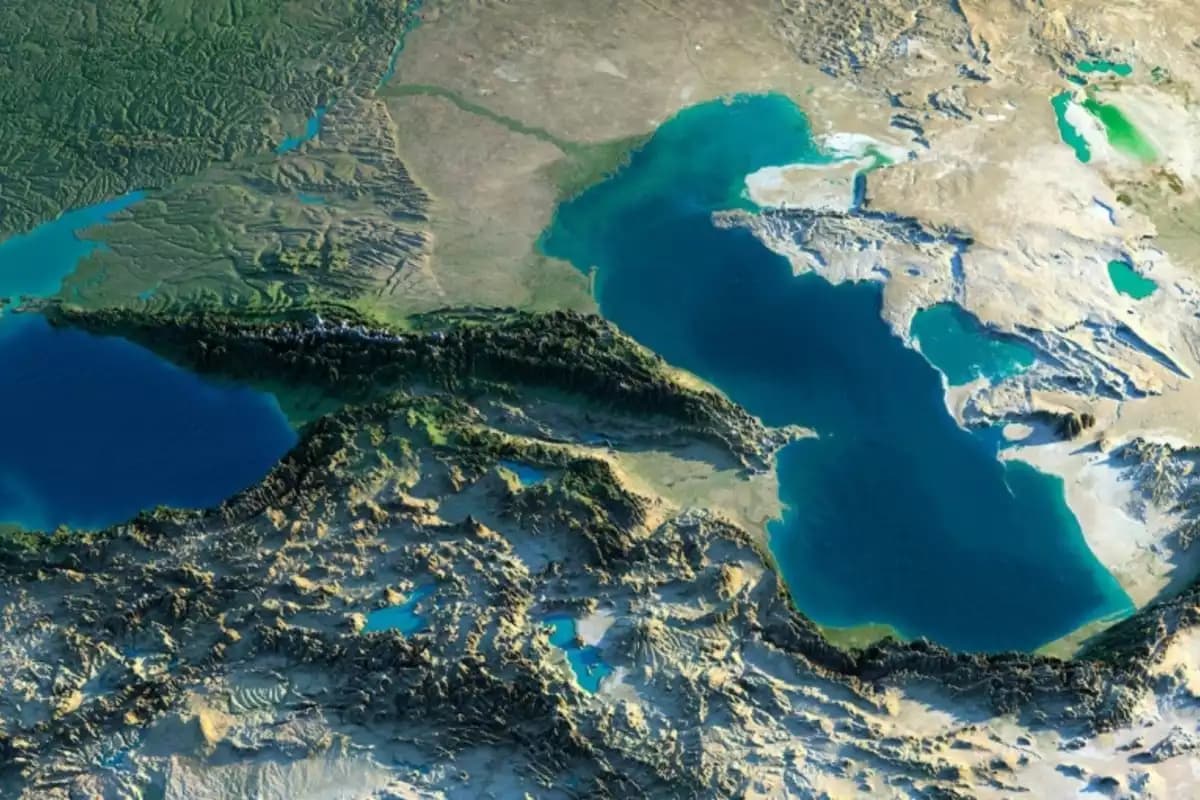
Two weeks ago, Secretary of State Rex Tillerson met with the EU’s High Representative of the Union for Foreign Affairs and Security Policy, Federica Mogherini. Although the State Department has not provided a readout of the meeting, a statement issued by Ms. Mogherini stated that "trans-Atlantic relations, the common challenge of countering terrorism, the ongoing work to strengthen European defense, relations with Russia, the Iran nuclear deal and the main crises, from Ukraine to Syria," were discussed. Notably absent was any specific mention of energy security for Europe. Considering that this is such an important issue for Europe, and taking into account Mr. Tillerson’s unique background as former CEO of ExxonMobil, this was a missed opportunity. A very important component of Europe’s future energy security can be found in the Caspian basin—an area Sec. Tillerson is very familiar with from his previous profession. Ms. Mogherini should have taken advantage of the meeting to press the case for more U.S. involvement in the region. The most important consideration in the region for the U.S. is the potential of Caspian oil and gas to offset much of Europe’s dependency on Russia for its energy needs. This, in turn, directly affects Europe’s security and, potentially, U.S. treaty obligations under NATO. An estimated 48 billion barrels of oil and 292 trillion cubic feet of natural gas in proved and probable reserves are in the Caspian region. Each barrel of oil and cubic foot of gas that Europe can buy from Azerbaijan, Kazakhstan, or Turkmenistan is one less that it must depend on from Russia. In 1906, the region’s first energy pipeline (carrying Kerosene) was completed, connecting Baku on the Caspian Sea with Batumi on the Black Sea. Interestingly, the pipes were actually made in Mariupol and Dnipropetrovsk (then called Katerynoslav) in Ukraine, showing how interconnected the region was even back then. More than 100 years later, this pipeline, measuring a mere eight inches in diameter, has been replaced with a modern network of natural gas and oil pipelines connecting the heart of Asia with Europe. Even with the network of existing pipelines, there is more work to be done to better connect Europe with the Caspian region. In particular, there is one major initiative which the United States and Europe need to continue supporting if both are serious about reducing the dependency on Russian natural gas: the Southern Gas Corridor The Southern Gas Corridor is the term used to describe a series of new gas pipeline projects that will someday operate alongside the existing network of pipelines. In 2015 construction started on the Trans-Anatolian Natural Gas Pipeline, further linking Azerbaijan to Turkey. Construction is expected to be finished by 2018, but recent reports suggest that it could be finished even earlier. It will then link with the Trans-Adriatic Pipeline currently under construction. This pipeline will run from the Turkish–Greek border to Italy via Albania and the Adriatic Sea when it is completed in 2020. Once fully operational, the Southern Gas Corridor will be a network of pipelines running 2,100 miles across seven countries, supplying 31 billion cubic meters of natural gas to Europe annually (Including Turkey). Adding to the potential of the Southern Gas Corridor is the proposal for the Trans-Caspian Gas Pipeline. Turkmenistan has the world’s 4th largest proven natural gas reserves. Thanks to geography there is currently no economically viable way to transport its natural gas to markets in Europe. According to some estimates transporting natural gas by ship in liquefied form is profitable only after 1,200 miles or more, and the distance between Turkmenbashi, Turkmenistan, and Baku, Azerbaijan is only 170 miles. This is why only a pipeline running under the Caspian makes sense. The idea of a Trans-Caspian Gas Pipeline has not become a reality because of the legal dispute over Caspian ownership. Completing the Trans-Caspian Gas Pipeline promises several benefits. The most obvious is providing Europe with another alternative to Russian gas. The pipeline would also improve regional stability by calming Azerbaijani–Turkmen relations, which have been strained in the Caspian over the past few years. From Ashgabat’s perspective, a Trans-Caspian Gas Pipeline would also help to diversify its energy export market, which is dependent on Russian and Chinese markets. Moscow has long sought to control the flow of oil and gas to Europe and has never liked pipelines that bypass Russian territory. The Kremlin’s mentality is that, if Europe is not buying oil and gas from Russia, it should not be buying it from anywhere else. To this end, where Europe is able to import from other sources, Russia has shown that it can easily pose an indirect risk to their supply. There are things that the new Administration can do to help advance U.S. interests in the Caspian. Firstly, the new Administration should show a more visible presence in the region. Occasional Cabinet-level visits need to be followed up with regular visits by senior officials from all areas of government including diplomatic, defense, economic, energy, and trade sectors of the U.S. government. With Secretary of State Rex Tillerson’s experience at ExxonMobil and Secretary of Defense Jim Mattis’ experience as Commander of U.S. Central Command (which includes Central Asia in its area of responsibility), senior members of the new cabinet are well placed to promote United States interests in the region. The new administration should also be vocal in its political support for the construction the Southern Gas Corridor project. As Europe seeks alternatives to Russian gas, the Southern Gas Corridor and completion of a Trans-Caspian Gas Pipeline will play important roles. The Caspian region has been, is, and will continue to be an area of geopolitical importance and competition. If the U.S. is to have a grand strategy to deal with a resurgent Russia and an emboldened Iran and to improve Europe’s energy security, policymakers in Washington cannot ignore the Caspian region. It is time the United States and Europe work together in the region. With experienced individuals now serving in key cabinet positions in the new Administration, there is no better time. Photo source: Reuters