Caspian Brief: July 31, 2017


Author: Caspian Policy Center
07/31/2017 · 6 min read
Cargo train launched between China's Ganzhou and Kazakhstan
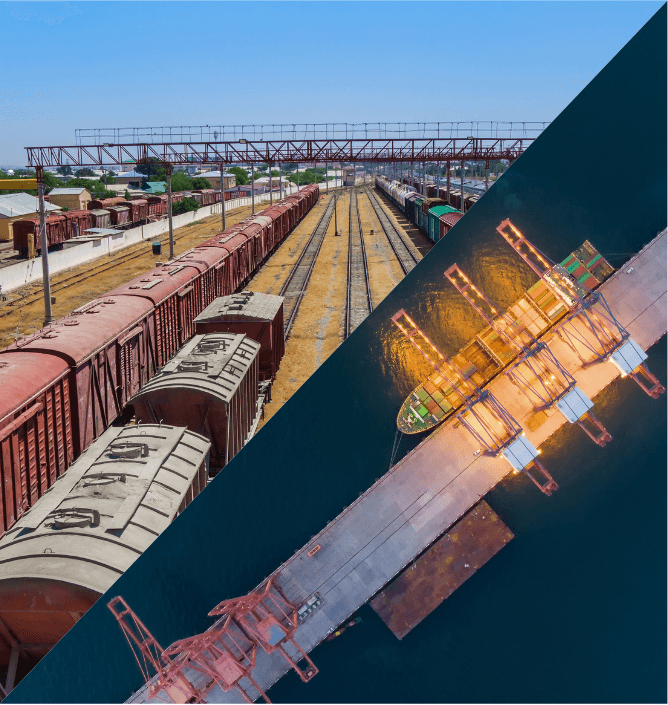
A cargo train service between Ganzhou in east China's Jiangxi Province and Kazakhstan was launched on July 27, China’s Xinhua news agency reported. A train carrying 100 containers loaded with furniture, clothes and electronic goods departed from Ganzhou on July 27 and is expected to arrive in Kazakhstan in 12 days. Kazakhstan is the third Central Asian destination from the port, following Kyrgyzstan and Uzbekistan, said Zhong Dingyan, deputy head of Nankang District in Ganzhou. Links to Tajikistan and Turkmenistan are expected in the near future, he said. A hub for railways, roads and shipping transportation along the Yangtze River, Ganzhou is striving to become an international cargo distribution center for China’s Belt and Road initiative, a multi-billion dollar project to connect China and South East Asia to Central Asia, Russia, Middle East, and Europe. About five million tons of cargo was transported between Kazakhstan and China during the first half of this year, a 26-percent increase on-year, Kazakhstan’s national railways company Kazakhstan Temir Zholy (KTZ) said. A total of 499 container trains passed through the Alashankou-Dostyk railway crossing on the Kazakh-Chinese border and 221 container trains ran through Khorgos-Altynkol border crossing. Expected volume of traffic for the second half of the year is about 5.7 million tons.
US sanctions pose risk for Russia, IRGC gas projects in Iran
The recent bipartisan package of US sanctions targeting Moscow, Tehran and Pyongyang is very likely to exert a dramatic impact on Iran's gas industry, a UK- based expert told Trend. "Once the new sanctions bill is approved, it will affect those parts of Iran's oil and gas industry that involve Russian companies as well as domestic firms affiliated with the Islamic Revolution Guards Corps (IRGC)," Mehrdad Emadi, a consultant at the UK-based Betamatrix International Consultancy, said in an exclusive interview with Trend. Elaborating on his forecast, Emadi said that the sanctions package includes all firms and entities linked to the IRGC and this is while a group of main contractors operating at Iran's South Pars, the world's largest gas field, are affiliated with the elite force. In the meantime, the sanctions are capable of making an impact on Iran's gas exports as the sanctions package put embargo on all Russian oil and gas companies including Lukoil, which are negotiating huge projects in Iran, he said. On the other hand the sanctions may restrict the European investment in Iran's gas projects if the business entities linked to the RGs are partners, Emadi added." On July 3 France's Total signed a $5 billion deal with Tehran to develop phase 11 of South Pars, marking the first major Western energy investment in the Islamic Republic since the lifting of nuclear related sanctions against Tehran. "Therefore, the sanctions would directly and indirectly hit the engineering and investment sectors of the industry in Iran," he suggested. However, those companies which are not linked to the IRGC will be on the safe side, the expert concluded.
Russia's Gazprom, Iran's OIEC sign deal over oil fields
Russia's Gazprom has signed a cooperation agreement with Iran's Oil Industries' Engineering and Construction (OIEC) over the development of two major oil fields in western Iran. The oil fields under agreement are Azar and Changuleh, Iran's most recent discoveries located in the western province of Lorestan, Iran's IRNA news agency reported July 30. Based on this agreement, the two sides would cooperate over the development of Azar and Changuleh through the framework of Iran's new format of oil contracts. Unlike Changuleh, Azar is a joint field shared with Iraq. The Iraqi part of Azar is called Badra. Azar and Changuleh were discovered in 2005 as a result of explorations conducted by a consortium comprising Russia's Lukoil and Norway's Statoil. Both fields -- together with Iraq's Badra -- are believed to hold an in-place reserve of about 3.5 billion barrels.
In Russia's shadow, Georgia and US launch major drills
Georgia and the United States on Sunday launched their biggest ever joint military exercises in the latest show of support for the tiny Caucasus nation that has squared off against Russia. The start of the drills comes a day ahead of a two-day visit to Tbilisi by US Vice President Mike Pence during which he is expected to reiterate Washington's backing for Georgia's wish to join NATO. Some 800 Georgian and 1600 US troops are taking part in the Noble Partner 2017 drills -- the largest ever in the Caucasus nation since it fought a brief war with Russia in 2008. Georgia's Defence Minister Levan Izoria called the scale of exercises "unprecedented", insisting they will "make clear the support for Georgia by the NATO member states, especially the US." The US has sent some of its M1A2 Abrams main battle tanks and M2 Bradley infantry fighting vehicles across the Black Sea for the drills, which will last until August 12. The exercises will also include 400 servicemen from Armenia, Germany, Slovenia, Turkey, Ukraine and the United Kingdom.
The 12.7 bcm/y Damghan-Neka gas pipeline breaks ground
Iranian authorities reported the start-up of the 12.7 bcm/y (35 mcm/d) Damghan-Neka gas pipeline construction phase. The route will stretch from the city of Damghan in Semnan Province (Iran) up to Neka in Mazandaran Province (Iran, Caspian Sea coastline) and the project is meant to reduce significantly the domestic gas imports from Turkmenistan. Instead, the pipeline will be part of a network of facilities used to transfer natural gas from the South Pars field in the Persian Gulf all the way to the northern regions of Iran. The country is trying to reduce its dependency towards Turkmen gas supplies, which were stopped unexpectedly in 2016 because Turkmenistan complained of a violation of the terms of its supply contract with Iran, which in turn increased dramatically the Iranian domestic gas prices. The deal was breached and gas supplies were cut temporarily. Iran has imported natural gas from Turkmenistan since 1997 in order to supply the northern parts of the country, which are located far away from the gas resources in the south.
Uzbekistan ready to buy part of Russian oil intended for China
Uzbekistan is ready to buy up to 500 thousand tons of Russian crude by the end of this year for its new oil refinery being built in the Jizzakh province, Russia’s Izvestiya newspaper reported with reference to a letter from Uzbekistan’s Prime Minister Abdulla Aripov to Russian First Deputy Prime Minister Igor Shuvalov. According to Izvestiya’s source close to the Russian Energy Ministry, Russian state-controlled Rosneft oil company may supply to Uzbekistan part of the oil intended for China. Uzbekistan started construction of a new oil refinery in the Jizzakh province in April. Uzbekistan, which lacks domestic crude to fully load its existing oil refineries and experiences regular fuel shortages, has embarked on this costly project whose future resource base may put Tashkent in a position of being politically dependent on Russia. The $2.2 billion oil refinery would produce fuel for sale domestically and abroad. Official news sources reported that oil supply agreements had already been reached with Kazakhstan and Russia. The new refinery is designed to process up to 5 million tons of oil annually, an almost 50 percent increase on Uzbekistan’s existing refining capacity. It will produce 3.7 million tons of gasoline, more than 700,000 tons of aviation fuel and 300,000 tons of associated products. Completion of the project is planned for 2022. Uzbekistan now has three refineries — Alty–Aryk, Ferghana and Bukhara — that can collectively process up to 11 million tons of oil. Sources: The Times of Central Asia, Trend News Agency, Press TV, The Economic Times, Energy Monitor Worldwide, The Times of Central Asia