A New and Expanded Central Asia: C6 Steps for Trans-Caspian Growth
Recent Articles
Author: Caspian Policy Center
03/05/2026
 Caspian Policy Center
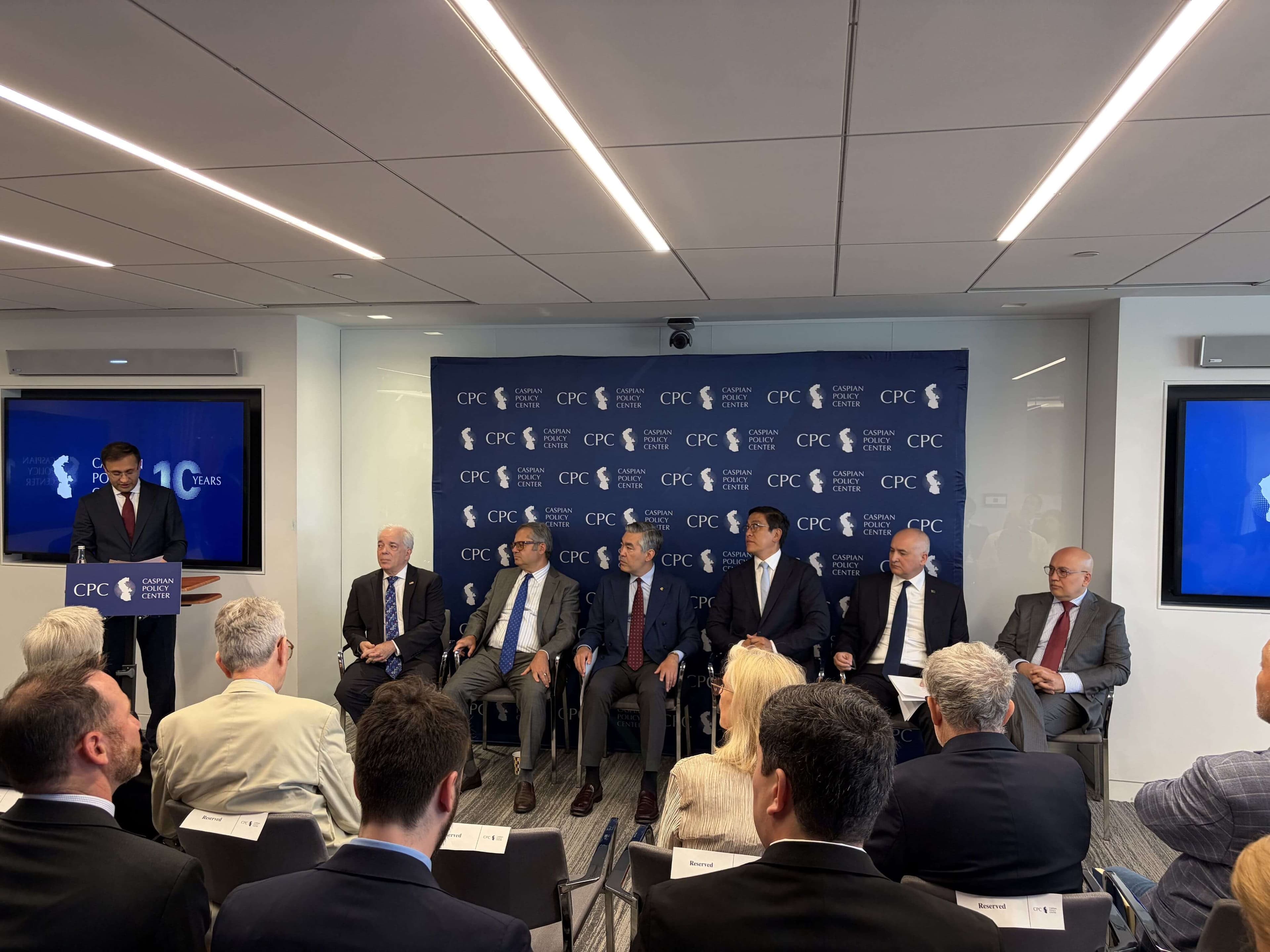
March 3, WASHINGTON, D.C. - Amid a period of profound geopolitical transformation, Central Asian states are advancing a renewed C6 Trans-Caspian vision aimed at strengthening regional cooperation, expanding connectivity, and enhancing economic resilience. The 2025 Washington C5+1 Presidential Summit, marking the framework’s 10th anniversary, underscored sustained U.S. engagement in Central Asia, while Azerbaijan’s formal integration into the Central Asia Consultative Meetings expanded the grouping from C5 to C6—signaling a new phase of regional cohesion and strategic alignment. On March 3, the Caspian Policy Center (CPC) convened a discussion to examine how the C6 countries can sustain and build upon this growing momentum. The event brought together regional and U.S. diplomats, policy experts, academics, and business leaders to explore the future of U.S.-Caspian cooperation. The discussion, moderated by CPC Senior Fellow Dr. Eric Rudenshiold, featured the following speakers: Khazar Ibrahim, Ambassador of Azerbaijan to the United States; Magzhan Ilyassov, Ambassador of Kazakhstan to the United States; and Furqat Sidiqov, Ambassador of Uzbekistan to the United States.
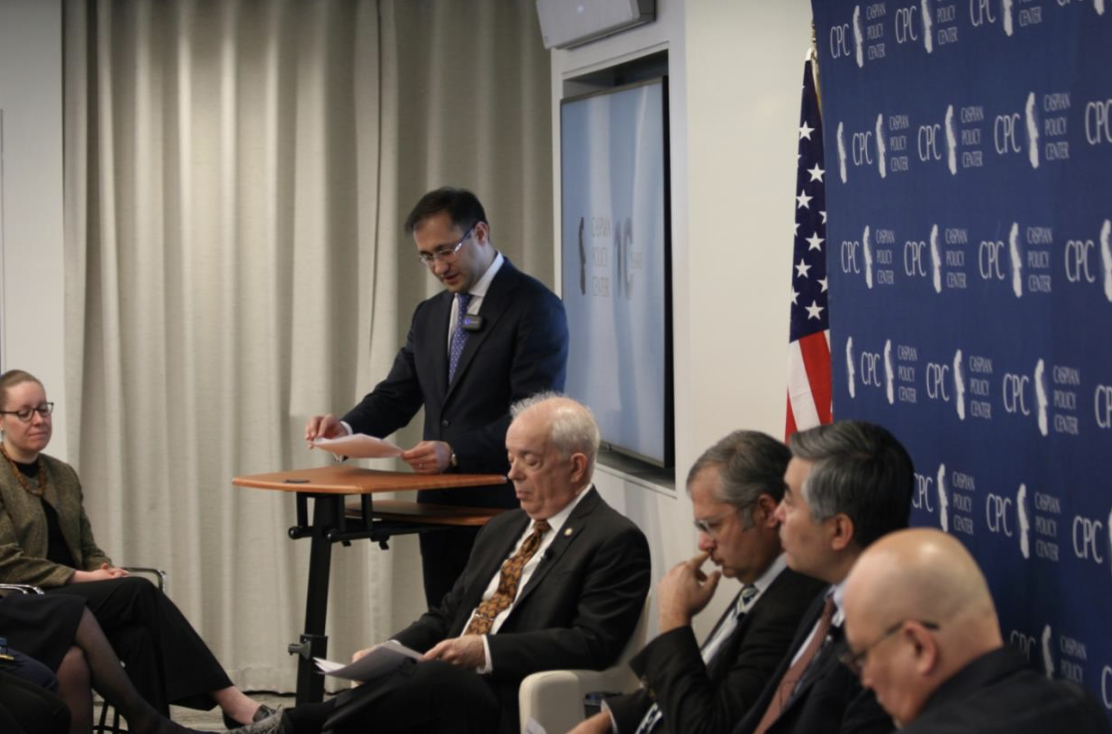
CPC President and CEO Efgan Nifti opened the discussion by outlining the future trajectory of the C6 format. He highlighted the significant strides made in recent years, noting that “increased levels of regional cooperation that were unthinkable only a few years ago are now happening on an increasingly regular basis,” highlighting the growing momentum behind regional integration efforts. Nifti emphasized that the most evident example of this deepening cooperation among Caspian states is Azerbaijan’s formal integration into the framework of Central Asia Consultative Meetings at the Tashkent Summit. He added that this shift also demonstrates a shift in strategic thinking among the countries of Central Asia and the South Caucasus: “The Caspian states are no longer passive actors, letting their region be shaped by external agendas. Instead, they are now building a trans-regional architecture that reflects their own priorities of partnership, alignment, and growing agency.”
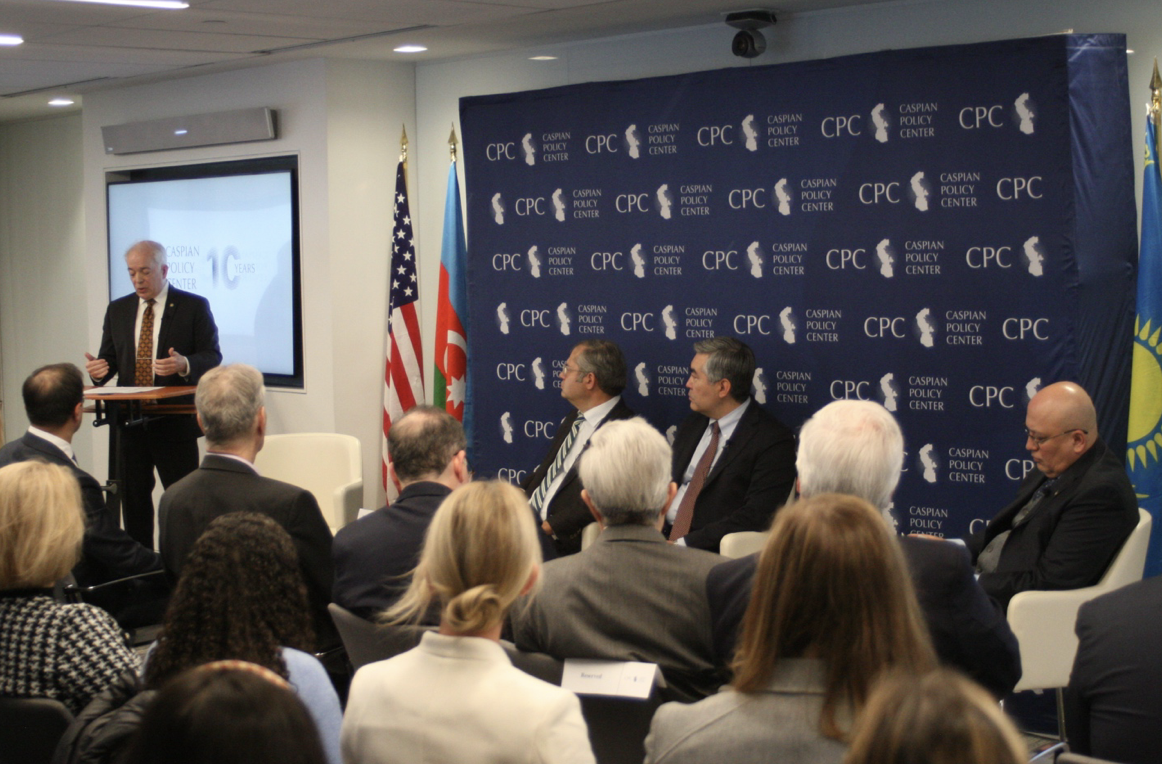
Following the opening remarks, Dr. Eric Rudenshiold launched the moderated discussion by addressing the region’s evolving geopolitical landscape. He underscored the profound transformation underway, noting that, “for decades, Central Asia and the South Caucasus were generally perceived as geopolitical afterthoughts. That era is over,” emphasizing that current developments reflect a broader structural reordering of regional and global dynamics. Since Russia’s invasion of Ukraine, regional states have demonstrated a marked shift toward what can he described as “interconnected sovereignty,” adapting their policies to enhance cooperation while safeguarding national interests. In this context, the evolution from the C5 to the C6 framework takes on added significance as a reflection of this new regional dynamic.
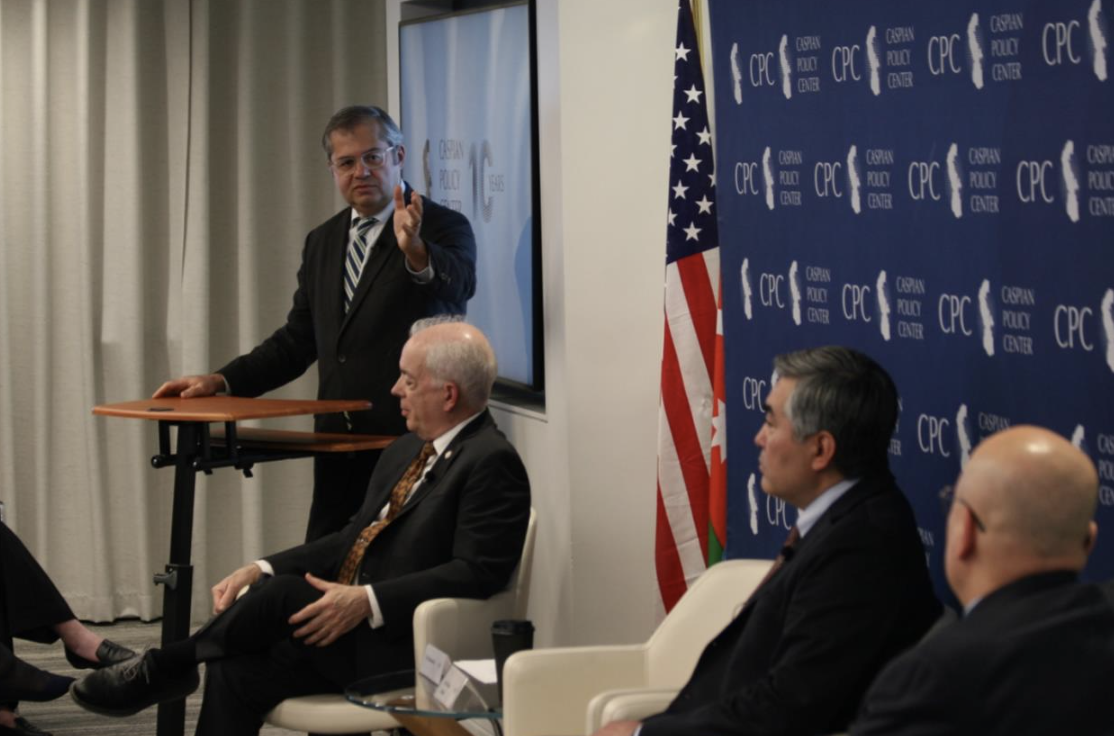
Ambassador of Azerbaijan to the United States Khazar Ibrahim discussed the importance of regional agency and unity in shaping the future of the C6 framework. Emphasizing that “ownership of our region is a fundamental principle that guides our shared vision and collective responsibility,” he noted that the C6 countries increasingly “speak with one voice,” reflecting a growing alignment of interests and purpose. Even though Azerbaijan’s formal integration into the C6 bloc is recent, Ibrahim emphasized that, in practice, the six countries have been collaborating closely for many years.
“Anchored in self-reliance, deepened solidarity, and unwavering cohesion, we move forward together, determined not only to advance our region, but contribute meaningfully to global cooperation,” Ambassador Ibrahim added.
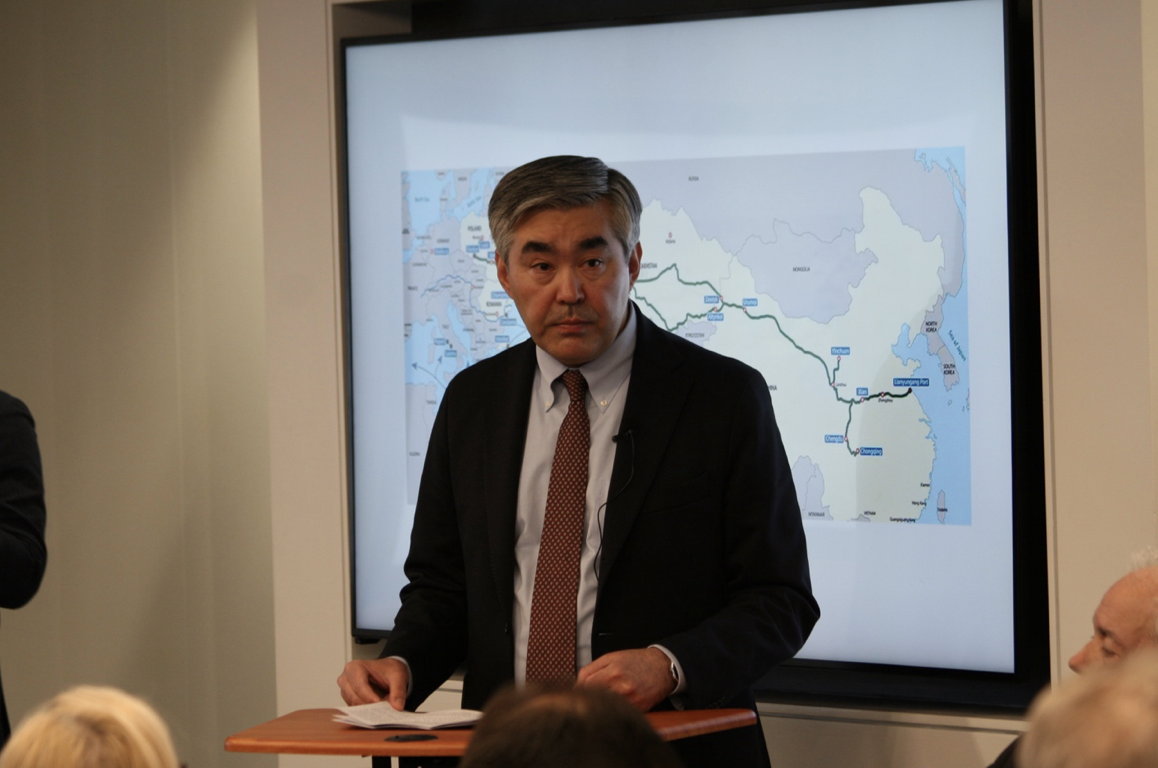
Ambassador of Kazakhstan to the United States Magzhan Ilyassov highlighted the growing importance of the “Central Asia plus” approach, noting that it reflects a practical reality: stability and progress in the region benefit the entire global community. He emphasized that the transition from C5 to C6 is particularly significant, with Azerbaijan’s full participation marking a historic milestone and signaling a new phase of strategic integration across the Caspian. Kazakhstan has actively supported this development, recognizing that bridging the two shores of the Caspian creates a unified economic and security space that is far greater than the sum of its parts.
Ilyassov emphasized that connectivity is the key driver of regional growth in the Caspian region, noting that Caspian states are actively working to transform the Trans-Caspian International Transport Route—also known as the Middle Corridor—from a regional connector into a fully integrated transcontinental highway.
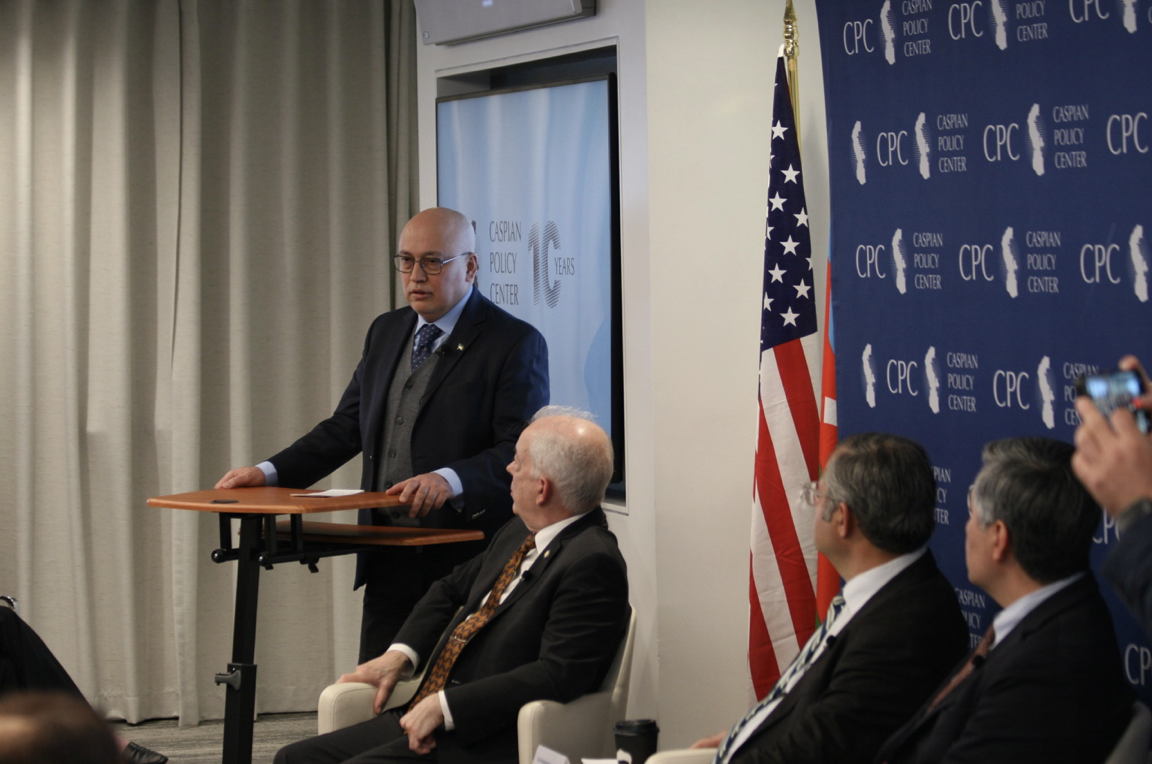
Ambassador of Uzbekistan to the United States Furqat Sidiqov spoke about the strength of U.S.-Central Asia relations, noting that “we’re enjoying the highest level of cooperation between the United States and Central Asia,” and that at the last C5+1 Presidential meeting in Washington, U.S. leadership acknowledged the strategic importance of the region as a whole. He emphasized the critical role of Azerbaijan, Kazakhstan, and Uzbekistan in advancing regional connectivity, stating that the U.S. relies on the Middle Corridor as much as the Central Asian countries do, particularly for transporting investments in the critical minerals sector. Sidiqov described the Middle Corridor as “an economic reality” for Central Asia, noting that Azerbaijan provides a gateway for regional goods to reach European and North American markets.
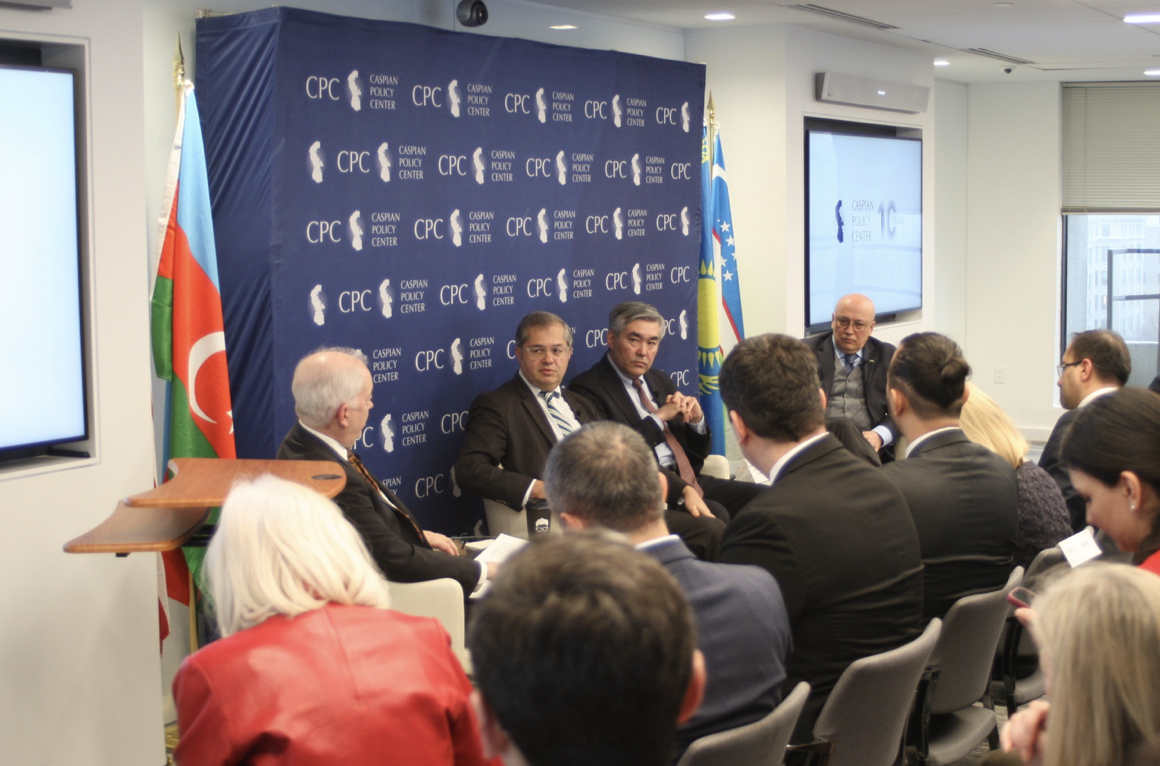
The event concluded with a Q&A session, providing an opportunity for further discussion and collaboration among attendees.