Headlines from the Caspian: May 4, 2026
Recent Articles
Author: Caspian Policy Center
05/04/2026
 mining.com
Energy and Economy
Kazakhstan–U.S. Tungsten Deal Gains Momentum
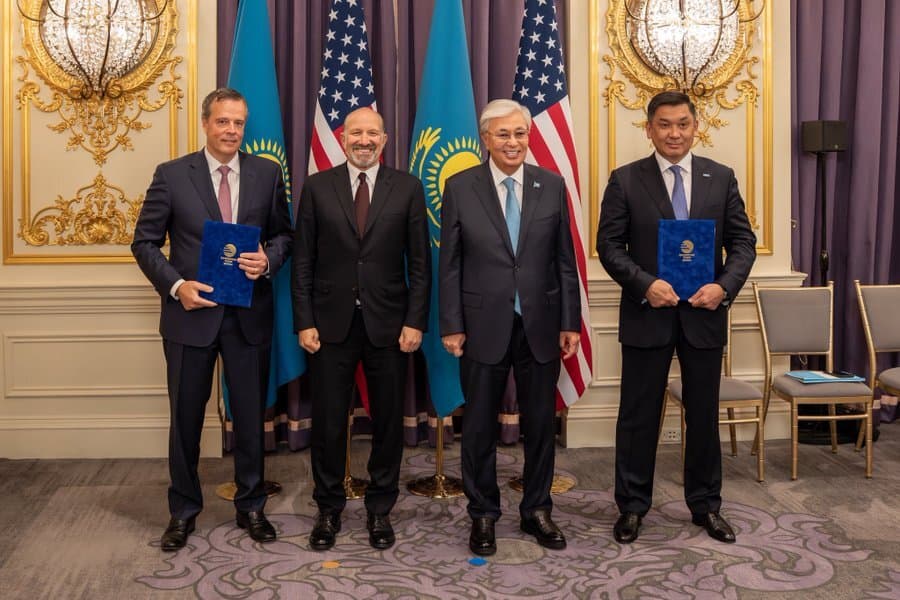
A major U.S.-linked mining deal in Kazakhstan is advancing plans to develop one of the world’s largest undeveloped tungsten deposits, highlighting deepening resource cooperation with the United States amid intensifying global competition for critical minerals. A proposed merger between Skyline Builders Group Holding Ltd. and Cove Kaz Capital Group LLC would form Kaz Resources Inc., a Nasdaq-listed company focused on tungsten and rare earths, anchored by projects in the Karaganda region in partnership with Kazakhstan’s Tau-Ken Samruk. Backed by preliminary interest from U.S. institutions such as the Export-Import Bank of the United States, the initiative reflects Washington’s push to diversify supply chains away from China, which dominates global tungsten production. As prices surge and demand grows across defense and high-tech sectors, the project positions Kazakhstan as an emerging key player in the global critical minerals landscape while reinforcing its role in Western supply-chain strategy.
Source: The Times of Central Asia
Turkish BOTAS to Quadruple Crude Oil Capacity in Ceyhan
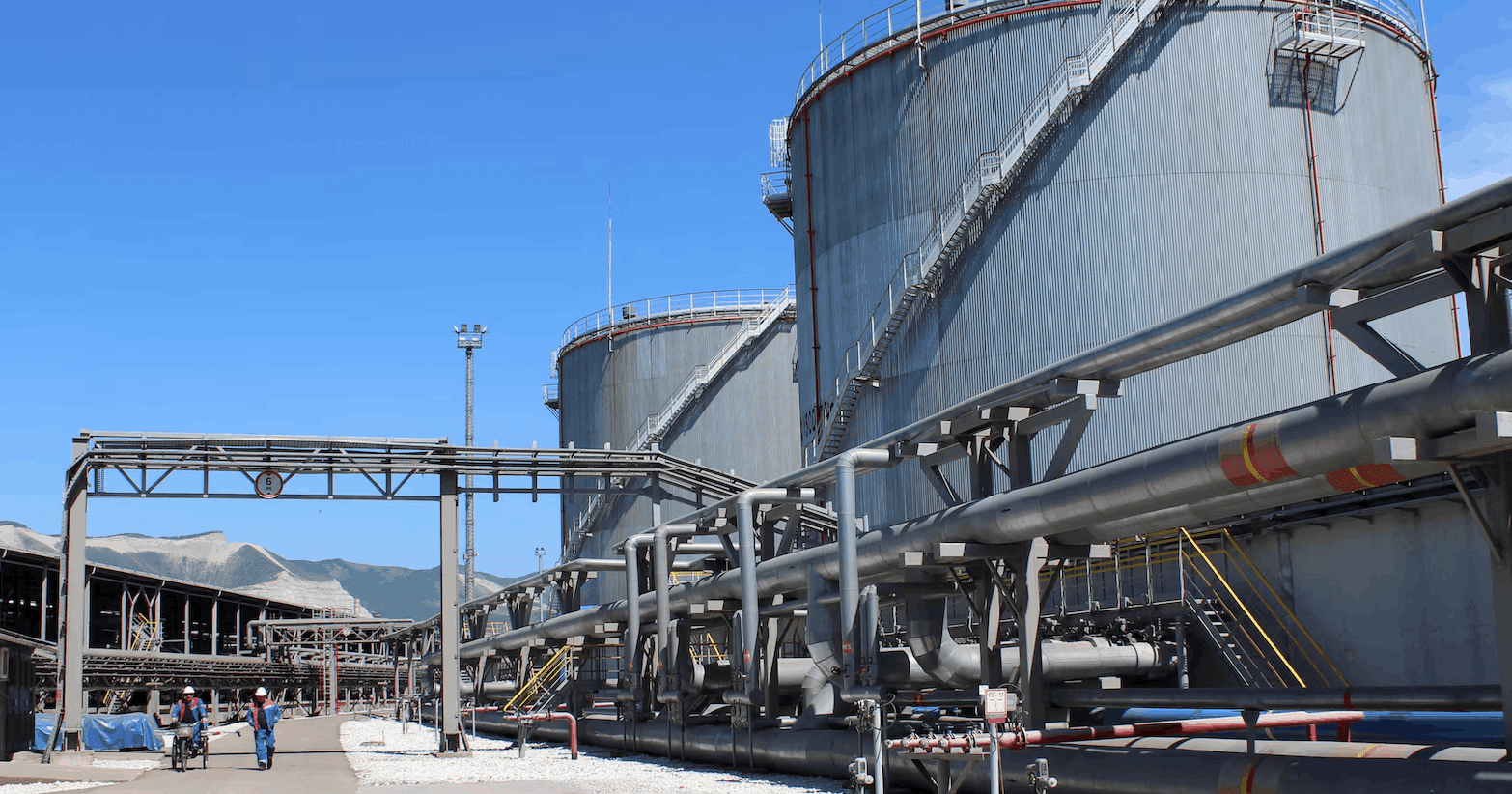
BOTAS, the Turkish oil and natural gas pipeline operator, plans to invest in facilities at Ceyhan to increase crude oil storage capacity from its current 11 million barrels to 45 million barrels by 2031. According to BOTAS Chief Executive Abdulvahit Fidan, developments in Ceyhan, where the Baku–Tbilisi–Ceyhan pipeline and Iraq–Türkiye crude oil pipelines converge, will strengthen Türkiye’s resilience to energy crises and allow it to play a more decisive role in global energy markets.
Source: Reuters
Soyuz-5 Launch Signals New Phase for Kazakhstan’s Space Ambitions
The first test launch of the Soyuz-5 from Baikonur Cosmodrome marks a significant milestone in Kazakhstan’s evolving role in the global space sector. Developed by Roscosmos, the new-generation rocket successfully completed its initial flight tests, demonstrating increased payload capacity and more cost-efficient, environmentally cleaner launch capabilities. The mission underscores deepening cooperation between Kazakhstan and Russia under joint projects, while highlighting Astana’s ambition to transition from a historic launch-site host to an emerging space power with modernized infrastructure and greater strategic control.
Source: Euronews
ADB Launches Disaster Bonds for Kyrgyzstan and Tajikistan
The Asian Development Bank has issued its first Disaster Relief Bonds to support Kyrgyzstan and Tajikistan. This marks a new step in protecting the region against natural disasters and climate shocks. The $160 million program will provide rapid funding in the event of major earthquakes or floods and will help governments respond quickly and support vulnerable populations. Designed with parametric triggers for fast disbursement, the bonds shift part of disaster risk to global investors and strengthen financial resilience in Central Asia. Backed by strong international demand and listed on the Singapore Exchange, the initiative signals growing innovation in climate finance and risk management across the region.
Source: Kazinform
Uzbekistan Orders New Electric Trains from Skoda
Uzbekistan has signed a €120 million agreement with Škoda Group to supply the Czech Republic with 10 modern electric trains, advancing efforts to upgrade its rail system. The deal, signed in the presence of President Shavkat Mirziyoyev and Czech Prime Minister Andrej Babiš, will provide energy-efficient trains designed for the region’s rail network. Beyond delivery, the project includes plans for a joint venture on maintenance and training, helping build local expertise and long-term capacity. Supported under the EU’s Global Gateway strategy, the initiative reflects growing cooperation between Uzbekistan and European partners in modern transport development.
Source: Daryo
Oil Leak Reported After Mudflow in Southern Uzbekistan
Uzbekistan has reported a new oil-contaminated spill in the Boysun district of the Surkhandarya region following a powerful mudflow that damaged protective infrastructure. Authorities say the situation is now under control, with specialists from the National Committee for Ecology and Climate Change of Uzbekistan assessing environmental impacts and continuing monitoring efforts. The incident follows a similar spill in April involving the Xongaronsoy River, highlighting ongoing environmental risks linked to energy operations and extreme weather events in the region.
Source: Daryo
Kyrgyzstan establishes new trade route to Pakistan through China
Kyrgyzstan has successfully tested a trade route to Pakistan's port city of Karachi, bypassing Afghanistan entirely. A single truck traveled roughly 3,300 kilometers from Bishkek along the Karakoram Highway through China, completing the journey on schedule. Kyrgyzstan's Transport Ministry called it a strategically important step for expanding the country's access to international seaports. Other Central Asian states have already expressed interest in using the same corridor. Within the past six months, the presidents of Kazakhstan, Kyrgyzstan, and Uzbekistan have all visited Islamabad with a stated objective of strengthening trade ties and achieving the strategic objective of gaining access to a seaport.
Source: Eurasianet
Kazakhstan Expands Middle Corridor with New Maritime Fleet
Kazakhstan Temir Zholy (KTZ) is launching its own maritime fleet to strengthen the Trans-Caspian International Transport Route, marking a strategic push to enhance connectivity between Asia and Europe. Through its subsidiary, the company has signed contracts to build six river-sea class cargo vessels designed to operate across the Caspian and Black Sea corridors. Four of them will be built in China and two at Azerbaijan’s Baku Shipyard. With modern navigation systems and compliance with global standards set by the International Maritime Organization, the new fleet aims to reduce logistical bottlenecks, improve efficiency, and solidify Kazakhstan’s role as a key transit hub amid shifting global trade dynamics.
Source: The Astana Times
Central Asian Ecological Summit Secures $2.3 billion for Green Transition
During last week’s Regional Ecological Summit in Astana, heads of Kazakhstan, Kyrgyzstan, Tajikistan, Turkmenistan, and Uzbekistan adopted a joint declaration on “Environmental Solidarity of Central Asia.” The Central Asia Climate Change Conference, held on the sidelines of the Summit, hosted UN senior representatives, international organizations, and financial institutions, and led the charge establishing a common environmental goal in the region, while also tying regional needs to global climate negotiations.
Source: Euronews
Politics and Security
Armenia and Azerbaijan Agree on Border Delimitation Drafts
The 13th meeting of the bilateral Armenian-Azerbaijani commissions on border delimitation took place in Aghveran, Armenia, with Armenian Deputy Prime Ministers Shahin Mustafayev and Mher Grigoryan leading the meetings. Each side exchanged draft instructions which contain expert group operations, map preparation, and the formalization of delimitation documents. These documents will begin the journey to their respective capitals to receive government approval. The talks also included discussions about cargo transit and the supply of petroleum products.
Source: AnewZ
Kazakhstan Stays the Course with OPEC+ Despite Pressure to Exit
Kazakhstan has confirmed it will maintain its participation in the OPEC+ framework, rejecting calls to follow the United Arab Emirates in stepping away from production coordination. Despite ongoing challenges in meeting output quotas, Astana signaled that stability in global energy markets remains a priority. The decision also reflects broader geopolitical and economic considerations, including Kazakhstan’s reliance on export routes via Russia and the influence of major energy partners. As uncertainty grows following the UAE’s exit, Kazakhstan’s move underscores its preference for continuity within OPEC+ to avoid market volatility and safeguard energy revenues.
Source: OilPrice.com
Eighth Summit of the European Political Community Held in Yerevan
Leaders from the European Political Community (EPC) converged in Armenia’s capital May 4-5 to discuss the state of global conflicts and European security. NATO-Secretary General Mark Rutte and European Commission President Ursula von der Leyen acknowledged tensions with Washington over the U.S. war with Iran and its partial withdrawal of troops from European soil. However, the parties reaffirmed their commitment to stepping up EU commitments to continental and transatlantic security. Meanwhile, Ukrainian President Volodymyr Zelenskyy called for assurances for continued military support, while announcing a newly signed drone deal with the EU. The EPC, which formed following Russia’s invasion of Ukraine in 2022, consists of 44 member states, including the entirety of the European Union (EU), Türkiye, Ukraine, and the South Caucasus nations.
Sources: European Council, DW
Giorgia Meloni Visits Azerbaijan
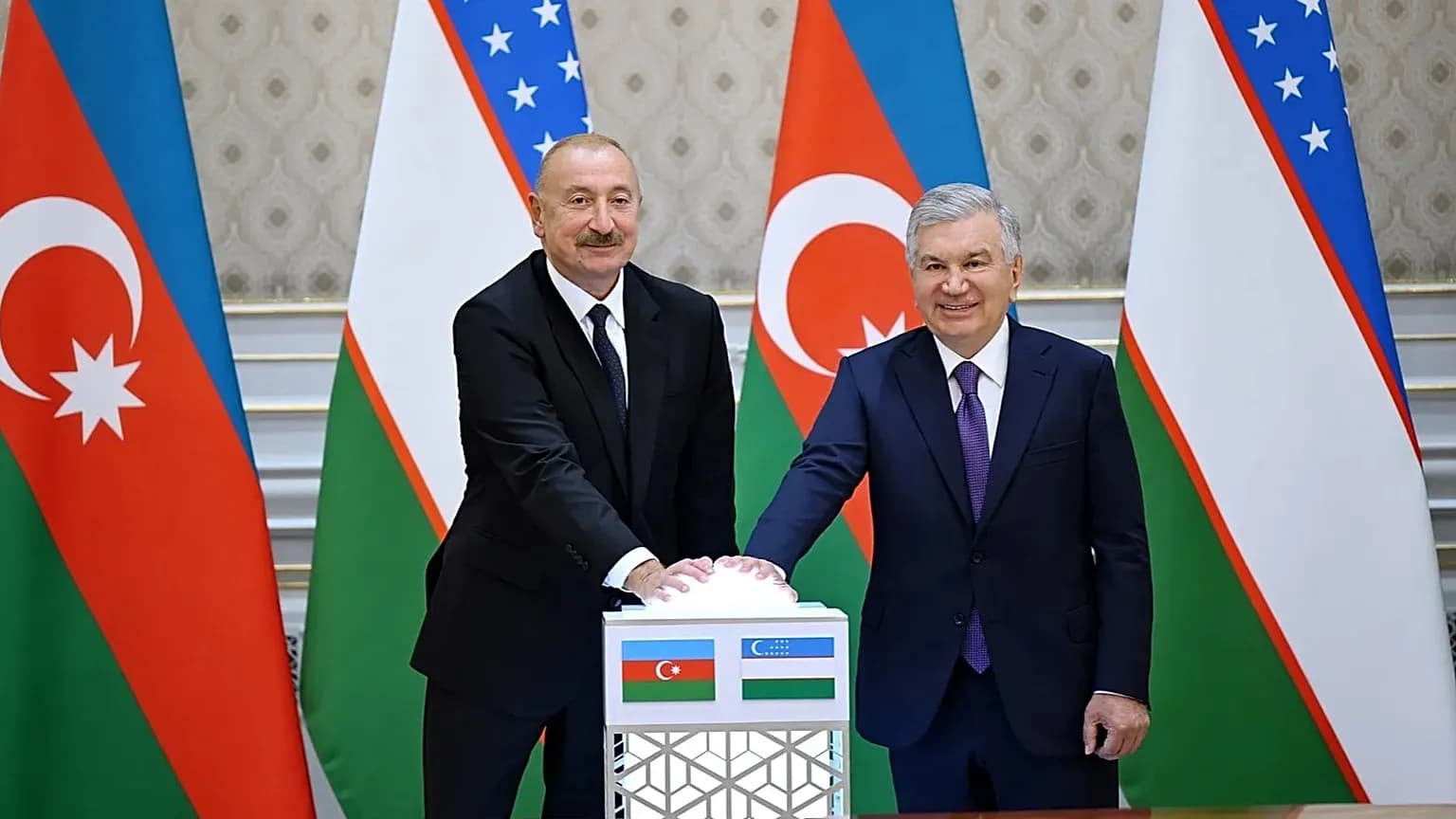
On May 4, Prime Minister of Italy Giorgia Meloni conducted an official visit to Azerbaijan. While in Baku, Meloni held a one-on-one meeting with President Ilham Aliyev, as well as Foreign Minister Jeyhun Bayramov. Following expanded-format talks, Meloni vowed closer cooperation with Azerbaijan in the energy sector, while Aliyev highlighted Italy as a key market for Azerbaijan’s oil and gas, noting that 9.5 of the 25 billion cubic meters exported last year went to Italy. He said discussions are underway to increase volumes, which will require further expansion of the Trans Adriatic Pipeline (TAP), part of the Southern Gas Corridor. Aliyev also reaffirmed that Azerbaijan and Italy are strategic partners, with Italy remaining Baku’s top trade partner.
Source: Anadolu Agency, Caspian Post
EU Sanctions Package against Russia Impacts Central Asian States
Adopting the 20th sanctions package on April 24, the European Union banned the export to Kyrgyzstan of computer numerical control machines, equipment necessary for high-precision components for weaponry and telecommunications equipment crucial to drone operations. These anti-circumvention sanctions, although punishing Kyrgyzstan, are meant to impact Russian drone and communication capabilities. A new method of sanctioning, it is unclear whether the Kyrgyz sanctions will deter sanctions busters or push them to adopt new methods of transferring technology to Russia. At the same time, the EU pulled three Tajik Banks from the current list – Dushanbe City Bank, Spitamen Bank, and Commerce Bank of Tajikistan – which were part of the 19th sanctions package.
Source: Eurasianet, European Council
Former Kyrgyzstan Security Chief Accused of Plotting to Seize Power
Kyrgyz Republic officials have charged Kamchybek Tashiev, the former head of the State Committee for National Security, with “abuse of office and the violent seizure of power.” Although not arrested, Tashiev has been placed under a court-ordered travel ban. Specific dates for the proceedings and details of the investigation have yet to be released. These charges follow Tashiev’s dismissal from his government role in early February. Tashiev continues to state that he is innocent.
Source: Organized Crime and Corruption Reporting Project